Video yükleniyor...

Video Yüklenemedi

Ana Sayfaya Dön

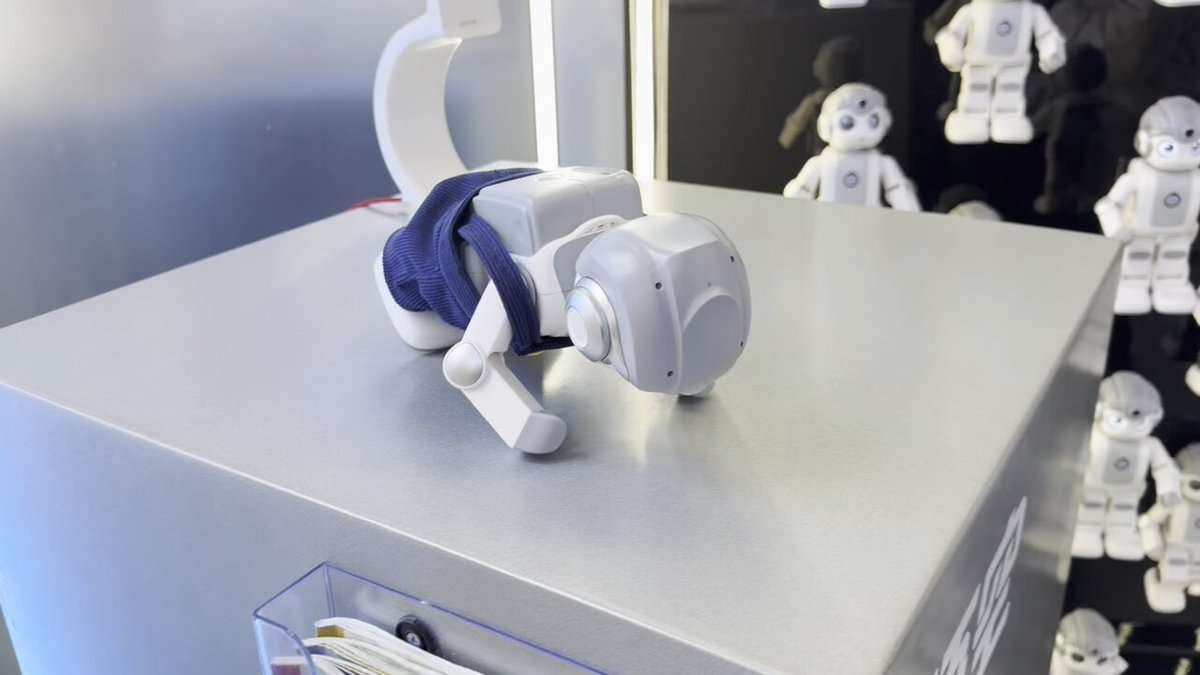
THIS GENERATION MAY BE THE FIRST TO GROW UP THINKING HUMANOID ROBOTS ARE NORMAL. And that's a much bigger deal than it sounds. Look at the adults. Phones out. Cameras recording. Everyone watching the machine because it's unusual. Now look at the kid. He just interacts with it. That's...

132,747 görüntüleme • 16 gün önce •via X (Twitter)

0 Yorum

Yorum bulunmuyor

Orijinal gönderinin yorumları burada görünecek

Benzer Videolar

THE FIRST GENERATION TO GROW UP WITH HUMANOID ROBOTS IS ALREADY HERE. And that could matter more than any robot demo. Look at this scene. A humanoid standing outside a school. Children walking around it. Watching it. Interacting with it. For adults, a machine like this still looks futuristic. For a child growing up around them? It could eventually look completely normal. Think about how quickly that changes a market. A generation ago, having a computer inside your home was unusual. Then children grew up with computers. The same happened with smartphones. Then tablets. Then AI. Technology stops feeling revolutionary when an entire generation has never known a world without it. Humanoids could be next. Imagine children growing up seeing robots in schools. Stores. Airports. Hospitals. Hotels. Homes. They won’t ask whether humans should interact with robots. They’ll already be doing it. And that matters economically. Because one of the biggest barriers to consumer robotics isn’t just price. It’s trust. People need to feel comfortable allowing an autonomous machine into their personal space. Inside their homes. Around their families. Around their children. That kind of acceptance can take years. Sometimes generations. But children who grow up around humanoids won’t need the same adjustment. To them, asking a robot to carry something might feel as normal as asking Alexa a question feels today. And once that happens, the addressable market changes dramatically. A robot isn’t just industrial equipment anymore. It becomes a household product. A service platform. An assistant. Potentially even something families upgrade every few years. First robot at school. First robot at the mall. First robot at work. Eventually… first robot at home. The companies building humanoids today aren’t only competing for today’s customers. They may be competing to become familiar to an entire generation of future customers. Because the biggest sign that humanoid robots have won won’t be people staring at them. It’ll be children walking past one without thinking twice.

Mag1strY0da

10,134 görüntüleme • 3 gün önce

I spent a month in Shenzhen visiting factories and robotics companies, and the contrast with the U.S. was striking. While Figure and Boston Dynamics hide their humanoids behind closed doors, Chinese companies have massive showrooms open to the public. But what really stood out wasn't just the transparency, it was how good they are at selling. Take UBTech: they've already sold 1,200 humanoid units at $200k each to factories. And here's the kicker, these robots aren't even that useful yet. They can only pick up and drop boxes at 1/10th the speed of a human, and factories still need to hire system integrators to train them for specific tasks. My theory is that these factories are terrified of getting left behind in the robotics/AI wave. They're investing in new tech not because it's ready, but because they can't afford to wait. The second surprise was the breadth of their robotics portfolio. These companies aren't just building humanoids, they're deploying service robots everywhere: restaurants, hotels, apartments. Consumer robots are cleaning houses, pools, pet waste, dishes. They're covering the entire spectrum. But the education piece shocked me most. I picked up what I thought was a high school or college robotics textbook, it was for primary school. The government mandated AI and robotics education starting in elementary school. Almost every single school in China now has AI and robotics curriculum, complete with education robots so kids can learn by building. They're creating a generation that grows up fluent in robotics and AI. China owns the supply chain and the hardware stack. But here's what I think people are missing: the race isn't just about who can build robots faster or cheaper. The U.S. advantage has always been in the layer between hardware and human, the interaction design, the software intelligence, the intuitive interfaces that make complex technology feel natural. China is building the physical infrastructure, but they're also learning fast. Every deployed service robot, every classroom full of kids building with education kits, every factory running humanoids, that's all data collection at scale. The window for the U.S. to establish its wedge is narrowing. It's not enough to be better at AI or software anymore. We need to be building the integration layer, the intelligence that makes physical AI actually useful, not just impressive in a showroom. Because right now, China isn't just manufacturing robots. They're manufacturing a robotics-native culture, and that might be the most defensible moat of all.

Miyu Horiuchi

90,718 görüntüleme • 8 ay önce

Two girls, arms overhead all day, plastering a ceiling in perfect sync and it makes them around $12,000 a month between them, mostly from filming it. Anyone who's done overhead work knows it's the worst position in the trade — arms up, neck back, shoulders burning inside ten minutes. Most people tap out. These two do it for hours, side by side, matching each other's pace like they share a brain. That's the thing you can't look away from: not just that it's two women on a ceiling, but that they're in rhythm doing the part everyone else dreads. Here's why the pair matters more than people think. A solo worker is a clip you watch once. Two people moving in sync — no talking, just anticipating each other — is a relationship, and relationships are what turn a viewer into a follower. You're not watching a task get done. You're watching a partnership work, and that pulls people back for the next one. The money runs three ways off one phone. Their calendar stays booked because homeowners watch the finish and hire them at full rate, zero ad spend — the video sells the work. Tool and material brands pay $3 - 5k a post to get their gear in genuinely skilled hands. And views, often 5-10 million a clip, stack payouts on a phone one of them wedges on a bucket. Neither of them edits. They film the shift, hand it to AI, it grabs the tightest synced stretch, cuts it to the beat, captions, schedules. They're onto the next room before it posts. The reframe for anyone doing hard work: the part of your job that's physically brutal — the part you assume nobody wants to see — is exactly what people respect watching. Struggle that looks effortless is magnetic. Doing it in sync with someone else doubles it. Do you work with someone you're so in sync with you barely need words? Drop it below — I'm breaking the best ones down next.

Rich

23,632 görüntüleme • 1 ay önce

THE $20,000 HUMANOID DOESN’T NEED TO REPLACE YOUR JOB. IT COULD REPLACE YOUR CHORES. Look at what the robot is doing. Cooking. It sounds like a small thing. But start adding up how much time humans spend maintaining their own lives. Cooking. Cleaning. Laundry. Dishes. Groceries. Taking out trash. Putting things away. Preparing food again tomorrow. None of these tasks individually feels expensive. But your time is. Imagine a humanoid eventually saves you just 2 hours every day. That’s 730 hours per year. Over five years? 3,650 hours. More than 152 full days of your life. Now imagine the robot costs $20,000. Ignoring electricity, maintenance, software and financing for a moment, that’s roughly $5.50 of hardware cost for every hour returned to you over those five years. And the calculation could get even more interesting. Because the robot you buy on day one may not have the same capabilities three years later. Today it cuts ingredients. Tomorrow a software update teaches it an entire recipe. Later it learns your preferences. Your kitchen. Your schedule. Your routines. Same motors. Same hands. Same physical machine. More useful labor every year. That’s fundamentally different from most appliances. A $2,000 refrigerator doesn’t suddenly learn to cook. A dishwasher doesn’t learn to clean your bathroom. An oven doesn’t start doing your laundry after a software update. But a general-purpose humanoid potentially could move between all of those tasks. That’s why comparing a home robot with one appliance misses the point. You aren’t buying a better oven. You’re buying a pair of hands that can potentially learn. And that’s where the economics of home robotics become much bigger. People spend enormous amounts of money buying convenience. Food delivery. Cleaning services. Meal preparation. Laundry services. Smart appliances. But they’re all separate expenses solving separate problems. A sufficiently capable humanoid could begin combining them into one physical platform. One purchase. One machine. Hundreds of potential skills. And thousands of hours returned over its lifetime. The killer feature of the home humanoid may not be intelligence. It may not even be cooking. It could simply be giving people their time back.

Forem

29,827 görüntüleme • 2 gün önce