Loading video...

Video Failed to Load

Go Home

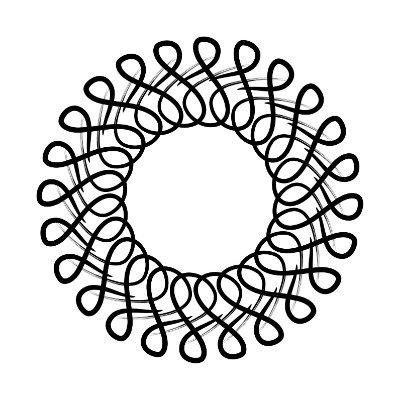
This is a Collapsible 3D Printed Vortex, a masterpiece of "Print-in-Place" engineering. How it works: The entire structure is printed as one single piece with incredibly tight tolerances—roughly 0.2mm to 0.3mm gaps between the rings. Because the layers don't actually touch, they can slide freely, creating that hypnotic "endless"...

77,675 views • 5 months ago •via X (Twitter)

0 Comments

No comments available

Comments from the original post will appear here

Related Videos

Narinder Kaur on TV dismissing thousands and thousands of illegal arrivals as “not a big deal.” “Thirty, forty thousand people coming in a population of sixty-seven, sixty-eight million isn’t the big deal you think it is… We are not being overrun.” It’s closer to 200,000 illegal arrivals in the last five years alone. Tell that to the families who suddenly have hundreds of young men, most of them with no paperwork, no known history, and no connection to the area, dumped on their doorstep. Look at Linton-on-Ouse. A quiet North Yorkshire village of around 700 people. The plan? House 1,200 single adult male asylum seekers on the former RAF base right in the middle of it. Overnight, the locals become the minority in their own community. Or Piddington in Oxfordshire. A village of roughly 350 residents. The proposal? Up to 1,250 single adult males on the neighbouring MoD site. That is more than three times the entire population of the village. Residents face becoming a minority in the place they grew up, with a park used by local children sitting right next to it. This is real communities being transformed without consent, without consultation, and without any real idea who these men are or what they have done. People don’t want it. They never asked for it. And it’s easy to sit in a television studio and declare it’s “not a big deal.” It is a big deal. Go out and ask the people who will actually be affected. They will tell you.

Skint Eastwood

25,251 views • 1 month ago

FIVE LAYERS OF AGENT ENGINEERING, EACH ONE WRAPS THE ONE BELOW IT. IF YOU SKIP LAYER 2, YOUR LAYER 5 WILL LOOK BROKEN WHEN IT IS ACTUALLY JUST STANDING ON NOTHING. for weeks i debated harness vs loop vs graph like they were competing choices. then a stack diagram made the shape obvious. they are not choices. they are floors. 01 | prompt engineering. the message. unit of work: one input. inputs are role, instructions, examples, format. output is a single raw response. 02 | context engineering. the memory. unit of work: what stays in the window. a curator selects, compresses, and drops from query, docs, memory, prior turns, and tool outputs before the prompt runs. 03 | harness engineering. the machine. unit of work: the machine itself. gather (context + prompt) → LLM → tools or sub-agents → verifier → final response. the article calls this the operating environment. 04 | loop engineering. the system. unit of work: the run. goal + success criteria + max iterations + budget + completion check wrap around one harness pass. failed pass appends results to context and retries. 05 | graph engineering. the topology. unit of work: the graph run. goal + nodes + edges + state schema. graph routes to agent nodes, tool nodes, or human approval. a reviewer node with a different model and fresh context checks the final answer. the wrapping is the whole point. layer 5 assumes layer 4 works. layer 4 assumes layer 3 works. skip layer 2 and layer 3's verifier keeps failing without a clear reason. this is why swapping the model is a one-day project and swapping the stack is a quarter. the model is the commodity. the five layers around it are the engineering. full three-layer breakdown of the top of the stack (harness, loop, graph) in the post below.

kocer

30,675 views • 24 days ago