Video wird geladen...

Video konnte nicht geladen werden

Zur Startseite

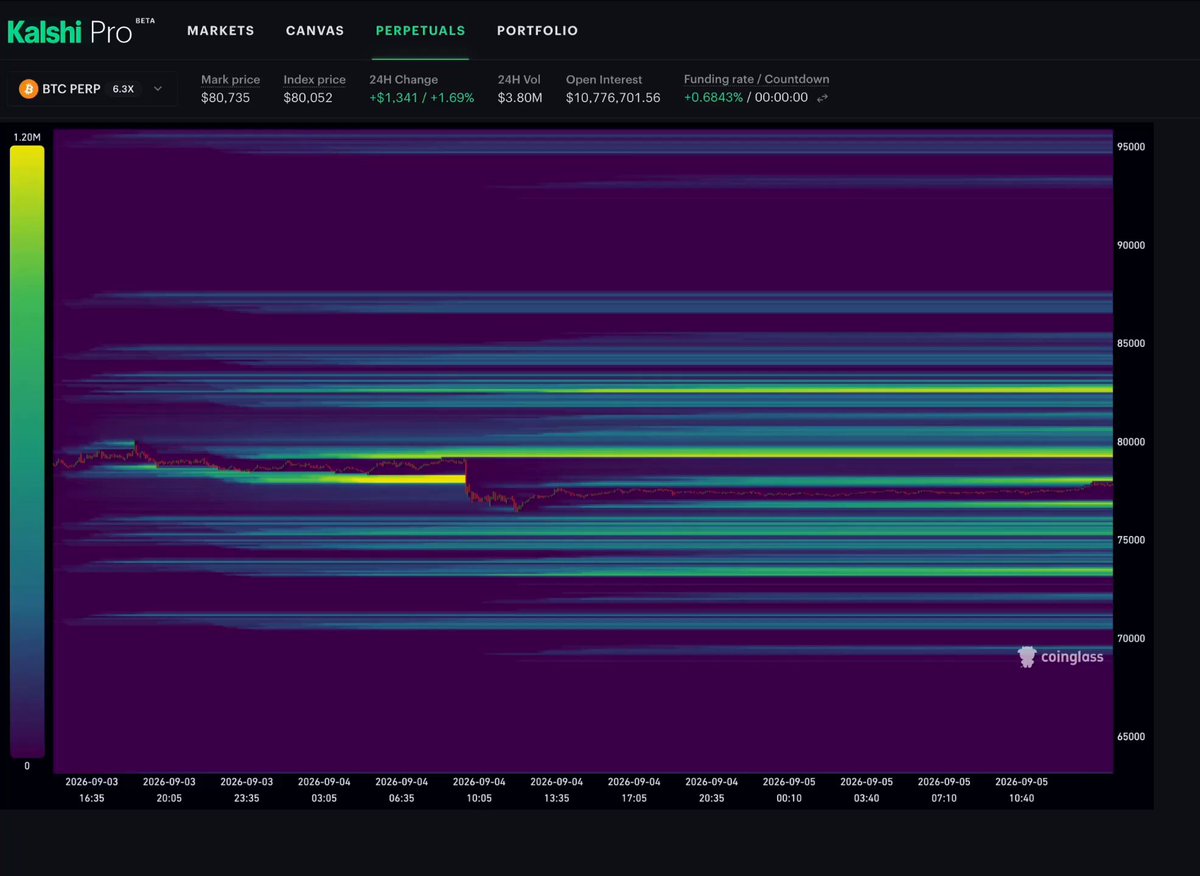
This is how I’ll know the exact Bitcoin bottom is in. The 2022 pattern points to October–December. And there is only one way to confirm it: Sentiment. Wait for the crowd to scream that Bitcoin is finished. Wait for the loudest bulls to finally break. And this cycle already...

88,357 Aufrufe • vor 19 Tagen •via X (Twitter)

0 Kommentare

Keine Kommentare verfügbar

Kommentare vom Original-Post werden hier angezeigt

Ähnliche Videos

🚨 WARNING: MONDAY COULD BE THE WORST MOMENT OF 2026!! Make sure to take a look at this before June 8, that’s tomorrow. The $SPCX IPO is coming on June 12. And markets open this Monday, June 8. This is the first real trading week before one of the biggest IPO events in market history. SpaceX is expected to go public at around $1.75 TRILLION to $2 TRILLION valuation. That one number explains everything. Because money does NOT appear from nowhere. If funds want to buy $SPCX, they need cash. And where does that cash come from? They sell what they already own. Stocks will dump. Crypto will dump. High beta tech will dump even harder. This is NOT just an IPO. This is a liquidity drain. Everyone sees the Elon hype. Almost nobody sees the forced selling. There are only a few ways this goes from here, and they are NOT equal. - LIGHT SHOCK: funds sell small positions, stocks get hit first, crypto follows, then markets try to stabilize. - HEAVIER SCENARIO: funds raise cash before June 12, high beta tech dumps, Bitcoin loses support, and retail gets trapped. - WORST CASE: everyone rushes into $SPCX at the same time, liquidity disappears from crowded trades, stocks dump HARD, crypto gets hit first, and people get liquidated. That last one is the REAL danger. Because none of this is happening in a vacuum. Stocks are already crowded. Crypto is already weak. Liquidity is already getting worse. And now one of the most hyped IPOs in history is about to absorb even more money. Now connect the dots. If everyone wants $SPCX, they need dollars. To get dollars, they sell assets. And when everyone sells at the same time, markets do NOT dip slowly. They dump. This is NOT a theory. The $SPCX IPO is June 12. Markets open Monday, June 8. And this is when positioning starts. Markets are NOT pricing the liquidity drain now. But they will. I usually do the opposite of what the masses are doing. Reminder: I’ve called all the market tops and bottoms for the last 15 years, including the Bitcoin bottom at $16,000 and the top at $126,000. The next call will be even more important. When I exit the markets completely, I’ll post it here publicly like I always do. Turn notifications on. If you’re not following yet, you’ll understand why that was a mistake later.

DANNY

958,561 Aufrufe • vor 18 Tagen

32 coins. $2.5 million. 0.0038% of the stack. That is the sale the market is now blaming for a $3 billion liquidation cascade and a Bitcoin price nearly halved from its peak. A $2.5 million sale cannot move a trillion-dollar asset. It is a rounding error. In the same week, Strategy raised $128.3 million selling its own stock, 50 times larger. It did not need to sell coins. It chose to. The crash has real drivers: a record 13-day run of ETF outflows, a rotation into AI, a Fed in no hurry to cut. But the accelerant the market keeps naming is 32 coins. The coins were never the point. The signal was. And the signal was deliberate. Michael Saylor told the Q1 call he would “probably sell some bitcoin to pay a dividend just to inoculate the market and send the message that we did it.” His logic was sound: prove the Bitcoin is usable capital, not a vault that can never be opened, and show he is not a prisoner of his own vow. His “never sell” always meant be a net accumulator. He is up more than 170,000 coins this year against the 32 he sold, and he scores himself on one number, Bitcoin per share. By that math, defending the dividend with a sliver was discipline, not distress. The market read it as the opposite. The dose became the catalyst now blamed for the crash. The inoculation became the infection. Because what changed was never Strategy’s solvency. It was its identity. The market has stopped pricing a permanent holder and started pricing what the filings always described: a state-contingent allocator now funding its own preferred dividends, at the margin, from the Bitcoin beneath them. And the buffer is thinning. The cash reserve behind those dividends has fallen from $2.25 billion to $900 million. Against a preferred bill near $1.7 billion a year, that is roughly 6 months of runway. Be precise. This is not a death spiral. Strategy still holds 843,706 Bitcoin, worth more than $50 billion even now, and has more funding levers than almost any company alive. A real rally makes this a footnote, and the sell-side calling the reaction overdone is not wrong on the fundamentals. But the regime has changed. The question is no longer Bitcoin’s price on any given day. It is the cadence of the dividend declarations and the path of that reserve. Bitcoin did not acquire a yield. The wrapper acquired liabilities. This week the market learned that difference costs far more than 32 coins.

Shanaka Anslem Perera ⚡

165,572 Aufrufe • vor 21 Tagen

Sold 32 coins. Bought 1,550. 48 times more, at a 15% discount, into the crash the market blamed on the sale. Strategy disclosed today that while everyone panicked over its $2.5 million Bitcoin sale, it was quietly buying the dip that panic created. 1,550 Bitcoin for $101 million, at $65,332 a coin, far below the $77,135 it sold for and below its own cost basis. The bears called the sale the first crack, a forced liquidation, the start of the death spiral. The answer was a buy 48 times the size of the sale that scared them. This is the machine we described: a state-contingent allocator. Above its funding line, it turns market access into Bitcoin. The sale was the exception. The buy is the rule. It also closed the question the sale opened. The cash reserve behind the preferred dividends had thinned to $900 million, about six months of cover. He rebuilt it to $1 billion in the same week. But watch how, because that is the real story. He funded none of it with coins. He funded it with $181 million of freshly issued stock, then spent it on Bitcoin and the reserve. The coins were never the funding source. The equity is. That is the flywheel working exactly as built, and the cost of it surfacing at the same time. Every turn now runs on issuing shares, and the premium that once made each share buy more Bitcoin than it diluted has compressed hard. He bought low. He sold his own stock low to do it. So the question quietly turns. It was never whether Saylor sells his Bitcoin. He just proved again that he buys far more than he sells. It is what each turn of the engine now costs in dilution, and how long the market keeps paying a premium worth that cost. He bought the dip. The dip was partly his own making. And he paid for it in equity, not coins.

Shanaka Anslem Perera ⚡

142,444 Aufrufe • vor 17 Tagen