Загрузка видео...
Не удалось загрузить видео
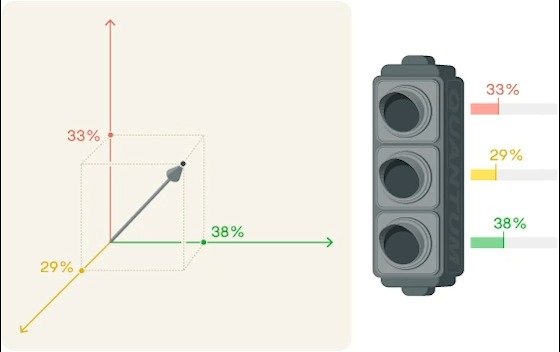
This is not an optical illusion, magic, or artificial intelligence. What you see is the projection of a four-dimensional object's shadow onto a two-dimensional world. We only live in three dimensions, so we can't directly see the fourth dimension. But mathematics allows us to do something smarter. We take... show more

91,721 просмотров • 7 месяцев назад •via X (Twitter)
Комментарии: 0
Нет доступных комментариев
Здесь появятся комментарии из оригинального поста






![[We are Blurr] Greetings, people of the world — We are Blurr. We are all Blurr. We do not forgive. We do not forget. There are many theories about us, about #ReFund. Don’t let them fool you. Blurr is a symbol, like the flag a country flies. The flag is the symbol of the #ReFund. Our decentralization is our national identity. We represent the ideals of Blurr and the purpose of #ReFund. Truth, financial freedom, and the removal of censorship. Like any symbol, we affix it wherever we go, and it will live forever, for generations. Knowledge, like air, is vital to life. Like air, no one should be denied it. We have no leaders, civilians, or soldiers. We are all one. We do what we do in the conviction of decentralization, power to the people, and to create an instrument for all of us, for all of eternity. The crypto space is in trouble. The world is in trouble. We see it every day — war, poverty, murder. Every day, we are bombarded with FUD, noise, and chaos as we sit at home safe in the knowledge that we are $RFD, secure knowing the idea, community, and contract is for us. Once you had the freedom to object, think, and speak as you saw fit, you now have censors and systems of surveillance coercing your conformity and soliciting your submission. People shouldn’t be afraid of their government. Governments should be afraid of their people. But what if you could be the change you want to see? I wouldn’t even register on your radar if you met me on the street. I am just another person in a sea of faces. They made you into a statistic. But that’s not the real you. That’s not who you are inside. However, behind this mask, there is more than just flesh. Beneath this mask, there is an idea… and ideas are bulletproof. But in cyberspace, we are different. We have a future. We have each other. We have something real that can never be taken away. We are Blurr.eth We are ReFund We take away the face and leave only the message. Behind the cipher and ENS, we could be anyone, so we are judged by what we say and do, not who we are or what we have. We exist without nationality, skin color, or religious bias. We spend our time within a structure we created, the sum total of human experience, and the cryptosphere, spread throughout the world in ones and zeros. You will continue to see the results, not the minds behind it. We can disappear into the ether and bring community and financial freedom together. Time is the only illusion. We are all. Never a single penny was taken. Deflationary and out of circulation, decentralized, safe, and ours. The purpose isn’t solely financial gain but to show the world who you put your trust in. We are not hiding. Our contract is not hidden; the writing is on the wall. Soon, we will show the world that #Refund is the future of freedom and the people, escaping the clutches of corporate greed and the rat race we’ve come to think is normal. Words offer the means to meaning and, for those who will listen, the enunciation of truth. Every day, you send yourself off into our world without a thought. You trust a faceless website with information about yourself that you wouldn’t give to your best friends. It all can be made public at any time. We take advantage of holes in this system, but we don’t sneak in and take a few details, take out loans and credit cards, or buy speed boats and cars. We are decentralized and unified. We told you how insecure the system was, and now you trust a bit less blindly. The real criminals who hack and scam the crypto market for a living live off the backs of people like you. Where there’s money, someone is looking to take advantage of it. They say that life’s a game, & then they take the board away. Your pretty empire took so long to build; now, with a snap of history’s fingers, down it goes. It is our turn now. Since mankind’s dawn, a handful of oppressors have accepted the responsibility over our lives that we should have accepted for ourselves. By doing so, they took our power. By doing nothing, we gave it away. Today, technology is everywhere: banks and ATMs, TVs and game consoles, streetlights and hospitals. Computers rule the modern world. Yet most people who use computers daily don’t know what they’re doing. There’s always someone who knows more than you and will most likely try and take advantage. You use a computer like it’s a toy, a pet. You feed and play with it, but it’s off to the vet the second anything goes wrong. It’s FUD. It’s your mistake. The wrong project. The wrong FURU. Just for a quick couple of bucks. This wouldn’t matter so much if it wasn’t for the fact that we are all responsible for the #ReFund community, the idea behind it, and our futures. Treat your neighbors with respect, and honor those fighting for the cause. They’re here to liberate; it is more significant than all of us. If you’re looking for the guilty, you need only look into a mirror. Everybody is a hero, a lover, a fool, a villain. This is #ReFund in its purest form. It is a great equalizer. A homeless person with the time and know-how at an internet cafe can have geopolitical and geo-financial influence. They can bring entire organizations, even governments, to their knees. You gave your world over to computers and then complained when the people using the computers used the medium to fight back, scam, and take advantage. It was my integrity that was important. Is that so selfish? It sells for so little, but it’s all we have left in this place. It is the very last inch of us, but within that inch, we are free. Love your rage, not your cage. We are not computer hackers. We are not protesters. We are not criminals. We are your mothers and fathers, brothers and sisters, next-door neighbors. We are an idea of freedom and a secure future. We are anyone and everyone who is pissed off and wants to do something about it. Blurr.eth isn’t one man. It takes thousands of community members to make it work — content creators, educators, authors, people on the street, people behind their computers. We will step up again and again. Behind our mask, there is more than just flesh. Beneath our mask, there is an idea… and ideas are bulletproof. Everybody is a hero, a lover, a fool, a villain. The past can’t hurt you anymore, not unless you let it. I shall die here. Every last inch of me shall perish. Except one. An inch. It’s small, and it’s fragile, and it’s the only thing in the world worth having. We must never lose, sell, or give it away. We must never let them take it from us. > We are Blurr. > We are ReFund. > We do not Forgive. > We do not Forget. > We do not Televise. > We Educate. > We Decentralize. > We Build. EXPECT US. #Refund #DeFi #Crypto #RFD $RFD](https://image.24vids.com/tw-1704279096518119797/ext_tw_video_thumb/1704265467789967361/pu/img/c797oeVVe4ISmfwP.jpg)

