Loading video...

Video Failed to Load

Go Home

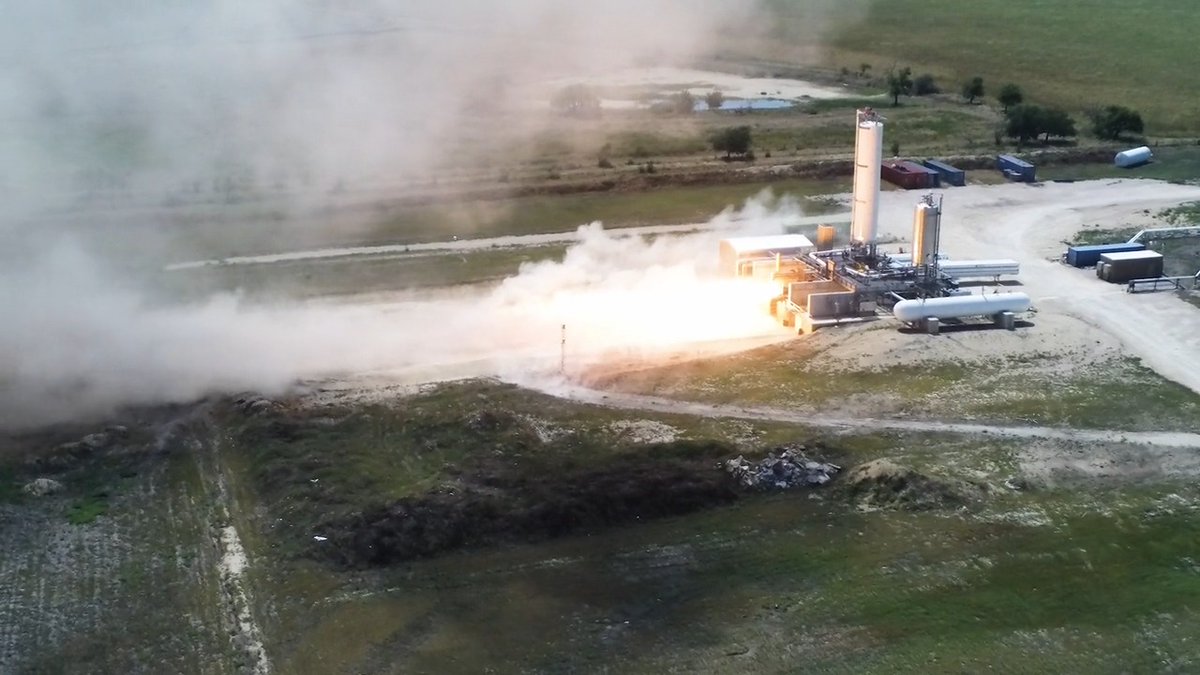
This is the most powerful commercial jet engine currently flying on an operational airliner. The GE90-115B was built by GE Aerospace specifically for the Boeing 777-300ER. It weighs around 8.3 tonnes, has a 3.25 metre wide fan and produces up to 512 kN (115,000 lbf) of thrust from a...

42,754 views • 1 day ago •via X (Twitter)

0 Comments

No comments available

Comments from the original post will appear here

Related Videos

Following the Delta A330-323(N813NW) engine failure after departure from São Paulo (GRU), many are asking: what actually happens if an airliner loses an engine just after takeoff? As passenger in the cabin watching this scenario unfold, the panic is understandable. Seeing flames from an engine is alarming. But this is exactly the kind of scenario pilots are trained for repeatedly in simulators. Modern multi-engine aircraft are designed to fly safely on one engine. In fact, losing one engine is a certification requirement during testing. Here’s what happens: At liftoff, pilots target V2 speed—the minimum safe speed that guarantees the aircraft can continue climbing even with one engine inoperative. If an engine fails: • The MASTER FIRE warning light will illuminate in the cockpit and the fire warning bell will sound, alerting the pilots on the affected engine (they will close the fuel, hydraulic shutoff, and engine bleed air valves, and also discharge the related fire bottle to extinguish the engine fire). Of course, they will be careful NOT TO shut down the wrong engine (this has happened before). • Maximum thrust is applied on the remaining engine. • Rudder input keeps the aircraft straight (countering asymmetric thrust) • The aircraft climbs straight ahead for best performance (turns reduce climb rate unless required) Once above a safe altitude (typically ~1,500 ft / Minimum Flap Retraction Altitude(MFRA): • The aircraft accelerates • Flaps are retracted (“cleaning up”) • Crew assesses the situation and plans a return or diversion Even at very low altitude, the aircraft remains controllable by design. It may not climb aggressively, but it will climb. Bottom line: What looks catastrophic from the cabin is a scenario pilots are highly trained to handle—and aircraft are engineered to withstand. Hope this helps any nervous flyer. Flying is safe, and the chances of this happening have reduced due to lessons learned from previous incidents. And if you ever find yourself in this situation, trust that the pilots will act according to their training—because that’s their job.

Turbine Traveller

42,927 views • 5 months ago

As the CFM LEAP engine shuts down, you can hear the distinctive “whoosh” sound followed by a gush of air. That is the Reverse Bleed System (RBS) at work. During normal operation, a significant amount of fuel remains unpurged in the system after engine shutdown. This residual fuel, located near or within the hot section, vaporizes due to high temperatures and deposits carbon (coke) on the fuel nozzles. Over time, nozzle coking leads to several operational and maintenance issues, including loss of thrust, reduced engine efficiency due to incomplete combustion, accelerated deterioration of hot-section components (combustor and High-Pressure Turbine), engine start failures, potential engine stalls, and increased unscheduled engine removals. The Reverse Bleed System (RBS) prevents fuel nozzle coking by automatically introducing cool air from the core compartment into the engine core flowpath after shutdown. This effectively lowers the fuel nozzle temperature below the coking threshold. RBS can operate for a maximum of 1 hour, and its effectiveness depends on ambient conditions (especially ambient temperature) and the total duration it runs. The last flight of the day contributes the most to fuel nozzle coke accumulation because of the extended dwell time at the gate. By actively managing post-shutdown thermal conditions, RBS significantly reduces coking-related problems, improves engine reliability, and lowers long-term maintenance costs. Now, also coming soon to the CFM56

Arjun Singh

53,523 views • 3 months ago

The name on one of the crew might ring a bell... June 19 1947: Pan Am Flight 121, a Constellation, crash-lands in Mayadine (Syria). 14 of 36 aboard die. In flight, the #1 engine failed due to a mechanical issue. Attempting to divert to an alternate airport, the #2 engine also failed. The crew made a belly landing in the desert, where the aircraft caught fire. Among the survivors was a dead heading 3rd officer named Gene Roddenberry, who would go on to create the iconic science fiction television series “Star Trek”. This was Roddenbery´s 2nd major plane crash, having survived another major accident during his service in the Pacific Theatre, during WW2 Accident description from ASN (One of many period accidents where an engine failure led to a fatal crash. Nowadays, an engine fail is nearly routine and at worst it causes a diversion...) "The Constellation, named "Clipper Eclipse", was cruising at FL185 when the no. 1 prop had to be feathered due to engine problems. The remaining three engines overheated, forcing the crew to reduced power. This resulted in a gradual descent. The crew elected to continue to Istanbul instead of landing at the nearby Habbaniya RAF Station in Iraq. While descending through FL100 a fire broke out in the engine no. 2 nacelle. A rapid descent was started during which the no. 2 engine separated from the wing. With the left wing on fire a belly landing was carried out in the desert. It appeared the no. 1 engine failure was due to a broken exhaust rocker arm on the no.18 cylinder. The no. 2 engine failure was due to a failure of the thrust bearing which in turn resulted in blocking the passage of oil from the propeller feathering motor to the propeller dome. PROBABLE CAUSE: "The Board determines that the probable cause of this accident was a fire which resulted from an attempt to feather the No. 2 propeller after the failure of the No. 2 engine thrust bearing."

Francisco Cunha

56,655 views • 2 months ago