Загрузка видео...

Не удалось загрузить видео

На главную

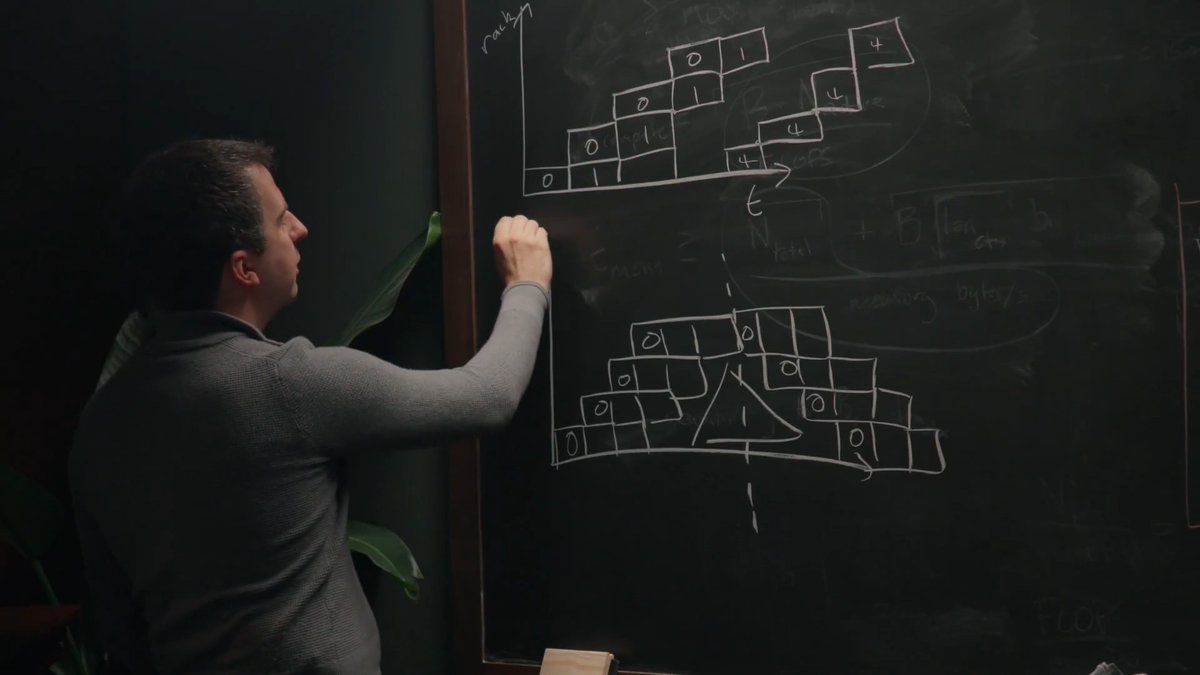
This lecture was a really simple & practical introduction to how machines learn Bayesian Learning, Bayes Theorem, Naive Bayes from Kimia Lab by Professor H.R.Tizhoosh. The lecture also walks through - MAP - Maximum Likelihood - Bayes Optimal Classifier - Naive Bayes model A really beginner-friendly lecture if you...

14,816 просмотров • 1 месяц назад •via X (Twitter)

Комментарии: 0

Нет доступных комментариев

Здесь появятся комментарии из оригинального поста

Похожие видео

a playlist of 30 youtube videos to learn machine learning fundamentals from scratch if you're struggling on where to start learning ML, this list goes this "Machine Learning: Teach by Doing" is a solid choice to learn both theory and code. (1) Introduction to Machine Learning Teach by Doing: (2) What is Machine Learning? History of Machine Learning: (3) Types of ML Models: (4) 6 steps of any ML project: (5) Install Python and VSCode and run your first code: (6) Linear Classifiers Part 1: (7) Linear Classifiers Part 2: (8) Jupyter Notebook, Numpy and Scikit-Learn: (9) Running the Random Linear Classifier Algorithm in Python: (10) The oldest ML model - Perceptron: (11) Coding the Perceptron: (12) Perceptron Convergence Theorem: (13) Magic of features in Machine Learning: (14) One hot encoding: (15) Logistic Regression Part 1: (16) Cross Entropy Loss: (17) How gradient descent works: (18) Logistic Regression from scratch in Python: (19) Introduction to Regularization: (20) Implementing Regularization in Python: (21) Linear Regression Introduction: (22) Ordinary Least Squares step by step implementation: (23) Ridge regression fundamentals and intuition: (24) Regression recap for interviews: (25) Neural network architecture in 30 minutes: (26) Backpropagation intuition: (27) Neural network activation functions: (28) Momentum in gradient descent: (29) Hands on neural network training in Python: (30) Introduction to Convolutional Neural Networks (CNNs):

ℏεsam

117,570 просмотров • 1 год назад

if you're struggling on where to start learning ML, here’s a playlist of 30 youtube videos to learn machine learning fundamentals from scratch "Machine Learning: Teach by Doing" is a solid choice to learn both theory and code. (1) Introduction to Machine Learning Teach by Doing: (2) What is Machine Learning? History of Machine Learning: (3) Types of ML Models: (4) 6 steps of any ML project: (5) Install Python and VSCode and run your first code: (6) Linear Classifiers Part 1: (7) Linear Classifiers Part 2: (8) Jupyter Notebook, Numpy and Scikit-Learn: (9) Running the Random Linear Classifier Algorithm in Python: (10) The oldest ML model - Perceptron: (11) Coding the Perceptron: (12) Perceptron Convergence Theorem: (13) Magic of features in Machine Learning: (14) One hot encoding: (15) Logistic Regression Part 1: (16) Cross Entropy Loss: (17) How gradient descent works: (18) Logistic Regression from scratch in Python: (19) Introduction to Regularization: (20) Implementing Regularization in Python: (21) Linear Regression Introduction: (22) Ordinary Least Squares step by step implementation: (23) Ridge regression fundamentals and intuition: (24) Regression recap for interviews: (25) Neural network architecture in 30 minutes: (26) Backpropagation intuition: (27) Neural network activation functions: (28) Momentum in gradient descent: (29) Hands on neural network training in Python: (30) Introduction to Convolutional Neural Networks (CNNs):

ℏεsam

109,261 просмотров • 1 год назад

Everybody is talking about recursive self-improvement (RSI) and meta learning. Here is my old 2020 talk about this [1]. It has aged well. Example: humans still define the starts & ends of trials of many modern meta learners. My RSI systems since 1994 LEARN to (re)define them [2]! [1] Meta Learning Machines in a Single Lifelong Trial (talk for workshops at ICML 2020 and NeurIPS 2021, based on earlier talks since 1994). Abstract: the most widely used machine learning algorithms were designed by humans and thus are hindered by our cognitive biases and limitations. Can we also construct meta learning algorithms that can learn better learning algorithms so that our self-improving AIs have no limits other than those inherited from computability and physics? This question has been a main driver of my research since I wrote a thesis on it in 1987 [2]. Here I summarize our work on meta reinforcement learning with self-modifying policies in a single lifelong trial (since 1994), and mathematically optimal meta-learning through the self-referential Gödel Machine (since 2003). Many additional publications on meta-learning since 1987 can be found in the RSI overview [2]. [2] J. Schmidhuber (AI Blog, 2020-2025). 1/3 century anniversary of first publication on recursive self-improvement (RSI) and meta learning machines that learn to learn (1987). For its cover I drew a robot that bootstraps itself. 1992-: gradient descent-based neural meta learning. 1994-: meta reinforcement learning with self-modifying policies. 1997: meta RL plus artificial curiosity and intrinsic motivation. 2002-: asymptotically optimal meta learning for curriculum learning. 2003-: mathematically optimal Gödel Machine. 2020-: new stuff!

Jürgen Schmidhuber

223,071 просмотров • 4 месяцев назад