Loading video...

Video Failed to Load

Go Home

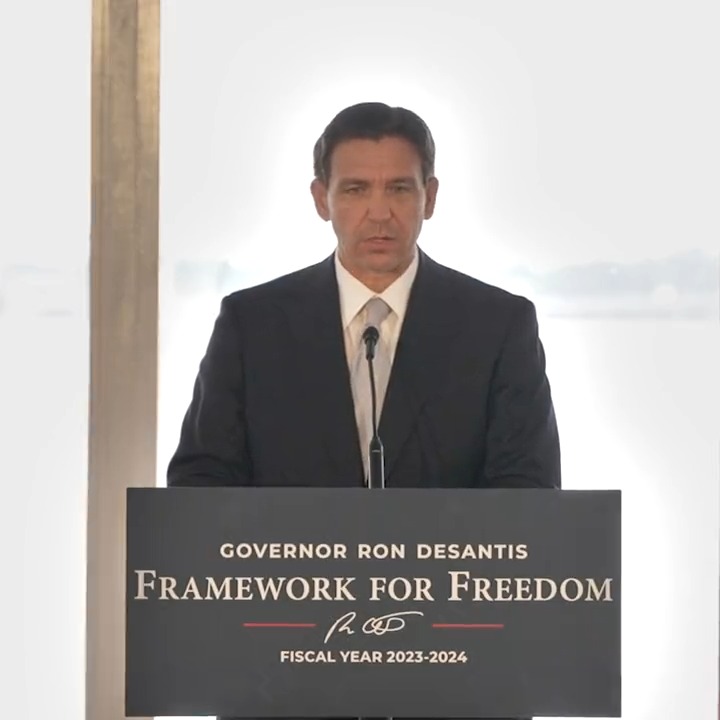
✅ This reservoir is a major feat of engineering, construction and planning. ✅ This reservoir added 55 billion gallons of water capacity storage in South Florida. ✅ This reservoir is one of the most important projects in the history of Everglades restoration. 💧🏅👏 The 10,000-acre Caloosahatchee (C-43) Reservoir is...

163,520 views • 5 days ago •via X (Twitter)

5 Comments

Branch Floridian's profile picture
Branch Floridian4 days ago

Let's stop pretending digging more canals, adding more pumps and blasting out giant holes is about "Everglades restoration." It's all about being able to water the 10 million more people you want to stuff in South Florida aka New New York.

🇺🇸WarEagle1776🇺🇸's profile picture
🇺🇸WarEagle1776🇺🇸4 days ago

@ByronDonalds will look at this and think “yes more water for data centers”

Dottie from the west's profile picture
Dottie from the west4 days ago

Yuge turnaround for the Everglades

Mr Gomez's profile picture
Mr Gomez4 days ago

wonderful

Mountaineer's profile picture
Mountaineer4 days ago

Damn that was quic

Related Videos

The Krishna Raja Sagar (KRS) Dam has entered the crucial Southwest Monsoon season of 2026 with one of its poorest water positions in recent years, raising concerns over the sluggish progress of rainfall in the Cauvery catchment areas of Kodagu. According to official data from Cauvery Neeravari Nigama Limited (CNNL) on June 28, 2026, the reservoir held 11.233 tmcft (thousand million cubic feet) of water at a level of 81 feet against its full reservoir level of 124.80 feet. The inflow stood at just 530 cusecs. Of the total storage, the live storage is only 2.809 tmcft, while 8.424 tmcft accounts for dead storage and silt. A comparison with data recorded on the same date over the past two decades shows that the present storage is among the lowest for the end of June and is dramatically lower than last year, when the reservoir had almost reached its full capacity. On June 28, 2025, the reservoir stood at 123.25 feet with 47.311 tmcft of water and was receiving a massive inflow of 73,811 cusecs following heavy monsoon rains in Kodagu. Notably, the cumulative inflow in the last 20 years is the lowest in 2026 (from June 1 to June 28) with 1.37 tmcft. At the same time, the cumulative inflow in the last 20 years was the highest in 2025, with 38.4 tmcft. The inflow trend also presents a worrying picture. At 530 cusecs, the present inflow is the lowest recorded among the 20 years listed, even lower than 547 cusecs in 2009 and 655 cusecs in 2019. By comparison, the reservoir received 13,437 cusecs in 2024, 36,510 cusecs in 2015, 23,867 cusecs in 2013, 11,483 cusecs in 2011 and a staggering 73,811 cusecs last year. Apart from weak monsoon rainfall and poor inflows, another major concern for the KRS Dam is the steady increase in silt accumulation, which has significantly reduced the reservoir's effective storage capacity. The estimated silt deposit and dead storage level at the reservoir remained unchanged at 4.401 tmcft between 2016 and 2023. However, it rose sharply to 8.179 tmcft (silt and dead storage level) in 2024, increased further to 8.379 tmcft in 2025 and has now reached 8.424 tmcft (silt and dead storage level) in 2026.

Star Of Mysore

17,643 views • 2 months ago

Real estate agent Morgan Goldberg lost her home in the Pacific Palisades fires She says she’s tired of the lies being told by Los Angeles mayor Karen Bass She shows “I’m back here at our reservoir, still empty, almost a year and a half after the fire” Karen Bass says this reservoir hasn’t been used for wildfires “in a million years” and now it’s only for drinking water Well, that’s a lie for 2 reasons Bass says the reservoir hasn’t been used in millions of years to fight fires, that’s false. It’s not that old 2nd, the reservoir can absolutely be used for fighting fires “All municipal systems have two kinds of water: potable and non-potable - Potable water is, in addition to drinking water, used in all of our systems; irrigation, fire hydrants, you name it. It simply means that the water's been treated - So non-potable water is sewage water, runoff water, everything that has not been treated or gone through our system So Just by mere fact that this exists in a LADWP man-made reservoir makes it potable, and it also funnels water to our fire hydrants. So yes, this is drinking water and it's fire hydrant water. We use it for everything. Except we don't because it's empty.” She’s referred to The Santa Ynez Reservoir, the 117 million gallon covered reservoir in the Pacific Palisades Highlands The reservoir stores treated drinking water. Its cover prevents contamination, which is why it isn’t used like open reservoirs for direct helicopter dipping. However, in an emergency this could have easily been used to fight fires So Karen Bass is lying again

Wall Street Apes

469,248 views • 4 months ago