Video yükleniyor...

Video Yüklenemedi

Ana Sayfaya Dön

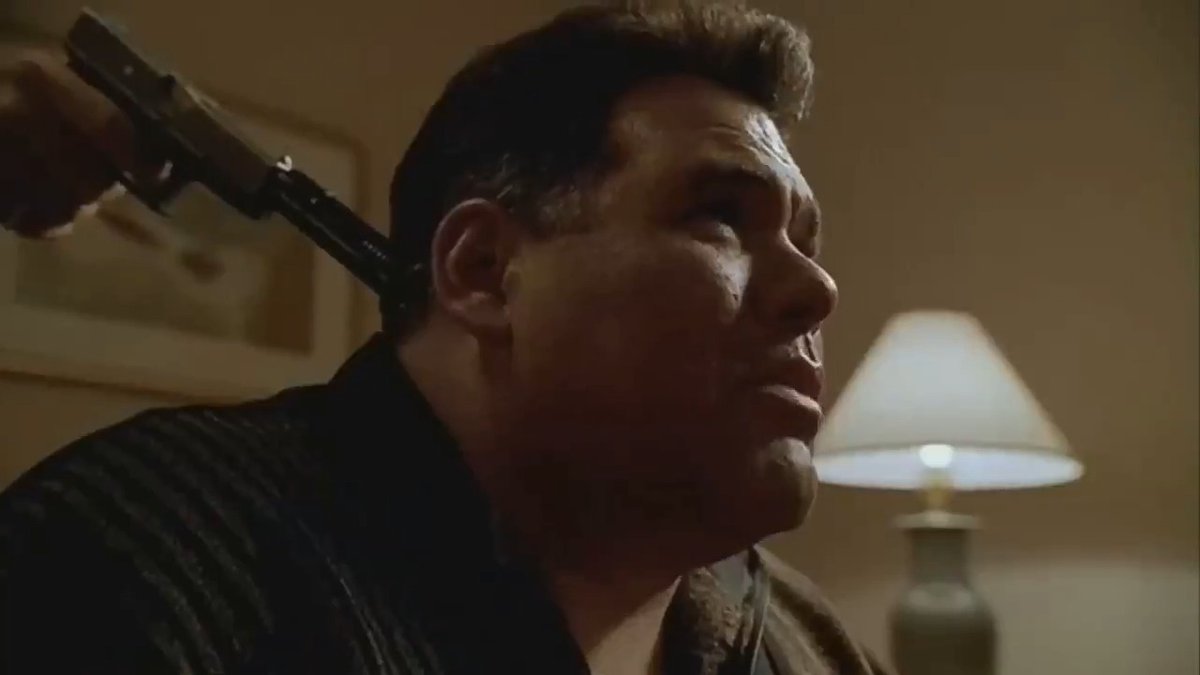
This scene never gets old, especially when Steve Carell makes that expression after the other guy reads it. The comedic brilliance of Dinner for Schmucks came into perfect focus during a scene that has since become one of the film’s most unforgettable moments, driven almost entirely by Steve Carell’s...

810,997 görüntüleme • 3 ay önce •via X (Twitter)

0 Yorum

Yorum bulunmuyor

Orijinal gönderinin yorumları burada görünecek

Benzer Videolar

Will Ferrell says the iconic Anchorman news team fight was his favorite scene to film, revealing it was shot in 100-degree heat in just one day and captured the absurd comedy that defined the movie. “One of my favorite scenes in the movie. It’s such an incredible joke bag. Before we get into the fight, Brick Tamland, played by Steve Carell, is holding a grenade. We don’t know how he got ahold of it. There is a man on fire, there is someone being dragged by a net by horseback, which is kind of an homage to early Planet of the Apes.” “I think it’s something like 30 to 35 different setups, with two units, a stunt unit working at the same time as the main film unit in downtown LA in the middle of July. And I think it was 100 degrees that day.” “And we only had the one day to complete all that. And it’s probably a scene that should have taken three days to shoot. So silly, so absurdist. I think it is really one of the touchstone moments that defines the tone of Anchorman.” “I think Adam and I wanted to create this film where we got to indulge every comedy idea we ever had and follow it all the way through without someone telling us, “No, that scene’s too long,” “No one would ever do that,” “That doesn’t make sense.” We just wanted it to be like, it may not make sense, but it’s just funny.” “I think when people saw that film, they were like, “This feels like someone gave you the keys to a car and you’re 5 years old and you don’t know how to drive.” No one wanted to make it, no one understood why this would be funny. We just felt like we were playing with the house’s money, and let’s just make the craziest film we can, because we may never be allowed to make another movie ever again.”

Ruzy.hl

60,067 görüntüleme • 1 ay önce

🎬This basketball scene from American History X (1998) is one of the more memorable moments in the film. It shows Derek (Edward Norton) playing a game on a public court against a group of Black players, creating an unexpected mix of tension and competition.🍿🍿🍿🍿 American History X is a very heavy movie about racism, hate, and violence. Most of the film is intense and disturbing, but this scene feels slightly different. On the surface, it’s just a basketball game, yet it carries a lot of underlying hostility. At the same time, there’s a strange sense of respect that develops through the competition. It’s one of the few moments where Derek interacts directly with the people he’s been taught to hate, and the game forces a kind of raw, physical confrontation that words can’t easily replace. What makes the scene stand out is how it shows the complexity of prejudice. Derek isn’t just spouting ideology here — he’s physically competing. The basketball court becomes a temporary neutral ground where skill and aggression matter more than background. It doesn’t erase his beliefs, but it creates a moment of uneasy humanity that feels rare in the rest of the movie. The scene also works because it avoids easy answers. It doesn’t suddenly turn Derek into a good person, nor does it make the other players one-dimensional. It simply shows how competition can bring out both the worst and most human sides of people. 👉Here’s my take: While American History X (1998) is known for its shocking and violent moments, this basketball scene might actually be one of its most effective. It shows how hate can exist alongside unexpected moments of respect — even if those moments don’t last. ❓Do you think this scene humanizes Derek too much, or does it make his character more believable? And what did you think of how the movie handled the tension during the game? #AmericanHistoryX #EdwardNorton #MovieAnalysis #ClassicMovies

BiffBifford™ 🇺🇸

611,526 görüntüleme • 1 ay önce

Not every memorable moment in cinema wins over audiences through cinematography, choreography, or music alone. Some moments endure because they touch something deeply rooted in human nature. Gene Kelly singing and dancing in the rain in Singin’ in the Rain (1952) is one such moment. At first glance, it is simply the image of a joyful man walking through the rain. He sings, spins his umbrella, steps through puddles, swings around a lamppost, and smiles in the middle of an empty street. But what allows this scene to remain in the memory of audiences is not only its visual beauty. Beneath the surface, it reflects a very special state of human existence: the moment when inner joy and outward expression become one unified whole. Perhaps this is the deepest source of beauty within this scene. From a Dance Scene to the Unity Between Inner Emotion and Outer Form What the audience first feels is a very simple sense of joy. Don Lockwood has just experienced a moment of happiness with Kathy. The emotion is so powerful that when he steps outside into the rain, he no longer sees the weather as an obstacle. He sings. He dances. He plays with the falling drops of water. The rain, which could normally be uncomfortable, becomes part of his happiness. But if we stop here, we are only seeing the surface of the scene. The deeper meaning lies in the way all elements come together in harmony. The music does not exist separately from the movement. The rhythm of the song becomes the rhythm of the body. Every step, every turn, every movement of the umbrella seems to come directly from the emotion within. The rain is no longer merely a background. The street is no longer just a setting. The entire world around him becomes part of his inner state. This reflects an idea often emphasized in Western aesthetics: beauty emerges when different elements achieve an organic unity. The outer form is no longer separated from the inner meaning. The Smallest Moment Can Contain the Greatest Spirit The entire scene can be condensed into one very small action: Gene Kelly steps into a puddle. This is not simply a humorous gesture. It is a symbol of the way human beings perceive the world. An ordinary person might avoid a puddle out of concern for dirty shoes, wet clothes, or losing a sense of neatness and control. But Don Lockwood deliberately steps into it. He transforms something that would normally be avoided into a source of happiness. In that moment, he is no longer controlled by hesitation or excessive awareness of himself. He is not trying to create the image of a happy person. He is simply living within that happiness. This is what makes the scene so special. The audience feels that they are not watching a performance about joy, but witnessing joy itself finding its own natural form of expression. Why Does This Touch the Human Heart? The deeper question is: Why does the unity between inner feeling and outer expression move us? Perhaps because, in everyday life, human beings often experience separation. We may think one thing but say another. We may feel something but have to hide it. We may want to act naturally but become limited by layers of worry and calculation. Yet sometimes, we encounter a moment when all those distances disappear. A child’s natural laughter is an example that closely reflects the spirit of Gene Kelly’s performance. When a child is truly happy, that happiness does not remain only within the mind. It appears through the whole person: The eyes brighten. The expression changes. The voice becomes clear and pure. The body moves together with the emotion. A child does not need to learn how to express happiness. Happiness naturally finds its way outward. This is exactly what Gene Kelly evokes in the rain. Although Don Lockwood is an adult, in that moment he returns to a very fundamental human state: when the soul and the body are no longer separated, when genuine emotion can freely express itself through every movement. This Principle Exists in Nature What is interesting is that this principle does not exist only in art. A similar pattern can be found in the natural world. A seed grows into a tree. The shape of the tree is not something added from the outside, but the expression of an inner process of life. A flower blooms not because it tries to become beautiful, but because the life within it has reached a form that naturally expresses itself. A river does not create beauty by resisting the landscape. It flows around rocks, adapts to the shape of the earth, and through this harmony creates its own unique form. The same is true within the human body. A genuine smile is not only found in the movement of the lips. It is the coordination of the eyes, facial expression, voice, and inner emotional state. A highly skilled athlete or artist often creates a similar impression: technique is no longer separated from emotion. The body becomes a natural instrument for expressing an idea from within. The Scene and the Beauty of Wholeness From an aesthetic perspective, what makes Singin’ in the Rain special is not simply that Gene Kelly dances beautifully. More importantly, the scene reveals a profound image of humanity: A person who is no longer divided between emotion and action. A person whose inner world and outer expression move toward the same direction. A person who encounters the world not as an obstacle, but as a part of life unfolding naturally. This is also why the scene continues to connect with generations of viewers. Regardless of the era, people can still recognize the beauty of a familiar state of being: the moment when a living being is able to exist in harmony with its own nature.

🎼🌺Music Love♥️

17,450 görüntüleme • 1 ay önce

Bach – Air on the G String (Orchestral Suite No. 3, BWV 1068) When a Moment Continues to Live Within the Flow of Time There are strange moments in life when time keeps moving, yet we feel as though we have remained where we are. The clock continues to tick. The light keeps changing. The world outside never stops moving. And yet, for a brief instant, the present seems deeper than usual. Not because time has stopped. But because we suddenly perceive more within that very moment. That is the experience Johann Sebastian Bach creates in Air from Orchestral Suite No. 3 in D major, BWV 1068. The wonder of this music does not lie in eliminating motion. Bach does something far more subtle: He allows time to keep moving, while enabling a single moment to remain alive longer within human perception. Not a Journey Forward, but a State Preserved Many great musical works are built as journeys. The music creates anticipation. It creates tension. It creates transformation. And eventually, it leads the listener toward resolution. Air offers a different kind of experience. It does not rely on dramatic events or powerful climaxes. From its very opening phrases, Bach does not give the impression of a melody eager to rush forward. Instead, he unfolds a continuous melodic line over harmonies that change with quiet patience. Each musical phrase exists not merely to lead into the next. It also creates a space in which the listener can remain and simply experience the present. Bach does not create depth by constantly changing states. He creates depth by allowing a single state enough time to reveal itself. Melody Creates Space What makes the melody of Air remarkable is that it is always moving without ever feeling driven. It does not resemble a straight line racing toward an ending. Instead, it unfolds like a space gradually opening before us. The violin's long, gentle phrases make time seem to expand. Yet this is not stillness. The melody continues to develop. It continues to change. It simply never gives the impression that it urgently needs to arrive somewhere. It allows the present to remain a little longer. The Bass: Time Continues Its Quiet Course Beneath the openness of the violin lies an uninterrupted current. The bass line continues its steady motion. It never demands attention. It never seeks to become the main character. Yet it is precisely this quiet movement that gives the entire work its stable flow. If the melody is the moment being expanded, then the bass is time itself continuing beneath that moment. Here lies the central paradox of Air: One musical layer seems to hold the moment in place. Another continues carrying time forward. Bach does not create peace by removing motion. He creates peace by placing different kinds of movement into perfect balance. Gentle Frictions: Where Structure Becomes Emotion The depth of Air does not arise only from the relationship between melody and bass. It also emerges through the smallest harmonic changes between the voices. Bach often allows one note to continue sounding while the harmony beneath it has already shifted. For a brief instant, the old sound has not completely disappeared, yet the new sound has already arrived. Two states exist simultaneously. This is where harmonic technique becomes human feeling. After all, change in life rarely happens in a single instant. A memory can remain even after the present has changed. An old emotion can still resonate within a new reality. Bach brings that fragile human experience into a musical structure of extraordinary balance. The String Ensemble: Where the Idea Becomes Sound Yet none of this would fully come alive without the unique color of the string ensemble. The strings' ability to sustain and subtly transform a single tone allows Bach's long melodic lines to be heard not merely as consecutive notes. They become a continuous stream of sound unfolding through time. A written note on the score is only a point. But through the violin's bow and the sustained voices of the string instruments, it becomes a space. That is what transforms the idea of "a moment preserved" from an abstract concept into a living musical experience. The Defining Seed of Air What makes Air truly distinctive does not lie in any single technique. Not simply because the bass keeps moving. Not because of its delicate suspensions. Not because of its beautiful melody. These are only the means. The essence lies in the principle that unites them: A moment does not need to stand still to become profound. It can continue to live even as time itself keeps moving. The melody opens the depth of the moment. The bass sustains the movement of time. The harmony creates subtle ripples of emotion. The strings transform all of these into a living sonic experience. That is why Air is not simply a slow piece of music. It is a unique way of experiencing time itself. A Distinctively Bachian Beauty Baroque composers discovered beauty through many different paths. Vivaldi often revealed the vitality and rhythm of nature. Handel explored the expressive and rhetorical power of music. Pachelbel found beauty in cyclical structures and balance. Bach, in Air, pursued something different. He showed that depth can arise not only from great transformations, but also from organizing the smallest movements into a perfectly balanced whole. Conclusion Air does not make time stop. Nor does it remove us from reality. What Bach achieves is something more subtle. He invites us to recognize that within every passing moment lies a depth we seldom notice. That is the enduring power of Air on the G String: Bach transforms a fleeting moment into a world spacious enough for the human spirit to dwell within.

🎼🌺Music Love♥️

16,726 görüntüleme • 1 ay önce

There is something truly remarkable about the third movement of Ludwig van Beethoven’s Piano Sonata No. 14 in C-sharp minor, Op. 27 No. 2. It is one of the most famous piano movements in the world. Yet if we try to find a simple melody that can be easily hummed, we may notice something fascinating: this movement is not built around a memorable melody in the usual sense. There is no long, gentle singing line. There is no simple theme that immediately settles into the listener’s memory. Instead, Beethoven creates a world of intense motion: notes rushing forward without rest, powerful chords filled with tension, and waves of sound constantly rising and colliding with one another. So what gives this movement such extraordinary vitality after more than two centuries? The answer does not lie in how many notes Beethoven wrote. It lies in the way he transformed the smallest elements into a tremendous source of energy. Beethoven did not write this movement merely for listeners to remember a melody. He wrote it so they could feel a force in motion. From the very first notes of the Presto agitato, Beethoven draws the listener into a world without rest. The broken chords of C-sharp minor (C♯–E–G♯) continuously move across the keyboard. Taken individually, these notes are not extraordinary. But Beethoven was not concerned with the power of each single note. He was concerned with the relationship between them. One note leads naturally to the next. One small movement creates a larger movement. A continuous stream of sound emerges, like a force that cannot be stopped. This is one of Beethoven’s greatest artistic secrets: his ability to take simple materials and transform them into an idea of immense scale. Like a small seed that grows into a great tree, a few basic notes in Beethoven’s hands can become an entire world of emotional depth. When listening to this movement, many people are first captivated by its speed. The endless rushing passages of the piano create the impression of a storm gathering strength. But speed itself is not the true source of power. If it contained only rapid notes, the music might impress us for a moment but would struggle to become a lasting masterpiece. What makes Beethoven different is that he transforms speed into an expression of will. Above, the right hand moves continuously like an unstoppable current of energy. Yet beneath it, the left hand provides strong accents, creating a sense of weight and stability. One side represents movement. The other represents gravity. One force pushes forward. The other prevents the entire structure from collapsing. It is this contrast that creates the feeling of a tremendous power under control. Not a chaotic storm. But a storm with form. One of Beethoven’s deepest principles lies in the way he uses tension. The music constantly creates the feeling that it is searching for a place to return. The harmonies are not completely settled. The changes in harmony leave the listener with a sense of anticipation: what will happen next? When will this stream of energy finally be released? Yet Beethoven does not rush toward the answer. He holds the listener in this state of expectation long enough so that when balance finally appears, it carries greater meaning. This is not only a principle of music. It reflects a profound human experience. We often recognize the value of peace more clearly after passing through turbulence. Calmness has little meaning if we have never experienced tension. Light becomes more visible when it appears after darkness. The most remarkable aspect of this movement is that Beethoven never allows emotion to destroy form. On the surface, the music is intense and forceful, but beneath it lies an extraordinarily disciplined structure. The movement follows the principles of sonata form: an idea is introduced, developed, transformed, and eventually returns in a new state. Small motifs repeatedly appear, but each return carries a different meaning. Repetition does not mean standing still. It becomes the foundation for growth. This is also a principle found throughout nature. A river remains a river, yet the water within it is always moving. A heartbeat repeats itself, yet that repetition is what sustains life. Beethoven works in the same way. He does not create greatness by constantly searching for something new. Instead, he discovers depth by developing his original ideas until they reach their fullest expression. The beauty of the third movement of the Moonlight Sonata is not only found in the music itself. It reflects a broader principle. In nature, the strongest forces are often not forces without order. A storm may have tremendous destructive power, yet it still follows the laws of the atmosphere. A mountain remains standing not because it is untouched by forces, but because its internal structure is strong enough to withstand pressure. A healthy body does not exist because nothing changes, but because millions of small processes work together within a shared order. Beethoven achieves the same thing through sound. He takes thousands of small finger movements, hundreds of relationships between notes, and transforms them into a unified structure with direction and purpose. He does not eliminate conflict. He organizes conflict. He does not weaken power. He creates a form large enough to contain it. What distinguishes great artists in the classical tradition is not only technical mastery. It is their ability to perceive the inner structure of a work. In Murray Perahia’s interpretation, listeners do not experience only the speed and intensity of the movement. They also sense the balance beneath it: the precision of rhythm, the logic of harmonic movement, and the connection between each small part and the entire architectural design. Perahia does not attempt to make Beethoven more dramatic than he already is. Instead, he allows Beethoven’s own structure to reveal its strength. Because a great performer does not stand before a work to overshadow it. They become a means through which the inner beauty of the composition can be revealed more clearly. If we were to search for a single principle that defines the greatness of this movement, perhaps it would be this: A great power, when placed within a great order, becomes beauty. Beethoven does not transform anger, tension, and conflict into something softer. He preserves their full force, but builds a structure strong enough to carry them. Therefore, what listeners experience is not merely fingers racing across the keys. They experience something deeper: a storm that still has a shape, an energy that still possesses order, and a struggle that can become beauty. That is why the third movement of the Moonlight Sonata continues to move people across generations. Because behind those powerful sounds is not only a display of technical brilliance. It is an image of a fundamental principle of life: The greatest strength is not strength without control. It is strength that discovers the perfect form of its own expression.

🎼🌺Music Love♥️

19,104 görüntüleme • 1 ay önce

EVERYTHING ABOUT VAN DAMME'S LEGENDARY DINER SCENE IN "UNIVERSAL SOLDIER" That's absolutely right, this is 100% one of the most iconic and memorable moments in Jean-Claude Van Damme's entire movie career. The main reason we all love this diner scene is how it perfectly mixes a naturally hilarious situation with some seriously cool martial arts. Watching the film, you can't help but laugh at the super cute contrast in the super-soldier Luc Deveraux. Despite having a shredded six-pack and destructive strength, his mind is as innocent as a toddler's—he has zero clues about how money works and just focuses on stuffing his face to recharge his batteries. The way he gives those completely blank, robot-like answers when asked to pay, combined with the aggressive attitude of the guys around him, creates a total laugh-out-loud moment right before the real fight kicks off. On top of that, this scene is just incredibly satisfying to watch because it hits that sweet spot of seeing a "hidden master" teach some local bullies a lesson they won't forget. What makes the fight so awesome is that Jean-Claude Van Damme showcases real-deal, crisp martial arts moves along with his legendary trademark spinning kick without needing any clunky CGI. We, as the audience, get total goosebumps seeing a guy who looks completely harmless and just wants to enjoy his meal in peace suddenly "flip the switch" into an unstoppable fighting machine, effortlessly clearing out a rude crowd with absolute calmness and precision. It’s this beautiful balance between a hearty laugh and a visually stunning action performance that has secured this diner scene a special place in the hearts of nineties movie buffs. Most importantly, Jean-Claude Van Damme's innocent and childlike facial expression in this scene is truly the "golden key" that allowed the character Luc Deveraux to touch the hearts of millions of viewers. For an action star who was always typecast in the hyper-masculine, edgy, and cold image of nineties cinema, this brilliant performance was a surprising and delightful transformation. His innocent, naive gaze at the plate of food, the way he devoured it so purely, and his genuine confusion when surrounded and demanded money created a beautiful contrast with his muscular physique. It was this original innocence that softened the harshness of a violent film, transforming an emotionless fighting machine into a lovable, endearing character that evoked pure compassion from the audience. This remarkable touch of empathy helps fans realize that, behind a destructive super-soldier, there still exists an innocent human soul simply yearning to live, to eat, and to rediscover itself amidst a world full of schemes and complexities.

𝐌𝐮𝐬𝐢𝐜 - 𝐌𝐨𝐯𝐢𝐞 - 𝐀𝐧𝐝 𝐌𝐨𝐫𝐞⭐️❤️

33,691 görüntüleme • 10 gün önce

Bluebird Pas de Deux: The Art of Transforming Technique into the Feeling of Wings There is a very special moment in the Bluebird Pas de Deux. It is not the instant when the dancer reaches the greatest height. Nor is it the moment when the fastest sequences of technique unfold. It is the instant the body leaves the ground without ever seeming to struggle against gravity. A leap lasts only a few seconds. Yet within that brief moment, time itself seems to slow. The audience no longer sees an artist executing a difficult technique. They see a living creature in flight. This is the most beautiful paradox at the heart of the Bluebird Pas de Deux from The Sleeping Beauty by Tchaikovsky and Marius Petipa: The movements demanding the greatest discipline and control appear as though they require no effort at all. When Years of Discipline Become Invisible Classical ballet has always embraced a remarkable paradox: The higher an artist's mastery, the less the audience notices the technique itself. Nowhere is this more evident than in the Bluebird. The Bluebird must perform rapid sequences with extraordinary precision and nearly absolute control of the body. Steps such as Brisés Volés and Entrechats demand lightning-fast footwork and perfect balance within the briefest moments of suspension. Yet their beauty does not lie in their difficulty. For if the audience sees only an athletic challenge, the image of the Bluebird disappears. The miracle occurs when technique fulfills its purpose and quietly steps into the background. The legs are no longer perceived simply as instruments for jumping. They become the movement of wings. The arms are more than graceful lines. They complete the sensation of flight. The body is doing more than maintaining balance. It creates the illusion that its weight has dissolved into movement itself. This is one of the defining ideals of classical ballet. Technique does not exist to display technique. Technique exists so that an artistic image can come to life. The Feeling of Flight Does Not Come from Escaping Gravity A bird does not fly simply because it has wings. Its flight comes from the way the entire body works together: balance, constant adjustment, continuous motion, and the ability to transform energy into effortless lightness. The Bluebird follows the same principle. A dancer never truly escapes gravity. The body still has weight. The ground never disappears. Yet through extraordinary control, the dancer makes both takeoff and landing almost invisible. In the rapid batterie sequences, the feet create a series of swift, precise movements in the air. Rather than suggesting strain, they resemble the quick flutter of wings changing direction. When the ballerina rises onto pointe, what impresses us is not merely her balance. It is the way she softens the very feeling that her body is bound to the floor. The beauty of the Bluebird does not come from denying the body's limitations. It comes from understanding the body so deeply that those limitations become part of the art itself. Wings Are Created by More Than Movement Alone The subtle brilliance of the Bluebird lies in the fact that it never imitates a real bird. There is no literal imitation of wings. Instead, ballet captures the deeper qualities of flight: agility, clarity, freedom within space, and an ever-present sense of forward motion. Each individual movement may be extraordinarily complex. Yet once they come together, the audience no longer analyzes the separate techniques. They perceive a single, unified image. This is one of the enduring strengths of classical art. It transforms countless carefully calculated elements into something that feels completely natural. Just as a magnificent building does not invite us to think about each individual stone, a great ballet performance does not make us think about every muscle at work. It invites us to experience beauty itself. Tchaikovsky Did Not Write Music for Wings—He Created the Space Where Wings Could Exist If the dancer's body gives shape to the Bluebird, Tchaikovsky's music creates the atmosphere in which that image can live. The Bluebird is neither heavy nor monumental. Its character is bright, light, and full of vitality. The colors of the flute, clarinet, and strings create an uninterrupted sense of motion, as though a living creature is continually moving through the air. Tchaikovsky did not attempt to portray a bird by imitating birdsong. He captured something deeper: the very nature of flight. Short musical phrases create the feeling of conversation. A melody appears, is answered, and then gently leads toward another direction. This is especially important in a pas de deux. The two dancers do more than share the stage. They listen to one another. One movement begins, and the music responds. A musical phrase unfolds, and the body continues it through the language of ballet. Music and movement do not merely illustrate one another. Together, they become a single living presence. Why Has the Bluebird Pas de Deux Endured for More Than a Century? Because its greatness lies in far more than technical brilliance. Difficult technique may inspire amazement for a moment. Only genuine artistry leaves a lasting image in memory. The Bluebird is extraordinary because it transforms the impossible into something that feels entirely natural. Human beings do not have wings. Yet through discipline, precision, and artistic harmony, the human body can awaken the sensation of flight. Perhaps that is why the Bluebird continues to captivate audiences today. It does not suggest that human beings can become another creature. Instead, it reveals that beauty emerges when we come to understand our own bodies with extraordinary depth. And at the moment when technique dissolves completely into art, something remarkable happens: The audience no longer sees a dancer performing. They see a pair of wings in flight.

🎼🌺Music Love♥️

15,670 görüntüleme • 1 ay önce

I’ve watched this so many times, and they’re still absolutely amazing. ❤️❤️❤️ Not the big lifts. Not the fast footwork. Not even the moments that make the audience react. Look at what happens when her feet touch the floor after a spin. His hand is already there, almost before she needs it, and that tiny detail tells you more about their partnership than any difficult move could. At first, you simply see two dancers moving across a wooden floor under bright competition lights. He leads with energy and a little mischief. She answers with speed, control, and remarkable precision. They move quickly, but there is never a sense of panic. Their bodies don't fight for space. They seem to know exactly where the other person will be. Look a little closer and the real performance starts to appear in the small things. His direction changes and her body responds almost immediately. She drops her weight and his arm adjusts without becoming rigid. A hand briefly touches a sleeve. A glance lasts less than a second. Sometimes they smile at exactly the same moment. None of these details would win the competition by themselves, but together they create something much harder to fake: trust. And then you remember that these aren't young dancers just discovering what their bodies can do. Years have passed. Their faces show it. Their movements aren't driven by the restless energy of teenagers. Yet they are still doing lifts, spins, splits, and rapid changes of direction with an ease that makes you forget how difficult any of it should be. That's what makes the performance interesting to me. They may have lost some of the raw speed of youth, but they seem to have gained something more valuable — an understanding of each other's timing. Near the end, there is a moment that isn't completely perfect. He drops into a deep split while they are still connected, and for a brief second the position looks almost too human. She ends up on the floor looking at him, and instead of hiding the moment, they smile. He keeps the connection and grins. Technically, it may not be the most impressive second of the routine. But it might be the one I remember. Because perfection shows what dancers can do. A moment like that shows who they are together. After enough years, two people can reach a point where they don't have to consciously think about every adjustment. One moves, the other responds. One loses balance slightly, the other is already making room. The countless hours of practice become something that looks almost effortless from the outside. Maybe that is what long partnerships really give us. Not a life without mistakes, but someone who has learned how to move with you when the mistake happens. We often think lasting relationships are built from big promises and memorable gestures. Watching these two dance makes that idea feel a little too simple. Perhaps the deeper work happens in all those tiny moments when one person notices the other and adjusts without being asked. The music changes. The bodies change. The years keep moving. But somehow, they keep finding the same rhythm. And maybe that is the most beautiful part of dancing together for so long: not staying exactly the same, but learning how to keep moving together as everything else changes. What do you think matters more in a long partnership — passion, trust, or simply learning each other's rhythm?

Emotion & Music

110,992 görüntüleme • 11 gün önce

Zack Snyder expected fans to edit 300 and 300: Rise of an Empire into a single chronological edit. "Well, this film takes place on the same three days as the Battle of Thermopylae. We just get to see a different perspective. We're not from the Spartan perspective. We're from the Free Greek perspective. And we're following this leader, Thermistocles, who is a naval commander." "Yeah, and the other thing we get to see, I think, that's different in this film is it sort of, it also, it jumps forward and backward a little bit because it also goes and sort of paints the origins of Xerxes. So you get to see Xerxes' birth, what caused him to sort of become the character that you saw in the original film. "And you get to see him, you know, transform before your eyes. So it's a, and that's a mystery too. And it's kind of fun to watch that. And I think it, and then you also get to see sort of some elements of the original film kind of woven through to sort of let you see where you are in context of the timeline of the original film. "So you kind of, every now and then you're just checking in with that sort of, the, you know, the Spartans and their, what they're up to. So it's kind of fun that way too." "I love that there's moments where you go, 'Oh, that's the messenger.' And it's not just the characters you expect to see coming back." "Or like when Daxos rides up and tells Thermistocles, like, 'The hot gates have fallen.' You're like, 'Oh, that's awesome.'" "'That's where he went. I remember him leaving.'" "'That's where he went off on the horse. Remember, he rides in the, it's cool.'" "It's a fun way to see the characters that, you know, that connect us to the original film." "I thought it'd be cool, like, if some fan, you know, once this movie comes out on DVD, they can, some fans could cut the two movies together into a single, like, you could cut them into a single film."

Zack Snyder Film

20,182 görüntüleme • 7 ay önce

When I rewatched Bilbo’s birthday party scene in The Lord of the Rings: The Fellowship of the Ring, there was one very brief moment that made me pause for quite a while: Gandalf’s dragon-shaped firework. I found myself wondering: Why does a dragon — a symbol of a world of adventure and danger — appear in the Shire in the form of a joke? At first glance, it is simply a very Gandalf-like fireworks display. Merry and Pippin mischievously send the dragon firework flying across the sky. The crowd of dancing Hobbits immediately panics and drops to the ground. Then the dragon explodes into a spectacular burst of fireworks, leaving Merry and Pippin’s faces covered in soot. I laughed. But the more I watched it, the more I felt that there was something very special about the humor in this moment. Because the dragon appears in a place where it seems completely out of place. The Shire is a world of parties, gardens, little homes, meals, and very ordinary pleasures. The Hobbits live lives almost completely removed from the great upheavals of the outside world. Dragons, however, belong to an entirely different world. They evoke distant lands, adventures, treasures, battles, and dangers that an ordinary Hobbit would never want to encounter. And yet Peter Jackson places that image right in the middle of a birthday celebration. But he does not show us a real dragon. He shows us a dragon made of fireworks. That is what makes this scene so interesting to me. Something frightening has been transformed into entertainment. A creature belonging to stories of adventure appears in the Shire, only to make everyone panic for a few seconds before they laugh again. The outside world has touched the Shire, but it has not truly entered yet. And Bilbo’s reaction makes me pay even closer attention. While everyone around him reacts with surprise to the dragon, Bilbo receives it with a very unusual calmness. He says: “There hasn’t been a dragon in these parts for a thousand years.” The line sounds very funny. But when I think about Bilbo’s life, I see another layer to it. The Hobbits around him know dragons only as things from distant stories. Bilbo, however, has actually stepped into that world. I am reminded again of Thrór’s map in Bag End, which preserves the traces of the journey to Erebor and the image of the dragon connected to Bilbo’s story. So when I see the dragon appear over the Shire, I cannot help but connect it with that past. In Bag End, the world of adventure lies on a map. At the party, it flies across the sky in the form of a firework. And in Bilbo’s life, that world was once real. From map to fireworks, from memory to amusement. Because it shows that Bilbo is living between two worlds. One is the Shire — where he can celebrate his birthday, drink, eat, and live peaceful days. The other is the world he once entered, a world of journeys and things that most Hobbits know only through stories. And then Gandalf appears. I really like the way the film ends this moment. Not with anything grand. There is no warning. No triumphant music. Gandalf simply walks over, grabs Merry and Pippin by the ears, and scolds the two troublemakers with an expression that is both stern and funny. A dragon has just flown across the sky. But in the end, everything returns to the laughter of a birthday party. And that is what makes me think even more deeply about the Shire. Perhaps this is how the film shows us the distance between two worlds. The world of adventure is already there, but to the Hobbits, it is still only a bit of fun. They can see the dragon. They can be frightened. But a few seconds later, the dragon turns into fireworks, and life goes on. We, the viewers, know something they do not. That this world will not remain fireworks forever. There will come a time when stories of distant lands will no longer remain on a map. There will come a time when Bilbo will no longer simply sit and look at them. And then it will be Frodo’s turn to leave the Shire. So when I look back at that fiery dragon streaking across the sky on Bilbo’s birthday night, I no longer see only a beautiful fireworks display. I see a strange world gently brushing against an ordinary one. A dragon appears in the Shire, but it is still only fireworks. Perhaps that is precisely what makes the moment beautiful. Because at that moment, the dangerous world is still far away. And the Shire can still laugh.

🎼🌺Music Love♥️

14,820 görüntüleme • 17 gün önce

This is the oldest surviving icon of Christ, the oldest painted portrait of the face of Jesus that has come down to us. It was made around 1500 years ago, and if you cover one half of the face, then the other, you are looking at two different men... It's called Christ Pantocrator, a Greek title meaning "Ruler of All," and it was painted in the sixth century, around the year 550, most likely in a workshop in Constantinople, the capital of the Byzantine Empire. It was almost certainly sent as an imperial gift to a remote new monastery being built in the Egyptian desert. It has hung there, in the Monastery of Saint Catherine at the foot of Mount Sinai, ever since. For roughly 1,500 years, it has never left. That it survived at all is remarkable. In the eighth and ninth centuries, the Byzantine Empire went through a violent period called Iconoclasm, in which religious images were condemned as idolatry and destroyed by the thousands. Almost every icon of this age in the empire was burned. But Saint Catherine's lay far out in the desert, beyond the reach of the emperors and their decrees, so this one was spared. It is one of the very few images of its kind on earth to come down to us intact. But the truly haunting thing is the face. Look at it, and the two sides do not match. On the side where Christ holds the Gospel, his features are harder, sterner, the brow raised, the eye larger and more severe, the face of a judge who sees everything. On the side where he raises his hand in blessing, the expression softens, calm and merciful, the face of a savior. One half is divine authority. The other is human compassion. Most scholars believe this was entirely deliberate. The icon was painted not long after the Church had formally defined that Christ was at once fully God and fully man, two natures joined in one person. And so the artist, it is thought, built that doctrine directly into the face, splitting it in two so that the same man could be, in a single gaze, both merciful and just, both human and divine... I started my newsletter because our past is extraordinary, and fewer and fewer people are showing us how to truly see it. Every week I try to. If that is something you'd like to be part of, you can join through the link in my bio, and if you'd like to support my work, a paid subscription is what makes it possible. Thanks for reading.

James Lucas

664,274 görüntüleme • 1 ay önce