Loading video...

Video Failed to Load

Go Home

Thought Process 🫡 Edit ila cheyyalane thought ravadam and dhaanni successful ga edit cheyyadam 🙏 Great thing kadha... #Prabhas #Kalki2898AD

50,601 views • 1 year ago •via X (Twitter)

9 Comments

Hari Msd's profile picture
Hari Msd1 year ago

Naaku okati ardham ayyi saavadhu Adhi enti ante ......! Okka raju gaarike set avuthay ilanti edits 🥵 🦖 idhane kaadhu asalu market lo kotthaga edhi vachhina sare adhbuthanga set avuthundhi em chestaham athani roopam alantidhi 🙏

Dan Peña's profile picture
Dan Peña3 years ago

29 Years of proven track record and creating generational wealth! If you want to learn what it takes to becomes super successful then take the success test now!

maheshvarma's profile picture
maheshvarma1 year ago

Thooop💥 inkha bagha cheyachu like bahubali tho

Prabhas Fan's profile picture
Prabhas Fan1 year ago

Single movie nundi ah variations chupinchadu

Bhuvi&SRH🧡's profile picture
Bhuvi&SRH🧡1 year ago

Great Edit💥

Dhanush's profile picture
Dhanush1 year ago

🔥🔥

Remo🦖🦖🦖's profile picture
Remo🦖🦖🦖1 year ago

Kidati janmaloo ramudu ayane ❤

dystopian's profile picture
dystopian1 year ago

odiyakka edit 🔥

L K's profile picture
L K1 year ago

🙏🏼❤️‍🔥❤️‍🔥❤️‍🔥❤️‍🔥🔥🔥🔥

Related Videos

😡GROTESQUE: Jared Kushner on Gaza— "[I'm a] volunteer to help the government when asked... [but] we appointed [the] new government in Gaza... businessmen who are risking their lives." "Tony Blair has been great." "We're building a Palestinian police force." "Steve [Witkoff] and I are both realizing, 'Oh, my God, there's a lot to do to keep this thing held together.'" ---------------Partial transcription of clip---------------- "I have not joined the administration, so I'm still just a, volunteer like other businessmen who volunteer to help the government when asked. The level of engagement has definitely been a lot more than, I anticipated. "It really got started with Gaza. I was helping, Steve Witkoff, who's, really, an amazing human being. And he's really made a big sacrifice to go and devote his life to trying to make a difference on some of these, very, very challenging issues. And I know firsthand how lonely it is to be in those jobs and how hard it is when everyone's rooting against your success. "And so I spent a lot of time helping Steve, just quietly. And then when things got very intense with Gaza, Steve, and the president asked me to get more involved operationally, which obviously, when the president asks you to do something, you do it. And, we worked together incredibly well. We're able to achieve an outcome that, I think nobody thought was possible. "For two years, the war in Gaza was raging. It was causing really, a big dark cloud over the entire world. And I think that, it was something we were able to get in. And really, with the great help of our partners, in Qatar and Egypt and Turkey and many others who helped, we were able to get to a great outcome. "And now the 20 hostages have been brought home. All 28 bodies have been returned. It's the first time since 2014 that there's no, hostages or dead bodies in Gaza. And now that's creating the conditions for a new beginning. "You know, the other side of it as well is now that the war has stopped and we've, you know, a lot of people thought it wouldn't hold. It was a very delicate ceasefire in the beginning. You know, I thought I would get the deal done, and then, you know, I'd go back to my life. But then Steve and I are both realizing, oh, my God, there's a lot to do to keep this thing held together. "You know, there's so much here hatred and emotion and distrust when you're ending a war that you can't just, like a light switch, turn it on and off. So we, then started focusing on how do we deal with the massive humanitarian issue that was occurring in Gaza. You had 2 million people there. "We've been able to work with the United Nations. I give Tom Fletcher a lot of credit. We've, put in more humanitarian aid into a war zone. Than I think has ever been done in history. So now, there's a lot of aid in there, and we've started the rebuilding process. I know Yakir, Gabay is here, who's a great friend of mine, and, he's basically volunteered all of his time away, from his businesses to try and help us come up with a plan to do this. "Tony Blair has been great, so we really have brought a lot of great entrepreneurs and thinkers in, and I think we're, making a lot of progress. And, we're currently, I think it's about four months, since the war, was stopped, and I think nobody thought it would last this long. And, we're kind of at the final stages of the negotiations with Hamas on the demilitarization, where, they've basically agreed in principle to, follow through. That was the agreement we did. Now their concerns are mostly about, well, if we turn over our weapons and we do this, who are we turning them over to? "And, we're building a Palestinian police force. Right now we had over, I think about 200,000 applicants for it, and I think over like 70,000 that passed our vet. So we're going to build a great Palestinian police force, and so we have to work it through. And I think that we appointed a new government in Gaza, which also was a very interesting, experience all, again, businessmen who are risking their lives, to go in and do public service in that area. And, our goal is just to really help them. And I think we want to see this region built for, at least Gaza. We want to see it built for the people of Gaza."

Sense Receptor

48,161 views • 3 months ago

Henrik Karlsson may be the best new writer I know. He has near-superhuman powers of eloquence and perception, and if you aren’t reading his Substack, it’s time to change that. How does he do it? Some answers: 1. A blog post is a very long and complex search query to find fascinating people and make them route interesting stuff to your inbox. 2. Almost everybody would be well-served thinking more about what to focus on. 3. Always, always aim to reach past your current understanding of a topic — to reach the thought behind the thought. 4. Beware of knowledge shields: These are mental models that are good enough to explain most of what we see, but cause us to ignore everything else, filter out contradictory evidence, and resist deeper explanations of reality. 5. Many of the greatest mathematicians didn't think in words or symbols; they thought kinetically. They'd feel ideas in their hands and follow the intelligence of their body. 6. When drawing, the trick is to spend more time looking at the thing you’re trying to describe than actually drawing. The same is true for writing. Look at what you’re describing more than the words you’ve written. 7. The philosopher Wittgenstein said: “Don’t think, look!” 8. "I'll go and look at a plant. I could stand and look at that for a long time, just describing what I'm seeing and then correcting it again and again." 9. The writing is finally good when what you’ve written evokes the same sense of aliveness and truth as the thing you’re trying to describe. Edit your writing until that’s true. 10. Finding your people is perhaps the biggest perk of writing online, but if you follow conventional writing advice, you will cut the very things that’ll help you find the people you’re looking for. 11. “I need to let things live in my body for about a year before I can actually turn them into essays.” 12. This is obvious, but bears repeating: If you write the best thing that’s ever been written about a topic, you’ll receive repeat traffic for years to come. There’s lots of competition for mediocre writing, but very little for any piece that’s 5-10x better than average, which is paradoxically the easier strategy to pursue. 13. If you insist on making your writing immediately comprehensible, you’ll block yourself off from especially interesting ideas that are right at the edge of language. 14. "Sometimes I'll lie on the sofa in my writing studio, close my eyes, and put on voice transcription and just talk." 15. To write is to pin your thoughts to the table so you can examine them. 16. The real work of becoming a writer is in becoming the kind of person who can think interesting thoughts, and essays are the exhaust from that process of personal growth. I’ve shared the full conversation with Henrik Karlsson below. If you want to watch it on YouTube, or listen on Apple or Spotify, check out the reply tweets.

David Perell

198,110 views • 11 months ago

Zack Snyder expected fans to edit 300 and 300: Rise of an Empire into a single chronological edit. "Well, this film takes place on the same three days as the Battle of Thermopylae. We just get to see a different perspective. We're not from the Spartan perspective. We're from the Free Greek perspective. And we're following this leader, Thermistocles, who is a naval commander." "Yeah, and the other thing we get to see, I think, that's different in this film is it sort of, it also, it jumps forward and backward a little bit because it also goes and sort of paints the origins of Xerxes. So you get to see Xerxes' birth, what caused him to sort of become the character that you saw in the original film. "And you get to see him, you know, transform before your eyes. So it's a, and that's a mystery too. And it's kind of fun to watch that. And I think it, and then you also get to see sort of some elements of the original film kind of woven through to sort of let you see where you are in context of the timeline of the original film. "So you kind of, every now and then you're just checking in with that sort of, the, you know, the Spartans and their, what they're up to. So it's kind of fun that way too." "I love that there's moments where you go, 'Oh, that's the messenger.' And it's not just the characters you expect to see coming back." "Or like when Daxos rides up and tells Thermistocles, like, 'The hot gates have fallen.' You're like, 'Oh, that's awesome.'" "'That's where he went. I remember him leaving.'" "'That's where he went off on the horse. Remember, he rides in the, it's cool.'" "It's a fun way to see the characters that, you know, that connect us to the original film." "I thought it'd be cool, like, if some fan, you know, once this movie comes out on DVD, they can, some fans could cut the two movies together into a single, like, you could cut them into a single film."

Zack Snyder Film

20,182 views • 6 months ago

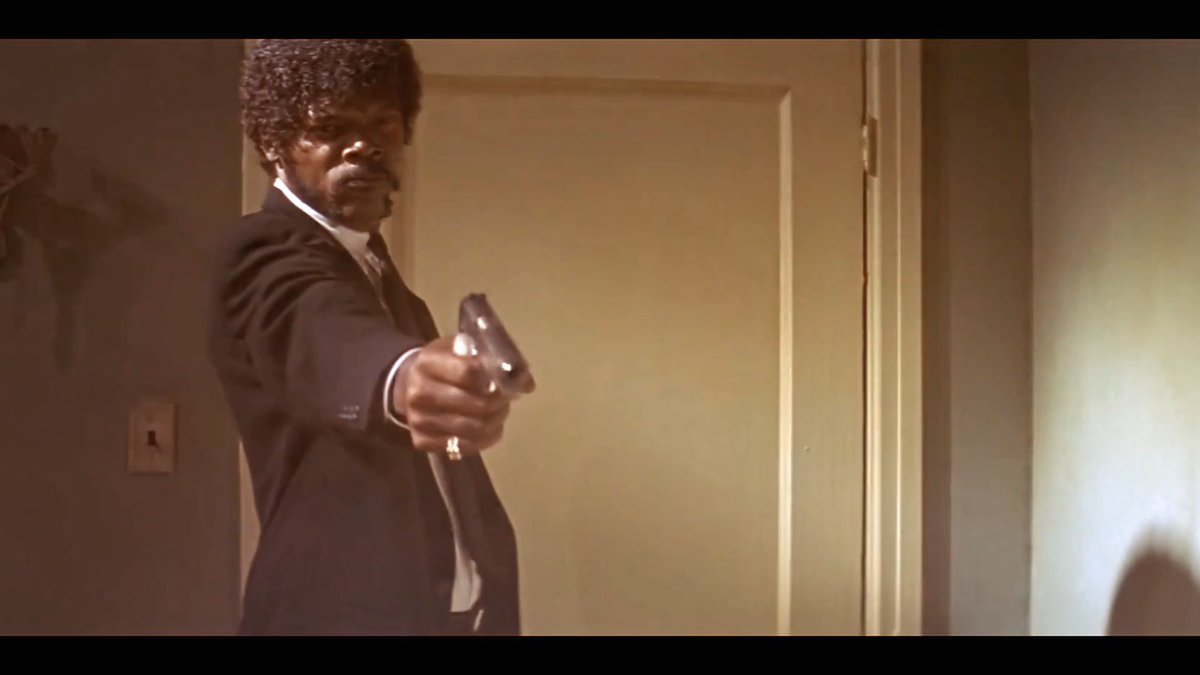
Samuel L. Jackson explains how he landed the role of Jules in Pulp Fiction, and what it was like seeing the film for the first time on the big screen: “Pulp Fiction and I came together in a very strange kind of way. I remember auditioning for Quentin for Reservoir Dogs in New York (for the role of of Detective Jim Holdaway, Mr. Orange’s police contact). And apparently I didn't get that role. But I was at Sundance the year that he screened it for the first time. I was sitting there and I watched that movie - I was awed by it. I mean, there were people running up the aisles when Michael Madsen was cutting the cop's ear off. People were going, "Oh my God, this is horrible!" All these “auteurs” were running out of the theatre. I was like, "This is good. This is happening. This is different." So after the film, I walked up to Quentin and said, "This film's amazing, man. It's great." And he looked at me and said, "Hey! How'd you like the guy who got your part?" And I was amazed that he even remembered who I was - but he remembered me. A year or so later, I got a phone call saying Quentin Tarantino wants to have dinner with you, because he'd seen Jungle Fever and he liked that Gator character. When we had dinner, we were sitting there talking. We started talking about Hong Kong films and cartoons and foreign movies and obscure things that we watched, horror movies. We found out we liked the same kind of stuff. And he told me he was writing this thing, and he was writing this part with me in mind. He was going to send it to me. I went off to do another film. I was in the backwoods of Virginia somewhere doing a film, and the script came. A little plain brown wrapper from Jersey Films. And Jersey's got these gangster images on the logo. And it said, "If you show this script to anybody, two guys named Ernie and Luigi will come and break both of your legs." Whatever. I went, "Yeah, right." So I sat down and read it. Boom. I read this thing. It's like, "Oh my God. This is awesome." And then I said to myself, "Nobody writes a script this good. There's no way that this script is as good as I thought it was." I closed it. I opened it again. I read it immediately. Okay. This is great - If whoever produces this film lets him shoot exactly what I just read, if they stay away from it, they don't try to edit any of this stuff out - this is going to be a great film. It's going to be kind of audience-specific, because I like that kind of stuff. I have friends that I knew would like it. It was a generational kind of film. I never thought it would cross over and do all this stuff. We shot it. We had a great time doing it. And the first time I actually saw the film was at the Cannes Film Festival. That night, it screened, and I was sitting there watching the film. The audience was loving this movie, loving it. About halfway through, I realized there were subtitles at the bottom of it. So I said, "Hey, these people are reading it, and they're getting it. This might be special. This really might be something special." And actually, by the time it was over, there were tears running down my face. I was just so pleased that I was part of that particular film… I never felt that satisfied, and that kind of full about a performance and about being part of something as I was in that particular moment.” Quote comes from an Interview with the American Film Institute 2010

Gangster Cinema Central

85,366 views • 26 days ago

Ridley Scott's message to the critics of 'Blade Runner' (1982) - "Go F**k yourself": ""[The shoot] was a very bad experience for me. I had horrendous partners. Financial guys, who were ki!!ing me every day. I'd been very successful in the running of a company, and I knew I was making something very, very special. So I would never take no for an answer. But they didn't understand what they had. You shoot it, and you edit it, and you mix it. And by the time you're halfway through, everyone's saying it's too slow. You've got to learn, as a director, you can't listen to anybody. I knew I was making something very, very special. And now it's one of the most important science-fiction films ever made which everybody feeds off. Every bloody film. I hadn't seen 'Blade Runner' for 20 years. Really. But I just watched it. And it's not slow. The information coming at you is so original and interesting, talking about biological creations, and mining off-world, which, in those days, they said was silly. I say, 'Go f**k yourself.' You know, 42 years ago, Pauline Kael saw 'Blade Runner,' and the article begins with: 'Oh, baby, let it rain.' which is a serious case of sarcasm. She destroyed the film in four pages. I was so crushed. I had a hard time making it, and yet I thought I delivered something special. And then to have it ki!!ed. It actually affected the release of the movie. I took the four pages and I framed them on the wall of my office. They're still there today because there's a lesson in that, which is: 'When you think you've got it, you don't know s**t.'" ("Ridley Scott Has A Message For Blade Runner Critics: 'Go F*** Yourself'", Sandy Schaefer, Slash Film, 2023)

DepressedBergman

336,174 views • 5 months ago

🚨 KHALEEL AHMED Cooked All the Haters of ROHIT SHARMA 🚨 Kaleel Said - I feel Rohit Sharma should play for the next 10 years for the good of Indian cricket and that's my personal feeling. When in 2019, we were playing a series against Bangladesh in Rajkot, once I didn't have a great day and only got one wicket, so he came to me and spoke to me personally in the dressing room. The team was leaving the stadium and he stayed back to have a one on one with me and told me how I should be. He told me that I am unaware of my own capabilities. When we were getting out of the stadium, all the fans were screaming for Rohit bhai and he told me that 'all of this should happen for you too' and that I should wish that for myself and stay positive. A captain like him, talking to me like that after the match, made me wonder how kind a person he was. I've seen him do the same thing with Rishabh. 'What a man! What a captain!' I would say. People don't even look at you when you have a bad match but as a captain he is something else. Recently I met him at the CoE during the Duleep Trophy and he looked very fit so I asked him to stay like that and keep playing. I have hardly seen such a captain and person in my life, he is a gem and I have a lot of respect and love for him. Respect is Earned not Begged 🫡🔥 Rohit Sharma is coming to rule the IPL and world cup too. No one even thought to stop him as soon as he is preparing himself to play it 🧡🔥.

cricketplusmeme

13,531 views • 3 months ago

Jaylen Brown says being vegan for 2 years helped him learn what his body needed to perform at an elite level in the NBA “In college, I was vegetarian for about a year and a half. Then I thought, let me take it to the next step and go vegan. I was vegan for about two years. I'm open to trying different things and seeing how my body feels. I'm not saying everybody should do one thing. Everybody's body is different. Do what makes you feel right, and your body will tell you. I'm not vegan anymore” “I've since transitioned my diet to other things. I wanted to bulk up, and I've gained a lot of weight. I'm like 240 pounds right now, and that's what's needed for me to win a championship. I'll probably get back to veganism at some point in my life” "It was great though, honestly. I lost some weight. I got skinnier, but I was very fast. I was running very fast, but I was able to think very, very clearly. That just shows there's so much processed stuff in our food. Sometimes our body, instead of being able to use our energy to do other things, has to process the negatives and toxins that are embedded into our food. The sugars, the heavy metals, all these different weird ingredients. They are poisoning us, and sometimes our body has to use so much energy just to break the food down that it doesn't have the energy to actually go out and manifest and do things. Sometimes what you eat can be slowing you down” “That could be the life changing decision, the difference between an idea working and not working. Your eating habits. Discipline is very key. It sounds like something small, but some of the smallest decisions have the biggest results”

dank

393,993 views • 11 days ago

I love this so much. On Rick Rubin’s first album, instead of “Produced by rick rubin” he wrote “REDUCED by rick rubin” Rick The Reducer It’s always been a curious thing… why is Rick Rubin so successful? - Can you play instruments? “...barely” - Do you make beats? “no” - Do you write songs? “nope” At first I thought maybe he’s just a dude coasting on his zen aura and A++ beard. But that doesn’t explain how you win 9 Grammy’s, co-found Def Jam, and help produce hits in every genre from Rock to Rap to Pop over 30+ years. “The most important music producer in the past 20 years” - MTV Rick calling himself a ‘reducer’ rather than a ‘producer’ is a good hint at his genius. But that sounds so general. What does it actually mean? You ask and the youtube gods giveth us an example: Check out this video below of Jay Z recording with Rick. Rick tells him “maybe we start acapella” (no beat, no background vocals, no sound effects). That became the iconic intro to the song 99 Problems. Golden nugget #1 – “when you add layers to make it bigger….The more you add, the smaller it gets” - Rick Rubin Golden nugget #2 – as a creator, we often have a draft or prototype that’s “not great yet”. The urge is to ADD to make things better. But the great artists show us that we should REDUCE it down. Instagram started as an app called Burbn with all kinds of features (Friends! Locations! Check Ins! Points! Photos!) — but when they hit a wall, they decided to REDUCE features. Going all in on photos with filters. They removed 90% of the app features…and yet the app got 10X more valuable. Addition via subtraction.

Shaan Puri

35,395 views • 1 year ago

Make Something Wonderful is 250 pages of Steve Jobs in his own words, speaking directly to you. The book contains some of Steve's ideas that I've never found anywhere else. Notes from the book: 1. He didn't care about being right. He cared about being excellent. 2. His mind was never a captive of reality. 3. He said working with great people gives you access to wisdom that you can't buy for love or money. 4. He believed technology should be streamlined and practical, simple and sophisticated, and that it should be a tool for enhancing creativity as much as productivity. 5. He believed you should ambush your customers. Meet them where they are. 6. His ideas were not arguments, but intuitions. He had a true inner freedom and an epic sense of possibility. 7. He gave an extraordinary amount of thought to how best to use our fleeting time. 8. By the time he was thirty he was the public face of a Fortune 500 company. 9. At Apple’s first board meeting he put his bare feet on a conference room table. 10. He said you should think of your life as a rainbow arching across the horizon of this world. You appear, have a chance to blaze in the sky, then you disappear. 11. He possessed unbelievable rigor that he imposed first, and most strenuously, on himself. 12. He saw clearly (1) what was not there, (2) what could be there, (3) what had to be there. 13. He said early Apple employees were more like poets and painters than cold technologists. That the passion they put into their products were completely indistinguishable from other creative fields. He said their work was a form of love. 14. He had a verbal mastery that was obvious at a young age. He used simple, descriptive language, told stories, and repeated lines and ideas that were important. 15. He thought it was inevitable that computers would be the dominant medium of human communication. He said this in 1983. 16. He had a talent for spotting markets full of second-rate products. 17. He said you could tell how important a product was based on the amount of time people spent interacting with it. As a result he thought it was inevitable that more design talent would shift from the automobile (1 or 2 hours a day) to computers (6+ hours a day). He said this in the 80s. 18. He said that books kept him out of jail and that it’s a shame there are so many mediocre teachers. 19. Like many great entrepreneurs before him, Steve knew what he wanted to do, but didn't know how to do it yet. He said he wanted to make an insanely great computer that was the size of a book. What he described sounded a lot like an iPad. He said this in the 80s. 20. He believed that you should use your unique set of talents to make things that make the lives of other people better. Most people just take. He said "the ability to put something back into the pool of human experience is extremely neat." 21. He would tell his team “You work for Apple first and your boss second.” He felt strongly about that. 22. He was constantly placing the products he was making in a historical perspective, like comparing the Macintosh to the invention of the telephone. 23. He believed you needed to give yourself more time to make mistakes. He said his taste got more refined as he made mistakes. He said that making mistakes over a long period of time made his aesthetics better. 24. He said the key ingredient to making something great was time. 25. He said he wanted to spend his life building things. He could have retired to a beach in his 20s and thought that was disgusting. 26. He was interested in learning how to hone a company down to its essence. 27. You read this book and a thought jumps out at you: How many people are willing to go through a decade of failure without quitting? Steve had the capacity to take pain. 28. He believed it was better to focus on what you're actually passionate about, instead of what you think will make you the most money. He made the most money that way. 29. He listened to older, wiser entrepreneurs and let them shape and mold his thinking. 30. He wasn't afraid to fail, but had to coach himself to adopt that trait. He didn't want to fail, but he wasn't afraid of it. 31. He said don't let your differentiation evaporate. 32. He said if you let your differentiation evaporate the only solution is innovation. 33. He believed great ideas don't map onto corporate hierarchy. 34. He was incapable of thinking that his work and his life were different, separate things. 35. He said the most important things in life are not the goal-oriented, materialistic things. He said you should tap into the world’s magical, mystical, and artistic sides. 36. He paid attention to subtle insights. He was guided by intuition. 37. He didn't believe in the concept or a career, or think it was wise to follow well-worn paths laid out by others. 38. He said most people make the mistake of not thinking about death. He said: "For me it’s the opposite: to know my arc will fall, makes me want to blaze while I am in the sky." 39. He thought Walt Disney had a great idea: Edit before you make it. 40. He said no amount of technology can turn a bad story into a good story. 41. He believed storytellers were the most powerful people in the world. 42. He believed if you didn't have great people you were doomed. 43. He found great people by looking at great results and finding out who was responsible for them. 44. This is how he interviewed people: "In an interview I will purposely upset someone: I’ll criticize their prior work. I’ll do my homework, find out what they worked on and say, “God, that really turned out to be a bomb. That really turned out to be a bozo product. Why did you work on that?” The worst thing that someone can do in an interview is to agree with me and knuckle under. What I look for is for someone to come right back and say, “You’re dead wrong and here’s why.” 45. He believed the job of the leader was to make sure the work is as good as it should be, and to get people to stretch beyond their best. 46. He believed the job of the leader was to cajole, and beg, and plead, and threaten at times—to do whatever is necessary to get people to see things in a bigger and more profound way and to have them do better work than they thought they could do. 47. He believed the priorities of the leader were (1) recruit, (2) set an overall direction, and (3) inspire and cajole and persuade. 48. He believed a creative company should have a risk-taking, creative environment on the product side and a fiscally conservative environment on the business side. 49. He believed you have to choose what you put your love into really carefully. 50. He had a remarkably consistent set of values that he held dear: Life is short; don’t waste it. Tell the truth. Technology should enhance human creativity. Process matters. Beauty matters. Details matter. The world we know is a human creation—and we can push it forward. 51. He thought when deciding what to work on that you should ask yourself: "What do I give a shit about?" And then go do that. 52. He would never sell Apple. Not for all the money in the world. 53. He believed you should master the basics, simplify the product line, and focus on the gems. 54. He believed marketing was about values. That the world is noisy and you should focus on telling customers what you believe in and what you stand for. 55. He believed one way to invest in yourself is by exploring uncharted paths that are different from your past experiences. You know it's an uncharted path when you have no idea where it will lead. 56. He believed that people that think they’re following a safe path pay the highest price of all. They won't realize it for a decade or two — and by then it's too late. 57. He didn't believe in resting on laurels or sleeping on wins. Make something great. Then do it again. 58. He imagined what reality lacked and set out to remedy it. 59. He believed in straight forward, clear communication. If the work isn't good enough you have to tell them straight: "This isn't good enough. I know you can do better. You need to do better. Now go do better." 60. He remained driven by a mission to "put something back into the pool of human experience." 61. He believed in the basics: great product, great marketing, great distribution. 62. He believed you must keep up with innovations in distribution. 63. He believed brands take decades to build. 64. He would capture the evolution of his own thinking by emailing himself. 65. He viewed Apple has the world's premier bridge builder between normal people and the exploding world of high technology. 66. He wanted to demystify technology. 67. He believed excellence was a habit and we are what we repeatedly do. 68. He believed you should be curious about what came before you and you should spend time to learn about it. 69. He believed you simply could not mix messages when selling something new. A customer can barely handle one great new idea, let alone several. 70. He said it's a circus world and you'll never know what's around the next corner. 71. He believed in management by values. Which means (1) find people that want the same things you want and (2) figure out the best way to get those things along the way. 72. He believed in the mantra: Finding the right people is half the battle. 73. He said you can't plan to meet the people who will change your life. 74. He believed everything is temporary — there is no such thing as safety. 75. He believed that your life is a story and that you should remember that your life is a story and that you should always act like your life is a story. 76. He believed in rejecting dogma, which he defined as living with the results of other people's thinking. He said that dogma can be so loud that it can drown out your own inner voice and you should avoid this. 77. He believed a great place to start was by improving a product you hate. If you can make something you love, you can convince other people to love it too. 78. He said all glory is fleeting and you should just get back to making something wonderful. I'm really proud of the episode I made about this book. You'll learn a lot from Steve by listening to it. You can watch/listen to it in full here, or in your favorite podcast app.

David Senra

205,292 views • 11 months ago

[ENG SUB] How Are You Feeling? EP.3 — #JimmySea 💜🩵 JIMMYSEA HOW ARE YOU #jimmyyjp #sea_tawinan #HowAreYouFeeling JimmySea sits down for a raw, heart-to-heart conversation with P’Ja and P’Tong (Psychologist). This episode touches on: 🤍 Reflections after the Fancon 🤍 Jimmy’s perfectionist mindset 🤍 Sea’s trust issues 🤍 Jimmy’s PTSD 🤍 Sea’s secret artwork 🤍 Personality differences 🤍 The balance between Eagle and Mouse 🤍 How well they understand each other 🤍 Feelings they want to share A space filled with sincerity, vulnerability, and quiet comfort. —— my New Year’s gift for you all 💝🥰 I found myself crying again while working on this episode. 😭 I’m really thankful that P’Ja invited JS again to her new show. Thanks to her, we were able to hear such raw, vulnerable, and sincere thoughts from them. Learned more about them, both as individuals and as a pair. 💜🩵 It’s another hour-long video that I finally managed to sub successfully. Yay!! 🥳 Proud of myself! 😁 For deep-talk videos like this, the process is especially time-consuming, just 5 minutes of it can take nearly an hour to translate, type, edit, and properly research. After that comes QC for the entire video. On top of that, the subbing app didn’t cooperate and frustrated me so much. 😭 Some thought it could be released in just a couple of days, but I was also working a full-time job, so I didn’t have many hours each day to work on it. There were nights I was so exhausted that I fell asleep with my iPad literally on my face. 😅 I’m doing this purely out of love for JS, and as a way to unwind and relieve stress after work, not to stress myself out even more lol. So pls be patient next time and try not to ask me when. 🥹 Thank you and enjoy! 😊🤍

Mhokstache ✨

71,822 views • 6 months ago

🚨AMERICA HELD HOSTAGE: DOCKWORKERS STRIKE!🚨 Why this strike makes a great case for using automation to prevent Americans from being victims of Unions. ⚓️Union Mafia Tactics at play as dockworkers abandon their posts, demanding sky-high wages amidst Kamala's Inflation Crisis. Here's what you need to know: The Strike: Tens of thousands of dockworkers from Maine to Texas have walked off the job, halting trade at some of America's busiest ports. The Reason: They claim their wages haven't kept up with inflation. But these aren't your average Joe's struggling to make ends meet. Many are pulling in salaries that would make your head spin! Union Overreach: This isn't labor negotiation; it's extortion. By blocking essential goods, the union acts more like a mafia than a workers' representative. They're betting on public desperation to force their demands. The Automation Argument: If these overpaid dockworkers think they're irreplaceable, think again. Automation stands ready. Why negotiate with a union when technology offers a strike-proof solution? Machines don't strike, don't demand exorbitant raises, and certainly don't hold an economy hostage. Economic Ramifications: Every day this strike continues, it's not just about delayed packages; it's about rising costs for EVERY American. From bananas to car parts, expect shortages and price hikes. A Call for Change: If the union truly cared for its members, wouldn't they ease up on those hefty dues? Instead, they're using those funds to strong-arm the nation. Time for Action: This strike proves one thing - it's time to seriously consider automating dockworkers. Let's modernize our ports, secure our supply chains, and stop being at the mercy of union whims. After all the ILA Dockworkers Union picked this fight. This isn't just about ports; it's about the principle. Do we allow unions to hold America hostage, or do we fight back? What are your thought in the ILA Dockworkers Strike?

Thomas Paine Band

67,259 views • 1 year ago

Steve Jobs on why the Beatles were his business model: In a 60 Minutes interview, Steve Jobs is asked about his approach to business. His answer? The Beatles. "My model of business is the Beatles. They were four very talented guys, four guys who kept each other's negative tendencies in check. They balanced each other and the sum was greater. The total was greater than the sum of the parts." Steve explains that this is how he sees business: "Great things in business are never done by one person; they're done by a team of people." He points to what happened when the Beatles split up as evidence: "When the Beatles were together, they did truly brilliant, innovative work. And when they split up, they did good work, but it was never the same. And I see business that way, too. It's really always a team." When asked about his biggest strength as a person, Steve's answer reinforces this team-first philosophy: "I've been very lucky in meeting incredibly talented people and hanging out with them. And so that's been my greatest strength." But Steve also warns about what can undermine great teams — arrogance: "All of us need to be on guard against arrogance which knocks at the door whenever you're successful." When asked if he'd lived through that himself, Steve acknowledges he had. The interviewer points to Apple's initial success and the sobering reality of competitors catching up. Steve goes further: "As you may know, I was basically fired from Apple when I was 30 and was invited to come back 12 years later. So that was difficult when it happened, but maybe the best thing that ever happened to me. There wouldn't be a Pixar if that hadn't happened. And so you know, you just move on. Life goes on and you learn from it." Asked if returning to Apple at 42 felt like sweet vindication, Steve's response reveals his broader outlook: "No. I thought at that moment what a circle of life. Life is just always mysterious and surprising and you never know what's around the next corner."

Emmett Voss

107,778 views • 3 months ago

Woot woot! THE BIG DAY IS HERE. Eddie AI v2! Download it: It’s been a sprint pace to cover a marathon distance. We launched Eddie AI v1 in October last year. Thousands of new users. Lots of feature requests. Learned a ton. (Yes, Paul Graham is right: ship early and often!) Eddie AI v2 releases three big advancements. And underpinning those decisions are the learnings baked in. 1. Eddie now runs locally on Macs and Windows. Our native apps are out of beta and available to everyone. Video is large. The video files used by video professionals are even larger. No one wants to wait around uploading. Native applications make it MUCH MUCH faster to import and thus much faster to get on with editing. One of the challenges with Eddie is how do we *quickly* get the user to aha – that moment where they can see the magic of this assistant AI video editor – if it takes awhile to upload files. These native applications are a big step towards getting to aha, swiftly, and help deliver on our promise to save customers time. 2. Analyze raw footage, aka logging interviews and B-rolls. Eddie v1 only created edits. But users were asking for a step before the edit too. They want their footage logged – what happened in this shot, who said what, etc – and grouped logically with this metadata back in their video editing application. We released a test of this a month ago. Users were blown away by the accuracy of the AI, the rich descriptions, and how the metadata seamlessly is sent to their video editing application where they can find the right shot when they need. We were blown away by the usage of this feature. Logging is now updated and released to all in v2. 3. Rough cut mode. This is the big dream: Eddie is the AI assistant video editor. There’s a lot of tedious work in video editing. Eddie takes it on. And helps you get to a great story faster. Sorting through hours of interviews and finding great soundbites that can be cut together to form a coherent story is a big step toward this dream. We attempted to do this in v1. But the prompt box was too open ended. People were typing in things like “Cut me a great story” and the subjectivity of the statement led to variable results. So we re-thought the story crafting process. We added friction. YES you read that correctly. We added friction into the product that slows the customer down. BUT they get much better results, reliably. And that trade-off is well worth it. Eddie now takes a step-by-step approach with you on crafting your story. It aligns with you on the story framework and then cuts chapter by chapter with your feedback. What used to take days, now takes minutes. We spent months hacking at LLMs to make them able to provide coherent edits over a longer duration and handle a large amount of source material (aka context-window problem). It’s ready for release. Version 2.0 is here. Download Eddie at

Shamir Allibhai

57,672 views • 1 year ago