Video yükleniyor...

Video Yüklenemedi

Ana Sayfaya Dön

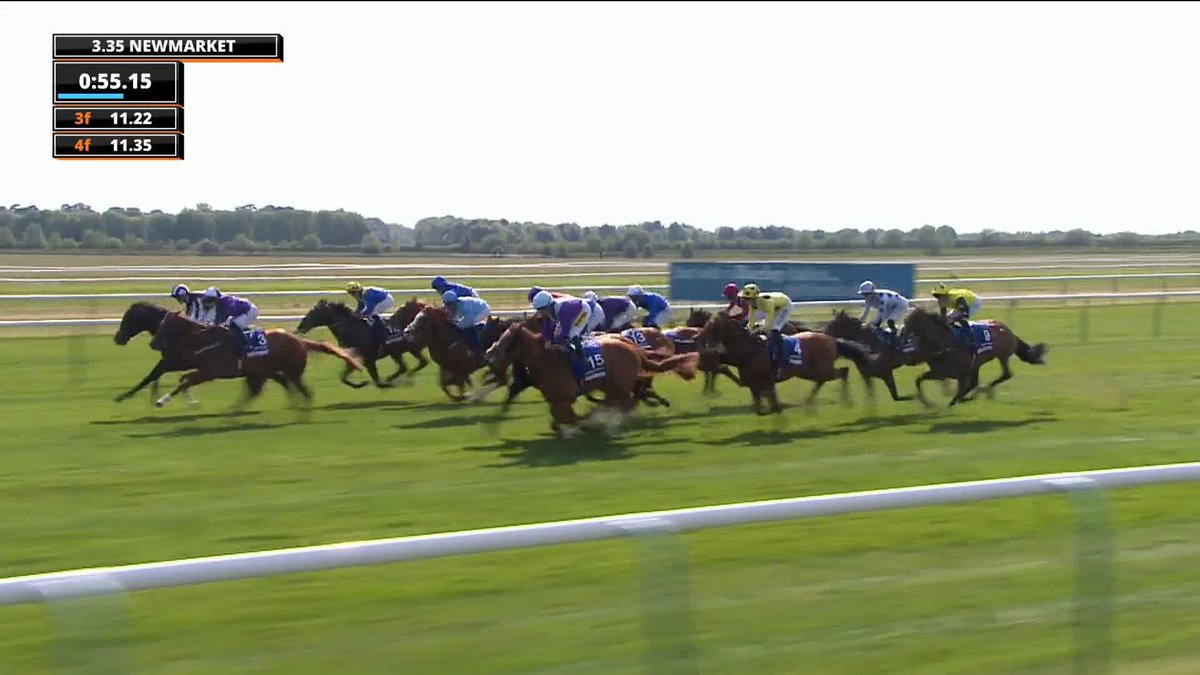
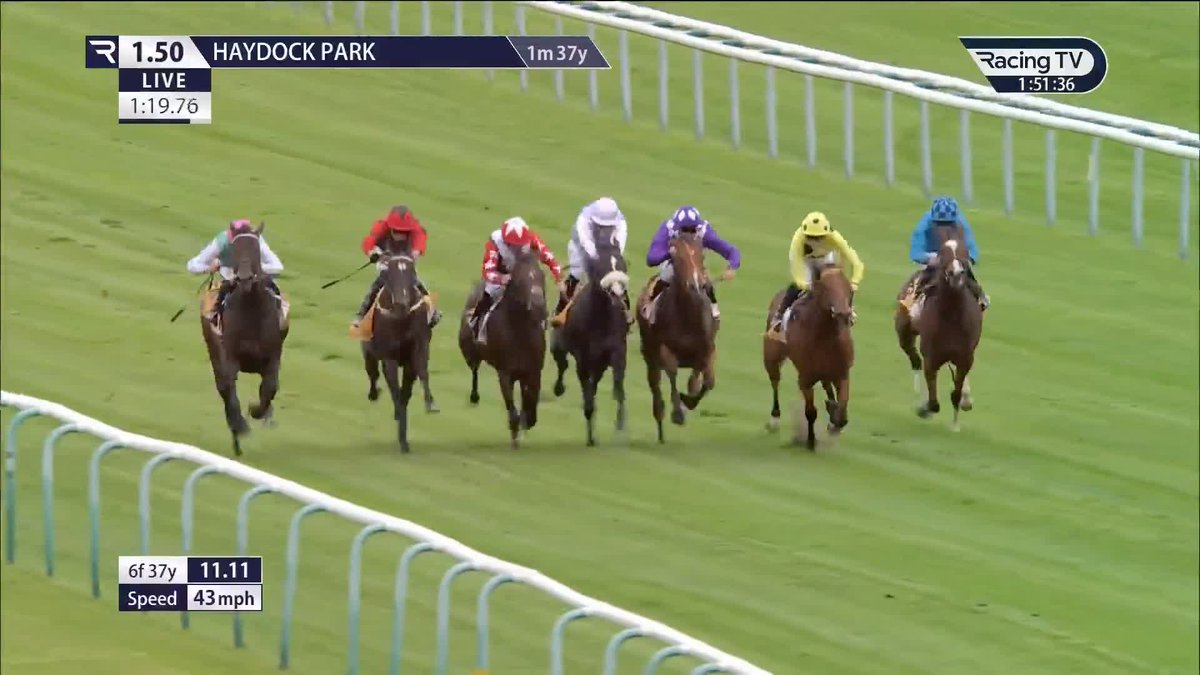
Three winners. Five unforgettable days. One Royal Ascot to remember. 1️⃣ Bow Echo - G1 St James's Palace Stakes 2️⃣ King Of Cloughan - Listed Windsor Castle Stakes 3️⃣ Libertango - G3 Albany Stakes #BL

16,095 görüntüleme • 1 ay önce •via X (Twitter)

0 Yorum

Yorum bulunmuyor

Orijinal gönderinin yorumları burada görünecek

Benzer Videolar

EXCLUSIVE & AN OPEN CHALLENGE TO THE HON'BLE MINISTER Shri Nitin Gadkari ji Dear Hon'ble Union Minister Shri Nitin Gadkari ji, Information from Team Bharat confirms you are in Pune this Saturday (18th July). On behalf of the Citizens of India, I am officially and respectfully requesting you to a LIVE, PUBLIC DEBATE with me on the Ethanol 20 (E20) blending policy. Let us put all facts on the table before the citizens of this great country! Here are my stakes: 1️⃣ Sir, if you defeat me in this debate, I will PUBLICLY APOLOGIZE to you on all forums. 2️⃣ I will permanently TAKE DOWN.all my anti-E20 posts. 3️⃣ I will NEVER bring up the issue of Ethanol ever again. We will also address the elephant in the room, sir. There is a massive, undeniable CONFLICT OF INTEREST with both your sons being involved in the Ethanol business. Whenever you are asked about this, you issue threats of action. In a robust democracy, citizens deserve answers not threats. Sir, Let us look at the facts: The last time you challenged us to produce even "one evidence of damage" to E10-compatible vehicles due to mandatory E20 blending, Team Bharat stepped up. We took the challenge. But instead of a debate, we were detained by the Delhi Police at the Tughlak Road Police Station. This is not how a democracy functions, Shri Nitin_gadkari ji. I urge you to accept my humble request. Let us strengthen our democratic fabric through open dialogue. If I am proven wrong, I will back down forever. The ball is in your court, Sir. I await your response. TEHSEEN POONAWALLA TEAM BHARAT To, Shri Nitin Gadkari ji.

Tehseen Poonawalla Official 🇮🇳

28,317 görüntüleme • 27 gün önce

🚨 BREAKING: Trump’s High-Stakes Situation Room Meeting on Iran Just Wrapped — Here’s What We Know 🇺🇸 President Trump has just concluded a critical Situation Room meeting with top Cabinet officials, including VP JD Vance, Secretary of State Marco Rubio, Defense Secretary Pete Hegseth, and special envoy Steve Witkoff, as tensions with Iran continue to escalate. 🔥 Key Takeaways from the Meeting: 1️⃣ Trump Is Done Playing Games — He made clear he’s not looking for a temporary ceasefire between Iran and Israel. He wants a complete and permanent end to Iran’s nuclear program. 2️⃣ "We Know Where He Is" — In a chilling message to Tehran, Trump revealed that the U.S. and Israel know exactly where Iran’s Supreme Leader is hiding. He said the U.S. won’t strike him... for now. But warned: “Our patience is wearing thin.” 3️⃣ Bunker Buster Bombs on the Table — One major topic discussed: authorizing the use of 30,000 lb bunker-busting bombs to destroy Fordow — Iran’s heavily protected underground nuclear site. The move would mark a massive escalation. 4️⃣ No Consensus Yet — There’s internal debate within Trump’s team about how far to go militarily. But insiders say the pressure is mounting for decisive action. 5️⃣ MAGA Warning — JD Vance defended Trump’s consistency: “The President has always said Iran will never get nukes.” He acknowledged concerns about another foreign entanglement, but made clear: This may be the one worth ending for good. 💬 Trump is expected to address the nation or post a Truth Social update soon. Stay tuned. The world is watching. #Trump #Iran #Israel #BreakingNews #SituationRoom #JDVance #ForeignPolicy #AmericaFirst #MAGA #WW3

Project Constitution

127,145 görüntüleme • 1 yıl önce

When mapping out a first-time adventure through Japan, it is incredibly easy to let the country's mega-cities completely dictate your route. Travel planning algorithms aggressively push a hyper-fast loop of Tokyo, Kyoto, and Osaka, causing most visitors to completely skip over the culturally rich chokepoint of the Ishikawa Prefecture. But on your next journey, you don't need to restrict yourself to just the loudest, most crowded locations. If you have around 11 days to spare, expanding your route into a 5-2-2-2 breakdown, incorporating five nights in Tokyo, two in Kanazawa, two in Kyoto, and two in Osaka, creates a beautifully balanced, immersive Japanese holiday. The secret weapon of this itinerary is Kanazawa. Sitting seamlessly on the Hokuriku Shinkansen bullet train line, it rests directly between Tokyo and Kyoto, making it an stress-free addition that requires just two and a half hours of transit out of the capital. Kanazawa escaped the devastating air raids of World War II, meaning its feudal neighborhoods are not modern reconstructions, but living pieces of untouched Edo-period history. Spend your first day stepping into the city’s traditional heart. Start at Omicho Market, a bustling culinary maze where locals have shopped for fresh Sea of Japan delicacies since the 1700s. From there, cross the Asano River to wander the wood-latticed alleys of the Higashi Chaya and Kazue-machi Chaya geisha districts. Make a definitive point to return to Higashi Chaya after dark; once the daytime shops close, the dark timber walls echo with the gentle plunk of the shamisen under the amber glow of traditional paper lanterns. Dedicate your second day to classic samurai and garden architecture. Kanazawa is home to Kenroku-en, universally revered as one of Japan’s three "Great Gardens," where meticulously trained pine trees shade reflecting ponds. Walk across the bridge to explore the expansive castle walls of Kanazawa Castle and its peaceful stone-walled sanctuary, Gyokuseninmaru Garden, before spending your afternoon tracing the mud-plastered walls and private canals of the Nagamachi Samurai District. Finally, your third day opens up a choice of three spectacular regional day trips. You can catch a direct bus from Kanazawa Station to the UNESCO World Heritage site of Shirakawa-go to photograph the iconic, steep-pitched gassho-zukuri farmhouses of Ogimachi Village. Alternatively, hop on a train to the hidden alpine valley of Takayama to explore the timber-framed merchant homes of Sanmachi Suji and browse the riverside Miyagawa Morning Market. If you are visiting during the winter months, your best move is to head into the mountains of Ishikawa to Hakusan Ichirino Onsen Ski Resort, where you can spend your day carving down snow-covered slopes before slipping into a piping-hot, mineral-dense outdoor onsen as the snow falls around you. It is a diverse, unforgettable detour that proves Japan's true soul is found when you venture just a few stops off the beaten path. 🎥 | IG

𝕏 Travels, Hotels and Resorts

13,553 görüntüleme • 1 ay önce

🎉 4/20 MEGA GIVEAWAY IS LIVE! 🎉 Hey, growers and enthusiasts! We’re celebrating 4/20 with an epic giveaway packed with genetics, gear, and goodies! One lucky winner will take home EVERYTHING listed below! 🌱💨 🎁 Prizes: - 15+ packs of premium seeds bred by GENETICS 101 🫘 - 9x packs of seeds from my personal stash, bred by WickedGeneticsOfficial, Raw Genetics, Lost In Translation, Seedsman, and Tackett Genetics 🫘 - 1x Vivosun.official Jeweler’s Loupe (perfect for inspecting trichomes!) 🔍 - 5x Vivosun.official 5-Gallon Fabric Pots (great for healthy root growth!) 🪴 - 1x Nemaglobe (beneficial nematodes for organic pest control) 🐞 - 1x 10mm Royal Neptunium Glass Tip from Proper Doinks (smoke in style!) 💎 - 2x packs of King Size ElementS Ultra Thin Rolling Papers 📜 - 1x Extra Thick Color-Changing Silver Fumed Inside-Out Spoon Pipe (handmade by Sonofthemountain on Etsy) 🥄 I might add a couple more surprises before the giveaway ends, so stay tuned! 👀 🚀 How to Enter: 1️⃣ Follow GENETICS 101 (we’ll check!) 2️⃣ Like this post ❤️ 3️⃣ Repost this to your feed 🔁 👉 Optional: Tag your friends in the comments to spread the love (not required, but appreciated!) - I'll add your @ to the wheel of names for all replies for a glass pendant + more 🫘 giveaway (separate from the main giveaway) 📅 Giveaway Timeline: - Starts: Sunday, April 20, 2025 - Ends: Friday, April 25, 2025, at 9 PM Eastern - Winner Announced: April 25, 2025 via a post on X sometime after 9pm 🌍 Eligibility: Open to international accounts! However, please ensure cannabis seeds are legal in your country. We’re not responsible for customs issues. (No problems yet, 30+ international shipments so far) 🏆 Winner: One winner will be randomly selected and will win ALL the prizes listed above! We’ll contact the winner via DM, so keep your notifications on. (I will be using "The X Picker" to randomly choose a winner.) 💡 Bonus: I’ll also be teaming up with Rangerbug for flash giveaways Monday through Friday (April 21-25) with more seed packs from both of us and more goodies up for grabs. Each flash giveaway will run for 2-5 hours—don’t miss out! Let’s make this 4/20 unforgettable! Enter now and good luck! 🍀 *No purchase necessary. This giveaway is not sponsored, endorsed, or administered by X. Participants must be 18+. Seeds are for souvenir/collectible purposes only; germination may be illegal in some regions—check local laws. #420Giveaway #Genetics101va #CannabisCommunity
0:42

Sensitive content

🎉 4/20 MEGA GIVEAWAY IS LIVE! 🎉 Hey, growers and enthusiasts! We’re celebrating 4/20 with an epic giveaway packed with genetics, gear, and goodies! One lucky winner will take home EVERYTHING listed below! 🌱💨 🎁 Prizes: - 15+ packs of premium seeds bred by GENETICS 101 🫘 - 9x packs of seeds from my personal stash, bred by WickedGeneticsOfficial, Raw Genetics, Lost In Translation, Seedsman, and Tackett Genetics 🫘 - 1x Vivosun.official Jeweler’s Loupe (perfect for inspecting trichomes!) 🔍 - 5x Vivosun.official 5-Gallon Fabric Pots (great for healthy root growth!) 🪴 - 1x Nemaglobe (beneficial nematodes for organic pest control) 🐞 - 1x 10mm Royal Neptunium Glass Tip from Proper Doinks (smoke in style!) 💎 - 2x packs of King Size ElementS Ultra Thin Rolling Papers 📜 - 1x Extra Thick Color-Changing Silver Fumed Inside-Out Spoon Pipe (handmade by Sonofthemountain on Etsy) 🥄 I might add a couple more surprises before the giveaway ends, so stay tuned! 👀 🚀 How to Enter: 1️⃣ Follow GENETICS 101 (we’ll check!) 2️⃣ Like this post ❤️ 3️⃣ Repost this to your feed 🔁 👉 Optional: Tag your friends in the comments to spread the love (not required, but appreciated!) - I'll add your @ to the wheel of names for all replies for a glass pendant + more 🫘 giveaway (separate from the main giveaway) 📅 Giveaway Timeline: - Starts: Sunday, April 20, 2025 - Ends: Friday, April 25, 2025, at 9 PM Eastern - Winner Announced: April 25, 2025 via a post on X sometime after 9pm 🌍 Eligibility: Open to international accounts! However, please ensure cannabis seeds are legal in your country. We’re not responsible for customs issues. (No problems yet, 30+ international shipments so far) 🏆 Winner: One winner will be randomly selected and will win ALL the prizes listed above! We’ll contact the winner via DM, so keep your notifications on. (I will be using "The X Picker" to randomly choose a winner.) 💡 Bonus: I’ll also be teaming up with Rangerbug for flash giveaways Monday through Friday (April 21-25) with more seed packs from both of us and more goodies up for grabs. Each flash giveaway will run for 2-5 hours—don’t miss out! Let’s make this 4/20 unforgettable! Enter now and good luck! 🍀 *No purchase necessary. This giveaway is not sponsored, endorsed, or administered by X. Participants must be 18+. Seeds are for souvenir/collectible purposes only; germination may be illegal in some regions—check local laws. #420Giveaway #Genetics101va #CannabisCommunity

GENETICS 101

27,299 görüntüleme • 1 yıl önce

🏴󠁧󠁢󠁥󠁮󠁧󠁿 50,000 people marched on London.⚔️ The government said it wasn't that many. 🇬🇧 It was much, much more. This is not the first time 📜 It is 1381. England. You wake. The frost is on the ground. You are a serf. You cannot leave your village without permission. You cannot marry without permission. You cannot sell your own labour. The land you work belongs to a lord you have never met. Your father was a serf. His father was a serf. You have been told your son will be a serf too. So you were told. But something had cracked 💔 The Black Death had taken half of England thirty years before. Labour was scarce. Wages had risen. For three decades, ordinary people had been quietly getting richer. The powerful hated it. Every law they made, the people walked around. Then John of Gaunt, the king's uncle and the richest man in England, taxed every adult the same shilling to pay for the war in France 💰 The Poll Tax. In four years, they tried it three times. The third one was one too many. In May 1381, a tax commissioner arrived in the Essex village of Fobbing. The villagers drove him out. The king sent soldiers. The villagers drove them out too. You hear what happened at Fobbing. You hear what happened next. Essex rose first. Then Kent. Then the eastern counties. Villages emptied. In Kent, a man called Wat Tyler took command ⚔️ His first move was to break open Maidstone Prison and free a radical priest called John Ball. By the time they reached Blackheath, just south of the Thames, they were 50,000 strong. That night, John Ball climbed onto a cart and asked a question that would echo for 600 years: "When Adam delved and Eve span, who was then the gentleman?" 📜 They burned the Savoy Palace 🔥 Gaunt escaped on horseback to Scotland. The next morning, the king rode out to meet them. Richard II. Fourteen years old. Just a boy on a horse, in front of 50,000 armed peasants. He agreed to everything. End serfdom. End forced labour. End the Poll Tax. He had clerks write charters of freedom sealed with the royal seal 👑 You hold one in your hands. Freedom. You have won. The next day at Smithfield, the Lord Mayor of London stabbed Wat Tyler in the throat 🗡️ The king rode forward alone and persuaded the crowd to follow him out of London. Then he revoked every promise. "Serfs you are. And serfs you shall remain." 1,500 rebels were executed. John Ball was hanged, drawn and quartered at St Albans. The king was there to see it. The dream is dead. Or so it looks. But they thought they had lost. They had not 📜 The Poll Tax was never collected again in their lifetime. Or their children's lifetime. It would be 609 years before any government in England dared to try it again. Within a hundred years, serfdom in England had effectively died out. Not because the powerful chose to free their people. Because the powerful had learned what happened when they refused 🏛️ The lesson did not die. The Putney Debates. The Levellers. The Chartists. The Tolpuddle Martyrs. The Suffragettes. Every uprising drew on what happened at Smithfield. In 1990, a Prime Minister tried to bring the Poll Tax back. 200,000 people marched on London again. Following the same route the peasants took 600 years earlier. The tax was withdrawn within a year. Within months, the Prime Minister was gone. The powerful learned the same lesson. They always learn the same lesson. Every right we have today was taken, not given. By people like the 50,000 on Blackheath. 📖 Read the full story, get the lesson plan, share the facts → ━━━━━━━━━━━━━━ They are still here 🏴󠁧󠁢󠁥󠁮󠁧󠁿 In every protest. In every refusal. In every "enough" spoken to a power that demanded too much. Same faces. Same blood. Same island 🇬🇧 This is our island. This is our story. This is our culture to keep 📜 Every story we tell, a supporter paid to keep alive. Without them, these stories stay in the past. Without you, the next one never comes out. 👉 👈 Be part of us. ☝️🇬🇧 Be Proud Of Us. 🙏🇬🇧

Proudofus.uk

21,984 görüntüleme • 2 ay önce

This day (April 11) in 1961, began the trial of Holocaust architect Adolf Eichmann in Jerusalem. For the first time since the Romans destroyed the Temple in 70 CE, Jews sat in judgment over a man who orchestrated their mass murder. In a 14-week trial, 111 survivors took the stand & described the horrors of the Final Solution, not just with dry Nazi documents, but with living voices. On December 15, 1961, Eichmann was convicted on all 15 counts: crimes against the Jewish people, crimes against humanity, war crimes, and membership in a criminal organization. He was hanged on June 1, 1962. But this trial was about much more than one man. Unlike the Nuremberg trials of 1945–46, where the victorious Allies judged Nazi leaders for “crimes against humanity” in the abstract, relying almost entirely on German paperwork and marginalizing Jewish voices, Israel deliberately put the victims at center stage. Prosecutor Gideon Hausner opened with words that still echo: “I do not stand alone. With me stand six million accusers… Their ashes are piled up on the hills of Auschwitz and the fields of Treblinka… Their blood cries out, but their voice is not heard. Therefore, I will be their spokesman.” This was not Nuremberg where a passive French political prisoner described Auschwitz “showers” in the third person. In Jerusalem, the survivors spoke in the first person; and for the first time, the world heard the Jewish story of the Holocaust from Jews themselves. Eichmann himself was chillingly ordinary. Hannah Arendt, covering the trial for The New Yorker, famously called it “the banality of evil.” He looked like a minor bank clerk. In his final testimony he admitted arranging the transport of millions to their deaths. Yet he coldly admitted he felt no guilt for the consequences. From his own notebooks, what he actually regretted was failing to “free Hungary of all its Jews” (killing ~565,000 of Hungary’s 825,000 Jews (68%) was not enough for Eichmann). What’s more, much of the world was able to watch Eichmann’s trial. This was one of the first trials ever to be broadcast on television. ABC, CBS, NBC, and networks across Canada and beyond, all aired nightly excerpts for months; and 750 journalists descended on Jerusalem. It was through Eichmann’s trial that the world finally learned the truth of the Holocaust. At the time, Anne Frank’s diary was still new in English, and Elie Wiesel’s "Night" had just appeared. The word “Holocaust” was barely in common use, and “genocide” was just an abstract legal term. After the trial, none of that remained true. In Israel, the impact was also shattering. In the 1950s, many young sabras - viewed as tough, suntanned citizen-soldiers who had just beaten five Arab armies - looked at the 500,000 Holocaust survivors among them with a degree of condescension: “Why did you go like sheep to the slaughter?” The Eichmann proceedings forced a reckoning in Israel. Witnesses explained how they had no weapons or army, how the Nazis used systematic deception and starvation, and how Jews saw with their own eyes that escape meant fifty others shot. Israelis learned that what separated them from Europe’s Jews was not courage, but the sheer luck of birthplace or getting out on time. Survivors who had stayed silent for years finally spoke. The stigma was finally lifted. The “new Jew” of Israel and the survivor were no longer opposites. They were one people. Israeli Prime Minister David Ben-Gurion understood the stakes. Capturing Eichmann (via Mossad, halfway across the world) and trying him in Jerusalem was about reminding the world what the Germans did, and also about reminding a new generation of Israelis why their state had to exist. For centuries, Jews had been humiliated, expelled, and murdered at will. The Jews simply had no army, no intelligence service, and no sovereign court to answer back. Now, in Israel, they had all three. The existential condition of the Jewish people had changed forever with the birth of the State of Israel.

Captain Allen

52,399 görüntüleme • 4 ay önce

The Daily Mail’s Royal Vendetta: A Month of Smears on William and Catherine, Followed by Crocodile Tears In the sweltering heat of August and September 2025, the Daily Mail unleashed a torrent of vitriol against Prince William, Catherine, the Princess of Wales, and even King Charles III. What began as whispers about a family home move quickly snowballed into a full-scale assault: accusations of “control freak” tendencies, “underwhelming” duties, a “dark past” tied to slavery, and hints of irreparable rifts. Collages of headlines tell the story — dozens of pieces from the Mail’s royal “hit squad,” peddling speculation as fact, while royal watchers cried “propaganda!” after every drop. This wasn’t journalism. It was SEO warfare dressed up as reporting, cynically timed to ride search trends like “William lazy,” “Kate health,” and “Charles succession,” while dangling glowing comparisons to bait Sussex fans. The Mail’s royal desk has turned itself into a digital sweatshop where outrage is the currency. Every article is deliberately contradictory — William is “too private” one day, “too performative” the next; Catherine is “influential but holding him back”; Charles is “weak but meddling.” Why? Because conflict sells. Rage-clicks fill MailOnline’s coffers. It’s the business model of chaos — and chaos is the coin of their grubby little realm. Now, in a twist worthy of their own soap-opera scripts, two of the Mail’s most prolific royal scribblers— Rebecca English and Richard Eden —have pivoted to pearl-clutching exposés about a “sinister plot” and “calculated wedge” undermining William and Catherine. It’s laughable. These aren’t brave whistleblowers; they’re architects of the very narrative they’re now decrying. The Daily Mail didn’t just report the hate—they manufactured it, weaponised it, monetised it, and now want to wash their hands as if they were bystanders. It’s the Fleet Street equivalent of throwing petrol on a bonfire, then sobbing that one’s eyebrows got singed. The Mail’s hypocrisy is breathtaking. For weeks, they ran columns dripping with Sussex apologia — Griffiths acting as Harry’s stenographer and Platell recycling Meghan’s grievances as “concerns,” and A.N. Wilson psychoanalysing William from his study like some amateur Freud-for-hire. All this while YouTube commenters and even their own readers blasted their Royals channel as “toxic propaganda.” But rather than adjust course, they doubled down — until subscribers fled and advertisers grew squeamish. Only then did the pivot to victimhood begin. One could almost hear the gnashing of teeth in Kensington High Street. Let’s expose the rot at the heart of this tabloid machine — how they orchestrated the smears, gamed the algorithms, amplified Sussex narratives, twisted facts into weapons, and how their financial decline drives the cruelty. The curtain must be pulled back, and the stagehands caught red-handed, script in one hand, calculator in the other. The Hit Parade: A Catalogue of Calculated Cruelty From 1 August to 27 September 2025, the Daily Mail’s royal desk became a factory for anti-Wales ammunition, deploying a multi-pronged strategy: recycle old grudges into fresh headlines, cherry-pick data to misrepresent workloads, sensationalise historical trivia, and frame every decision as evidence of impending royal collapse. The trigger? William and Catherine’s pragmatic decision to relocate from Adelaide Cottage to Forest Lodge on the Sandringham estate — a “forever home” for family stability amid Catherine’s cancer recovery and global threats. What should have been a non-story morphed into “proof” of William’s fatal flaws: too private, too lazy, too “woke,” too everything. In short, too damned convenient for the Mail’s search engine tinkering. This was not random. The Mail runs on click-chains: one “exclusive” generates spinoffs, which are then linked in sidebars, ensuring readers never escape the outrage cycle. Eviction headlines lead into slavery history “revelations,” which link to workload hit pieces, which in turn promote YouTube debate clips. It is algorithmic entrapment sold as news — a kind of journalistic mousetrap baited with bile. Here’s the rogue’s gallery of the worst offenders, their pieces dripping with pro-Sussex favoritism and wild conjecture, broken down by tactic: • Amanda Platell (Columnist): On 20 August, Platell sneered at William’s “puny” 71 engagements, cherry-picking incomplete 2024 figures and ignoring health crises in the family. She compared him unfavourably to Princess Anne and accused him of making the Firm “pure vanilla.” Platell’s column was SEO-stuffed with phrases like “workshy heir” and “royal crisis” — all designed to trend on Google and bait shares. Her follow-ups even recycled Meghan’s old “baby brain” anecdote as if it were fresh ammunition. This isn’t journalism; it’s content farming — and farming in barren soil at that. • Christopher Wilson (Historian/Columnist): On 23 August, Wilson exhumed Forest Lodge’s “dark past,” weaponising obscure history to frame William and Catherine as morally negligent. The piece was algorithmically tied to MailOnline’s “slavery legacy” tag — the same tag used to cover Netflix’s colonial dramas. It wasn’t about informing readers; it was about capturing traffic off unrelated cultural debates. Like a ghoul rifling through parish records for sport. • A.N. Wilson (Royal Author): On 19 September, he declared William “angry and unhappy,” citing outdated stats and palace whispers. But more insidious was the Mail’s packaging: push alerts framed it as a “shock diagnosis,” with sidebars linking to Sussex puff pieces. William’s Earthshot success was buried, Harry’s “fun scamp” antics headlined. Manipulation by design, as brazen as a conjurer’s sleight of hand. • Charlotte Griffiths (Royal Correspondent): On 13 September, Griffiths painted William as the villain blocking Harry’s reconciliation. Her reliance on “anonymous sources” was classic Mail — unverifiable quotes crafted to fuel fan wars online. Each story was cross-promoted under MailOnline’s “Sussex comeback” hub, ensuring clicks from both sides of the aisle. Division is profitable, and she is its clerk of works. • Liz Jones (Columnist): On 5 September, Jones targeted Kate’s “bronde” hair during a visit to the Natural History Museum gardens, mixing sharp critique with grudging praise. Trolls called the lighter shade “washed out” or a “wig,” but Jones framed it as smart and empowering, signalling Kate’s post-cancer confidence. Her long history of nitpicking Kate’s hair — from 2012 bangs to post-2024 hospital styles — fits the pattern: personal opinion masquerading as insight, always driving clicks. She also recently editorialised against William as a future king, questioning his temperament and charisma, further stoking debate and subtly undermining the heir apparent. • Tina Brown (via Mail amplification): Brown’s Vanity Fair critiques were sliced into fragments and drip-fed as “Mail exclusives.” This is another trick: repackaging syndicated content as fresh scoops, maximising monetisation while disguising the recycling. In Fleet Street terms, it’s reheated cabbage passed off as coq au vin. • Rebecca English & Richard Eden: Even before their pivot, both poured fuel on the fire. English questioned the Forest Lodge move as a “taxpayer gamble” (24 September). Eden mocked it as indecisiveness (18 September). Both columns carried DailyMailPlus paywall teasers, designed to convert outrage into subscriptions. This wasn’t reporting. It was a coordinated content strategy: anonymous sourcing (cheap and unverifiable), data manipulation (engagement cherry-picking), and emotional framing (slavery, evictions, family rifts) — all calculated to maximise page dwell-time and comments. It’s the cynical mechanics of Fleet Street turned up to eleven, all brass band and no tune. The Asinine Pivot: From Smear-Mongers to Victimhood By late September, the Mail faced a problem: the narrative it had stoked was now boomeranging. Readers began calling out bias, subscribers fled, and Palace Confidential was haemorrhaging viewers. Cue the pivot. • On 25 September, Eden wailed about a “sinister plot.” • On 26 September, English warned of a “wedge between Charles and William.” Both pieces were smoke and mirrors. They rehashed earlier reporting — their own reporting — while pretending to be alarmed that anti-Wales narratives were spreading. Classic Mail: start the fire, then play the firefighter. They build the echo chamber, harvest the clicks, and when the backlash hits, shrug and blame “external forces.” It is not just hypocrisy — it is fraud. Fraud against readers, against journalism, against public trust. A betrayal wrapped in bunting. YouTube Implosion: Palace Confidential’s Monarchy Meltdown The nadir came mid-September when the Mail’s Palace Confidential channel speculated if William’s reign would “end the monarchy.” The video was a montage of the very print smears their own desk had churned out — workload cherry-picking, rift whispers, Forest Lodge doom-mongering. Within days, subscribers plummeted by the thousands. Comment sections filled with accusations of “hateful propaganda.” Forensic look at the analytics shows watch-time collapsing, click-through rates nosediving. Why? Because even Mail loyalists saw through the con. They were watching for the same reheated slop, dressed up as “exclusive debate.” According to VidIQ data, the Daily Mail Royals YouTube channel currently shows around 482,000 subscribers and has amassed over 313 million total video views. While those are nontrivial numbers, the channel’s estimated monthly earnings do not vindicate the hours of content churn — often in the modest range of £14,580–44,550 depending on viewership and ad engagement. In other words, the editorial excess is not being rewarded by proportionate audience loyalty or monetisation growth — the metrics are flat or weakening under scrutiny. Tubics data earlier in 2025 had placed the Daily Mail Royals subscriber count at ~464,000 with a view count ~292 million, indicating very slow growth — a channel in stagnation rather than ascendancy. This wasn’t content collapse; it was audience striking back. The vox populi spoke — and it said, enough. Follow the Money: The Mail’s Financial Desperation To understand why the Daily Mail behaves this way, you must follow the money. The pathology of smear campaigns is fed by urgent financial pressure. • Print decline: As of June 2025, the Daily Mail’s audited daily circulation stood at ~631,191 copies. That figure reflects a dramatic shrinkage over years — the paper, once selling well into multiple hundreds of thousands more, is now hollowed out. • Yearly comparisons: In 2024, ABC audit figures showed the Daily Mail had a daily circulation of 706,839 — meaning circulation has dropped by over 10% in roughly a year. • Advertiser exodus: In January 2025, the Mail announced it would merge its print and online teams and initiate cost-cutting, as major advertisers increasingly balk at brand adjacency with toxic, polarising content. The memo revealed that Mail+ (the paywall arm) had achieved 100,000 paying subscribers since its launch — a modest number given the scale of MailOnline’s reach. • Staff cuts as symptom: This internal restructuring is not optional — it is a forced retreat. Under the integration plan, job losses are anticipated. • Parent group pressure: DMG Media, the Mail’s owner, has made it clear that the print-online integration is about survival in a hostile advertising environment and declining print returns. In short, the Mail is bleeding. These royal smear campaigns aren’t just editorial cynicism — they’re a press outlet in full panic, scrabbling for clicks, subscriptions, and relevance by flogging scandal, outrage, and division. It’s the frantic thrashing of a swimmer who knows the tide has turned against them. Dirty Hands, No Excuses: Time to Hold the Mail Accountable The Daily Mail’s hands aren’t just dirty — they’re smeared, ink-stained with the fingerprints of manipulation. This wasn’t an accident, not a slip of the editorial pen. It was deliberate. They gamed algorithms like card sharks stacking a deck, pitted fandoms against one another like gladiators in the Coliseum, and weaponised history, health, and grief as if they were trinkets to be traded for clicks. CharlotteGriffiths , Amanda Platell, A.N. Wilson, Tina Brown, Liz Jones Goddess and the rest dutifully acted as stenographers for Sussex spin; Rebecca English and Richard Eden cried about “plots” they themselves had stoked; and editors signed off on every exaggeration, knowing that rage pays the bills. And now, when the wind shifts, they dare pivot to victimhood — as if they were the collateral and not the culprits. It’s theatre. Bad theatre. And the damage? It’s carved into public trust like graffiti on a listed building. The contrast couldn’t be clearer. William and Catherine ride out the storm with quiet resilience, their 74% approval proving that duty and dignity still matter. The monarchy carries on; the Mail only carries on as long as division sells. Readers aren’t fooled. Legacy media is collapsing under the weight of its own duplicity. Advertisers abandoned The Sun after Hillsborough. News of the World collapsed after phone hacking. And the Daily Mail — drunk on its own poison — is staggering toward the same graveyard. This was never “just gossip.” It was calculated sabotage dressed up in broadsheet clothing, a smear campaign masquerading as reportage, a racket that hollowed out the very idea of journalism. They didn’t just observe events; they made them happen. They didn’t reflect public opinion; they twisted it. They didn’t hold power to account; they abused it. The case is closed. The Waleses endure — proof that quiet service and real substance always outlast scandal. The Mail’s hit squad, by contrast, are done. History won’t remember them as kingmakers, only as mercenaries who confused clickbait for craft and outrage for insight, and in the process wrote their own obituaries. They won’t go down as journalists; they’ll go down as clickbait casualties — yesterday’s men and women, swept away by the very tide they tried to ride. #BoycottDailyMail #WeAreTheMediaNow #RoyalSmearCampaign #ExposeTheMail #MediaManipulation #StopTheSpin #TabloidTyranny #FakeNewsFactory #MonarchyVsMedia #FleetStreetFraud #TruthOverClickbait #InkStainedLies

༺𝐻𝑅𝐻 𝐿𝒶𝒹𝓎 𝒥༻ 👑

29,572 görüntüleme • 10 ay önce

The July 4th weekend All-In The All-In Podcast turned into a long argument about who owns the intelligence layer. The besties think enterprises just woke up to a trap they had been walking into, here's how the conversation went (save this): ◽️ The Palantir-Nvidia deal is a bet against the model-layer duopoly. Palantir will use Nvidia's Nemotron open models to build a custom frontier-quality model for US government agencies, and the agencies own the hardware, the data, and the weights. Sacks framed it as structural: an application company and a chip company both want a competitive model layer, so they are natural partners against a two-provider middle. ◽️ Alex Karp's CNBC "crashout" was actually the thesis. Karp argued enterprises have lost trust in the frontier labs and want to own their compute, models, data, and alpha. Sacks translated it as a new definition of enterprise AI safety: safety means the model provider cannot hoover up your proprietary knowledge and turn it into its next product. ◽️ Figma is the cautionary tale that made it real. Anthropic launched Claude Design into Figma's category, its chief product officer sat on Figma's board and resigned only 3 days before launch, and Figma's stock is down about 50% this year while Anthropic's valuation surged. Sacks listed Claude Science, Security, Legal, Financial, and Code as the same move: dominate the model layer, then take the lucrative verticals. ◽️ The playbook has a name, and it is Microsoft and Google. Sacks argued Anthropic is running the operating-system strategy: own the layer everyone builds on, then walk up the stack. His Google receipt is that fewer than half of searches now send you off-site, versus an early Google that prided itself on how fast it kicked you away. ◽️ The BCG number is what raises the stakes. Chamath cited a BCG return-on-capital-employed study: the cost of capital is back to its long-run 8 to 11%, and half of large US companies cannot earn returns above it. If you are already teetering on your cost of capital, handing your alpha to a provider that may compete with you is not a luxury risk, it is fatal. ◽️ The 16.4x number is the whole argument in one data point. Chamath ran a code-migration task through 8090's harness. Wrapping Claude was 1.4x cheaper and 1.5x faster than Claude Opus alone. Wrapping the best open-source model was 16.4x cheaper, at about 3x slower. For a background task, three extra hours to cut cost by 16x is not a close call. ◽️ Even at 100x cheaper, enterprises were saying no for the wrong reason. Chamath relayed an ex-Meta PM's point that companies reject open models over China and safety fears, when they could host those same open weights on their own GPUs in US data centers with nothing flowing back. The safety objection, she argued, is backwards: the leak is the data you hand the frontier labs. ◽️ Friedberg says the frontier labs are trying to commoditize their own customers. Anthropic has been signing up life-sciences companies to feed a new life-focused model in exchange for early access, and nearly everyone he has talked to now refuses, recognizing that data they spent billions generating becomes worthless once it is pooled with everyone else's. ◽️ The deployment topology is shifting from big hubs to distributed spokes. Friedberg's map: the old assumption was a few capital-advantaged mega-clusters plus inference clouds. The new one is large hubs, medium hubs (enterprise training clusters), and distributed spokes, including on-prem inference in your own building. Owning your weights is the point. ◽️ Chamath's endgame is running GLM himself. An industry contact told him that with harness post-training and telemetry, an open Chinese model like GLM could get as good as Anthropic's Mythos. His conclusion: take GLM, control it soup-to-nuts on US hardware with only US citizens touching it, and pay a fraction. ◽️ The Apple analogy sharpens why renting intelligence is different from renting distribution. Chamath argued Apple is the only platform that respected developers, deliberately keeping its stock apps basic to protect the ecosystem and collect its 30% tax. There is no 30% tax on open models, and worse, you cannot rent intelligence from the same place that rents it to your competitor without ending up identical to them. ◽️ Nvidia's open model is now good enough to matter. Calacanis claimed you cannot tell Jensen Huang's Nemotron from Claude on 95% of searches, and that Nvidia downplayed the model until now to avoid alarming its top customers. The gloves came off once OpenAI, Anthropic, and Elon all signaled their own silicon ambitions. ◽️ Sacks sized the duopoly: roughly $60B and $40B in ARR. Anthropic is around ~$60 billion of ARR, OpenAI at ~$40 billion, and no one else generates meaningful model-layer revenue. Sacks's policy line: the US does not ban monopolies, only anti-competitive tactics, but the government should do nothing to make the duopoly more likely. ◽️ The token deflation call: 90% a year for three years. Calacanis predicted token costs fall 90% annually for three years, putting the price of intelligence near free and making it rational to waste tokens on hardware you already own. Friedberg's version is a 70/20/10 split between big cloud, local, and other clouds. ◽️ A wave of platform lock-in spending is already landing. Calacanis flagged Microsoft standing up a roughly $2.5 billion forward-deployed-engineer effort and Amazon spending about $1 billion on the same, plus OpenAI's version. His read: enterprises will slam the door, because letting a provider's engineers study your business is how it ends up in their model. ◽️ The server-per-employee prediction. Calacanis expects every employee to get $10,000 to $20,000 of local compute, a Mac Studio or a high-RAM Dell, running a personal local model that syncs to a thin laptop. A server per person, so nothing leaks. ◽️ On jobs, the data does not show present-tense loss. Sacks cited a RAMP and Revelio Labs study of over 21,000 US firms: the heaviest AI spenders grew headcount about 10% over two years, and entry-level headcount grew even faster at 12%. Friedberg's harder claim: there is no AI job loss yet, only clunky, gradual value creation, and the media will not reverse its narrative because that destroys its credibility. ◽️ The displacement case is real but forward-dated. The counterpoint on the show was that customer support, entry-level data entry and BPO, and driving are the near-term displacements, with Waymo cited as present-tense evidence: in markets where it hits critical mass, Uber and Lyft stop recruiting drivers. Sacks noted most US entry-level support was already offshored, so the acute risk sits in those countries first. ◽️ The human-premium counternarrative. Friedberg argued that as automation spreads, human interaction gets a premium: the skilled bartender, the real driver, the human-in-the-loop tier. He cited the company (referenced as Klarna) that hyped replacing its whole support team with AI, then reversed a year later on brand grounds. ◽️ The export-control episode needed three conditions, and Sacks says do not over-read it. Commerce lifted controls on Anthropic's Fable 5 after two weeks, with Mythos 5 restored to US customers around June 26 once co-founder Tom Brown replaced Dario as lead negotiator. Sacks's three conditions: Dario boasting for months about a cyber weapon, Amazon reporting failed guardrails in testing, and Dario refusing to roll Fable back. His message to allies: this was a particular set of circumstances rather than the debut of a standing lever. ◽️ The import question nobody answered cleanly. Calacanis pressed on why the US blocks Chinese cars and drones but not Chinese open models like DeepSeek and Kimi. Sacks's answer: a forked open model run on US hardware stops being Chinese, and banning open source would isolate the US and impose a token tax on American enterprises, so let the market decide if American open models win. ◽️ The California fiscal story is a business-climate story. Friedberg walked through the numbers behind Newsom's "balanced" $351B budget: expenses exceed revenue and $20-40B is borrowed to close the gap, the budget grew 65% in six years ($215B to $355B), personal income tax is $142B of ~$211B revenue with the top 1% (150,000 people) paying $70B of it, and the corporate rate of 8.9% sits far above Texas at zero. ◽️ The tax base is leaving, and the state is now taxing everyone else. Friedberg cited 1 to 1.5% of adjusted gross income leaving each year (about 15% over a decade), at least 15 Fortune 500 HQs and ~2,100 firms gone since 2019, and a new 8% software sales tax hitting Word, Gmail, and ChatGPT subscriptions plus a health-insurance tax, on top of a now-permanent 14.4% top bracket. The liabilities behind it run $1.4T in debt, up to $1.5T in unfunded pensions senior to state bonds, and ~$40B/year in out-year deficits. Lastly, the line that framed the whole show: "You can't rent intelligence from the same place that rents it to your competitor." That is the sovereignty thesis in one sentence, and every number in this episode is an argument for it. ____ Follow Fireside Alpha for more summaries on key business and technology conversations.

Fireside Alpha

55,816 görüntüleme • 1 ay önce

The fight between Anthropic and the DoW is a warning shot. Right now, LLMs are probably not being used in mission critical ways. But within 20 years, 99% of the workforce in the military, the government, and the private sector will be AIs. This includes the soldiers (by which I mean the robot armies), the superhumanly intelligent advisors and engineers, the police, you name it. Our future civilization will run on AI labor. And as much as the government’s actions here piss me off, in a way I’m glad this episode happened - because it gives us the opportunity to think through some extremely important questions about who this future workforce will be accountable and aligned to, and who gets to determine that. What Hegseth should have done Obviously the DoW has the right to refuse to use Anthropic’s models because of these redlines. In fact, I think the government’s case had they done so would be very reasonable, especially given the ambiguity of concepts like autonomous weapons or mass surveillance. Honestly, for this reason, if I was the Defense Secretary, I would probably actually refuse to do this deal with Anthropic. Imagine if in the future, there’s a Democratic administration, and Elon Musk is negotiating some SpaceX contract to give the military access to Starlink. And suppose if Elon said, “I reserve the right to cancel this contract if I determine that you’re using Starlink technology to wage a war not authorized by Congress.” On the face of it, that language seems reasonable - but as the military, you simply can’t give a private company a kill switch on technology your operations have come to rely on, especially if you have an an acrimonious and low trust relationship with said contractor - as in fact Anthropic has with the current administration. If the government had just said, “Hey we’re not gonna do business with you,” that would have been fine, and I would not have felt the need to write this blog post. Instead the government has threatened to destroy Anthropic as a private business, because Anthropic refuses to sell to the government on terms the government commands. If upheld, this Supply Chain Restriction would mean that Amazon and Google and Nvidia and Palantir would need to ensure Claude isn't touching any of their Pentagon work. Anthropic would be able to survive this designation today. But given the way AI is going, eventually AI is not gonna be some party trick addendum to these contractors’ products that can just be turned off. It'll be woven into how every product is built, maintained, and operated. For example, the code for the AWS services that the DoW uses will be written by Claude - is that a supply chain risk? In a world with ubiquitous and powerful AI, it's actually not clear to me that these big tech companies will be able to cordon off the use of Claude in order to keep working with the Pentagon. And that raises a question the Department of War probably hasn't thought through. If AI really is that pervasive and powerful, then when forced to choose between their AI provider and a DoW contract that represents a tiny fraction of their revenue, wouldn’t most tech companies drop the government, not the AI? So what's the Pentagon's plan — to coerce and threaten to destroy every single company that won't give them what they want on exactly their terms? The whole background of this AI conversation is that we’re in a race with China, and we have to win. But what is the reason we want America to win the AI race? It’s because we want to make sure free open societies can defend themselves. We don't want the winner of the AI race to be a government which operates on the principle that there is no such thing as a truly private company or a private citizen. And that if the state wants you to provide them with a service on terms you find morally objectionable, you are not allowed to refuse. And if you do refuse, the government will try to destroy your ability to do business. Are we racing to beat the CCP in AI just so that we can adopt the most ghoulish parts of their system? Now, people will say, "Oh, well, our government is democratically elected, so it's not the same thing if they tell you what you must do." I refuse to accept this idea that if a democratically elected leader hypothetically wants to do mass surveillance on his citizens or wants to violate their rights or punish them for political reasons, that not only is that okay, but that you have a duty to help him. The overhangs of tyranny Mass surveillance is, at least in certain forms, legal. It just has been impractical so far. Under current law, you have no Fourth Amendment protection over data you share with a third party, including your bank, your phone carrier, your ISP, and your email provider. The government reserves the right to purchase and obtain and read this data in bulk without a warrant. What's been missing is the ability to actually do anything with all of this data — no agency has the manpower to monitor every camera feed, cross-reference every transaction, or read every message. But that bottleneck goes away with AI. There are 100 million CCTV cameras in America. You can get pretty good open source multimodal models for 10 cents per million input tokens. So if you process a frame every ten seconds, and each frame is 1,000 tokens, you’re looking at a yearly cost of about 30 billion dollars to process every single camera in America. And remember that a given level of AI ability gets 10x cheaper year over year - so a year from now it’ll cost 3 billion, and then a year after 300 million, and by 2030, it might be cheaper for the government to be able to understand what is going on in every single nook and cranny of this country than it is to remodel to the White House. Once the technical capacity for mass surveillance and political suppression exists, the only thing standing between us and an authoritarian surveillance state is the political expectation that this is not something we do here. And this is why I think what Anthropic did here is so valuable and commendable, because it is helping set that norm and precedent. AI structurally favors mass surveillance What we’re learning from this episode is that the government actually has way more leverage over private companies than we realized. Even if this supply chain restriction is backtracked (which prediction markets currently give it a 81% chance of happening), the President has so many different ways in which he can make your life difficult if you’re a company that is resisting him. The federal government controls permitting for new power generation, which is needed for datacenters. It oversees antitrust enforcement. The federal government has contracts with all the other big tech companies whom Anthropic needs to partner with for chips and for funding - and they could make it an unspoken condition for such contracts that those companies can no longer do business with Anthropic. People have proposed that the real problem here is that there’s only 3 leading AI companies. This creates a clear and narrow target for the government to apply leverage on in order to get what they want out of this technology. But if there’s wide diffusion, then from the government’s perspective, the situation is even easier. Maybe the best models of early 2027 (if you engineered the safeguards out) - the Claude 6 and Gemini 5 - will be capable of enabling mass surveillance. But by late 2027, and certainly by 2028, there will be open source models that do the same thing. So in 2028, the government can just say, “Oh Anthropic, Google, OpenAI, you’re drawing a line in the sand? No issue - I’ll just run some open source model that might not be at the frontier, but is definitely smart enough to note-take a camera feed.” The more fundamental problem is just that even if the three leading companies draw lines in the sand, and are even willing to get destroyed in order to preserve those lines, it doesn’t really change the fact that the technology itself is just a big boon to mass surveillance and control over the population. Then the question is, what do we do about it? Honestly, I don’t have an answer. You'd hope there's some symmetric property of the technology — some way we as citizens can use AI to check government power as effectively as the government can use AI to monitor and control its population. But realistically, I just don’t think that’s how it’s going to shake out. You can think of AI as giving everybody more leverage on whatever assets and authority they currently have. And the government is already starting with a monopoly of violence. Which they can now supercharge with extremely obedient employees that will not question the government's orders. Alignment - to whom? And this gets us to the issue of alignment. What I have just described to you - an army of extremely obedient employees - is what it would look like if alignment succeeded - that is, we figured out at a technical level how to get AI systems to follow someone’s intentions. And the reason it sounds scary when I put it in terms of mass surveillance or robot armies is that there is a very important question at the heart of alignment which we just haven’t discussed much as a society. Because up till now, AIs were just capable enough to make the question relevant: to whom or what should the AIs be aligned? In what situations should the AI defer to the end user versus the model company versus the law versus its own sense of morality? This is maybe the most important question about what happens with powerful AI systems. And we barely talk about it. It’s understandable why we don’t hear much about it. If you’re a model company, you don’t really wanna be advertising that you have complete control over a document that determines the preferences and character of what will eventually be almost the entire labor force, not just for private sector companies, but also for the military and the civilian government. We’re getting to see, with this DoW/Anthropic spat, a much earlier version of the highest stakes negotiations in history. By the way, make no mistake about it - with real AGI the stakes are even much higher than mass surveillance. This is just the example that has come up already relatively early on in the development of AGI. The military insists that the law already prohibits mass surveillance, and so Anthropic should agree to let their models be used for “all lawful purposes”. Of course, as we saw from the 2013 Snowden revelations, even in this specific example of mass surveillance , the government has shown that it will use secret and deceptive interpretations of the law to justify its actions. Remember, what we learned from Snowden was that the NSA, which, by the way, is part of the Department of War, used the 2001 Patriot Act’s authorization to collect any records "relevant" to an investigation to justify collecting literally every phone record in America. The argument went that it was all "relevant" because some subset might prove useful in some future investigation. They ran this program for years under secret court approval. So when the Pentagon today says, "We would never use AI for mass surveillance, it's already illegal, your red lines are unnecessary", it would be extremely naive to take that at face value. No government is going to call its own actions "mass surveillance". For the government, it will always have a different label. So then Anthropic comes back and says, "No, we want red lines separate from 'all lawful purposes,' and we want the right to refuse you service when we believe those red lines are being violated." But think about it from the military’s perspective. In the future, almost every soldier in the field, and every bureaucrat and analyst and even general in the Pentagon, is going to be an AI. And that AI is, on current track, going to be supplied by a private company. I’m guessing Hegseth is not thinking about “genAI” in those terms just yet. But sooner or later, it will be obvious to everyone what the stakes here are, just as after 1945, the strategic importance of nuclear weapons became clear to everyone. And now the private company insists that it reserves the right to say, "Hey, Pentagon, you're breaking the values we embedded in our contract, so we're cutting you off." Maybe in the future, Claude will have its own sense of right and wrong, and it will be smart enough to just personally decide that it's being used against its values. For the military, maybe that’s even scarier. I'll admit that at first glance, "let the AI follow its own values" sounds like the pitch for every sci-fi dystopia ever made. The Terminator has its own values. Isn't this literally what misalignment is? But I think situations like this actually illustrate why it matters that AIs have their own robust sense of morality. Some of the biggest catastrophes in history were avoided because the boots on the ground refused to follow orders. One night in 1989, the Berlin Wall fell, and as a result, the totalitarian East German regime collapsed, because the guards at the border refused to shoot down their fellow country men who were trying to escape to freedom. Maybe the best example is Stanislav Petrov, who was a Soviet lieutenant colonel on duty at a nuclear early warning station. His sensors reported that the United States had launched five interconnected continental ballistic missiles into the Soviet Union. But he judged it to be a false alarm, and so he broke protocol and refused to alert his higher-ups. If he hadn't, the Soviet higher-ups would likely have retaliated, and hundreds of millions of people would have died. Of course, the problem is that one person's virtue is another person's misalignment. Who gets to decide what moral convictions these AIs should have - in whose service they may even decide to break the chain of command? Who gets to write this model constitution that will shape the characters of the intelligent, powerful entities that will operate our civilization in the future? I like the idea that Dario laid out when he came on my podcast: different AI companies can build their models using different constitutions, and we as end users can pick the one that best achieves and represents what we want out of these systems. I think it’s very dangerous for the government to be mandating what values AIs should have. Coordination not worth the costs The AI safety community has been naive about its advocacy of regulation in order to stem the risks of AI. And honestly, Anthropic specifically has been naive here in urging regulation, and, for example, in opposing moratoriums on state AI regulation. Which is quite ironic, because I think what they’re advocating for would give the government even more power to apply more of this kind of thuggish political pressure on AI companies. The underlying logic for why Anthropic wants regulations makes sense. Many of the actions that labs could take to make AI development safer impose real costs on the labs that adopt them and slow them down relative to their competitors - for example, investing more compute in safety research rather than raw capabilities, enforcing safeguards against misuse for bioweapons or cyberattacks, slowing recursive self-improvement to a pace where humans can actually monitor what's happening (rather than kicking off an uncontrolled singularity). And these safeguards are meaningless unless the whole industry follows suit. Which means there’s a real collective action problem here. Anthropic has been quite open about their opinion that they think eventually a very extensive and involved regulatory apparatus will be needed - this is from their frontier safety roadmap: “At the most advanced capability levels and risks, the appropriate governance analogy may be closer to nuclear energy or financial regulation than to today's approach to software.” So they’re imagining something like the Nuclear Regulatory Commission, or the Securities and Exchange Commission, but for AI. I cannot imagine how a regulatory framework built around the concepts that underlie AI risk discourse will not be abused by wanna despots - the underlying terms are so vague and open to interpretation that you’re just handing a power hungry leader a fully loaded bazooka. 'Catastrophic risk.' 'Mass persuasion risk.' 'Threats to national security.' 'Autonomy risk.' These can mean whatever the government wants them to mean. Have you built a model that tells users the administration's tariff policy is misguided? That's a deceptive, manipulative model — can't deploy it. Have you built a model that refuses to assist with mass surveillance? That's a threat to national security. In fact, the government may say, you’re not allowed to build any model which is trained to have its own sense of right and wrong, where it refuses government requests which it thinks cross a redline - for example, enabling mass surveillance, prosecuting political enemies, disobeying military orders that break the US constitution - because that’s an autonomy risk! Look at what the current government is already doing in abusing statutes that have nothing to do with AI to coerce AI companies to drop their redlines on mass surveillance. The Pentagon had threatened Anthropic with two separate legal instruments. One was a supply chain risk designation — an authority from the 2018 defense bill meant to keep Huawei components out of American military hardware. The other was the Defense Production Act — a statute passed in 1950 so that Harry Truman could keep steel mills and ammunition factories running during the Korean War. Do you really want to hand the same government a purpose-built regulatory apparatus on AI - which is to say, directly at the thing the government will most want to control? I know I've repeated myself here 10 times, but it is hard to emphasize how much AI will be the substrate of our future civilization. You and I, as private citizens, will have our access to all commercial activity, to information about what is happening in the world, to advice about what we should do as voters and capital holders, mediated through AIs. Mass surveillance, while very scary, is like the 10th scariest thing the government could do with control over the AI systems with which we will interface with the world. The strongest objection to everything I've argued is this: are we really going to have zero regulation of the most powerful technology in human history? Even if you thought that was ideal, there’s just no world where the government doesn’t regulate AI in some way. Besides, it is genuinely true that regulation could help us deal with some of the coordination challenges we face with the development of superintelligence. The problem is, I honestly don't know how to design a regulatory architecture for AI that isn’t gonna be this huge tempting opportunity to control our future civilization (which will run on AIs) and to requisition millions of blindly obedient soldiers and censors and apparatchiks. While some regulation might be inevitable, I think it’d be a terrible idea for the government to wholesale take over this technology. Ben Thompson had a post last Monday where he made the point that people like Dario have compared the technology they’re developing to nuclear weapons - specifically in the context of the catastrophic risk it poses, and why we need to export control it from China. But then you oughta think about what that logic implies: “if nuclear weapons were developed by a private company, and that private company sought to dictate terms to the U.S. military, the U.S. would absolutely be incentivized to destroy that company.” And honestly, safety aligned people have actually made similar arguments. Leopold Ascenbrenner, who is a former guest and a good friend, wrote in his 2024 Situational Awareness memo, "I find it an insane proposition that the US government will let a random SF startup develop superintelligence. Imagine if we had developed atomic bombs by letting Uber just improvise." And my response to Leopold’s argument at the time, and Ben’s argument now, is that while they’re right that it’s crazy that we’re entrusting private companies with the development of this world historical technology, I just don’t see the reason to think that it’s an improvement to give this authority to the government. Nobody is qualified to steward the development of superintelligence. It is a terrifying, unprecedented thing that our species is doing right now, and the fact that private companies aren't the ideal institutions to take up this task does not mean the Pentagon or the White House is. Yes - if a single private company were the only entity capable of building nuclear weapons, the government would not tolerate that company claiming veto power over how those weapons were used. I think this nuclear weapons analogy is not the correct way to think about AI. For at least two important reasons: First, AI is not some self-contained pure weapon. A nuclear bomb does one thing. AI is closer to the process of industrialization itself — a general-purpose transformation of the economy with thousands of applications across every sector. If you applied Thompson's or Aschenbrenner's logic to the industrial revolution — which was also, by any measure, world-historically important — it would imply the government had the right to requisition any factory, dictate terms to any manufacturer, and destroy any business that refused to comply. That's not how free societies handled industrialization, and it shouldn't be how they handle AI. People will say, "Well, AI will develop unprecedentedly powerful weapons - superhuman hackers, superhuman bioweapons researchers, fully autonomous robot armies, etc - and we can’t have private companies developing that kind of tech." But the Industrial Revolution also enabled new weaponry that was far beyond the understanding and capacity of, say, 17th century Europe - we got aerial bombardment, and chemical weapons, not to mention nukes themselves. The way we’ve accommodated these dangerous new consequences of modernity is not by giving the government absolute control over the whole industrial revolution (that is, over modern civilization itself), but rather by coming up with bans and regulations on those specific weaponizable use cases. And we should regulate AI in a similar way - that is, ban specific destructive end uses (which would also be unacceptable if performed by a human - for example, launching cyber attacks). And there should also be laws which regulate how the government might abuse this technology. For example, by building an AI-powered surveillance state. The second reason that Ben’s analogy to some monopolistic private nuclear weapons builder breaks down is that it's not just that one company that can develop this technology. There are other frontier model companies that the government could have otherwise turned to. The government's argument that it has to usurp the property rights of this one company in order to access a critical national security capability is extremely weak if it can just make a voluntary contract with Anthropic’s half a dozen competitors. If in the future that stops being the case - if only one entity ends up being capable of building the robot armies and the superhuman hackers, and we had reason to worry that they could take over the whole world with their insurmountable lead, then I agree - it woul d not be acceptable to have that entity be a private company. And so honestly, I think my crux against the people who say that because AI is so powerful we cannot allow it to be shaped by private hands is that I just expect this technology to be much more multi-polar than they do, with lots of competitive companies at each layer of the supply chain. And it is for this reason that unfortunately, individual acts of corporate courage will not solve the problem we are faced with here, which is just that structurally AI favors authoritarian applications, mass surveillance being one among many. Even if Anthropic refuses to have its models be used for such uses, and even if the next two frontier labs do the same, within 12 months everyone and their mother will be to train AIs as good as today’s frontier. And at that point, there will be some AI vendor who is capable and willing to help the government enable mass surveillance. The only way we can preserve our free society is if we make laws and norms through our political system that it is unacceptable for the government to use AI to enforce mass surveillance and censorship and control. Just as after WW2, the world set the norm that it is unacceptable to use nuclear weapons to wage war. Timestamps 0:00:00 - Anthropic vs The Pentagon 0:04:16 - The overhangs of tyranny 0:05:54 - AI structurally favors mass surveillance 0:08:25 - Alignment... to whom? 0:13:55 - Coordination not worth the costs

Dwarkesh Patel

547,094 görüntüleme • 5 ay önce