Загрузка видео...

Не удалось загрузить видео

На главную

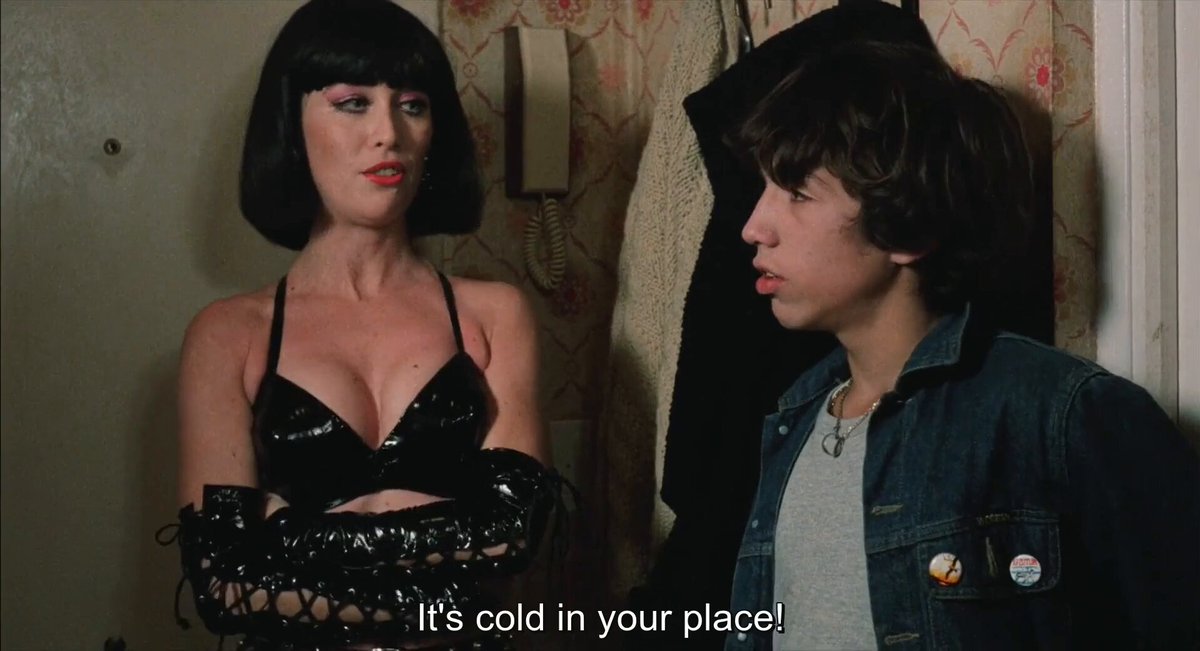
Tobe Hooper asked Kit Carson to write the screenplay for the "The Texas Chainsaw Massacre 2" (1986) with an emphasis on dark comedy, an element Hooper felt was present in the first film but went unacknowledged by audiences and critics. Hooper said, "I’ll be honest: I feel that "TCM...

27,382 просмотров • 7 дней назад •via X (Twitter)

Комментарии: 0

Нет доступных комментариев

Здесь появятся комментарии из оригинального поста

Похожие видео

Francis Ford Coppola on how young children convinced him to make 'The Outsiders' (1983) & the reason why he loves the movie: "Interviewer: 'Rumble Fish' (1983) is so completely different a film from 'The Outsiders' (1983), not just in black and white and color, but in the tone. And everybody said, “Well, he’s off in Tulsa, making two films,” rather in a way that, once, people would go up to the desert and make two westerns at the same time. 'Rumble Fish' makes 'The Outsiders' seem an odder film than I thought it was when I first saw it. 'The Outsiders' almost felt like a film in which you weren't quite there all the time. Coppola: No, I don’t think so. 'The Outsiders' (1984) was the type of film that I personally liked, a melodrama with a romantic tone. I liked the book a lot when I read it; I thought it was sweet and youthful and had something in its little, simple theme that was of value, and I wanted to make the picture very much as the book was. Maybe that’s what you're interpreting as my not always being there, except that I did make the decision to make it exactly like the book. The key to 'The Outsiders' is the score; the fact that it’s this schmaltzy classical movie score indicates that I wanted a movie told in sumptuous terms, very honestly or carefully taken from the book without changing it a lot, with young actors—putting the emphasis more on that kind of 'Gone with the Wind' (1939) lyricism which was so important to the young girl [Susie Hinton] when she wrote it. I liked the film on that basis. It’s how I made it and why I made it. But if you think about my career, I’ve never made two films that were alike... maybe the two Godfathers. But every one of my films is very different from one another and I was feeling that I was in kind of a journeyman period of my life, approaching a future style of work as a more serious, older man which would be based on a tremendous amount of exploration while I had the chance to do that. To me it’s nothing to say, well, I’m going to make that film and it’s going to be that kind of film. Like 'The Outsiders'—it’s not that I couldn’t make that sixteen other ways. People suggested, “Well, are we really going to make this book like that?” “Well,” I said, “little kids wrote me a letter and wanted me to make it that way.” Of all the letters I get from movies, 'The Outsiders' is the one where all of these cute little fourteen- year-olds . . . so I’m in it for them. I feel I must have gained something, although it wasn’t as challenging, cinematically or even on the level of acting and other things as, say, the one that came afterwards. But I always had this idea that I wanted to make one film that was romantic and schmaltzy, like 'The Godfather' (1972), and one film that was more of an art film, more in the direction of 'Apocalypse Now' (1979)." (Francis Ford Coppola's interview with David Thomson & Lucy Gray, 1983)

DepressedBergman

36,099 просмотров • 7 месяцев назад

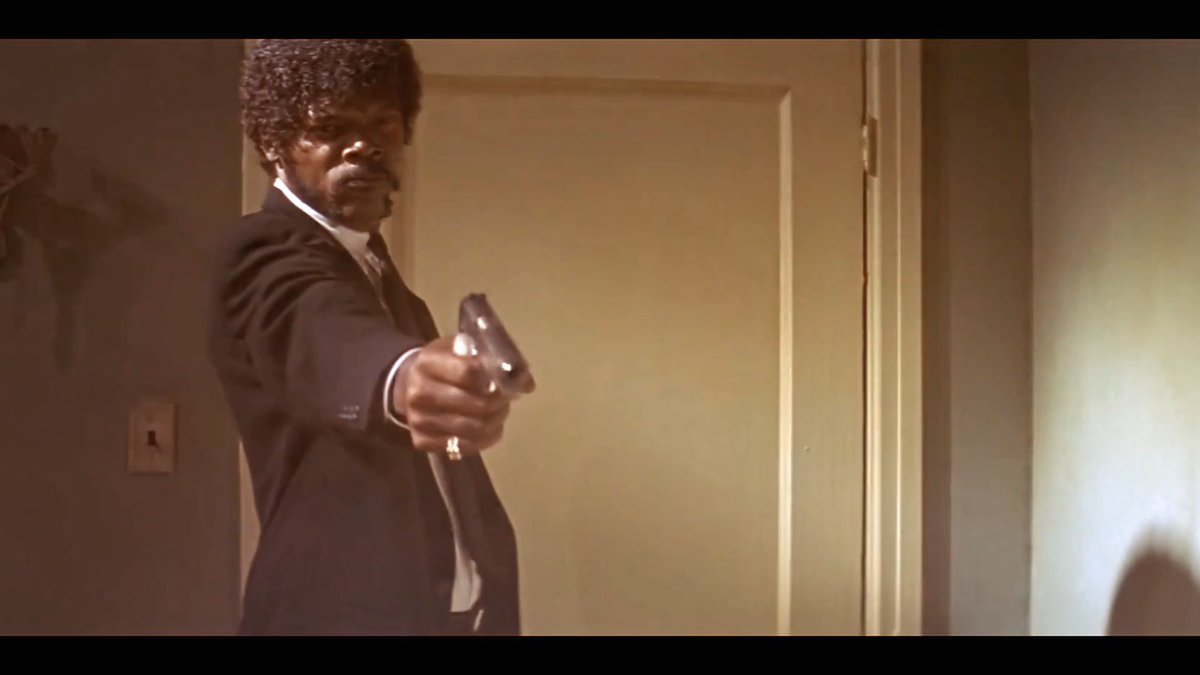
Samuel L. Jackson explains how he landed the role of Jules in Pulp Fiction, and what it was like seeing the film for the first time on the big screen: “Pulp Fiction and I came together in a very strange kind of way. I remember auditioning for Quentin for Reservoir Dogs in New York (for the role of of Detective Jim Holdaway, Mr. Orange’s police contact). And apparently I didn't get that role. But I was at Sundance the year that he screened it for the first time. I was sitting there and I watched that movie - I was awed by it. I mean, there were people running up the aisles when Michael Madsen was cutting the cop's ear off. People were going, "Oh my God, this is horrible!" All these “auteurs” were running out of the theatre. I was like, "This is good. This is happening. This is different." So after the film, I walked up to Quentin and said, "This film's amazing, man. It's great." And he looked at me and said, "Hey! How'd you like the guy who got your part?" And I was amazed that he even remembered who I was - but he remembered me. A year or so later, I got a phone call saying Quentin Tarantino wants to have dinner with you, because he'd seen Jungle Fever and he liked that Gator character. When we had dinner, we were sitting there talking. We started talking about Hong Kong films and cartoons and foreign movies and obscure things that we watched, horror movies. We found out we liked the same kind of stuff. And he told me he was writing this thing, and he was writing this part with me in mind. He was going to send it to me. I went off to do another film. I was in the backwoods of Virginia somewhere doing a film, and the script came. A little plain brown wrapper from Jersey Films. And Jersey's got these gangster images on the logo. And it said, "If you show this script to anybody, two guys named Ernie and Luigi will come and break both of your legs." Whatever. I went, "Yeah, right." So I sat down and read it. Boom. I read this thing. It's like, "Oh my God. This is awesome." And then I said to myself, "Nobody writes a script this good. There's no way that this script is as good as I thought it was." I closed it. I opened it again. I read it immediately. Okay. This is great - If whoever produces this film lets him shoot exactly what I just read, if they stay away from it, they don't try to edit any of this stuff out - this is going to be a great film. It's going to be kind of audience-specific, because I like that kind of stuff. I have friends that I knew would like it. It was a generational kind of film. I never thought it would cross over and do all this stuff. We shot it. We had a great time doing it. And the first time I actually saw the film was at the Cannes Film Festival. That night, it screened, and I was sitting there watching the film. The audience was loving this movie, loving it. About halfway through, I realized there were subtitles at the bottom of it. So I said, "Hey, these people are reading it, and they're getting it. This might be special. This really might be something special." And actually, by the time it was over, there were tears running down my face. I was just so pleased that I was part of that particular film… I never felt that satisfied, and that kind of full about a performance and about being part of something as I was in that particular moment.” Quote comes from an Interview with the American Film Institute 2010

Gangster Cinema Central

85,366 просмотров • 2 месяцев назад

#SEONGHWA talking about watching his favorite musical, Les Misérables., for the first time in a theater in London! ⭐️: Anyway, as for what I did today, I’m talking in circles (not answering). Today… so yesterday after dinner I saw they were performing a musical. I’ve seen a lot of small‑theater musicals but I’ve never seen a really big musical live, like in person. So… and they happened to be performing my favorite! What could it be~? Oh, someone got it right. It's Les Misérables. When did it come out? I was in wlementary school? Wait, when did Les Misérables come out in Korea? When it first released I went to see it with my mom, just the two of us. (After researching it) Here it says it came out in 2012. Then how old was I? Was I in middle school? Yes, right. I went to see it with my mom, the two of us, and it was so fun. I think it was the first musical film I properly watched in a theater. Before that I watched Mamma Mia on DVD when I was in Australia, but I couldn’t understand it then so I didn’t know what was fun about it. Les Mis was the first musical film I properly saw in a theater. I loved it so much that I went to see it three or four more times. And then yesterday, when I came out after eating, I saw this huge billboard for it. So, since I’m the type who acts fast once I decide, I said “I’m going to watch it today,” and went with my manager. There were real session musicians there, like down below. I was shocked by that. From above, like slightly, youu could see the conductor. I didn’t know that, I thought they played MR... So I was like, “this is awesome.” I went and bought merch too. But I didn’t know which seats were good, so I just chose the seat in the back of the first floor. But because there’s a second floor, my view was blocked, my view of the stage looked like this (obstructed from the bottom and above), so I watched slouching on my chair like this. Now I know, the front row of the second floor is the best. Or the very front of the first floor so you can see the actors’ expressions well. But movies are better from the back so (I though was the same for musicals). Anyway. Yes, I think it was a “restricted view” seat... it was probably cheaper. Anyway, the show was 2 hours 50 minutes and since I know the movie so well I understood everything even without subtitles. It was so fun. I knew most of the songs too. It was my first time seeing a musical in such a big venue so it was really great. The actors too were amazing. There were about 40? And the set, there were at least 10 different ones. I don’t know how it works, because it’s was not people moving/changing sets. They just slid in and out and the stage transitions were so smooth. Who’s my favorite character? Oh, that's a hard question? First, I like Marius. Ah, actualyy, when I was younger I liked Cosette and Marius. But now I feel drawn to Éponine. Because she loves so... unconditionally. After watching it today, Éponine loves Marius but even while she’s in a one‑sided love, she tells him where the girl he loves lives and helps him escape. That's so sad. Fantine was really pitiful too. Kind of... unfairly treated? My favorite song is One Day More, of course. And today, there were songs that felt different listening now that I’m older. I don't know the titles so I’ll have to look them up. The lingering feeling was strong, it felt similar to when I first watched it. And after that act (One Day More), the audience clapped and cheered so loudly. You know, I thought musicals were supposed to be quiet? But everyone was cheering so loudly, so I clapped and shouted too. And right after it ended the lights suddenly turned on and I was like, "is it over?" but it was the intermission. There were Act 1 and Act 2. I was so confused, I really thought it was over. I asked myself, “Is this a half‑length movie?" I mean, "musical?” Everyone got up so naturally and I was just confused alone. Anyway, the orchestra was seriously so cool. I want to see it in Korea too.

Everything Seonghwa

11,434 просмотров • 2 месяцев назад

John Carpenter on how the studio, audience and critics reacted after watching "Big Trouble in Little China" (1986) & the reason for movie's failure: "Carpenter: I thought about writing a book about my experiences in Hollywood being a director, mainly because I was burned out on making movies. But | didn't do it because | thought, “I’m not ready yet. | don't have enough to say yet. I need to make more films and | don’t want to quit yet.” Interviewer: How did Fox executives react when they saw the movie for the first time? Carpenter: Needless to say, they had a few problems with the movie. They sat down with me and we went through the film. They didn’t like that the white hero was such a buffoon, and that he was being shown up by the Asians. They were afraid the audience wouldn't think this guy was brave, so they asked me to cut out the humor and emphasize his bravery, which was impossible to do. Then we got to the preview stage. The audience that saw it really loved it and laughed, so they wanted me to put the humor back in and go back to what it was—they still hated the movie, though. They didn't want Kurt to play it plenty. They wanted him to be an action hero, a real live action hero, not Jack Burton. They wanted him to be more like Rambo or Stallone. They wanted him to play it straight and it wasn't straight. Interviewer: How was the movie perceived by the audience and the critics? Carpenter: Nobody got it. Like I said earlier, timing was never my thing in terms of when my movies come out. This movie was completely and totally misunderstood. The critics and the public thought it was just bad, and there is nothing | can do about that." ("John Carpenter - The Prince of Darkness", Gilles Boulenger, 2001) P.S: On this day, 40 years ago, "Big Trouble in Little China" (1986) was released in the USA.

DepressedBergman

102,065 просмотров • 1 месяц назад

Alex Proyas on the Commercial failure of 'Dark City' (1998) & its similarities with 'The Matrix' (1999): "Interviewer: Are you surprised by how big a cult film it has become? Proyas: I was surprised it didn't achieve commercial success initially, but I'm happy it has had this long-lasting life after the fact. I was pretty disappointed the studio hadn't really managed to sell the movie in the way that they could have. I don't think they really knew what to make of it quite frankly. The studio put out a trailer that was quite clever. It was completely non-narrative, just music and imagery. The guys who made the trailer specifically wrote a piece of music for the trailer, and the whole thing felt handcrafted and definitely had a personality. I think people were genuinely impressed by it but it didn't explain to them what the movie was or give them an idea of the kind of experience they were going to get. I think it made audiences think it was some kind of a horror movie. As a result people kind of overlooked it in the theaters. I know 99% of the people who loved it and always ask me about it are people who saw it on video years later. How do you feel about the similarities the later 'The Matrix' (1999) has to 'Dark City' (1998)? If I answer that question honestly it sounds like sour grapes because obviously 'The Matrix' did better commercially than 'Dark City' did. 'Dark City' came out a year before 'The Matrix', one of my producers on 'Dark City' worked on 'The Matrix', and the Wachowskis saw 'Dark City' a good nine months before 'Dark City' came out in the theaters, so they had a good run at picking the more important cherries off the cake. I feel like it's a question I can't answer in any more detail than that, other than to say that maybe the Wachowskis should be asked the question rather than me." (Alex Proyas' interview with Paul Rowlands, 2017)

DepressedBergman

66,180 просмотров • 7 месяцев назад

Edward Yang on the impact of watching Aguirre, the Wrath of God (1972): "I found a job in Seattle at a research laboratory that contracted to do classified defense projects in microcomputers. I was among the first generation of designers and applicators for microcomputers and microprocessors. By the time I turned thirty I was pretty well established, with a team of seven or eight guys working on some very interesting projects. Later on I made the association that designing is like writing, and I realized that this background helped me a lot. After a couple of years as an engineer, of course, the routine bored me. One night, I was driving after work in downtown Seattle, and I saw a billboard outside a movie theater with the words, German New Wave, and the title, Aguirre: The Wrath of God. It made me curious, so I went in. I was fortunate. I came out a different person. That two hours just blew me away. It restored my sense of competence that I could be a filmmaker. This is what I thought a film should be. Film school would never teach you to make those kind of shots. That was one of the crucial moments of my life. I had turned thirty, I thought I was getting old, and three more years passed before I got the chance to work on a film project with a friend who asked me to write a script for him. I went back to Taipei, and also visited Hong Kong for the first time, and the film was shot in Japan. I got an offer to write and direct a made-for-TV movie in Taiwan, so I didn't go back to Seattle." — The Engineer of Modern Perplexity: An Interview with Edward Yang by Robert Sklar, published in Cineaste, Vol. 25, No. 3 in 2000

RadiantFilm

97,385 просмотров • 9 месяцев назад

Pedro Almodóvar on his taste in movies: "Interviewer: With every film you make, you reveal more about yourself as a cineaste. Do you think people underestimated your film knowledge at the beginning? Almodóvar: Yes, when you're making underground films it's very easy for people not to take one seriously. But from my very first film I was very serious as a filmmaker. I had a very outstanding media personality at the time. I'd get up onstage and sing punk rock songs, not exactly in drag but in very daring attire. So, probably, in the media, I was connected to that world and taken less seriously. It was drag in the sense that the New York Dolls were in drag, because they wore make-up, high heels and things like that. But it was very much a part of the same thing. From the very beginning I took my filmmaking very seriously. By way of example, on my first film I devoted a year and half to making it, with very scarce resources, and I think that proves my passion for filmmaking from the very beginning. Interviewer: And that was Pepi, Luci, Bom...? Almodóvar: Yes. But I think in Spain they started to take me seriously after 'What Have I Done To Deserve This?' (1984), because it was a film with a very powerful social and class-awareness message. Abroad, it was probably with 'Law Of Desire' (1987), 'Matador' (1986) and 'Women on the Verge of a Nervous Breakdown' (1988). I'm not complaining about that, it just took a bit longer perhaps. But, yes, my first film was deliberately underground, because i had no budget to make it. But I was very serious about my filmmaking. And as I started to make perhaps more serious films... There's a question of prejudice when the films become more serious – people take you more seriously. I do believe they're better films, but when you're making films that seem more light-hearted there's always that prejudice. At the same time, I was always very eclectic. Even in the music I listen to. But above all with the movies that I see or that interest me. Interviewer: What do you mean by that? Almodóvar: I could get a lot of pleasure from a screening 'Pink Flamingos' (1972) by John Waters, and at the same time a Bergman movie, like 'Face To Face' (1976) or 'Persona' (1966). When I was a child, I remember very well that I saw a film by Michelangelo Antonioni. I was at school at the time, about 11 or 12, and I was deeply interested. But at the same time I saw silly pop movies that I liked too, because I was a child. I always combined these two tastes in my life." (Pedro Almodóvar's interview, Damon Wise, 2011) P.S: On this day, 40 years ago, 'What Have I Done To Deserve This?' (1984) premiered at the Montréal World Film Festival, Canada.

DepressedBergman

54,052 просмотров • 6 дней назад

Bong Joon-ho on the "American-bashing" in 'The Host' (2006) & why he was surprised by the film's success: "Cineaste: Why did you put so much political subtext into 'The Host' (2006)? Do Korean audiences like that? Bong Joon-ho: It’s fun for me to bury my political comments here and there in a film, but this is also part of the tradition of the monster or sci-fi genre. It was a double blessing for me to convey some political commentary in the film and have it work within a genre. For instance, the opening scene, when the two scientists are pouring chemicals into the Han River refers to an actual event that took place six years ago. But at the same time it’s a very typical monster movie opening. So for me it was great to hit both at the same time. It’s not like I’m putting raw social commentary in the film. It is integrated into the entertainment value of the film. Some Koreans believe that 'The Host' (2006) is a moving family story; others say, “Wow, we’re totally bashing America!” But there are more of the former. Cineaste: Is there a lot of “America bashing” in Korean films? Bong Joon-ho: Some films do to some extent, once in a while. But to quote a famous Korean critic: “This is Korea’s first legitimate anti-American film.” And she gave me four stars. Cineaste: Perhaps this may start a trend in Korean films. Bong Joon-ho: It would be hard for this to become a trend. When The Host first came out, some critics said that by drawing America in this satiric way, the film would limit its appeal to mass audiences, that the satire would make them uncomfortable. Of course, after it became such a big hit, critics reevaluated and said that the younger generation really likes those elements in the film. But overall, those elements weren’t the focus of the film. (....) Cineaste: So is the incredible response of the Korean audience what you expected? Bong Joon-ho: I was so preoccupied just trying to finish the film because there were many technical difficulties that I had no time to think about how audiences would react. When the box office was so big, I was puzzled. At this point I still can’t analyze why people love it." (Bong Joon-ho's interview with Kevin B. Lee, Cineaste, 2007)

DepressedBergman

125,367 просмотров • 7 месяцев назад

"In 'Zodiac' (2007), I wanted the audience to feel like they went through the ringer with these guys,(...) in retrospect you look at it & say maybe audiences who are looking for entertainment on a Friday night don’t want that toll taken on them." --- David Fincher Full Excerpt: "Interviewer: It’s so rare to walk out of a movie and to feel like I know more about a subject than I did walking into it. Watching Zodiac is like the experience of reading a really absorbing non-fiction book, and I know that part of it for you was about honoring the people who were the victims of the Zodiac, but you also have so many details, so many facts, you take it to such a level where there’s so much information… why was that important to you? Fincher: I don’t respect movies that treat me like I don’t have the attention span or mental faculty to follow… it’s one thing to talk about Dave Toschi’s fall from grace in an oblique and generic way. I can answer that question in a couple of different ways. I wanted the movie to take its toll on the audience, I wanted the audience to feel like they went through it, like they went through the ringer with these guys, and I didn’t know how to do that because these guys didn’t run across rooftops and fall off fire escapes. In their quest to bring the Zodiac to justice they followed the trail of breadcrumbs as far as it would take them, and they kept pushing and kept pushing when there were crackpots coming out of the woodwork. I felt like I didn’t want to make one of those movies where you do montage/montage/montage and you get the idea that they went to the mat with this, that it took its toll – I wanted the audience to feel that. You know, in retrospect you look at it and say maybe audiences who are looking for entertainment on a Friday night don’t want that toll taken on them. I felt like anything less than that would be doing the story and people involved a disservice. You could do it as something compressed, where you get the gist of it, and we would have shots of Jake [Gyllenhaal] half asleep and you would have those obligatory shots where the boss says, ‘You look like sh!t.’ And in the end I still don’t feel like you get enough of what happens with his family, we don’t get enough with his wife and kids, but it was all we could do to get it in at under two hours and forty minutes. I feel like we took about as much time as you can really expect an audience to sit still for and we tried to make them feel what it was like to be invested in this circuitous run down the rabbit hole." (David Fincher's interview with Devin Farachi, 2008)

DepressedBergman

19,335 просмотров • 6 месяцев назад