正在加载视频...

视频加载失败

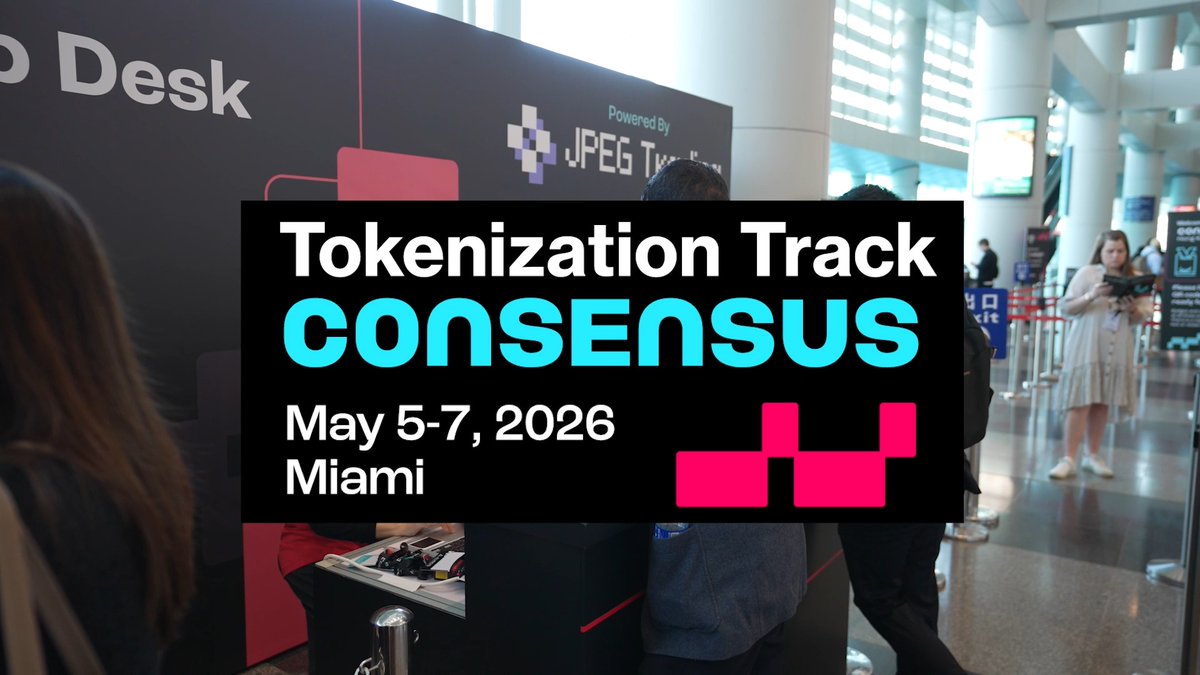
Tokenization as Infrastructure, Not a Shortcut In this clip, André Casterman explains why tokenization is best understood as an upgrade to the internet’s financial infrastructure, not a guarantee of liquidity or success. Tokenization does not create demand on its own. Liquidity still matters. What it does change is the...

14,607 次观看 • 7 个月前 •via X (Twitter)

0 条评论

暂无评论

原始帖子的评论将显示在这里

相关视频

🌐 XDC Network x Brickken | Institutional Tokenization Infrastructure In our latest XDC Network show, we sat down with Ludo R., Co-Founder and CRO of Brickken, to discuss what real, institutional-grade tokenization looks like in practice today. Brickken has already enabled $300M+ in tokenized value across 16+ jurisdictions, supporting compliant issuance of equity, debt, funds, and real-world assets. This is not experimental infrastructure. It is production-grade. One of the biggest misconceptions is that tokenization is mainly a technical challenge. In reality, the hardest work happens off-chain: legal structuring, jurisdictional compliance, and institutional onboarding. Brickken exists to unify all of this into a single operating layer. We discussed why Brickken chose to integrate with XDC Network. Institutional finance cannot operate on unpredictable costs or congested networks. XDC’s fast finality, near-zero and predictable fees, and enterprise-aligned infrastructure make it a practical foundation for real-world assets. The bigger shift is who is leading adoption. Early narratives focused on retail. What we are seeing now is institutions moving first, driven by efficiency, instant settlement, and operational clarity as regulatory frameworks mature. Tokenization is entering its next phase: plug-and-play infrastructure, institutional-grade standards, and real integration with traditional finance. Podcast supported by XDC Foundation

Generation Infinity

118,117 次观看 • 8 个月前

We Were Right About This Space $12.7 trillion is now moving toward tokenized money markets. JPMorgan Chase Wealth Management just released a document describing the tokenization of money market funds as a fundamental upgrade to the plumbing of global finance, not a simple technology enhancement. The global money market fund industry is ~$12.7T, with ~$8.1T in the U.S. alone. Their position is explicit: Tokenized money market funds extend the evolution from stablecoins and deposit tokens while enabling: • faster settlement • greater predictability • improved collateral efficiency • more transparent redemptions that may enhance financial stability This document is written for institutional, wholesale, and professional clients and references live infrastructure, not theory. Networks and systems mentioned or contextualized: • Hedera as a public permissioned DLT with built-in regulatory controls • Solana and Avalanche as scalable, widely adopted public blockchains • Bitcoin and Ethereum as foundational blockchain systems • Canton Network through JP Morgan–related settlement and market infrastructure activity Additional real-world deployments highlighted: • JP Morgan arranged a U.S. commercial paper issuance on Solana for Galaxy, purchased by Coinbase and Franklin Templeton Interesting connections uncovered: • Visa launched USDC settlement for U.S. banks on Solana, with Cross River Bank helping scale the program to billions in annualized volume • As early as 2016, Cross River Bank was among the first U.S. banks to adopt Ripple (the “IOU network”) for real-time, low-cost cross-border payments, long before today’s tokenization narratives By the numbers: JP Morgan’s global liquidity business manages ~$1.4T, including ~$1.1T in money market funds, and is actively developing tokenized versions to optimize liquidity. For context, total on-chain tokenized real-world assets today are still only ~$50B. JP Morgan alone is discussing tokenization at a multi-trillion-dollar scale. This isn’t speculation. Regulated financial institutions are preparing for tokenized markets to operate inside the existing system, not outside of it. Networks mentioned: SOL I HBAR I XRP I CC I LINK I ETH I AVAX I BTC Watch what they do, not what they say.

Ryan (King) Solomon

17,986 次观看 • 7 个月前

BREAKING🚨 OVER $2 BILLION IN ELECTRICITY IS NOW TOKENIZED ON $XRP LEDGER. 👇 Not crypto. Not DeFi yield. Electricity. Real energy. Real economic value. ON XRP INFRASTRUCTURE Justoken turned real-world electricity production into digital financial assets living on XRPL. That's physical energy flowing through power grids being represented, traded, and settled on the same blockchain that powers XRP. This is why every XRP holder needs to understand what this means for token demand. Every single transaction on XRPL requires XRP for fees. Issuing tokens. Moving them. Trading them. Settling them. Managing them. Each action burns a fraction of XRP. $2B in tokenized electricity generates constant transactional demand. Every new account on XRPL requires XRP reserves. More companies. More brokers. More settlement accounts. More wallets holding tokenized energy. Each one locks XRP just to exist on the ledger. Every trust line requires XRP reserves. XRPL tokens operate through trust lines. Each trust line locks additional XRP. $2B in tokenized assets means thousands of trust lines. Thousands of XRP reserve requirements. As tokenized energy gets traded, financed, and settled, XRP sits at the center of liquidity routes. The native DEX on XRPL means these tokens can be exchanged through XRP as the bridge asset. Payment paths. Exchange routes. Settlement layers. All flowing through XRP. This is not a partnership announcement. This is $2 billion in real-world commodity value creating measurable, ongoing demand for XRP through network fees, account reserves, trust lines, and liquidity routing. The tokenization of assets on XRPL is the demand driver most people haven't modeled yet. Justoken just proved it at $2B scale. TRILLIONS COMING SOON

X Finance Bull

94,066 次观看 • 3 个月前

Why BlackRock CEO Larry Fink calls Ethereum "The Toll Road to Tokenization" "What he meant by that is assets will be tokenized, people will transact, and then each of those transactions will pay a fee to the Ethereum network. Part of that fee will be burned and decrease the supply of ETH. The other part will be paid to stakers. So it's kind of like a toll road for anyone who wants to transact with tokenized assets." "The first example of product/market fit with tokenization was stablecoins. There are a lot of reasons why a tokenized dollar is better than one on fiat rails. But the big things are accessibility -- it gives people around the world who don't have access to the US financial system access to dollars -- and reducing the friction of settling those transactions. If you've had to send a wire or ACH transfer, it takes days. Stablecoins settle instantly, so it's way more efficient. You've even heard Jamie Dimon come around to the advantages of stablecoins." "Stablecoins are really just tokenized dollars, and then that's going to happen with almost every asset class. Stocks will be next. People are talking a bout tokenizing art and real estate. The theme is 'the tokenization of everything.' And as all of these assets move on chain because more people can access them and the friction of transacting with them is reduced, trillions of dollars of assets will move on-chain... and Ethereum will be the global settlement layer for all of those transactions, and all of those transactions will generate a fee to ETH holders, which is why your ETH will compound."

Etherealize

10,783 次观看 • 3 个月前

Let me explain something very few people in this space seem to know, or even understand about tokenization. #Tokenization is both the Great Taking and the Great Wealth Transfer. On the surface, it's innovation. In reality, it’s the digitization of the world’s assets, including real estate, gold, currencies, debt, stocks, commodities, even things like carbon credits and natural resources. Once tokenized, these assets become programmable, controllable, trackable, and transferable without any friction. This is how they're changing the definition of ownership without asking for your permission. But here’s the part they never advertise: What matters is who controls the flow of value between them all. Because whoever owns the rails, owns the future. They’re not just creating a new asset class, they’re building the infrastructure that moves all that value. And that’s the real Great Taking: seizing control of the movement, not just the money. At the same time, it’s also the greatest wealth transfer in history. If you understand this early, and position yourself correctly, you can be on the receiving end of that consolidation phase. That’s where #XRP comes in. The #XRPLedger wasn’t made to compete, it was made to connect and bridge everything underneath it all. That's why It’s fast, neutral, borderless, and infinitely scalable. Designed to be the value layer of the tokenized world. This is why I keep telling you, if you understand this macro view, you’re not just early, you’re blessed and in alignment with the next financial system before it goes live. “Wealth is no longer owned. It’s routed.” — Versan Aljarrah 🔗

Black Swan Capitalist

39,995 次观看 • 1 年前