Загрузка видео...

Не удалось загрузить видео

На главную

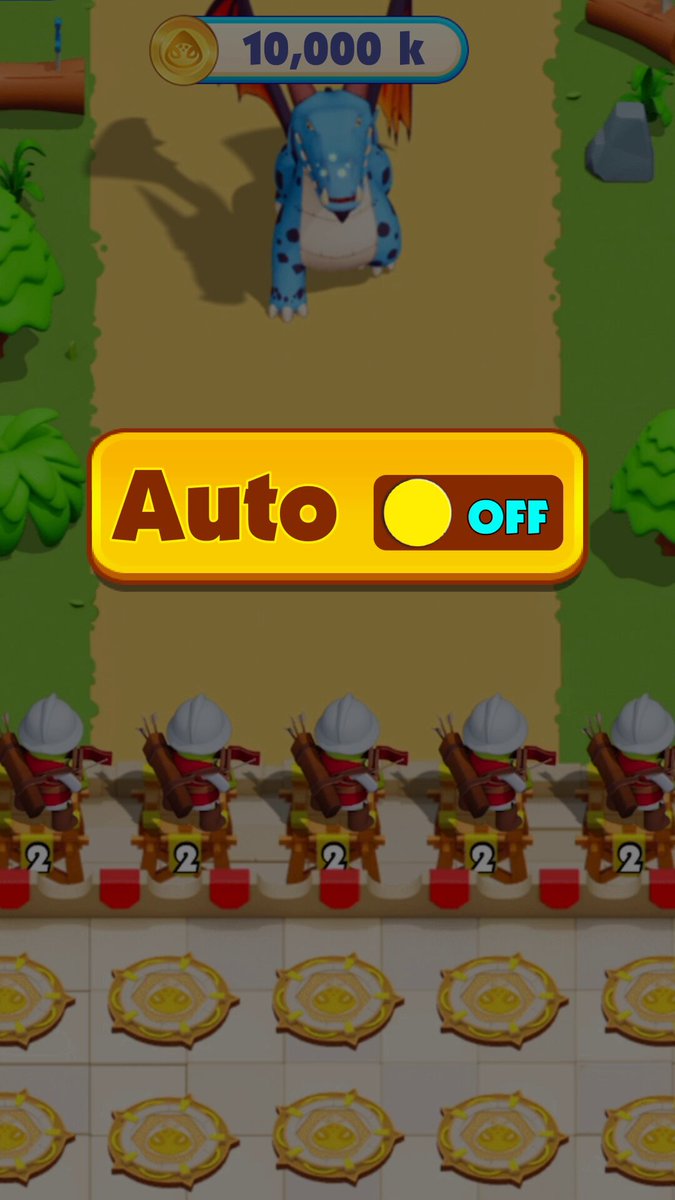
$TON is getting listed on #Binance futures! The TON coins season is here! Don’t overlook the biggest dApp on Ton ecosystem integrated with Telegram. #Airdrop + Tier 1 #CEX listing confirmed! Join here: ✨ Why Notcoin Stands Out » A gaming twist to crypto, without barriers to entry »...

11,995 просмотров • 2 лет назад •via X (Twitter)

Комментарии: 0

Нет доступных комментариев

Здесь появятся комментарии из оригинального поста

Похожие видео

Prediction Market is one of the leading Web3 niches in 2024! With about $4 Billion in trading volume, $192 Million in TVL and millions of users in 2024, prediction protocols have been showing tremendous growth and attracting user adoption in Web3. PolyMarket seems to be leading the pack, with over $175M in TVL, and backing from Vitalik Buterin. However, a majority of Prediction Markets, including PolyMarket, currently lacks the flexibility and capital efficiency required for seamless transactions. Also, they are all majorly focused on driving Web2 users thus neglecting the need for markets that cater for short-term, high-risk investments from Web3 Degens. To tackle these flaws, there's a need for a revolutionary contender that understands the need of Web3 Chads That's where Predict Hub comes in PredictHub is a prediction Market that transforms real world events into opportunities for everyone to participate and forecast. Launching on Arbitrum, PredictHub is already catching the attention of major players in the Space by offering something PolyMarket and others don't - Flexibility and Incentives. By offering fast market updates and innovative prediction category like ETF Forecasts, PredictHub is changing how we interact with Prediction Markets. But then, here's where it gets more interesting; PredictHub offer users a unique point system, where you don't just make predictions, you also earn rewards. The more you Predict, the more you earn. These rewards are 2-fold: Nova and Orbit Points. Nova Points are earned by traders based on their trading activity and their leaderboard ranking. Orbit Points, on the other hand, are earned by users who provide liquidity, based on their LP size and duration. Other Point systems include PolyMarket User Points, Leaderboard Bonus and Market Multipliers. These rewards offer users more competitive edge than other prediction markets. Apart from these rewards, PredictHub features a unique 3-tier referral system, rewarding users with even more as you invite your friends. The more friends you bring, the greater the rewards. On top of these, PredictHub focuses on USDC and a wide-range of yield bearing assets like GLP, gUSDC, and sUSDe, enabling users to optimise their earning while holding assets across Networks. Exciting, right? PredictHub is in its Testnet phase and you can start earning Points Right away 🔅 Here's how to Get Started on PredictHub: 1. Go to 2. Request Faucet 3. Start making predictions and earning Points Easy-Peasy ✅ More Info can be gotten from Predict Hub All eyes are on PredictHub as the fix for the flaws of Prediction Market Protocols. With its unique approach targeting untapped niches that most existing prediction markets have yet to explore, I believe the Protocol has the potential to become a breakout success I will be placing good Predictions to Position 🚀🚀🚀

InfoSpace OG

19,674 просмотров • 1 год назад

The Sei ecosystem is thriving, and this week was no exception. From ATHs in daily users to major integrations and exciting community events, the ecosystem keeps leveling up. Here’s what you might have missed 👇 🔴 ATH in Daily Users - Sei sets a new record for daily active users showcasing consistent ecosystem growth. 🔴 @CryptoBint 'Wen?' - How a single tweet led to Sei NFTs on Magic Eden. 🔴 Sei Eco at Basel - Gaming, community, and hoops collide in Miami. Full details: 🔴 Magic Eden 🪄 - Sei NFTs launch on Web3's biggest NFT marketplace. 🔴 Sei Dapps - #1, #3, #4, #5, and #9 fastest-growing apps in crypto—all Sei native. 🔴 Sei Tenkaichi - The tournament continues. $25K up for grabs across 5 games. 🔴 Relay - Bringing to Sei now live on Relay. 🔴 World of Dypians - Explore a dynamic metaverse with treasure hunts and battles—all powered by Sei. 🔴 Drift Zone - 600K players and counting! A huge milestone for one of the standout games on Sei. 🔴 Chirpley🐦 - Now integrating with Sei to enhance user experience and become the influencer hub for the Sei ecosystem. 🔴 Dad's Attic - Shadow Mysteries, a survival Telegram Mini App game including quests, and mysteries—all powered by Sei. 🔴 @MokokoStudioOFL - Mini-games like @MajyoGame and CandyDreams are now live on Sei, bringing fresh gaming experiences to the ecosystem. Another incredible week for the Sei ecosystem. From major milestones to exciting integrations and gaming activations, Sei continues to thrive. The momentum is real, and it’s only the beginning. Sei Less, Build More.

Sei

110,575 просмотров • 1 год назад

Building The On-Chain Cooperative 🟡 Welcome to the dawn of a new era in the crypto space, where the buzzword "community" is not just a hollow echo but a vibrant force that propels us towards a brighter future. Let's delve into the heart of MODE, the Onchain Cooperative that seeks to redefine the landscape of web3. What does MODE stand for? MODE stands for building an on-chain cooperative focused on sustainable growth and collective prosperity. At its core, MODE is guided by the principles of cooperation, shared incentives, and community-driven development. The goal is to shift from the "fat protocol" mentality where most value accrues to the blockchain/protocol itself, towards an ecosystem where builders, users, and applications can thrive together. What’s MODE's vision and mission in the web3 space? MODE's vision is to return to web3's founding promise - a future that is better for all, not just the individual. A world with aligned incentives that drive growth for everyone involved. A place with opportunities for all, not just the few. The mission is to pioneer the on-chain cooperative - where contributors are rewarded fairly based on the value they provide. Features like Sequencer Fee Sharing distribute a portion of fees to smart contract developers, incentivizing participation. The aim is to encourage collaboration instead of confrontation. Together, the MODE community can deliver new models for cooperation and shared prosperity in web3. Mode Network will solve many problems today in Web3: • Lack of incentives for developers: Developers creating decentralized apps (dApps) currently have few direct economic incentives to create and maintain their projects. Mode provides them with a steady source of income through fee-sharing. • Lack of collaboration: There are few incentives for blockchain projects to compete less and collaborate more for the benefit of the entire ecosystem. Mode's model encourages collaboration by aligning participants economically. • Excessive value accrual at the protocol layer: Mode aims for a more balanced model where the protocol's success is fueled by the success of application developers/builders and the wider community. Growth is a two-way street – "as we grow, you grow". The MODE Pledge 💛 The promise of crypto and blockchain is a brighter future. One that is better for all not just the individual. Where nothing is more important than community. We've strayed from this path. Entering a world of player vs player. Where value is extracted rather than shared. The game is zero sum rather than positive sum. And incentives are aligned with domination, rather than cooperation. Mode is the dawn of a new age. and a return to the promise of what can be. A world with aligned incentives that drive growth for builders, users and projects. A place with opportunities for all, rather than the few. Where we say goodbye to the 'fat protocol', and hello to the onchain cooperative. Join us on our mission to grow together. If this vision for a community-powered web3 ecosystem resonates - where creators are rewarded for their contributions - you can join the MODE on-chain cooperative! Visit Join the discord community Follow Mode 🟡 Together, we can transform web3 into a positive-sum game that unlocks new possibilities for all. Where your growth fuels the growth of others. Let's build the on-chain cooperative!

ETHachi Uchiha | Crypto DEGENius

16,774 просмотров • 2 лет назад

The $INJ Community BuyBack is witnessing record participation as it accelerates INJ burns while also rewarding loyal ninjas. This is the only token BuyBack program that not only reduces INJ supply but also enables community members to earn a share of Injective’s onchain revenue. To date, over 6.9 Million $INJ tokens have been burned with increasing momentum with the new Community BuyBack. So here is a short guide that walks through how the buybacks work, how you can get whitelisted, and how you too can start earning from the burns. 1️⃣ How does the INJ Community BuyBack work? The Community BuyBack is an onchain event that allows eligible participants to take part in Injective’s deflationary mechanism. Participants commit INJ and in return receive a pro-rata share of the revenue generated across the Injective ecosystem. The INJ committed is permanently burned, reducing total supply. This process rewards the community, increases INJ scarcity, and aligns long term value with ecosystem success. 2️⃣ Why was the BuyBack created? The INJ Community BuyBack is designed to increase the rate of $INJ burns. This works in tandem with the recent introduction of the INJ Supply Squeeze upgrade which enables INJ to be one of the most deflationary assets in all of crypto. The Community BuyBack also leads to a more inclusive structure designed to prioritize rewarding real, active users within the ecosystem. 3️⃣ How can I get whitelisted? Currently, whitelist eligibility is determined based on users who are actively staking $INJ and those who actively interacted with onchain apps on Injective. From this list of active addresses which, a randomized selection process is used. This prevents simple gas wars or bot dominated entries and creates a more level playing field for genuine participants. The system is designed to favor those who are consistently active and contributing to the network’s growth, giving them a fair chance to participate in the Community BuyBack. 4️⃣ How can I join the BuyBack? You can head on over to INJ Hub to see if you are eligible. But don't worry if you did not get into this round! Actively staking and participating int he ecosystem is the best way to increase the odds of your addresses getting whitelisted for the next round. Ninjas on top. Always 🥷

Injective 🥷

21,346 просмотров • 6 месяцев назад

Comprehensive Guide to Maximize Your Points in the Mode Airdrop: Strategies and Tips 🟡 Mode's airdrop is available, but earning points is not just about volume. Here's what really matters when it comes to increasing your points: Precheck: • Past activity, NFT holdings, and participation in Mode campaigns get you points. (Testnet participants, early NFT holders, and Degen Score Beacon holders) TVL: • Bridge your assets to Mode and keep them there for maximum points. The longer, the better! • Fees generated matter more than just volume, so avoid botting. Referrals: • Can't bring big TVL? Refer others who do! You earn 16% of their points (TVL & fees). Example: Refer someone who generates 10,000 points, you get 1,600. Quests & Ecosystem: • Complete on-chain quests and use approved dapps for points. More dapps coming soon! • Provide liquidity to approved partners and earn double the points for TVL. Bonus Points: • Get a Mode NS name for points and future ecosystem benefits. • Keep an eye out for partner airdrops (separate from Mode points). How not to earn points • Volume doesn't matter. Focus on fees generated. • Buying Mode NFTs now won't get you points. They might be useful later, but for now... nah. • Making tons of wallets is pointless. 1 wallet with high TVL beats 100 with low TVL. • Depositing $10 and doing nothing won't work. Be active, bring value, and support the ecosystem. Remember, this is only Airdrop 1. Mode is building a thriving ecosystem and your active participation is important. Participate, earn points and be part of Mode. If you have not yet participated in Mode 🟡 airdrop campaign, do it now! You will need to enter through a referral link: Or use my code: 2uyMS8 If You Know You Mode, Good luck Chad!

ETHachi Uchiha | Crypto DEGENius

17,392 просмотров • 2 лет назад

Chiliz's Highlight of The Week: Chiliz Farm: Play & Earn | Mobile Farm Game 🌶️ 🎮 🌶️🧑‍🌾 Take a moment to stretch your fingers, because this week's highlight is going to ask a lot from them. Welcome to Chiliz Farm! ✨ 📚 Introduction: Chiliz Farm is a play-to-earn mobile farm game on Chiliz Chain. It started as a casual Telegram clicker game, like Notcoin & Hamster Kombat, but has already introduced many new features and mini-games such as Snake, Match-three and auto-farmer. Since the launch on August 10th, Chiliz Farm already onboarded 6,000+ users, with over 200,000+ mini-games played and 10,000,000,000+ coins being farmed. 💥 Why to play the game: First of all, it is fun to play! Second, all players will receive an airdrop of the upcoming Chiliz Farm token based on the number of coins you've accumulated in the game. But that's not all! The top 100 players that acquired the most coins, the top 20 players in each mini-game and the most active participants in the community will also receive special NFTs, which will be incredibly valuable and offer unique boosts in the future game where you can earn real tokens. These NFTs will also provide additional advantages within the larger ecosystem. 🏗️ What to expect in the future: Chiliz Farm is dedicated to release an Android & IOS app for Chiliz Farm at the end of 2024. With their own cryptocurrency on Chiliz Chain being the backbone of the mobile based game. This token will have real value, and can be earned by simply taking care of your farm. In addition, they will be integrating NFTs for rare items that will significantly impact your progress. 🤝 Partnerships: Chiliz Farm has already partnered up with one of the major DEXs on Chiliz Chain: KEWL. KEWL Swap integration is coming soon to the Chiliz Farm game, bringing new tasks and opportunities for KEWL's users. 🎮 You can play the game via the following link: Chiliz Farm is an independent third-party project and has no affiliation with or endorsement from Chiliz Group, and their terms. Term and conditions might apply. That's it! Make sure to follow Chiliz, as we will be highlighting KEWL, the first and one of the major DEXs on Chiliz Chain, on next week's edition. 🌶️

Chiliz - The Sports Blockchain

43,550 просмотров • 2 лет назад

Hey gm crypto and AI community, I’ve been following SocialFi since the early days, and I have to say Frog Defense is changing the game for Web3. This isn’t about short-term hype but about building long-term value. Powered by the Kaia blockchain and partnered with LINE Next, the project uses LINE’s massive reach with over 95% penetration across Asia to open the gates for real Web3 traffic. Let’s look closer. Kaia now has more than 45 million unique wallets and around 59 million dollars in transaction volume from payments alone. Frog Defense, currently the number one DApp on Kaia, is driving mass adoption by integrating Mini Apps directly into LINE chats. No extra downloads, no friction, just instant access for millions of users. Unlike TON’s global approach, Kaia focuses on localization. It started with 30 Mini DApps, and Frog Defense was among the first, launching on January 22, 2025. The FOFO token powers the ecosystem, distributing rewards through the Free-Gacha Center. It also integrates DePIN to verify real user activity and AI to optimize rewards. Over 10 million wallet users have turned everyday social interactions into on-chain value, helping Kaia surpass 150 DApps within months. The expansion plan follows an Uber-style model that starts in Taiwan, then expands to Japan, Korea, and Southeast Asia. With verified users through KYC, this creates a strong and trusted foundation for growth. Frog Defense isn’t just a game; it’s a platform designed to build a genuine Web3 community and eliminate fake traffic. You can join by registering on BingX here for a chance to win rewards from the 8,200 dollar prize pool: Submit your UID in-game and fill out the Season 2 Qualification Form. Invite friends to boost your airdrop potential and grow the ecosystem together. What do you think of this localization first approach? Drop your thoughts below. #BingXSpotBlast #FrogDefense

Lynn

33,611 просмотров • 9 месяцев назад

🚨 Protocol Update #9 It's incredible how time flies when you’re laser-focused on building and delivering the essential products that form the backbone of decentralized finance. Hatom has now been live on the Mainnet for over a year, and we're proud to say that this entire period has been free of issues or downtime. Our platform has been battle-tested during volatile market conditions, and each of our products has performed exactly as expected—solidifying our place as a cornerstone in the #MultiversX ecosystem. Describing last year as “incredible” feels like an understatement. We’ve witnessed unprecedented growth across the entire #MultiversX ecosystem, particularly in terms of TVL and yield opportunities. The day before Hatom launched its Lending Protocol and Liquid Staking on Mainnet, #MultiversX had a total TVL of $95 million. Within two weeks, the ecosystem surpassed $200 million in TVL, with Hatom driving over 50% of that growth. At its peak, Hatom reached over $280 million in TVL, accounting for more than 70% of the chain’s total TVL. What's even more remarkable is that, after initially using Treasury funds to incentivize users, Hatom has shifted to distributing rewards solely from protocol revenue. This marks the start of a fully sustainable, real-yield model, proving our products' rapid product-market fit and long-term viability. A Recap of the Past Year Here’s a quick overview of what we’ve accomplished in the past year: • Launched the first Lending Protocol in the #MultiversX ecosystem, along with the Liquid Staking Protocol on Mainnet. • Surpassed $100 million in TVL within just five days of the launch. • Deployed the HTM Booster Module and Accumulator. • Launched the Tao Bridge and Tao Liquid Staking, bringing over 33k $TAO into the #MultiversX ecosystem in just two weeks. • Implemented multiple upgrades to core infrastructure. • $HTM became the second-largest ESDT token after $EGLD. • Distributed over $3.85 million in rewards to our users. We are happy to announce that Hatom V2 is now live! After an incredible year of growth, we’re excited to take the next step toward becoming the leading liquidity hub across multiple chains. We invite you to explore our newly rebranded website at marking the beginning of our omni-chain journey. This rebranding reflects our bold vision and sets the stage for a full overhaul of our dApps, delivering a fresh and enhanced experience for all users. Achieving self-sustainability in such a short time, we now focus on research and development. Instead of pursuing many ideas, we’re committed to building high-impact products that create perfect synergies within our ecosystem. With that said, let’s dive into the key topics of this update: USH and Booster V2. Hatom USD (USH) We’ve highlighted USH in several updates, and it’s great to see the community recognizing its potential. USH is set to be one of the most impactful products on #MultiversX, providing a key revenue stream for Hatom while helping us maintain competitive rates and long-term sustainability. USH is the result of extensive research and careful development, designed to seamlessly fit into the Hatom ecosystem. While many DeFi projects are raising millions for new stablecoins, USH stands as another powerful product within our hub. The time has finally come for USH to be unveiled to the public, and we are excited to announce that USH will officially launch on Devnet on 28th October. While we’ve thoroughly tested for bugs internally, we’re excited to engage the community in this critical phase. To encourage participation, we’ll offer incentives for those testing USH on the Devnet, with more details to be shared at launch. Understanding USH's architecture is key to how it functions within our ecosystem. Let’s break it down step by step, starting with an explanation of each component. Facilitators USH’s minting process is driven by Facilitators—smart contracts responsible for the controlled minting and burning of USH. At launch, two primary facilitators will handle these tasks, each with distinct functionality: 1. Lending Protocol Facilitator The Lending Protocol Facilitator allows users to mint USH using a variety of supported collateral assets directly into the Hatom Lending Protocol. Unlike traditional lending mechanisms, where interest rates fluctuate based on the utilization rate, the minting of USH has fixed interest rates, thanks to Hatom's unique role as the entity managing the minting process. In a scenario where a user is minting USH through this facilitator using multiple assets as collateral, the protocol automatically prioritizes collateral with the lowest Minting APY. Let’s consider an example where a user deposits: - $1,000 in USDC (with a collateral factor of 80% and a 2% Minting APY) - $1,000 in BTC (with a collateral factor of 75% and a 3% Minting APY) - $1,000 in HTM (with a collateral factor of 70% and a 4% Minting APY) Based on these parameters, the user can mint a maximum of $2,250 worth of USH, distributed as follows: - $800 from $USDC (80% of $1,000) at 2% Minting APY - $750 from $BTC (75% of $1,000) at 3% Minting APY - $700 from $HTM (70% of $1,000) at 4% Minting APY The overall Minting APY will be a weighted average of these individual APYs, calculated based on the proportion of USH minted from each collateral type. Now, if the user decides to borrow only $1,000 worth of USH, the APY is determined as follows: - The first $800 will be borrowed from $USDC at 2% APY - The remaining $200 will be borrowed from $BTC at 3% APY This results in an effective Minting APY of 2.2%, reflecting a weighted average of the APYs across the borrowed amounts. It’s important to note that EGLD and wTAO, along with their liquid staking derivatives such as sEGLD and swTAO, can only be used as collateral in the Isolated Pools (which will be explained in the next section), not in the Lending Protocol 2. Isolated Pools Facilitator The Isolated Pools Facilitator allows users to mint $USH at zero interest using $EGLD, $wTAO, or their liquid staking derivatives ( $sEGLD or $swTAO) as collateral. Here’s how it works: When depositing EGLD or wTAO • These assets are staked through the Hatom Liquid Staking Protocol, generating the staking APY. • The staked assets are then deposited into the Lending Protocol, earning a supply APY, but are not activated as collateral. When depositing sEGLD or swTAO • When users deposit staking derivatives into the Isolated Pools, the protocol holds the staking derivatives, but the user's exposure is immediately shifted to the underlying asset ( $EGLD or $wTAO). This means the user no longer benefits from the staking rewards of the derivative, and instead, their exposure is entirely tied to the value and price movements of the underlying asset. • The staked assets are deposited into the Hatom Lending Protocol, earning the supply APY, but again not being activated as collateral. Since the protocol generates revenue from staking and supplying assets in the Lending Protocol, this income is used to incentivize the USH Staking Module. The protocol buys HTM tokens from the open market and distributes them, along with all fees generated by other facilitators, as rewards to stakers. We believe that the Isolated Pools Facilitator is one of the most important pieces of the USH ecosystem. Its potential impact on the TVL within both the Hatom ecosystem and the broader #MultiversX blockchain is immense and the revenue generated by this facilitator through fees will significantly bolster the overall growth of the protocol. To illustrate the potential of Isolated Pools, let’s use the following example: • $50 million worth of $EGLD is deposited into the Isolated Pools, generating a 6% staking APY • $50 million worth of $wTAO is also deposited, earning a 15% staking APY The total staking rewards generated from these assets would be: • $EGLD staking rewards: $50 million × 6% = $3 million annually • $wTAO staking rewards: $50 million × 15% = $7.5 million annually In total, the protocol generates $10.5 million in staking rewards annually. These rewards are then used to buy back HTM tokens from the open market, driving significant buying pressure on the HTM token itself. The purchased HTM tokens are distributed to USH LP stakers in the USH Staking Module, alongside the revenue generated by the Lending Protocol Facilitator. TVL and Yield Impact As we explore the broader impact of USH and the Isolated Pools, it becomes evident how these mechanisms contribute to the overall growth of the Hatom ecosystem, particularly in terms of TVL and potential yield generation. Based on the above numbers, if $50 million worth of $EGLD and $50 million worth of $wTAO are deposited into the Isolated Pools with a 75% collateral factor, we could mint up to $75 million worth of $USH. However, to prioritize safety, we’ll mint only 50% of the maximum, resulting in $37.5 million worth of $USH. In an ideal scenario, but also very unlikely, the $37.5 million $USH would be deposited in the Staking Module to generate rewards. In order for $USH to be deposited in the Staking Module, it is paired with another token (e.g., $USDC or $EGLD) to form Liquidity Pool (LP) position, contributing $75 million to the USH Staking Module. Additionally, the $100 million deposited in the Isolated Pools cycles through Liquid Staking and into the Lending Protocol, contributing a total of $300 million in TVL. Total TVL Breakdown: • $300 million from assets flowing through Isolated Pools ($100m) → Liquid Staking ($100m) → Lending Protocol ($100m) • $75 million from LP positions in the USH Staking Module Total TVL = $375 million As mentioned above, the $100 million deposited in Isolated Pools generates approximately $10.5 million annually in staking rewards (6% APY from $sEGLD and 15% APY from $swTAO). If all minted $USH is deposited into the Staking Module, the $75 million staked would benefit from these rewards, resulting in a 14% APY for USH LP stakers. On top of the protocol’s rewards, liquidity providers earn additional fees from their LP positions on decentralized exchanges, creating the perfect opportunity for all the participants in the USH Staking Module looking for attractive yields. USH Stability: The Peg Mechanism Ensuring the stability of USH is paramount, and to maintain its value close to $1 under all market conditions, we’ve implemented a robust dual peg mechanism. This system consists of two key layers of protection—Soft Peg and Hard Peg—designed to keep USH stable through both market-driven incentives and other mechanisms for scenarios where the Soft Peg mechanism can’t reclaim the peg. 1. Soft Peg Mechanism The Soft Peg Mechanism helps keep USH stable around its $1 value by encouraging market participants to act when USH trades above or below $1. When USH trades below $1 Users can buy USH at a discount, on a DEX, and repay their USH loans on Hatom, as USH is always valued at $1 on the protocol. This action removes $USH from circulation, helping to restore its price. When USH trades above $1 Users can borrow USH from the protocol at $1 and sell it on the open market at the higher price, increasing the circulating supply of USH and pushing its price back down to $1. 2. Hard Peg Mechanism (Redemption Mode) In cases where the Soft Peg alone cannot restore USH to $1 and its price drops significantly below the peg, the Hard Peg Mechanism is triggered through Redemption Mode. This mechanism allows any market participant to step in and help restore the peg by repaying USH loans for other borrowers, seizing their collateral at the full $1 value. It's important to note that Redemption Mode is only activated in the Isolated Pools and does not impact users minting USH through the Lending Protocol. Here’s how Redemption Mode works: When USH trades below $1 and the Redemption Mode is activated, redeemers can buy USH at the lower market price (e.g., $0.95), and use it to repay borrowers' debts at the full $1 value within the protocol. The redeemer receives collateral in the form of liquid staked tokens(such as $sEGLD or $swTAO) equivalent to the USH they repaid at its full $1 value, profiting from the difference between the discounted purchase price and the redemption value. The borrower being redeemed also benefits by receiving a redemption bonus, which allows them to keep a portion of their collateral after part of it is seized after loan was repaid. This system ensures that borrowers are not penalized during redemption, creating a balanced mechanism where both the redeemer and the borrower have something to gain. Redemption Mode differs from Liquidation in several ways: Redemption is triggered by USH falling below $1 and involves repaying borrower accounts to restore the peg. Both the redeemer and the borrower benefit, with the redeemer profiting from the price difference, and the borrower receiving a bonus from their collateral. Liquidation occurs when a borrower’s collateral falls below a certain threshold, making them risky. During liquidation, a portion of the borrower’s loan is repaid, and the collateral is seized, while also incurring a liquidation penalty. Redemption Mode uses a data structure known as a Red-Black Tree to efficiently monitor and rank all borrower positions within the protocol smart contract itself. This structure dynamically tracks borrowers based on their Borrow Limit Used, which is the percentage of collateral they have utilized relative to their borrowing capacity. The system prioritizes borrowers with the highest Borrow Limit Used, meaning those who have borrowed the most relative to their collateral are considered first for redemption. USH Airdrop Regarding the USH Airdrop, we would like to inform you that snapshots will end once USH is deployed on the Public Mainnet. The airdrop will be concluded shortly after, once all liquidity pools are stable and we determine the optimal moment to distribute the rewards to the community. USH Staking Module & Booster V2 The USH Staking Module will play a critical role in maintaining deep liquidity for USH while offering users high-yield opportunities. By staking USH LP tokens, such as USH/USDC and USH/EGLD, users can earn rewards generated by USH facilitators. This approach strengthens USH’s liquidity pools, making them robust enough to handle significant trades without destabilizing its price, thus reinforcing USH’s peg and overall stability. Beyond creating robust liquidity, the USH Staking Module serves as the key utility module within the USH ecosystem, designed to provide users with an opportunity to earn high yields on their USH holdings in a sustainable and organic way. All rewards distributed through the module are generated by various products across the Hatom ecosystem, ensuring long-term sustainability. For users seeking a more stable yield, the USH/USDC LP provides lower risk and steady returns. Those looking to leverage their EGLD holdings can opt for the USH/EGLD LP, which can be staked in the USH Staking Module. A key advantage of staking in the USH Staking Module is that rewards are based on the full value of the LP, not just the USH portion, maximizing your yield potential. As we continue to grow, we’ll be adding more LPs, providing users with even greater flexibility and options for staking their USH in the module. While our current focus is on LP tokens, we’re also exploring the possibility of allowing direct USH staking in the future, expanding the staking opportunities across the ecosystem. The Integration of Booster V2 with the Staking Module Booster V2 will be available for testing with the USH Devnet release, and with its introduction, we’ve strengthened the relationship between the HTM token and USH. Our ecosystem now features two independent boosters: one for the Lending Protocol and one for the USH Staking Module, each operating with the goal of maximizing yields for users. Key Improvements in Booster V2 Booster V2 brings several enhancements that elevate the functionality and user experience: Support for Multiple Token Types: Users will be able to deposit Pool Tokens, Farm Tokens, Dual Farm Tokens, or Staked HTM Tokens (via xExchange). Only the HTM portion will be considered for boosting. Unlimited Staking: The cap on HTM deposits will be removed, allowing users to stake without limits. This will foster a competitive environment where the more HTM you stake, the higher your potential APY. Integrated xExchange Management: Users will be able to manage their xExchange positions directly from the Booster dashboard. This will include creating pools, farming, dual farming, and staking HTM tokens, all from one convenient dashboard. Energy Management Integration: Booster V2 will allow users to manage their xExchange Energy directly from the dashboard, providing an additional way to boost rewards even further. Seamless Migration: Users will be able to migrate HTM between the Lending Protocol Booster and the USH Staking Module Booster without any cooldown periods, making it easier to optimize strategies across both modules. How the Yields Work Booster V2 will introduce a more structured and competitive approach to yield distribution across both the Lending Protocol and the Staking Module. HTM Booster in the Lending Protocol Base APY (First Batch): This is available to all users who stake a specific percentage of HTM relative to their collateral value. Any user can achieve this Base APY by staking the required amount of HTM. Boosted APY (Second Batch): After achieving the base level, users can boost their returns further by staking additional HTM, competing for the second batch of rewards. The more HTM staked beyond the base threshold, the higher the potential yield. USH Staking Module Yields Staking APY: Users who deposit USH-related LP tokens without boosting through the HTM Booster will still receive a Staking APY. This ensures that even passive participants which are not looking to stake their HTM in the Booster can take advantage of the USH Ecosystem to generate yields. Booster APY: Similar to the system in the Lending Protocol, users can stake HTM to unlock a Base APY. Beyond this threshold, any additional HTM staked will increase their APY in a competitive manner, allowing users to maximize their returns based on the amount of HTM they commit to boosting their positions. Rollout Plan for USH USH will be deployed in a phased rollout to ensure smooth implementation: Public Devnet: Open for testing, with incentives for participants to explore and stress-test the platform. Private Mainnet: A limited launch with partners to mint USH, bootstrap USH liquidity and generate initial protocol revenue. Public Mainnet: A full-scale launch, enabling all users to mint, stake, and trade USH. We know DeFi can be complex, which is why we’re committed to providing the tools and resources needed to navigate our ecosystem. With the USH Public Devnet launch, we’ll release updated documentation offering clear guidance on Hatom’s products. Developer documentation is also in the works, and we’re exploring the idea of a Hatom Academy for educational resources. Plus, we’ll soon roll out content focused on USH, helping users fully tap into its potential within Hatom and the MultiversX ecosystem. What’s Next? Hatom Pulse As Hatom grows, our focus remains on pushing DeFi boundaries while expanding across multiple ecosystems. Although this update doesn’t include a full roadmap—that will come later—our priority is clear: expanding Hatom across chains. To stand out in the competitive DeFi landscape, we’re committed to developing standout products. With that in mind, we’re excited to give you an exclusive preview of one of our most innovative products in development: Hatom Pulse. Over-collateralized non-custodial lending protocols, liquid staking, and over-collateralized stablecoins already exist on #Ethereum. What sets us apart is the synergy between these components within a unified ecosystem. By integrating these pillars, we tackle capital inefficiencies, allowing one protocol to enhance strategies that benefit the others, maximizing returns across the board. For example, when USH is minted, it means that EGLD is deposited, liquid-staked, and supplied in the lending protocol—all three protocols working in harmony. Hatom Pulse will elevate this synergy to another level, solving key issues faced by Aave, Compound Labs , and other leading protocols. We believe this innovation will be pivotal as we work to gain market share while expanding cross-chain. Our proof of concept will be deployed and battle-tested on #MultiversX, but the real growth will come when we scale this to markets that are thousands of times larger. This will be a turning point for Hatom. So, what is Hatom Pulse? On Hatom, like on Aave and other leading lending protocols, the largest assets used as collateral are often not borrowed, leading to substantial revenue loss for the protocol. This also results in very low income on the supply side, as borrowing fees depend on utilization rates, which only increase when borrowing activity rises. Generally, lending protocols are used to provide assets for borrowing stablecoins or for leveraging liquid staking strategies. This inefficiency locks up billions of dollars in dormant assets, and users earn very low supply rates on their collateral, which doesn’t help offset their loan interest. Hatom Pulse is designed to address these inefficiencies by leveraging the synergy between our existing products. It creates sophisticated vaults that activate dormant assets, unlocking advanced yield opportunities through a delta-neutral strategy. By utilizing assets like $EGLD, $sEGLD, $wTAO, and $swTAO, Hatom Pulse enables users to engage in delta-neutral strategies, where we long and short these assets on (CEXs), earning funding rates and staking rewards while keeping their assets intact. (The exact strategy, along with all the details, will be shared once USH is fully established). Initially, these vaults will operate on CEXs, where liquidity is highest, and will be managed through custodians like Copper.co to mitigate counterparty risks. Later, we plan to extend this to DEXs where all operations will be governed by smart contracts, ensuring full decentralization. serves as a strong proof of concept for us in this regard. However, our strategy will differ, as our focus will be on protecting the unit value, rather than the dollar value. Although Hatom Pulse is still in its research phase, early estimates suggest that this product alone could generate over 18% annual returns on $EGLD and more than 35% on $wTAO, with what we believe to be minimal risk. It’s important to note that these figures reflect current metrics based on internal calculations and may slightly differ upon product launch. But imagine reaching this on #Ethereum, while allowing users to borrow using their assets—this could be a disruptive protocol. We believe Hatom Pulse has the potential to become a cornerstone product as we transition into an omni-chain future. In a competitive DeFi landscape, it could give us a significant edge by offering something truly groundbreaking, capable of competing with well-established protocols across various chains. This strategy represents immense untapped potential. Hatom Pulse is being developed for risk-averse users who seek higher returns without excessive risk. By addressing inefficiencies in current DeFi strategies, we aim to offer a secure, robust option for yield generation that could rival established protocols. It's been an intense year for our team, and we sincerely thank the community for their patience, trust, and unwavering support as we've worked hard to build and deliver these groundbreaking products. As Hatom's omni-chain expansion nears, we remain focused on improving our existing products and researching new innovations to stay ahead in this competitive market. Our goal is to build a comprehensive DeFi ecosystem, accessible across all blockchains. With USH approaching its Mainnet release, we're proud of how our products have reshaped the DeFi landscape on MultiversX. By filling key gaps in the on-chain economy, we've created opportunities for users to generate yield, unlock the potential of decentralized finance, and provide strong utility for EGLD. In just over a year, we’ve built a strong ecosystem, but this is only the beginning. We’re ready to go even further, developing better products and unlocking new opportunities for our users. We’ll share more about our expansion plans in a dedicated post, staying focused on what matters most. Rest assured, what’s coming will be truly impressive for Hatom and our growing community!

Hatom Labs

182,902 просмотров • 1 год назад

🍖WHAT TO UNDERSTAND ABOUT $BONE 🍖 With the launch of Shibarium, Bone which serves as the gas fee , is expected to see a significant surge in price. Here's why: 1. Increased Demand: #Shibarium's introduction will lead to a surge in overall usage and adoption within the Shiba ecosystem. As more transactions occur on the blockchain, there will be a higher demand for Bone as users need it to pay for gas fees. This increased demand for Bone will likely drive its price upwards. 2. Essentiality and Utility: Bone becomes a vital asset within the Shiba ecosystem as the designated currency for gas fees. Its primary function in facilitating transactions and interacting with the network establishes its intrinsic value and necessity. As Shibarium adoption grows, the demand for Bone will increase, potentially leading to a surge in its price. 3. Limited Supply: If the supply of Bone remains fixed or grows at a slower rate compared to its increasing demand, scarcity will come into play. The limited availability of $Bone, combined with its growing utility, can contribute to its price explosion. 4. Network Effect: Shibarium's traction will create a network effect where the value of Bone increases as more participants join the ecosystem. As the user base expands, the demand for Bone rises, creating a positive feedback loop that can drive up its price. 5. Investor Confidence: The successful launch of Shibarium will likely instill confidence in investors, attracting more attention and potential investment to the ecosystem. Positive sentiment, along with the platform's technological advancements and utility, can contribute to the price appreciation of $Bone. #Shibarium operates as a Layer 2 solution, reducing gas fees significantly and enhancing scalability. This scalability improvement allows for a larger volume of transactions at a lower cost. The combination of reduced gas fees and increased transaction capacity creates a favorable environment, further fueling the potential price explosion of Bone.

𝐋𝐔𝐂𝐈𝐄

34,483 просмотров • 3 лет назад