Загрузка видео...

Не удалось загрузить видео

На главную

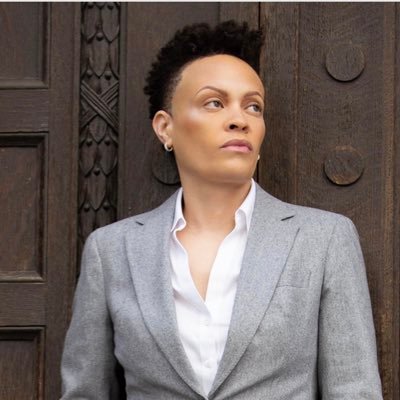
Toni Braxton’s financial problems weren’t caused by Gucci flatware. But Oprah turned everyone’s attention away from record labels & whether artists are fairly compensated. Toni couldn’t manage money. That became the storyline, & the framing was intentional.
29,923 просмотров • 2 лет назад •via X (Twitter)

Комментарии: 10

Фото профиля Yvette Carnell 🇺🇸
Yvette Carnell 🇺🇸2 лет назад

This should’ve been the conversation, from “The Guardian”: Braxton wound up with huge debts after being forced to self-fund her tour with …saxophonist Kenny G and assumed the royalty cheques she was owed would clear the debt. The cheque she’d been waiting for amounted to just $2,000 after label deductions, while her debts totalled nearly $4m. In late 1997 she sued LaFace and Arista, before filing for bankruptcy in January 1998.

Фото профиля Yvette Carnell 🇺🇸
Yvette Carnell 🇺🇸2 лет назад

Also I recall hearing at the time that Oprah called LA Reid prior to the interview & let him know what she was about to do to Braxton. I wish I could recall where I heard it.

Фото профиля Yvette Carnell 🇺🇸
Yvette Carnell 🇺🇸2 лет назад

Y’all really believe the woman who cried about not being able to purchase a $38k purse didn’t know Gucci made flatware?

Фото профиля Yvette Carnell 🇺🇸
Yvette Carnell 🇺🇸2 лет назад

And the woman who sang Unbreak My Heart should have Gucci flatware 🤷🏽‍♀️ If she can’t afford it, that’s a problem. We just let Oprah tell us anything. For YEARS.

Фото профиля TexwellTheWiz 🇺🇸✊🏾⛓️
TexwellTheWiz 🇺🇸✊🏾⛓️2 лет назад

Oprah could have illustrated how record deals are structured for artists to end up broke. Instead she punches down as usual. Labels deduct the $1 million album costs, $1 million video cost and other expenses like tour support from the artist’s measly 6% of records sales.

Фото профиля ADOS Warrior 🇺🇲
ADOS Warrior 🇺🇲2 лет назад

Dang missed this too...didn't know Toni felt this way. I watched the show when aired. I felt so embarrassed for Toni.

Фото профиля TexwellTheWiz 🇺🇸✊🏾⛓️
TexwellTheWiz 🇺🇸✊🏾⛓️2 лет назад

Get her Mother!

Фото профиля M. P. J. is A.D.O.S.🇺🇲
M. P. J. is A.D.O.S.🇺🇲2 лет назад

The absolute VILEST of human! OMG...

Фото профиля Fabulous 💫
Fabulous 💫2 лет назад

I remember this. 😫

Фото профиля thatone
thatone2 лет назад

Yup I never looked at opera the same after this

Похожие видео

When a Woman Took Off Her Shirt in the Middle of a Bushfire 🐨🔥 Some images last only a few minutes, yet stay with us for a very long time. For me, it was the moment Toni Doherty rushed into a bushfire zone to save a badly injured koala. In 2019, during the devastating bushfires in New South Wales, Australia, Toni was driving near Long Flat, in the Port Macquarie area, when she spotted a koala struggling to crawl across the scorched ground. Its fur was badly singed, its body covered in ash, and its burns were so severe that it could barely move. Toni stopped her car immediately. She got out, took off the shirt she was wearing, and ran toward the koala. Amid the smoke and flames, she wrapped the animal in her shirt, carried it away from the danger, and used water to help soothe its burns. What moved me was not simply that Toni saved an animal, but the way she acted without almost any hesitation. She was not a professional rescuer. She had no special equipment with her. She did not even know whether she would be able to save the koala. But when she saw a living creature suffering right in front of her, she chose not to stand by and watch. Perhaps that is what makes this story so memorable. We often think of courage as something that requires extraordinary acts. But sometimes, courage simply means stopping when everyone else might keep going. It means kneeling beside a desperate creature and doing whatever you can, even when you have no idea how things will turn out. The image of Toni using her own shirt to wrap the koala has stayed with me. The shirt was just an ordinary piece of clothing, but in that moment, it became the first thing protecting a small life caught in the middle of a disaster. The story also reminds us that behind every bushfire are more than statistics about acres of land burned or homes destroyed. There are countless animals forced to flee, injured, or left without the habitats they depend on. The koala Toni saw that day was just one of many living creatures affected by the disaster. But at least in that moment, one person stopped. Toni could not save every animal in the forest. She could only save the one life she happened to encounter on the road. But perhaps compassion is not measured by how many lives we are able to save. It begins with whether we are willing to save one when the opportunity appears before us. Amid the smoke, flames, and chaos, a woman took off the shirt she was wearing and used it to hold an injured koala. A very small act. Yet it reminds us that even in the darkest moments, we can still choose not to turn away from the suffering of another living being 💖

Beauty of music and nature 🌺🌺

51,924 просмотров • 2 дней назад

Oprah Winfrey said she called Meghan Markle in early 2018 asking for an interview and was told “it wasn’t the right time.” Now it’s being spun as if the palace blocked it. If Oprah was so interested in Meghan, what stopped her from interviewing her before Harry was even in the picture? Where was that interest when Meghan was just another working actress trying to make it? Where was the sit-down when she was deep in Suits, far from global headlines? No one needed palace permission back then. No one was “banned.” No palace. No restrictions. No “people in the room.” No one to “block” anything. You want to blame the palace as if it was some kind of silencing move, but you fail to understand that instead it exposes what this really is. Meghan Markle was simply not someone Oprah was prioritising for a major sit-down. Nor was Meghan Markle relevant enough for that level of attention. It’s also interesting how Meghan frames it as not being “allowed” to speak privately, with others present, as if that’s unusual. She was about to marry into one of the most scrutinised institutions in the world. Of course communications are structured. That’s not some shocking revelation, that’s standard. Then comes the key line. “Now we can speak freely.” “Now I can say yes.” So what changed? It only became “the right time” once she had the global platform, the title, and the leverage that came with the royal connection. You can’t rewrite this into a story about being silenced by the palace when the timeline shows something much simpler. The demand wasn’t there before Harry. The value wasn’t there before the royal family connection. And suddenly, after everything, we’re supposed to believe this was always about “not being allowed” rather than finally having something to sell. Let that sink it.

Queen Esther

149,986 просмотров • 4 месяцев назад

#WATCH | Verona, Italy: On FCRA Bill, Analyst and Advisor, India-Italy relations, Carlo Lombardi says, "... Let's not forget that the first FCRA was passed by the Indian Parliament in 1976. It was done by Indira Gandhi. It was then overhauled in 2010 by Manmohan Singh's government, and it was actually harsher in the day. We also have to consider that the technology that is spreading all around the world is making this kind of influence extremely easy. Financial openness also allows for the transfer of funds through many channels that didn't exist in the past. Historically, there's really nothing new. My basic point is that NGOs are great; they do a lot of good work for humanity, but they are also an instrument of foreign policy. This is not a secret. In 1983, the National Endowment for Democracy was created in the United States and became the mother of all NGOs. And one of its co-founders, Allen Weinstein, actually went on record in the Washington Post in 1991 saying, "Much of what the NED, National Endowment for Democracy, does today, the CIA did covertly 25 years earlier." So, NGOs are also an instrument of foreign policy. And it's only right that a government knows who's funding what and for what reasons, and assures that the money which is coming in from foreign NGOs is actually used for the purposes which are stated and not misused. For example, money coming in for educational purposes, and then the NGO uses it for protests against the government, driving a political agenda under the umbrella of charitable, non-profit goodwill organisations..."

ANI

158,205 просмотров • 14 дней назад

🇺🇸🇮🇷 The world may be approaching an energy crisis worse than the Great Depression, and this time governments can't print their way out of it. Most people compare today's global financial risks to 2008, but economist Chris Martenson says that's the wrong comparison. The banking crisis was ultimately a financial problem, and governments responded by creating trillions of dollars, euros and pounds to stabilise the system. You can debate whether that was wise, but it worked because the problem was financial. This time, he warns, the problem will be physical. If the Strait of Hormuz and Bab el-Mandeb remain disrupted, the world doesn't just lose oil; it loses diesel, jet fuel, lubricants, natural gas, petrochemicals, and fertiliser. The countless industrial inputs that keep supply chains, factories, farms and transport networks operating. And as Chris put it: You can't print missing molecules. That's why he believes this crisis is fundamentally different. If those physical resources become scarce, printing more money doesn't solve the problem; it simply means more money is chasing fewer real goods. And according to Chris, we're already seeing early signs of that reality beneath the surface. While many people focus on crude oil prices, he says the real warning is coming from refined products like diesel, where shortages are becoming increasingly visible and supply chains are beginning to tighten. His concern is that policymakers are treating this like another financial crisis when it's actually an energy crisis. And those require completely different solutions that no one seems to be addressing yet. Chris Martenson

Mario Nawfal

286,738 просмотров • 27 дней назад

In 1971, the U.S. literally ran out of money. Back then, the dollar was backed by gold, which meant every paper dollar represented real gold sitting in U.S. reserves. The problem was the country was spending way more than it earned, printing dollars that didn’t have enough gold to back them. As other countries realized this, they started trading their dollars in for gold. The gold reserves began to drain fast. That Sunday night, President Nixon went on TV and told the world the U.S. was “suspend temporarily convertibility” of dollars into gold. What that really meant was the U.S. couldn’t pay what it owed in real money anymore. At that time, Ray Dalio was a young clerk on the floor of the New York Stock Exchange. He thought markets would collapse the next day. Instead, stocks soared. The U.S. had just made money worth less, and when that happens, asset prices usually rise. He later found out the same thing had happened in 1933 when FDR also cut the gold link. Both times, the U.S. printed more paper money to keep spending, and each dollar ended up buying less. That moment in 1971 changed the entire global system. From then on, money wasn’t something you could exchange for gold, it became a promise backed only by trust. And that’s where the connection to today comes in. Trust in that promise is fading again. Inflation is running above target, the dollar is sliding, and people are moving into things that don’t rely on faith in any government such as gold and bitcoin. Foreign investors aren’t pulling away from America, but they are protecting themselves. They’re still buying U.S. assets, just not without hedging the risk. They don’t want to be caught holding paper that keeps losing value. Dalio’s story shows how this cycle keeps repeating. The system runs on confidence until it doesn’t. And every time it slips, people turn back to hard assets, not because they want to, but because they have to.

StockMarket.News

95,018 просмотров • 10 месяцев назад

Page 1. The Crisis Isn’t the Cause…It’s the Cover One of the hardest truths in financial history is that governments rarely admit when the system is breaking. Instead, they wait for a story big enough to justify the kind of intervention that would otherwise look reckless. Wars, pandemics, and national security crises often become that story. Look closely at the past century and a pattern emerges. The financial plumbing is already strained, credit bubbles overextended, currency pegs fraying, leverage piled too high and policymakers face a problem: how to inject massive liquidity without spooking markets or losing political credibility. Then comes the event. A geopolitical shock, a war, or a health crisis gives them cover to do what they couldn’t do in calm times: flip the switch, flood the system, and rewrite the rules in the name of survival. Think back to the great turning points. In 1914, the gold standard was already cracking before World War I gave governments the excuse to suspend convertibility and unleash bond financed spending. In 1940, the U.S. was still clawing out of depression when WWII allowed Roosevelt to blow out deficits and normalize Fed monetization of Treasury debt. In the late 1960s, Vietnam spending plus domestic programs strained the dollar, but only once the war escalated did policymakers have the justification to tear up Bretton Woods in 1971. After 9/11 and the Iraq War, the U.S. used national security spending as the story, while Greenspan’s Fed quietly opened the spigots to cushion a financial system still reeling from the dot com bust. And in 2020, COVID-19 became the perfect excuse for an unprecedented global money printing campaign, arriving just as repo markets and corporate debt were already flashing stress in late 2019. The details differ, but the sequencing rhymes. The financial system shows cracks first. Then an event arrives that allows governments to act on a scale they otherwise couldn’t. Liquidity surges are justified as emergency responses, but in practice they are often preemptive rescues of fragile balance sheets. This isn’t to say the events aren’t real, they are. Wars kill, pandemics devastate, geopolitical shocks reshape the world. But for students of monetary history, the question is whether the timing of interventions is driven only by the events, or also by what was already happening beneath the surface. Were the events the trigger or the excuse? That’s the pattern I want to explore. When you line up the last century’s great liquidity waves with the geopolitical crises that accompanied them, you start to see that the narrative and the financial mechanics are inseparable. Policymakers need a cover story. And history suggests that the biggest liquidity expansions often arrive not just because of the event, but because the system was breaking beforehand.

EndGame Macro

70,356 просмотров • 8 месяцев назад

Well waddayaknow! More superannuation ticket clipping. Labor is going to put a levy on Self Managed Super Funds on top of other funds to cover the losses caused by shonky financial engineers. I thought the whole point of super was that people were supposed to take responsibility for saving for their own retirement? Of course that was always a lie as people were never asked if they wanted to hand their wages over to shonky financial engineers in the first place at a cost of $40 billion per annum in administrative costs. If people have to bail out other people then shouldn’t we just provide a strong pension system as a safety net rather than subsidise poor behaviour by the superannuation industry? If Australia wants to starting heading in the right direction we need to stop propping up the enormous power of the institutions which are the pure definition of socialists who spend your money and start protecting individuals who are the true capitalists. To put the people first instead of the establishment, sign up at ••••••••••••••• “Dr Mulino is also expected to announce changes to the widely panned Compensation Scheme of Last Resort, including removing the controversial 'but for' provision that sees victims of financial misconduct compensated for hypothetical losses. The CSLR hands up to $150,000 in compensation to victims of financial misconduct when the responsible firm is insolvent. As well, Dr Mulino is expected to bring SMSFs into the CSLR funding umbrella as the scheme faces a shortfall of $170m for the 2027 financial year. A special levy will apply to parts of the sector, including SMSFs and APRA-regulated funds, as well as others.”

Gerard Rennick

39,572 просмотров • 15 дней назад

On Friday, December 2, 1988, ABC News’ “20/20” aired an archival investigative segment that revisited one of the most painful parts of Jackie Wilson’s story: not only the tragic 1975 onstage collapse that left him severely incapacitated, but the financial exploitation, royalty disputes, debt, and legal battles that surrounded his name while his music continued to generate value. The report examined allegations tied to Brunswick Records and Wilson’s longtime manager Nat Tarnopol, including disputed royalty accounting, questionable advances, and contested songwriting and publishing issues. Tarnopol and other Brunswick executives had been convicted in 1976 in a federal case before those convictions were later overturned on appeal, but public summaries of the case still describe a record of evidence around artists being deprived of royalties. That is what makes the Jackie Wilson story so devastating. Here was a man whose voice helped build the bridge between Rhythm and Blues, Rock and Roll, Pop, and Soul; whose records kept moving through radio, film, reissues, and cultural memory; and yet the wealth connected to that catalog became tangled in contracts, accounting, debt, and legal systems he could no longer personally fight. This is not just a Jackie Wilson story. It is part of a larger Black Music History pattern: Black artists creating catalogs that feed the world while labels, managers, publishers, estates, tax burdens, bad contracts, and industry gatekeepers often control, delay, dispute, or drain the money attached to that genius. Remembering Jackie Wilson means honoring “Mr. Excitement,” the voice, the body, the stage fire, and the records. But it also means remembering the business side of the archive: the receipts, the missing royalties, the disputed ownership, the family aftermath, and the industry systems that too often separated Black American brilliance from the wealth it created.

#BMH365 🎶🎤

20,135 просмотров • 2 месяцев назад

EXCLUSIVE: The Next Financial Shift Is Already in Motion Bitcoin didn’t start as an investment. It started as an idea. Back in 2008, right after the financial crisis, someone using the name Satoshi Nakamoto released a whitepaper describing a new kind of money. No banks. No central authority. Just a digital currency that people could send directly to each other. In 2009, Bitcoin launched. At the time, it was basically worthless. In fact, one of the first real-world transactions was 10,000 Bitcoin for two pizzas. Today, that same amount would be worth hundreds of millions of dollars. Since then, Bitcoin has gone from an obscure experiment to a global asset. It’s traded by institutions, held by public companies, and even recognized as legal tender in some countries. Entire financial systems are being built around it. But the path hasn’t been smooth. Crypto has seen massive runs, sharp crashes, and constant headlines. Prices have surged, collapsed, and surged again. And while adoption has grown, confusion hasn’t gone away. A lot of people still don’t fully understand how it works. They hear terms like “blockchain,” “wallets,” or “private keys,” and it feels overwhelming. Others are interested, but they don’t want to actively trade or manage something this volatile—especially when it comes to retirement savings. At the same time, there’s a growing belief that the future of money will be more digital, more decentralized, and more data-driven. So the real question becomes: How do you participate in something like this… without having to become a crypto expert, and without putting your financial future at unnecessary risk? Jonathan Rose, CEO of BlockTrust IRA, joins us now to discuss... 🧵

The Vigilant Fox 🦊

32,356 просмотров • 5 месяцев назад

I live and work in Pune. I had an unfortunate incident where I was attacked by a few goons on my way home from the office. I was returning from the office in, Kharadi, Pune around 8:30 PM on Wednesday 11th December, 2024. I took a turn on Kharadi-Hadapsar bypass on Accolade society road. As the road was wet and it was not a rainy day I thought of it due to some water tankers which must have passed. But as I reached closer there was a pothole. The car was already slow as it was a narrow alley with bad roads. I further slowed down as evident from dashcam footage. I also tried to keep the wheels of the car to the left of the pothole but it was not possible due to the scooty standing ahead. And the pothole was a little deep and tires rolling over the deep pothole caused a little splash, which was not intentional. After that, these goons chased the car and stopped it a little ahead. You can hear from their language what kind of hooligans they were. I tried to stay calm and tried to explain that it was not intentional but they were not ready to listen to any reasoning. Probably their plan was to take my car to the side and extort money but I refused to take it to the side. Then one of the boys kicked at my car causing a dent and then ran away. I reported this to the police and registered a FIR and gave them the two wheeler number MH12 GP 6147 immediately, but I don't think the police will take any action. The two wheeler's insurance has expired since 2012. They refused to issue any challan also. This kind of incident is common in Pune, Kharadi area and has happened with my colleagues also. Sadly due to police inaction these guys have become more fearless. @punepolicecity महाराष्ट्र पोलीस - Maharashtra Police #pune

Prateek Singh

909,414 просмотров • 1 год назад