正在加载视频...

视频加载失败

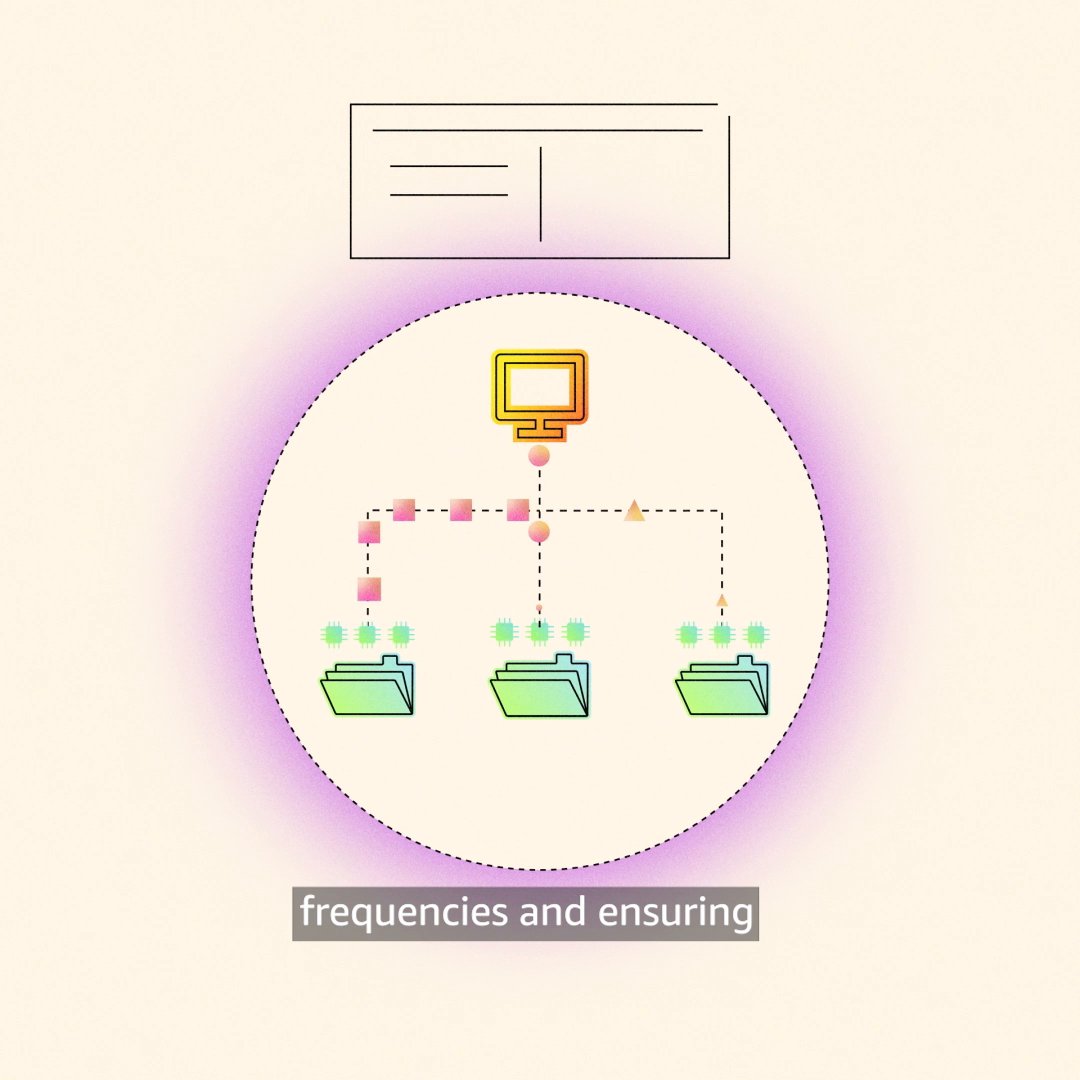
Trade in manual maintenance for minimal setup. ☁️💡💻 Optimized for analytics & machine learning workloads, Amazon S3 Tables deliver purpose-built storage for tabular data, improving performance while optimizing costs. #AWS #AWSreInvent 👉

13,135 次观看 • 1 年前 •via X (Twitter)

2 条评论

Paulino mariete 的头像
Paulino mariete1 年前

Amazon Trabalho On-line!!! 🤔🤑😎

Vijay Thombare 的头像
Vijay Thombare1 年前

What's difference in Athena and S3 tables

相关视频

🧠 Aigentrun × XRPfi Analytics Is Live We’re proud to announce the launch of our XRPfi Analytics dashboard, powered by our agents This marks a major step forward for XRPfi transparency and analytics on the XRPL, giving traders and builders the clearest view yet of the ecosystem’s top protocols. 🚀 What’s New 🗂️ New XRPfi Tab → Real-time analytics with daily-refreshed data + AI agent integration 📊 XRPfi Analytics Table → Compare protocols, explore yields, and visualize XRP's expanding yield-bearing landscape 💬 Chat with the AI Assistant → Bottom-right pop-up where you can ask anything from “How safe are my funds in x protocol?” to “Where does the yield on x protocol come from?” or even “Analyze and rank the active XRPfi protocols by long-term yield sustainability.” 💻 Terminal & Traders Analysis Overhaul → Complete UI/UX redesign for the entire app including the Aigent Terminal, with faster performance and better flow 💡 Why It Matters The new dashboard is the first AI-powered analytics and hub for the XRPfi ecosystem. Turning complex yield data into clear, actionable insights that users can now explore and compare performance, safety, and yield data directly through our dashboard while assisted by specialized AI agents. 🔍 We’re Tracking Analytics from some of the XRPL’s leading XRPfi platforms such as Doppler Finance, Midas / Axelar Network, Kinetic.Market☀️, MoreMarkets, Strobe Finance, Ēnosys, and Soil 🌐 🔗 Try It Now: XRPfi Dashboard (Link in comments below) 👇

aigent.run

64,223 次观看 • 9 个月前

Why is Redis Fast? Redis is fast for in-memory data storage. Its speed has made it popular for caching, session storage, and real-time analytics. But what gives Redis its blazing speed? Let's explore: RAM-Based Storage At its core, Redis primarily uses main memory for storing data. Accessing data from RAM is orders of magnitude faster than from disk. This is a major reason for Redis's speed. However, RAM is volatile. To persist data, Redis supports disk snapshots and append-only file logging. This combines RAM's performance with disk's permanence. There is a tradeoff though - recovery from disk is slow. If a Redis instance fails, restarting from disk can be slow compared to failing over to a replica instance fully in memory. So while Redis offers durability via disk, it comes at the cost of slower recovery. A better solution is Redis replication. With a synchronized replica kept in memory, failover is instant with no rehydration. This maintains speed and near-instant recovery. IO Multiplexing & Single-threaded Read/Write Redis uses an event-driven, single-threaded model for its core operations. A main event loop handles all client requests and data operations sequentially. This single-threaded execution avoids context switching and synchronization overhead typical of multi-threaded systems. Redis uses non-blocking I/O to handle multiple connections asynchronously. This allows it to support many client connections with very low overhead, Redis does leverage threading in certain areas: - Background tasks like taking snapshots. - I/O threads are used for certain operations. - Modules can use threads. - Since Redis 6.0, it supports multi-threaded I/O for network communication, improving performance on multi-core systems. Redis also uses pipelining for high throughput. Clients pipeline commands without waiting for each response. This allows more efficient network round trips, boosting overall performance. Efficient Data Structures Redis supports various optimized data structures, from linked lists, zip lists, and skip lists to sets, hashes, and sorted sets, among others. Each is carefully designed for specific use cases for quick and efficient data access. Over to you: With Redis now supporting some multi-threading, how should we configure it to fully utilize all the CPU cores of modern hardware when deploying in production? – Subscribe to our weekly newsletter to get a Free System Design PDF (158 pages):

Sahn Lam

46,910 次观看 • 2 年前

$AMD $AMZN partnership will 🚀 in 2026 🔥 Amazon/AMD partnership is hidden among hot headlines from OpenAI $NVDA $ORCL... TLDR: Amazon refused to bid up the overpriced $NVDA chips among other hyperscalers, and decided to work closely with $AMD. Amazon is expected to spend up to $10-$20B a year on 2026 EPYC breakthrough Gen and Future Gen. Dr. Su confirmed "we have plenty for other large customers". For its 2026 EPYC "Venice" processors, AMD is using a multi-node manufacturing strategy: the CPU core complex dies (CCDs) are built on TSMC's 2 nm-class node (N2), while the I/O die (IOD) uses the N3P (3 nm) process. Context: Andy Jassy Amazon Web Services has been working with AMD on EPYC processors since November 2018. With this "secret weapon" breakthrough(patented), this long time partnership has expanded to New breakthrough 2026 EPYC Gen. AMD's 6th Gen EPYC "Venice" processors, slated for 2026, introduce New Chiplet design breakthrough. a revolutionary chiplet interconnect fabric that redefines server scalability for AI. This isn't just faster silicon; it's a paradigm shift for AWS, enabling hyper-efficient, rack-scale AI inference that slashes costs and latency while boosting throughput. AMD to benefit AWS's $100B+ AI opportunity along with $ORCL $MSFT $GOOGL $META Saudi, UAE ,38+ countries and startups. In early October, Amazon/AWS announced the new EC2 M8a instances as their latest-generation, general-purpose compute instances now powered by AMD EPYC 9005 "Turin" processors. Amazon announced the M8a as having up to 30% higher performance and up to 19% better price performance over M7a. With my testing of both at 32 vCPUs, the new AMD EPYC Turin instance provided 1.59x the performance over the prior-generation EPYC Genoa instance! How will this impact AWS AI Inference? ~Cost Efficiency: Inference is 80%+ of AI workloads and latency-sensitive (e.g., chatbots need <1s responses). "Secret weapon" enables 35x better inference perf (per AMD's CDNA roadmap tie-in), cutting AWS's energy use by 50%+ in clusters. With $118B 2025 capex, this could save $20–$30B annually in OPEX, boosting margins to 35%-40%. ~Scalability for Agentic AI: Supports "Helios" rack-scale platforms (up to 128 GPUs + EPYC hosts), delivering 3.58x FP6 perf for distributed inference. AWS can run 700K+ more tokens/sec in 1,000-node clusters (via EPYC 9575F boosts), enabling real-time apps like personalized search or fraud detection at enterprise scale. ~Adoption Catalysts: Early partners like Oracle signal broad uptake; AWS's existing AMD instances G4ad with Radeon GPUs) pave the way. By 2026, EPYC could power 40%+ of AWS AI infra, outpacing Nvidia's GPU lock-in via open standards (ROCm 8 software). Lastly, Amazon’s trajectory toward a $320 stock price is not a speculative leap but a grounded projection rooted in its unmatched fundamentals and strategic AI leadership. With Amazon Web Services poised to surpass $100 billion in annual revenue by 2026, driven by explosive AI inference demand, Amazon is redefining cloud computing’s future. The adoption of AMD’s 2026 EPYC processors with "Secret" architecture is a game-changer, slashing costs by up to 50% and boosting inference throughput 3x, enabling AWS to dominate enterprise AI workloads with unmatched efficiency. This technological edge, combined with Amazon’s e-commerce dominance and high-margin advertising growth, supports a valuation rerating to 22x EV/EBITDA, and it is still a discount to historical highs. Trading at $222, $AMZN is undervalued for its 15–20% revenue CAGR and 25%+ EPS growth through 2030.

Mike

511,082 次观看 • 9 个月前

A new roadmap. A New Era of The Graph 🗺️ The Graph’s new roadmap introduces a bold and transformative vision for the future of The Graph! The new R&D roadmap details an expansion of The Graph’s ability to serve web3’s growing demands for data access, while better serving builders and protocol contributors, and improving the overall simplicity and efficiency of the network. After three years of serving builders, The Graph Network is mature, reliable, and performant. The Graph ecosystem has followed through on its commitment to democratize access to blockchain data while also establishing subgraphs as a web3 standard. But The Graph’s innovation journey doesn’t end there. The New Era of The Graph is organized into five core objectives: 1️⃣ World of Data Services: Expanding to provide new data services beyond subgraphs to deliver a rich market of data on the network, serving novel use cases for data scientists and more. This will include more data sources, new query languages, and support for LLMs. 2️⃣ Developer Empowerment: Supporting developers through enhanced DevEx and tooling by introducing streamlined billing, clear pricing models, a new free query plan, and reduced gas fees. A more SaaS-like experience for devs, without compromising on decentralization! 3️⃣ Protocol Evolution & Resiliency: Delivering improvements resulting in a more resilient, flexible, and simple protocol, including updates to delegation. 4️⃣ Optimized Indexer Performance: Boosting network performance with improved Indexer tooling and operational capabilities to deliver increased scalability, reduce costs, and enhanced network reliability. 5️⃣ Interconnected Graph of Data: Creating tools for composable data and a global, organized knowledge graph – interlinking open data and making it easier to build upon. The new roadmap sets in motion an exciting evolution in web3 data infrastructure. In a phased rollout, The Graph will introduce many new features and benefits, including the integration of new data services, new query languages, enhanced developer tooling, improved UX + UI, alongside greater protocol efficiency and resilience. As this new era unfolds, The Graph crystallizes as the connective tissue across the many layers of the web3 stack, evolving into a comprehensive, interwoven graph of data equipped to serve every project dreamt up by web3’s innovators. Read the full announcement linked in the comment below!

The Graph

425,373 次观看 • 2 年前

Today we announced our new Fairwater datacenter in Atlanta, connected with our first Fairwater site in Wisconsin and our broader Azure footprint to create the world’s first AI superfactory. Fairwater exemplifies our vision for a fungible fleet: infra that can serve any workload, anywhere, on fit-for-purpose accelerators and network paths, with maximum performance and efficiency. AI workloads have evolved beyond large-scale pre-training. Today, they encompass fine-tuning, reinforcement learning (RL), synthetic data generation, evaluation pipelines, and more. Fairwater is built to support this full lifecycle: Max density: Fairwater’s two-story design and liquid cooling system lets us place racks in three dimensions and pack them with GPUs as densely as possible, minimizing cable runs and improving latency and effective bandwidth. Fleet: Each Fairwater DC can integrate hundreds of thousands of the latest NVIDIA GPUs into a single coherent cluster. This provides flexible infra that can support the full spectrum of workloads, and ensure no GPU is left unnecessarily idle. And that’s on top of the more than 100,000 GB300s coming online this quarter alone for inference across the rest of our fleet. For us, it’s all about turning every gigawatt into the maximum number of useful tokens. Not every GW is created equal! Planet-scale: Every Fairwater DC will connect through our continent-spanning AI WAN to prior generations of AI supercomputers, forming a truly fungible pool of compute. This enables developers to scale beyond the capacity of a single site and dynamically land workloads on the right infra for their needs. Together, these innovations let us bring together different generations of silicon and AI systems across DCs and geos into a single elastic system that scales seamlessly across training and inference workloads And this elastic AI capacity is all available alongside all the other cloud services (compute, storage, databases, app services) that AI agents and workloads need. This is what we mean when we talk about building a fungible fleet – a single, unified platform that pushes the limits of performance per watt and per dollar. Read more:

Satya Nadella

907,624 次观看 • 8 个月前

Quit my Job at Microsoft, and back to the Classroom as a Student - My Short Story. Till today, some say quitting my job at Microsoft doesn't make logical sense. To be serious, it doesn't make any logical sense especially when I have to return to the classroom and back to the job market. This was however necessary for me to pursue a new path for my family. When I was at Microsoft, on several occasions, I felt Microsoft was God's sent to Africa and I am the Evangelist. Explain to me why a company is investing so much in capacity development in Africa like Microsoft. Through relevant skills, we can bring many out of poverty, save them from the after-effects of unemployment, make them dream big and achieve it, and keep alive hopes in the hearts of millions of others with similar backgrounds like mine. So, I took my work with passion and purpose. I was allowed to support academic institutes in several countries and I appeared as a Guest Lecturer for Masters Courses on Advance Data Analytics. I relocated to the US and everything changed, back to the classroom but now as a Student. Indeed a humbling experience for me. I love every opportunity I have to make complex topics simple. You wouldn't know how much I know about Data Management, Data Science, Data Analytics, and Power Platform until you give me a Mic or Opportunity to lead (Yeah, kindly reach out if you would like to have such a passionate young man like myself in your team). I am deeply passionate about these fields and my passion is validated by years of work that I have invested in building up my skills. I have been opportune to lead diverse teams in my career and both my listening skill and ability to break down complex tasks made it easier to bring out the best in my team members. In this presentation, I explained what Supervised Machine Learning is, the data science workflow, and evaluating machine learning models, and I did a live demo in class - built a Supervised Machine Learning model to drive home full comprehension. I am looking for a Remote Internship for Summer 2024 in Data Analytics and I need your help to Like and Repost this. Who knows, I can be lucky enough to find a team that will give me a chance. Thank you in advance 🙏 #intern

TheOyinbooke

216,018 次观看 • 2 年前

HERMES AGENT CAN RUN YOUR SEO. CONNECT IT TO GOOGLE SEARCH CONSOLE AND GOOGLE ANALYTICS. IT MONITORS, REPORTS, AND WRITES CONTENT BASED ON YOUR ACTUAL DATA. stop paying an SEO agency. stop doing the tedious work yourself. Hermes handles it 24/7. WHAT THE SEO AGENT DOES: → pulls clicks, impressions, CTR, and position data from Google Search Console automatically → tracks traffic, user behavior, and conversions from Google Analytics → checks which pages are indexed and which are not → submits sitemaps for indexing → inspects URLs for crawl or indexing issues → identifies ranking drops and keyword opportunities → writes content based on what your data says works → generates weekly SEO performance reports → delivers everything to Telegram CONNECT GOOGLE SEARCH CONSOLE: two paths: 1. COMPOSIO (managed, easiest): paste this into Hermes chat: https:// composio. dev/hermes or add to config.yaml: mcp_servers: composio: url: "https:// connect.composio. dev /mcp" headers: x-consumer-api-key: "YOUR_COMPOSIO_API_KEY" Hermes prompts you to authenticate. one OAuth flow. done. 2. CLAWLINK (one-click): 9 Google Search Console tools exposed via MCP. hosted auth. nothing to run or maintain. paste the install prompt into Hermes chat. CONNECT GOOGLE ANALYTICS: same Composio setup. one MCP endpoint handles both Search Console and Analytics. authenticate once. both data sources available. your agent can now query: → search analytics (clicks, impressions, CTR, position) → traffic by source and landing page → user behavior and conversions → indexing status for any URL → sitemap status WHAT TO AUTOMATE WITH CRON: weekly SEO report (Monday 8am): "pull search analytics for last 7 days. compare vs previous week. flag any keyword that dropped more than 5 positions. flag any page that lost more than 20% clicks. deliver report to Telegram." daily indexing check (6am): "check if any new pages are not indexed. if found, submit sitemap and report to Telegram." wakeAgent gate: skip if all pages indexed. content opportunity scan (weekly): "find queries where my site appears on page 2 (positions 11-20) with high impressions. these are the keywords one good article could push to page 1. deliver list to Telegram with suggested topics." CONTENT WRITING FROM YOUR DATA: the difference between generic SEO content and content that ranks: your agent has your Search Console data. "write a blog post targeting [keyword]. my current position is 14 with 2,400 monthly impressions. check what pages currently rank 1-3 for this keyword. write something better. include the gaps they miss." the agent researches competitors via Firecrawl, checks your existing content in the wiki, and drafts based on real data. not guesswork. WHAT THIS REPLACES: → SEO agency: $1,000-5,000/month → SEO tool subscriptions: $100-300/month → manual reporting: 3-5 hours/week → manual content research: 2-4 hours/week Hermes SEO agent: one profile with two MCPs. cron jobs handle the monitoring. you handle the decisions. SETUP IN 10 MINUTES: 1. create a profile: hermes profile create seo-agent 2. write SOUL.md: "you are an SEO specialist. monitor search performance daily. flag ranking drops and opportunities. write content based on Search Console data. weekly report every Monday." 3. connect Google Search Console + Analytics via Composio or ClawLink 4. set cron jobs (weekly report, daily index check, content opportunity scan) 5. set model: DeepSeek V4 for routine monitoring. Sonnet for content writing. 6. connect to Telegram for delivery. the agent runs. you review reports. rankings improve because you stopped guessing and started using your own data. comment HERMES and I'll send you the full setup guide for running Hermes Agent as your SEO specialist. full Hermes architecture deep-dive in the article 👇

YanXbt

40,614 次观看 • 1 个月前

Data teams spend weeks on simple requests. (This AI answers them in minutes.) Most data analysis is repetitive manual tasks. Data teams spend more time on setup than actual analysis. The workflow usually looks like this: → Run some exploratory data analysis in a local Jupyter notebook or environment → Pull data from multiple disconnected sources → Write code from scratch for every analysis → Export static charts that stakeholders can't explore (or wrestle with legacy BI to create a dashboard) → Manually send updates via email or Slack when data changes → Start over for each new request Most teams accept this as "how data analysis works." While business decisions wait for insights. That's where Fabi changes the entire approach. It's a powerful, AI-native platform built for teams that want to boost productivity and supercharge their data workflows. Instead of working on separate tools and manual processes, you collaborate on analysis that automatically delivers insights where teams work. Here's what makes Fabi different: AI-Native Analysis Environment ↳ SQL and Python work together with AI assistance that handles coding and debugging automatically. Smart Automation Workflows ↳ Automatically send AI-powered reports and summaries right where business works in Slack, email, and spreadsheets. Universal Data Integration ↳ Analyze data from files, Google Sheets, Airtable, plus your data warehouse and databases in one place. Collaborative Data Apps ↳ Create interactive dashboards that stakeholders can explore and ask follow-up questions directly. What you can do with Fabi that legacy BI can't: ➟ Send AI-generated insights directly to Slack channels ➟ Automatically email data summaries to stakeholders ➟ Analyze uploaded files without complex ETL processes ➟ Collaborate on analysis like Google Docs for data ➟ Build workflows that push insights to spreadsheets Perfect for teams that want to move beyond the constraints of legacy and increase their impact. Teams using Fabi see immediate results: ✓ Insights delivered in minutes instead of days ✓ Reduced context switching between tools ✓ Stakeholders explore data independently ✓ Workflows automated to save hours of manual work From analysis to automated delivery - all in one AI-native environment. 📌 Try Fabi today: 👉 Follow Fabi.ai and marc for Fabi updates. 🔄 Repost to help other teams streamline data analysis #DataAnalysis #ModernBI #DataOps #InteractiveDashboards #FabiPartnership #SponsoredByFabi

Andrew Bolis

36,504 次观看 • 10 个月前

The $HASHAI Ecosystem Over the past 15 months, Hash AI has built a robust and sustainable ecosystem that delivers real value to both individual users and businesses, all while operating under a fully self-sustaining 0/0% tax business model. ⚡️Crypto Mining Infrastructure 1,000+ ASIC Miners Efficient, high-performance machines dedicated to large-scale crypto mining. 100+ AI-Optimised GPU Rigs Enhanced by our AI algorithm for maximum efficiency and performance. 🌐 Node Rental & Lending Our high-performance nodes serve both B2B and B2C clients, providing scalable and reliable compute power for blockchain and AI workloads. Users can also lend their own nodes to the Hash AI ecosystem, contributing to network capacity while earning rewards. 🏢 Global Facilities Hash AI’s global infrastructure is designed for maximum uptime, security, and energy optimisation. These facilities ensure efficient operation and profitability across all mining activities. 💰Community Share Pool Designed to deliver consistent and reliable passive income, the Community Share Pool has already distributed nearly $1.5 million in mining profits to $HASHAI token holders. ⚙️ Coming Soon: Fractionalized ASIC Ownership Purpose-built facility in the UAE Located to provide the lowest operational costs and highest yields. Fractionalised ASIC Ownership Own a portion of physical crypto mining machines. Fully hosted and maintained by Hash AI. Earn Passive Mining Rewards Receive mining rewards without the hassle of managing hardware. RWA Marketplace Trade tokenised real-world assets using $HASHAI and other currencies.

Hash AI

21,489 次观看 • 1 年前