Loading video...
Video Failed to Load
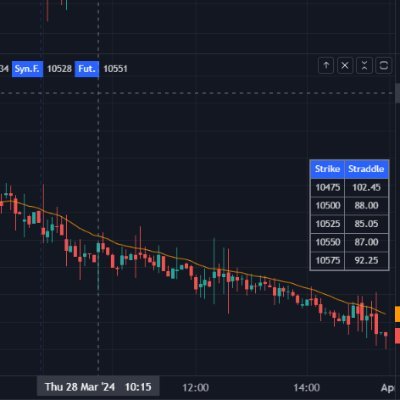
Trading View - Option Chain Experimental Indicator that shows CE/PE Ltp, Volume, Traded Value (Ltp x Volume) for the chart timeframe Once OI data is available on Trading View , OI data will be added as well. Link [ Animation - Traded Value per min.
46,583 views • 2 years ago •via X (Twitter)
11 Comments

Keshav Arora2 years ago
Ek hi Dil hai Kitni baar jeetoge sir 🙏

blackswan2 years ago
Oh wow this looks cool 👌

Aniket jain2 years ago
What are benefit of it 🤔

AKM2 years ago
Great work 👍

TradingAlgo2 years ago
This looks 🔥

Arghya Ray2 years ago
Excellent

Mr. आत्मनिर्भर बेरोजगार2 years ago
Very nice

Aman Jain🫰🏻2 years ago
Kya baate hai Sir. Ek number

Shivam Pardeshi2 years ago
Damn 🙌🏻

Rajesh.D2 years ago
It's only for bank nifty??

I Luv Markets2 years ago
Go to Inputs and adjust the Ref Strike and Expiry Date





![CSS in 2024 🤯 You can create a range slider with updating value tooltip and color changing track without using any JavaScript 🤯 ::-webkit-slider-thumb{ view-timeline: --thumb inline; } Scroll animation on the slider thumb that animates a number between the "min" and "max" of the range 😅 @property --value { syntax: ' '; } @keyframes sync { to { --value: 100; }} Tie that up to the contain animation-range ⚡️ .control { animation: sync both linear reverse; animation-timeline: --thumb; animation-range: contain; } Hoist the view timeline so the tooltip can use the value too! :root { timeline-scope: --thumb; } Then use it in the counter which goes in the tooltip 😇 .tooltip { counter-reset: val var(--value); } .tooltip::after { content: counter(val); } Then the accent color is based on the value too 🎨 [type=range] { accent-color: hsl(var(--value) 90% 65%); } The magic from the quoted post is using anchor positioning on the range thumb to position that tooltip 👏 Never thought of that when working on the spec for this API. This API lets you tether elements to other elements. Using the pseudo is a clever move! ::-webkit-slider-thumb { anchor-name: --thumb; } .tooltip { position: absolute; anchor-default: --thumb; left: anchor(50%); bottom: calc(anchor(top) + 25%); } The last piece is the little bounce transition... OK. I used a line or two of JavaScript for that 🙏😬 const updateDelta = ({ movementX }) => { document.documentElement.style.setProperty('--delta-x', movementX) } document.body.addEventListener('pointermove', updateDelta) But only so you can pass the movement delta to CSS and then reset the position with linear() to get that bouncy transition 😎 .hint { rotate: calc(clamp(-60, var(--delta-x) * -1, 60) * 1deg); transition: rotate 1s linear( 0, 0.2178 2.1%, 1.1144 8.49%, ... ); } Should probably do a video on this one. Lots of little tricks to break down with it for sure! 💯 As always, any questions, let me know! Also, this one only works in Chrome Canary with the Experimental Web Platform Features flag enabled ✅ This one almost feels like rocket science ha 🚀 CodePen.IO link below! 👇](https://image.24vids.com/tw-1742951071473967117/ext_tw_video_thumb/1742947397649506306/pu/img/A1Su3thQr8ZQBvdt.jpg)


