Loading video...

Video Failed to Load

Go Home

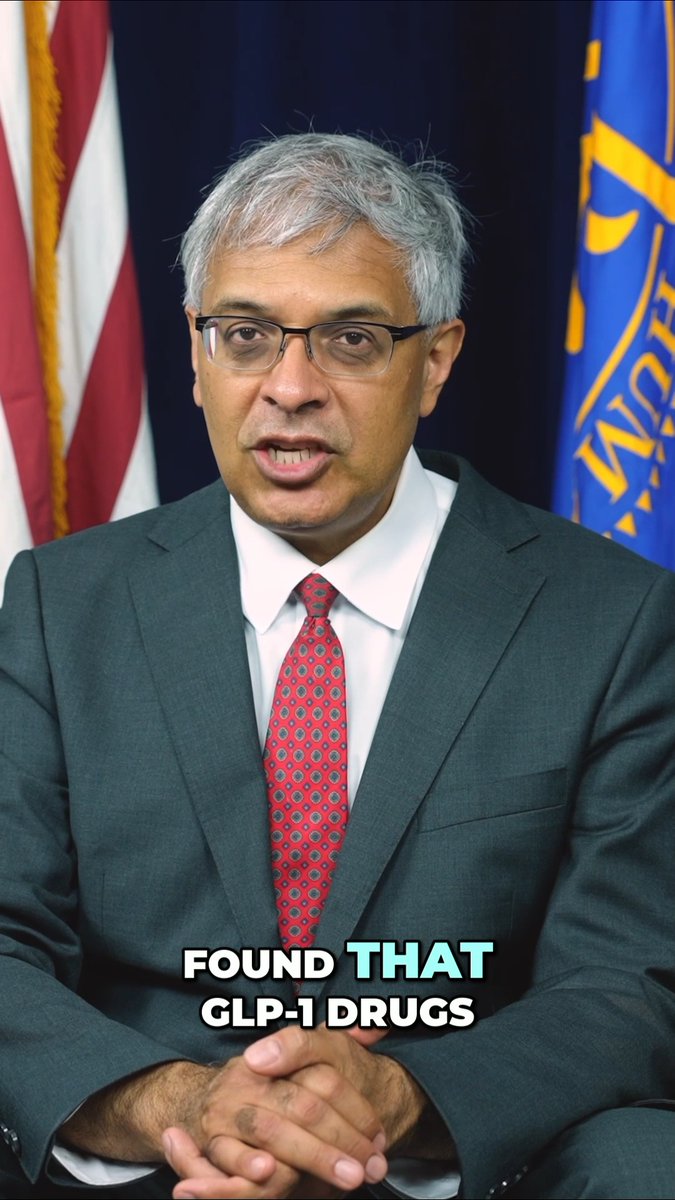
🔬Traditional treatments for multiple sclerosis (MS) can help mitigate a patient’s symptoms or keep them from returning. Now, new NIH-funded research suggests that a modified drug historically used for treating HIV and Hepatitis B could potentially reverse the disease’s effects. Learn more ➡️

26,876 views • 5 days ago •via X (Twitter)

18 Comments

Mark from Evergreen's profile picture
Mark from Evergreen5 days ago

From your lips to God's ears....

Barney Shane's profile picture
Barney Shane5 days ago

Snake oil salesman. Don’t worry it’ll just have some “minor” side effects. One side effect is drug company will make tons of money. You? Who cares. Just shut up!! No one believes you buffing any more

Sandy Bracco's profile picture
Sandy Bracco5 days ago

This is fantastic

Prof. Avv. Gianfrancesco Vecchio's profile picture
Prof. Avv. Gianfrancesco Vecchio5 days ago

The origin of sclerosis has to be clearly detected. Thank for everything.

Erica~Jo's profile picture
Erica~Jo5 days ago

But will you be informing people of the mitochondrial and neurological toxicity that is known from this platform or are we still rocking the “safe and effective 4 life” skullduggery that’s going on with mRNA gene therapy?

Jason Strecker's profile picture
Jason Strecker5 days ago

Sounds promising- what a benefit to sufferers this would be!

Franka Sanchez's profile picture
Franka Sanchez5 days ago

...in an experimental autoimmune encephalitis mouse model of MS hey economics professor, please don't raise false hope with mouse studies

Greg's profile picture
Greg5 days ago

Amazing

Kenzo's profile picture
Kenzo5 days ago

ME CFS please man

Debie Potter's profile picture
Debie Potter5 days ago

@HHSGov How about looking at what causes it in the first place.

Christine Lee's profile picture
Christine Lee5 days ago

Creepy When ivermectin has already been identified

Mvl80's profile picture
Mvl805 days ago

I sure hope so 🙏🙏

Mark Talbott's profile picture
Mark Talbott5 days ago

Anybody else hate the word "mitigate?" I'm putting it right up there with moist!

Peri Dwyer Worrell's profile picture
Peri Dwyer Worrell5 days ago

I wonder if this would be effective in CIDP

Barney Shane's profile picture
Barney Shane5 days ago

You’re all comprised. Just shut up

Ash's profile picture
Ash5 days ago

Ivermectin

NoWaKnowSo's profile picture
NoWaKnowSo5 days ago

Ai mrna type therapy, right?. My god

Marcus Aurelius's profile picture
Marcus Aurelius5 days ago

Ah, I wonder what type of research lead to this new gain of function…I mean discovery.

Related Videos

Brain Parasites in MS Patients: Are We Missing the Real Enemy? Have we misunderstood multiple sclerosis all along? For decades, MS has been seen as an autoimmune disease—where the body attacks itself. But new research suggests something more sinister might be involved: parasites. Dr. Alan McDonald, a leading researcher in the field, has reported finding microscopic worms—nematodes—in the brain tissue of every MS patient he studied. These findings challenge the core assumptions of mainstream neurology. What if MS isn’t self-destruction, but a hidden war against invaders? This isn’t some remote, third-world threat. It could be happening here, right now. In some cases, spinal fluid from MS patients has shown signs of parasitic infection. These organisms aren’t passive. They consume brain tissue, damage neurons, and disrupt the nervous system from within. The idea may sound shocking, but it opens a new door. If parasites play a role in MS, new treatment options might emerge. Herbal detox protocols, long dismissed by conventional medicine, could help restore balance. The possibility is worth exploring—especially for those living with pain, fatigue, and uncertainty. This theory doesn’t claim to replace all we know about MS. But it adds a missing piece to the puzzle. And in medicine, sometimes one piece can change everything. Don’t stop asking questions. Don’t dismiss new ideas too quickly. Seeking truth from multiple angles might just lead to better care—and save lives.

Jack Straw

16,559 views • 1 year ago