Video wird geladen...

Video konnte nicht geladen werden

Zur Startseite

tripleS Grand Gravity ASSEMBLE25 Title Track Day 7 FINAL Stranger Thing VS Diablo 2025.01.30 11:00 ~ 2025.01.31 09:00 KST ASSEMBLE25 Gravity Final is live! Vote on ! ※ tripleS Gravity에 처음 참여하시는 분들께 랜덤 Ever01 퍼스트 클래스 오브젝트 3장을 선물로 드립니다! ※ For those participating in tripleS Gravity for...

1,638,386 Aufrufe • vor 1 Jahr •via X (Twitter)

11 Kommentare

Profilbild von 😈 i dont stan tripleS
😈 i dont stan tripleSvor 1 Jahr

VOTE DIABLO GUYS ONE LAST PUSH LETS GO

Profilbild von RedDeer.Games IR
RedDeer.Games IRvor 2 Jahren

🌟 Discover Amazing Games! 🌟 Click Now! >>> Unlock a world of incredible adventures with RedDeerGames on #Steam. Dive into our unique and captivating games today! 👉 Visit & FOLLOW on Steam >>>

Profilbild von LUCⱯS ♱ eusexua’s waiting room of fools
LUCⱯS ♱ eusexua’s waiting room of foolsvor 1 Jahr

me after giving my 1 como to stranger things

Profilbild von yul ིྀ semi-ia
yul ིྀ semi-iavor 1 Jahr

DIABLO VOTINGS IS NOW

Profilbild von 🇵🇸 ミ☆ ken | #GLOW UP
🇵🇸 ミ☆ ken | #GLOW UPvor 1 Jahr

all the baddies vote for diablo

Profilbild von migue
miguevor 1 Jahr

DIABLO LETS GOOOOOO

Profilbild von revelllie'veSSS
revelllie'veSSSvor 1 Jahr

Vote Stranger Things!!!!!

Profilbild von เนียวโร 💘
เนียวโร 💘vor 1 Jahr

DIABLO VOTERS DEFEAT STRANGER THINGS FOR US

Profilbild von bon¹²
bon¹²vor 1 Jahr

SAVE US

Profilbild von yoolove
yoolovevor 1 Jahr

diablo NOW

Profilbild von 🅱️🅾️🅾️
🅱️🅾️🅾️vor 1 Jahr

TEAM STRANGER THINGS 🥰

Ähnliche Videos

Pamela Anderson Is PROOF That All Women Will HIT The Wall! ⏲️TIME STAMPS⏲️ 0:00 : Stream loading… 13:40 : INTRO 16:00 : The different kinds of S!mps 19:20 : RP is the truth 22:10 : 304’s are rewarded 25:25 : First story: Pamela Anderson | The wall is undefeated 🥛 30:00 : A woman’s sexual market value is perishable 32:50 : You have time on your side fellas 36:40 : These girls are in the movie Smile 😀 42:10 : Reading chats 💬 43:30 : Next Story: Trey Songz ordered to pay 11 million… 51:20 : Women who like celebrities are an L | Women have strange fantasies 52:30 : Next Story: Jets QB Tyrod Taylor | Frank is too nice 🐕 55:00 : She pissed on the side of the street 🤢 56:30 : Back to the story 59:40 : 🥷’s shot the club up 1:01:40 : Her dating history 🤯 1:10:50 : Chats | Superchat all your W’s 1:19:55 : Schedule for this week 1:21:30 : We create, lose weight, buy real estate 1:25:45 : OUTRO | Zoom call is loading… —SWITCH TO CASTLE CLUB 🏰— 1:31:25 : Caller #1 Should I be removed from her credit? 1:33:50 : #2 How much money do I need to buy a house in Canada? 🇨🇦 / You can be aware, but don’t cancel yourself 1:37:50 : #3 Advice for a new business owner (ATM) 1:42:30 : #4 Should I surrender my car? What’s a buy here pay here? 1:50:50 : #5 car advice for a business owner 1:59:10 : Why you need good credit 2:01:00 : #6 Don’t take those personal loans/ Focus on one skill first 2:07:00 : #7 How can I get better at networking? 2:09:00 : #8 High yield savings account advice 2:12:45 : #9 DM’s on demand/ Work on fixing your accent 2:15:30 : #10 I’m in HVAC, but I want to get into law enforcement/ Get rid of your tattoos 2:21:00 : #11 Fitness advice for getting abs 2:27:30 : #12 What content is safe for TikTok and YouTube? 2:33:10 : OUTRO
1:32:19

Sensitive content

Pamela Anderson Is PROOF That All Women Will HIT The Wall! ⏲️TIME STAMPS⏲️ 0:00 : Stream loading… 13:40 : INTRO 16:00 : The different kinds of S!mps 19:20 : RP is the truth 22:10 : 304’s are rewarded 25:25 : First story: Pamela Anderson | The wall is undefeated 🥛 30:00 : A woman’s sexual market value is perishable 32:50 : You have time on your side fellas 36:40 : These girls are in the movie Smile 😀 42:10 : Reading chats 💬 43:30 : Next Story: Trey Songz ordered to pay 11 million… 51:20 : Women who like celebrities are an L | Women have strange fantasies 52:30 : Next Story: Jets QB Tyrod Taylor | Frank is too nice 🐕 55:00 : She pissed on the side of the street 🤢 56:30 : Back to the story 59:40 : 🥷’s shot the club up 1:01:40 : Her dating history 🤯 1:10:50 : Chats | Superchat all your W’s 1:19:55 : Schedule for this week 1:21:30 : We create, lose weight, buy real estate 1:25:45 : OUTRO | Zoom call is loading… —SWITCH TO CASTLE CLUB 🏰— 1:31:25 : Caller #1 Should I be removed from her credit? 1:33:50 : #2 How much money do I need to buy a house in Canada? 🇨🇦 / You can be aware, but don’t cancel yourself 1:37:50 : #3 Advice for a new business owner (ATM) 1:42:30 : #4 Should I surrender my car? What’s a buy here pay here? 1:50:50 : #5 car advice for a business owner 1:59:10 : Why you need good credit 2:01:00 : #6 Don’t take those personal loans/ Focus on one skill first 2:07:00 : #7 How can I get better at networking? 2:09:00 : #8 High yield savings account advice 2:12:45 : #9 DM’s on demand/ Work on fixing your accent 2:15:30 : #10 I’m in HVAC, but I want to get into law enforcement/ Get rid of your tattoos 2:21:00 : #11 Fitness advice for getting abs 2:27:30 : #12 What content is safe for TikTok and YouTube? 2:33:10 : OUTRO

Myron Gaines

51,313 Aufrufe • vor 1 Jahr

2034 Earth–Venus–Mars opportunity looks promising. 10–15 on-orbit refueling operations may be needed to make a crewed ship full. Most can be done at an altitude of 180–200 km, made possible by Starship’s size. The final refueling may be performed at a higher altitude of ~2000 km, just below the Van Allen belt. Earth departure on 2034-08-21 from 2000 km orbit. A Trans-Venus Injection burn of ~3.7 km/s will place the ship on an Earth–Venus–Earth free-return trajectory. Venus flyby is expected on 2034-12-19, 120 days after departure. Two weeks before the encounter, if the mission proceeds as planned, a 25-m/s maneuver will shift the trajectory from Earth-return to Mars-bound. If not, the ship will free return to Earth in September 2035. The Venus gravity assist will send the ship into another Earth free-return trajectory, with Mars flyby around 2035-06-02. One week before reaching Mars, a system health check will determine whether to commit to Mars Orbit Insertion. If it’s GO, a small 10-m/s manuever will put the ship to less than 100 km altitude periapsis. Otherwise, a Mars flyby will lead to an Earth return in May 2036. The ship will enter the Martian atmosphere at about 9.4 km/s, performing an aerobrake to slow to 4.88 km/s and capture into a 100x140000 km, 7-day period high elliptical orbit. At apoapsis, a 50-m/s plane change will align the inclination with Mars’ equator, followed by additional aerobraking to remove about 650 m/s of velocity, placing the spacecraft in a 120x6128 km orbit. A 550-m/s burn at 6128 km altitude will then adjust the trajectory into Phobos orbit. The ship will stay at Phobos for about 7 days. The Mars–Phobos L1 point is only about two miles above Phobos’ surface, and Mars would dominate nearly half the sky, appearing about 80 times larger than the Moon from Earth. The ship will depart for Deimos afterward. Two burns totaling roughly 750 m/s will transfer the ship from Phobos to Deimos. And the ship will stay at Deimos for 7 days more. From Deimos, the ship will raise its apoapsis to form a 20000x140000 km altitude, 7-day orbit, requiring about 420 m/s of delta-v. At apogee, a 50-m/s burn will adjust inclination and lower periapsis to ~500 km for final Trans-Earth Injection. If time and propellant allow, the orbit can be aligned to a polar inclination for Mars ice-cap observations before departure. A Trans-Earth Injection burn at 500 km altitude, requiring 1.5–1.6 km/s of delta-v in early July 2035. If departure on the first days in July, Earth arrival is expected in December 2035. If missed that window, a March 2036 arrival may look more feasible. Nominal mission duration: 490 days, with 30 days in Mars orbit and 14 days at Phobos and Deimos. Two planets, two moons for 3.7+0.025+0.010+0.05+0.42+0.55+0.75+1.55=7.06 km/s Δv

Chun

224,900 Aufrufe • vor 9 Monaten

Alex Hormozi’s business advice has taken the world by storm. He’s published two books and has more than 9,000,000 followers on the Internet. This is the first interview he’s ever done all about his writing process. Some highlights: 1. Be loyal to the truth, not your own ideas. 2. Silence the world when you write: Alex closes the windows, wears earplugs, and uses noise-cancelling headphones to create an environment where the outside world ceases to exist. 3. His book, $100M Leads went through 19 drafts (so expect to rewrite, a lot). 4. There’s a big difference between becoming known and becoming respected. Don’t let an algorithm convince you otherwise. 5. The pain is the pitch: The more vividly you describe someone’s problem, the less you need to sell the solution. 6. People buy things from people who can describe their pain better than they can. They assume: “If you understand my problem that well, you must have the solution.” 7. Sell at the point of greatest deprivation, not satisfaction. Offer the steak when someone is starving, not when they’re already full. 8. When writing ads, capture moments of pain as specifically as possible. Don’t say “I was overweight” when you can say “I wore a cover-up at the beach and avoided photos.” 9. Structure your writing time around long, uninterrupted blocks of time. Alex shoots for six hour blocks, even if that means waking up at 5am. 10. Memory is unreliable, so capture your best stories. Alex has an Excel spreadsheet with more than 600 stories from his life. 11. The #1 creator mistake: They keep building new products for their audience rather than building more audience for their product. 12. Alex’s best ideas come from reconciling contradictions. He says: “I look for places where two things seem true, but seem to conflict.” 13. The back cover should function as a mini sales letter. Each bullet point should tease a lesson in a way that makes people curious​. 14. If an idea can’t be operationalized, it’s useless – “What does this change about what someone actually does?” If the answer is nothing, cut it. I’ve shared the full interview with Alex Hormozi below. And if audio is your thing, I’ve linked to Apple, Spotify, YouTube in the reply tweets. — — Timestamps Below 00:00:00 Intro 00:00:20 Hormozi’s cave 00:05:35 Discovery process 00:12:32 Fix problems using MECE 00:13:43 Marketing “$100M Leads” 00:20:55 Writing for YouTube vs Books 00:27:13 The pain is the pitch 00:31:37 Break down the world into frameworks 00:34:09 10x more effort = 1000x results 00:38:24 Understanding the table of contents 00:49:27 The only app I use to read articles (Readwise Reader) 00:50:53 How to think about your audience 00:54:22 The #1 creator mistake 00:57:58 The business of Hormozi’s books 01:02:04 The love for writing as a kid 01:04:34 Hormozi’s ideal university writing class

David Perell

33,676 Aufrufe • vor 1 Jahr

My Bitcoin Treasury discussion with Joe Burnett, MSBA. 0:00 – Intro 1:00 – First priority as Director of Bitcoin Strategy 3:11 – Should Bitcoin companies copy MSTR’s preferreds? 5:02 – Structuring credit: BTC Ratings from 2 to 10 6:25 – Long-term CAGR for Bitcoin vs. S&P 500 8:28 – Why Bitcoin has fewer risks than stocks 10:36 – The global index with no counterparty risk 15:14 – Is Bitcoin a global productivity index? 16:56 – Will MSTR join the S&P 500? 18:14 – Why Vanguard owns MSTR 19:23 – Unlocking passive capital for Bitcoin 21:14 – Why BTC companies magnetize capital 23:24 – Mag 7 adoption playbook: fast vs. slow 25:47 – Most CEOs don’t want the money 27:15 – Who should adopt Bitcoin—and who won’t 29:20 – Why MSTR is going all-in on preferreds 31:21 – Preferreds are better than convertibles 32:32 – Will BTC companies still trade above NAV in bear markets? 34:09 – Why 2022 was a crypto-catalyzed bear market 35:14 – The difference between 1.1x and 100x leverage 37:07 – How to defend BTC NAV with credit instruments 39:14 – How to create a Bitcoin short squeeze 41:20 – Why shorts don’t have the courage 43:20 – The future of BTC-backed credit and equity 45:04 – A new theory of Bitcoin corporate finance 49:30 – Copy MSTR: it’s good for everyone 50:26 – Harvard’s outdated Bitcoin case study 52:16 – Why the smartest firms are making bad moves 54:16 – Why academics ignore Strategy’s success 55:15 – How the world could look in four years 57:09 – Final thoughts and wrap-up

Michael Saylor

483,895 Aufrufe • vor 1 Jahr

Just in $AMD Anush "Speed is the moat"|ROCm🎙️ In the race to define the future of AI, what's the one advantage that truly lasts? It's not proprietary tech, argues Anush Elangovan Elangovan, VP of AI Software at AMD , but the sustainable speed of innovation. He explains why AMD is rejecting the "walled garden" model for its open source ROCm stack, betting that an open community flywheel is the key to victory. Listen to understand how this open strategy is designed to out-innovate closed systems by empowering developers to solve everything from frontier-model challenges to the mundane, everyday problems that define the "last mile" of AI. AMD ROCm Software: Part 1 Transcript [00:00:00] Andrew Zigler: Joining me is Anush Elangovan, VP of AI software at AMD. And when people talk about AI compute, the conversation often stops at hardware specs, but it's more than just physical chips that win the game. It's also the software ecosystems supporting them. [00:00:18] Andrew Zigler: The prevailing strategy in the industry has been to build something like a walled garden. You know, something closed, proprietary locks, developers in. But AMD is betting on an entirely different play, open source acceleration, and with rock, their open source AI software stack. AMD is building not just hardware parity, but an innovation flywheel that's powered by the community with interoperability and the freedom to scale without all of that pesky lockin. [00:00:48] Andrew Zigler: And in this world, speed is your moat and how fast you can innovate while your platform remains open, flexible, and standardize across all of its applications. That's what we're gonna explore [00:01:00] today. So Anush, I'm really excited to have you here. Welcome to Dev Interrupted. [00:01:04] Anush Elangovan: Thanks for having me. Uh, super excited to chat about it. [00:01:07] Andrew Zigler: Amazing. Well, let's go ahead and dive right in with kind of what I laid it out with in the beginning, the idea of the moat and it being about speed. I wanna unpack that a bit because that came from you when you and I first spoke. And I, and I want to know, you know, how do you define speed inside of AMD beyond just things like hardware, benchmarks. [00:01:27] Anush Elangovan: Yeah, that's a very good question. So when we typically talk about speed, everyone's like, Hey, hardware benchmark specs, right? Like, uh, memory bandwidth or, or flops. And that is one important part of it, uh, AMD does very well. With that, we do have, a, a very good history of executing on that axis. [00:01:47] Anush Elangovan: But when I say speed is the moat, it is about, uh, how we prepare, how we build the muscle to run the race for a long time and run it fast. And it is [00:02:00] not about a single point in time that you've, you've beat some you know, benchmark and, and you declare victory. It's about building the ability to consistently develop and deliver. [00:02:13] Anush Elangovan: Both hardware and software innovation at scale and do it fast, right? Like, you know, we we're increasingly getting to a point where models come out and they're, uh, you know, a year or two ago it was like, Hey, they work on AMD on day zero, which is great, but now they are performing on AMD the day it releases, right? [00:02:32] Anush Elangovan: So, what does it take to Prefetch where the industry is going? Be prepared to intercept. At that point is what you know, I, I refer to as you know, the, the speed factor in, in creating this mode, right? And the mode is just shed all things that hold you back and run as fast as you can. [00:02:53] Anush Elangovan: Uh, because the pace of innovation that is, uh, being seen in, in AI [00:03:00] industries is just. Amazing. Right? And it's like, it's transformational at at how you generate electricity. It's transformational as at how you build data centers. It's transformational at how you deploy compute, networking. It's transformational at what kind of use cases you, you know, uh, use AI for. [00:03:17] Anush Elangovan: Uh, and for that, you need to be prepared to, see what comes tomorrow and be prepared to run the race tomorrow. [00:03:23] Andrew Zigler: Yeah, it's a really great perspective because it highlights that it's not just like a checkpoint that you run through. I like how you called out, like it's not just hitting that benchmark or being the best in class at that moment, in that snapshot, it's about having a. The throughput and about having that dedication to the idea and continuing to deliver on it. [00:03:43] Andrew Zigler: It's not just crossing the threshold, but it's also being the engine. And that's what, that's what protects a business. That is the moat, because the moat is that innovation layer, the faster and more, uh, future forward. That you can work and think, [00:04:00] you know, the better. Uh, we, we talk a lot about like future forward work styles. [00:04:04] Andrew Zigler: Like what are the things I could be doing right now today that are gonna be like, way more useful tomorrow? Let, let's abandon those, workflows that are older and that kind of like, that translates into. An advantage when you work that way. You know, what kind of things have you learned working with, uh, like across all spectrums of people who would use ROCm, right? [00:04:23] Andrew Zigler: You have like the developers, but then you also have the enterprises and you have this large span of adoptees, right? So what is the, what does that look like that you learn? [00:04:32] Anush Elangovan: Yeah, so, so the way I look at it is there are gonna be pockets of different, uh, you know, cadences, right? Like, so people who are deploying in enterprises, for example, right? The validation and how long it takes for them to deploy an LLM that's secure. It's, with guardrails, et cetera, maybe longer. [00:04:52] Anush Elangovan: but you still have to go through the process and you have to be prepared to like, walk that walk to deploy an enterprises. That doesn't mean it's [00:05:00] not fast, that's as fast as you can do for that industry, right? And if you are deploying AI in healthcare, right, it's, it's got its own, uh, cycle. [00:05:07] Anush Elangovan: but in each one of these, you want to see how, like, go down to the essence of what is it that you actually have to do. And, you know, I, I, I like how you framed it. It's like it's, you shed your prior assumptions of how things are done, right. And, and you kind of build up from a, uh, first principles, uh, approach to say, this is how I could use AI to unlock, whatever I'm doing. [00:05:33] Anush Elangovan: And, and, some of it, you know, it's good to really step back and look at. Just question every part of it, right? Like right now you're getting chat GPT and, Gemini competing for like, math, olympiads and, and, uh, college, uh, reasoning, uh, tests. Right? And, and those are like that, that is amazing and increasingly like complex tasks that they're trying to do. [00:05:58] Anush Elangovan: But there may also be like. [00:06:00] More mundane things that AI could, could get applied to. Right? And, and so when we think about shedding old ways, you wanna shed it not just in like the tip of the spear. It's like, you know, I'm gonna see what's the frontier model. It's also, it could be something as simple as. [00:06:18] Anush Elangovan: How do you choose a, a movie, uh, you know, like a recommendation system, right? Or, or, uh, an automated, uh, flight, uh, rebooking system. So the moment, you know, your flight is late, uh, right now it's a notification, right? It's like, oh, you got a text message saying your flight's late. And I got that like three times this week. [00:06:38] Anush Elangovan: But anyway, uh, and, and, and, and, I was just like, okay, so if I were to rethink this. All this MCPs that we have that should be hooked up into an MCP that says, your flight's delayed. Here are your options. If you want, you know, these are the paid options. Yeah. Here are the free options. This will get you back into your you know, Toronto airport [00:07:00] tonight. [00:07:00] Anush Elangovan: Or if you stay, here's a hotel plus this, plus this, plus. It's just like, go ahead is all I should say. Versus now I'm like, okay, can someone, you know, can I call a travel agent? Can I do this? Can I go online and log into And you know, so we gotta fundamentally rethink even those like small, nuances of, things that we do that can be automated out and AI is really, really good at doing something like this, right? Maybe I just explained an AI startup idea right now. Somebody should just start that. [00:07:29] Andrew Zigler: I think you did. Yeah, you definitely did. Someone, one of our listeners is definitely going to lift that off of you. I, I, I, you know, I hate being on the receiving end of those. You feel a little helpless and then you have to like, follow the whole flow. So I know what you mean. Like I, I like how you called out that the build and this like. [00:07:45] Andrew Zigler: Where speed is your moat and the innovation layer is protecting you, is what makes you better than your competitors. How you scale that and you bring that to market. So by understanding the problems that you're solving, uh, throwing away those older assumptions, but also [00:08:00] recognizing that like. We're building every single day, new things and new ways of using stuff that we're still figuring out the implications of. [00:08:08] Andrew Zigler: And so when you have a lot of velocity and you're introducing a lot of new ideas, and maybe you have that workflow now that automatically rebook your flight off of your late flight text message, and uh, I know I would certainly use it, but you know, what kind of philosophies guide the way that y'all think about building this ecosystem to manage that stability while letting folks. [00:08:29] Andrew Zigler: Play with the speed and the assumptions and the airplane re bookings. [00:08:34] Anush Elangovan: so, so I think, you know, we need to peel one layer down, right? and the philosophy is, Hey, we, we just discovered electricity, right? And you know what we're gonna do? We are gonna make motors, uh, or dynamos, right? Like engines. Uh, sure. We don't know if it's gonna be a Ferrari that you're gonna make, or it's a a a a dump truck. [00:08:57] Anush Elangovan: That's good for doing this. But let's [00:09:00] let, which is also required, right? You need a dump truck. You need a garbage truck. And, [00:09:04] Andrew Zigler: Yeah. You need the [00:09:04] Anush Elangovan: course you need, uh, a Ferrari for a midlife crisis, right? So, [00:09:09] Andrew Zigler: precisely. [00:09:10] Anush Elangovan: But, but my, uh, point is what do we build next? And, uh, and this is what I meant by like, okay, let's, let's take those baby steps to build the. [00:09:20] Anush Elangovan: Infrastructure that's required that we know we'll have to use, right? So, so if I just discovered electricity, okay, great. Now one, how do I save this electricity and how do I use it? So there's battery technology, so you need to do something like that, right? Like so. But then you also want to make it into an actionable thing. [00:09:37] Anush Elangovan: You want to make it for like automobiles, or you wanna use it for, you know, powering, uh, entire cities. So it is that transformational. So, uh, AI is that transformational. So, if you distill down, it'll, it'll come down to how do we think about, what we can do with this this fundamental technology that, We may not be aware of what it [00:10:00] is gonna unlock next, but at least you know the next step is clear, right? It's like a dense fog, you know, it's gonna be like, it, it's the right path. You see the light, but it's kind of like out there and, and the steps you're taking are concrete and you're like, okay, this is good. [00:10:16] Anush Elangovan: I, this is better than where I was or where we were. So we are moving forward. So you can build with the. Intuition from what you see in the short term and a tactical view, but towards what you think the future is gonna be. [00:10:28] Andrew Zigler: Right. You almost like we're all in this like fog of war, right? And like you said, you're reaching out and you're trying to step through it. You could think of it too, as like you're in the dark and your hands are up in front of you and you know that. You're, you're not gonna run your face into a wall because your hands are out in front of you, but you're not gonna maybe do much better than that. [00:10:45] Andrew Zigler: So that's kind of like, I think the eco, the, the industry, the world that we find ourselves in, uh, and we all have to, then this becomes the power of an ecosystem, of a group of people working together to create that layer of, [00:11:00] uh, of establishing the [00:11:01] Anush Elangovan: exactly. And I, I, I just, instead of, you know, saying fog of war I describe it as like, you're in this. Beautiful valley with like a morning, uh, fog that's in. You can smell the flowers. You, you hear the birds. You are like, okay, it's, we are in like, uh, utopian paradise and yes, I just need to like, continue the walk, right? [00:11:24] Anush Elangovan: and then move forward with that, conviction that you're in the right spot. [00:11:27] Andrew Zigler: Yeah. So let's talk about that ecosystem world. This nice, I love how you describe it, this grassy side of a hill in the morning that's covered in some mist and maybe we can't see 30 feet in one direction, but it sure is a beautiful hill and it smells nice. And so we're all here. And why is, in that world, why is. [00:11:44] Andrew Zigler: You know, open source, their strategic advantage that y'all are going for in the AI hardware market. And, and then how does like ROCm turn that into wins for people within that ecosystem? [00:11:56] Anush Elangovan: you know, the, the way we look at it is this, is kind of like how I view [00:12:00] AI and the ecosystem, right? But, but it is for everyone to enjoy. Uh, and so we do want to make sure that. You know, it is, uh, beneficial for everyone. [00:12:09] Anush Elangovan: The ecosystem can come in and, and innovate. It's an open innovation engine. and uh, it is very different from, you know, having a walled garden with, Hey, only I know how to do this and I'm gonna do it and throw it over the fence and you can use it or keep walking, right? So we'd like to be good citizens that way, but also. [00:12:30] Anush Elangovan: Uh, it is self-fulfilling in a way, right? Like it, the, the pace at which we innovate with open source is unmatched. Like, you know, our serving engines are like VLLM and, and sg l. Those things, uh, those frameworks are like super, super aggressive in terms of how fast they come out with features and how fast they can you know, get performant models out. [00:12:52] Anush Elangovan: And that compared with what, uh, you'd get from, you know, the likes of like T-R-T-L-L-M or something is always lagging, right? Because you [00:13:00] just can't keep up with you know, 200 commits a week just on one particular model to get that model really performant [00:13:06] Andrew Zigler: And, and, and in that world where, you know, everyone can enjoy the winds of this, what kind of customer stories or innovation stories have really stood out to you and excite you about building and creating this place for developers? [00:13:19] Anush Elangovan: Yeah. So I think the parts that are super exciting for me are when when we get to see a customer that is first skeptical. Then they start a little like, okay, fine, we'll give you a chance. Uh, we do a simple, uh, POC and then they're like, huh, this seems to work. Yeah, we told you it works. [00:13:42] Anush Elangovan: You don't have to change one line of code. Really? Yes, no need to change one line of code. Okay, let's try a production workload. So then they try it. Oh, you're more performant than the competition. Yes. We're more performant than, than the competition. So how much does it cost? And we're like, oh, it's your TCO is better with, uh, [00:14:00] AMD. [00:14:00] Anush Elangovan: So again, they're like, wow, okay, good. So now how do we deploy at scale? And then we go deploy it at scale. And when they give a thumbs up on that and they say, this is good, right? That's when you know, you, you see it go full circle from like, oh, we, we've never heard about AMD to like actually deploy to tens of thousands of GPUs In the order of a few months, right? It, it, it really is fascinating to see and very exciting and invigorating to [00:14:28] Andrew Zigler: Yeah. At like a great exposure to a lot of interesting problems. And, and then people using the infrastructure, the, the technology available to solve those problems. Really specific problems by the way, that's often why they're bringing their data and AI to it, uh, is because it is really specific and important for them. [00:14:45] Andrew Zigler: And there's a, a lot I think that other engineering orgs can learn and even emulate from AMD's success and, and having this open source ecosystem and it causing this acceleration within. You [00:15:00] know, uh, customers and enterprises that use and adopt the tools and, and, and that creates an advantage. And that goes back to why we're talking and like the real thesis of our conversation today. [00:15:10] Andrew Zigler: So how do you think engineering leaders that are listening to this and obviously tapping into this great success AMD has from an open source flywheel, how do you think other, other folks building in the same space can foster that open, first, that open source oriented culture in order to, you know, accelerate their innovation goals? [00:15:29] Anush Elangovan: Yeah, that's a very good question. So the startup that um, was acquired by AMD we, we built, I mean, we started off doing iot stuff and you know, smart ring and all that, right? But in the, the end of like, uh, and not the end, the last six years of the company was building ML compilers. [00:15:47] Anush Elangovan: And ml, ML compilers are like super, uh, complicated, sophisticated, advanced algorithms, dah, dah, dah. but it was all open source, right? So our VCs were like, wait, what do you mean your core [00:16:00] IP is open source? And um, the speed is the moat applied even then, right? It was just like, yes, if you have an idea that. [00:16:08] Anush Elangovan: Because someone saw this idea that you are, they're gonna be able to catch up, then you probably have the wrong idea anyway. But if they are, you know, you execute and they're gonna catch up, that you should assume they're gonna catch up. Right? So you gotta move forward. So keeping it open source is super important. [00:16:25] Anush Elangovan: But also to your question on like, you know, the learnings from an AMD standpoint, right? If there are, hard problems, I'd say dig in and work through it, right? Like there's no way but through it, right? That should be the simple mentality. And more, uh, frequently than not. you'll see that you'll just make it through in a, in, in good form. [00:16:52] Anush Elangovan: But if you doubt it and you're like, oh, I don't know if I should commit, if I'm, I, you know, what should just commit to do the right thing [00:17:00] every step, right? Every step, and just keep taking one step in front of the other. And in no time you'll see that you'll be running. Right. And, and yes, the first few steps will be like, yeah, everyone's complaining about your software quality. [00:17:15] Anush Elangovan: Everyone's complaining about this and that, and it doesn't work. And, and a few steps in, you know, you get, you get the hang of all the complaints that are coming in. You get the feedback loop. You're like, okay, what, what are you prioritizing again? One step in front of the other, right? You just keep knocking that out and then you get to a point where you're, it just becomes second nature, right? To do the, to do the right thing. And, and then yes, if someone gives you two options, you'll be like, fine. This is, uh, you know, there's always the resource trade off. There's always a human capital trade off, but what's the right thing to do? of course, I, I'm pragmatic about what we choose, but, but if the right thing for your long-term success is dig in, go first, principles, make it [00:18:00] happen. [00:18:00] Anush Elangovan: Well. Then just go for that. There's, there is no shortcut to [00:18:04] Andrew Zigler: acknowledging, you know, how it aligns with your mission, your core company goals, and what you're looking to achieve. And, and I, I love how you rightfully called out that in the open source world and you know, you have your technology that you've built, what you think is your moat upon, right? [00:18:22] Andrew Zigler: It's your code and, and to open source that, or to just make it where anyone could peer in is, you know. Scary in one regard, but two, it just kind of feels like you're handing away your throne room in some kind of sense, a very direct feeling sense. But the ultimately, you were really right to call out, and this is something I think about all the time, that the real power there is still the speed This the speed. [00:18:42] Andrew Zigler: That was the moat at the beginning of our conversation. It's the speed in combination with your. Very specific domain understanding of what you're building and what you're creating, and your new role as the steward of that world and how people plug into it, which [00:19:00] has frankly, a lot more influence and power than lording over a closed. [00:19:04] Andrew Zigler: You know, repository or an ecosystem, and like you said, like throwing things over the wall. Sure. There, there might be people always on the other side of that wall, but you're not gonna have a great connection with them. You're not gonna be able to really clearly understand them. I, I like your metaphor of the side of the field of the mountain a lot more. [00:19:23] Andrew Zigler: But, but in the, in this world, you know, where. That speed is, is the power and, and open source is just one way that you can harness that speed to get really far ahead and to innovate. , There's other parts of this equation that you can be experimenting with too, and I'd love to pick your brain about them as a software leader and, and, and one of them is about looking forward and kind of understanding that future that we're all building towards and beyond today's models and hardware. [00:19:48] Andrew Zigler: You know, what do you see as the next major bottleneck or opportunity in the AI compute space? As, as you know, enterprises and folks start to get a little more mature about what's available to [00:20:00] them. [00:20:00] Anush Elangovan: Yeah, I think, the bottleneck and opportunity is, uh, what I'd call, call walking the last mile of ai. Right. Uh, and like I I, I gave you an example, uh, previously, but, but it's similar to that. It's like there are cases where Humans have so many, uh, things to do in your day. You know, like the, if we sit down and actually had a customer focus like, okay, these customers lives, I'm gonna save four hours of this customer's life. And if you actually sit down and look at all of that, it'll be. Easily automatable, easily you know, uh, applicable, uh, for ai, right? [00:20:39] Anush Elangovan: Like, but then making it happen is gonna take a little bit, right? It's like maybe it's, uh, paying your utility bill, right? Or something like that, right? Or, or, your healthcare explanation of benefits. Uh, like, I'm sure you get an explanation of benefits, and I'm like, I, I don't even know what that thing is. [00:20:55] Anush Elangovan: It's just like EOB and like. [00:20:57] Andrew Zigler: it's a big, a big old PDF. Yeah, [00:21:00] exactly. [00:21:01] Anush Elangovan: Like, like, I'm like great straight to the, uh, shredder, right? And but that could be, you know, automated with the ai, right? It, it, it'd be like, Hey, the summary of this thing is you went and visited this day. Everything is okay. Everything is paid for, so don't worry, it's not a bill. [00:21:17] Anush Elangovan: That again, the same, uh, thing, but the sense of what that information overload is could be. Digested by ai, uh, accumulated over time and retrieved when you need it. Like, I don't, I actually don't even need to know this EOB right now, unless of course, whenever I need to know it, that maybe, you know, like for some benefits I need to figure out what do, what did I do over the past year and how do I apply it? Source:

Mike

14,195 Aufrufe • vor 8 Monaten

🔊UNBELIEVERS: ONE MORE TIME—DON'T CLOSE YOUR EARS!! The tribulation is coming, and you are completely unprepared for what’s around the corner! It will be the worst time in all of history, and you have no idea what’s coming. God is about to unleash His judgment on this world, and NO ONE will stop Him. The 7-year tribulation will soon begin, but before that, He will come to take His Church OUT of this world. IT'S TIME TO TURN TO JESUS!! 🔥Times are about to change once the Church is removed! The world as we know it will come to an end and it will face the 7-year tribulation. 📜It's all written in the book of Revelation which is a letter written by Jesus to His Church, where He tells us HOW He will judge and unveil His divine nature to this world after being hidden for 6,000 years. He opens the scroll and breaks the seals, revealing what is about to happen. ⚠️SNEAK PEEK OF WHAT'S COMING UP! 👉🏼First, Jesus will descend from heaven to resurrect and rapture His Church. All believers who have died in Him will be raised from the dead, and then, those of us who are still alive will be taken to heaven to be the Lord. The world will try to spin it as if it's related to aliens or some other fabricated story—do NOT be deceived! Remember, it's written: 📖 "For the Lord Himself will descend from heaven with a shout, with the voice of an archangel, and with the trumpet of God. And the dead in Christ will rise first. Then we who are alive and remain shall be caught up together with them in the clouds to meet the Lord in the air. And thus we shall always be with the Lord." 1 Thess 4:15-17 🖊️After the Church is taken away, the Antichrist will emerge and will sign a 7-year peace agreement with Israel allowing them to rebuild the third temple. This agreement will mark the beginning of the 7-year tribulation. It will be a time of great trouble, the worst the world has ever seen! 👉🏼During this time, according to the Book of Revelation, God will unleash 21 divine judgments upon the Earth, leading to the death of over half the world's population. These judgments will include turning both the seas and fresh drinking water into blood and causing the sun and moon to lose their light. 📜THIS IS HOW IT WILL UNFOLD: 👉🏼 Seven Seals: 1/4 of the world’s population dies. (Revelation 6) 1. The White Horse (Antichrist-false peace). 2. The Red Horse (War). 3. The Black Horse (Drought/Famine/Economic disaster). 4. The Pale Horse (Plague/Disease). 5. Martyrdom of those who refuse to worship the beast (The Tribulation saints massacre). 6. A massive earthquake reshapes the earth. 7. Silence in Heaven. 👉🏼 Seven Trumpets: 1/3 of the world’s population dies. (Revelation 8-11) 1. Hail and fire mixed with blood. 2. A great mountain cast into the sea. 3. Wormwood — a meteor that poisons a third of the drinking water. 4. A third of the sun, moon, and stars darkened (great cold and darkness) 5. First Woe (Those who accept the mark suffer under a plague of demonic locusts). 6. Second Woe (one-third of mankind killed by a demon army). 7. Third Woe (Lightning, Voices, Thunder, an Earthquake, and Great hail.) 👉🏼 Seven Vials/Bowls (Revelation 16) 1. Grievous Sores on those who take the mark of the beast. 2. The rest of the seas turn to blood. 3. Rivers and fountains turned to blood. 4. Great heat. 5. Great darkness over the earth. 6. The Euphrates River dries up. 7. A Massive earthquake and vast earth changes. 🕞During the midpoint of the tribulation, 3.5 years after the Antichrist signs the deal with Israel, he will sit in the temple, declaring himself as God and demanding to be worshipped. Israel will realize they've been deceived and seek refuge. If you're still here during this time, DO NOT ACCEPT THE MARK OF THE BEAST, it will be your doom, and you will go straight to hell! 👉🏼 The Battle of Armageddon (Revelation 19) At the conclusion of the seven years, the Beast's armies, alongside the kings from the east, assemble in the Megiddo Valley (Israel) with the intent to annihilate the remaining Jewish population. At this moment Christ will return in power and glory, accompanied by the Armies of Heaven. Together, they defeat the evil armies, securing the final victory! 👉🏼 The Judgment of the Nations (Matthew 25) Christ judges the remaining nations. This will be the end of the 6,000 years and a new era will begin for this world. 👉🏼THE MILLENIAL KINGDOM: Christ will reign on the throne of David in Israel, ruling over the earth for a thousand years. During this time, the world will be freed from the curse of sin, and it will become a peaceful place, as it was originally intended to be from the beginning! 🔥As far as our understanding goes, without salvation, all those who rejected Him will be sent to Hades (Luke 16:22–23) upon death, where they will experience an excruciating time waiting for the end of the 7-year tribulation and the 1,000-year millennial period when Jesus will rule on Earth. 💣After this, Satan who was bound will be released, and he will revolt against God again, but his rebellion will be finally defeated. At that point, the Bible tells us that he will be thrown into the lake of fire (Revelation 19: 19-20; 20:7-10). Then everyone who has died, whether they were important or not who rejected Christ and His cross, will face God at the "Great White Throne" (Revelation 20:11–15). 👉🏼Next, "the books" described in Revelation 20: 12 will be opened. These books hold records of everyone's deeds, whether good or evil. It's crucial to understand that God knows everything that has ever been said, done or even thought. Using this information, God will fairly judge each person based on their actions. 📕Another book will be opened at this moment, known as the "Book of Life" (Revelation 20: 12). This specific book plays a crucial role in deciding whether a person will receive eternal life with God or endure eternal punishment in the lake of fire. 🔥On this horrific day, all those who are not morally perfect and have rejected the free gift of salvation in Christ, His cross, will be thrown into hell, known as the lake of fire. Their fate will be sealed, and there will be NO HOPE of ever getting out! (Revelation 20:13) 👉🏼I don't share any of these terrible things with you to scare you, but to awaken you to the reality you face. The most important decision of your entire life is where you put your trust. Jesus is the way, the truth, and the life! He died so you can spend eternity at His side! 👉🏼God says: 📖" ‘As I live,’ says the Lord God, ‘I have no pleasure in the death of the wicked, but that the wicked turn from his way and live. Turn, turn from your evil ways! For why should you die, O house of Israel?" Ezekiel 33:11 ✝️Ready or not, the world as we know it is coming to an end, and at the end of that road, we will ALL face HIS cross. At that point, our future will depend on ONE decision we make here on Earth — choosing Jesus! Jesus Christ is Lord! 🔚At the end of that road, it will not matter what your opinion of Jesus is anymore. The Bible states that "every knee will bow and every tongue will confess that Jesus Christ is Lord." 🔊 At the cross is where it all ends for every person who has ever lived. The most important decision that you could ever make in your life is to believe in Jesus, this is where our life truly begins! 🔊TURN to HIM BEFORE YOUR FATE IS SEALED! DON'T REFUSE HIS INVITATION!! Jesus is coming for His Church to rescue us from those horrific 7 years of tribulation that the world must endure. We are at the end of the road! 👇🏼👇🏼👇🏼 ⚠️Believe Jesus is the Son of God, who shed His blood for you, and died on the cross for our sins, He was buried and resurrected during the third day, according to the Scriptures, so we can have eternal life with Him. The moment you believe in Him and that He died for your sins - you're saved, justified, sealed until the day of redemption, and rapture ready! The Holy Spirit will come to live inside of you - He will help you, guide you, change you, and be with you FOREVER! 📖"For God so loved the world that He gave His only begotten Son, that whoever believes in Him should not perish but have everlasting life." For God did not send His Son into the world to condemn the world, but that the world through Him might be saved. He who believes in Him is not condemned; but he who does not believe is condemned already, because he has not believed in the name of the only begotten Son of God." (John 3:16-18) ︵‿︵‿︵‿︵︵‿︵‿︵‿︵︵‿︵‿︵‿ Maranatha!🤍🤍🤍

Maranatha777

15,233 Aufrufe • vor 11 Monaten

Xiaomi SU7 Ultra, with 1548 horsepower, as a true production vehicle, recorded a 7:04.957 Nürburgring lap time in June 2025, breaking the previous records held by Rimac Nevera (7:05.298) and Porsche Taycan Turbo GT (7:07.55). In a run against our BMW i4 M50, the SU7 made it feel as if we were driving a broken B58 in an M2. But stepping back before the final driving impression — our inspection of the vehicle brutally impressed us. Unlike mainstream media that focuses on panel gaps, leather on the gear selector, and other superficial “cup holder review” topics, we went a bit deeper under the surface. The first – and essentially the only serious downside – is that the car has SGW (Secure Gateway), meaning the OBD diagnostic port is locked. By searching for the powertrain CAN bus somewhere along the wiring harness, we were able to manually access the PT network, bypass the SGW, sniff the network and capture packets. The battery system is Qilin 2, with a CATL-derived BMS stack with only minor modifications (similar approach as seen in Xpeng and NIO). On the powertrain side, the CAN network looks very similar to a UAES/Bosch architecture (0x1A0–0x1AF). The official diagnostic tool costs around €10,000, but we are already developing our own tool so we can support this rocket within our service ecosystem. The BMS is an 800V system with 214 NMC prismatic cells in series, forming a 93.7 kWh battery pack tailored for high performance. The car offers up to 630 km (391 miles) CLTC range. It supports 800V fast charging, capable of 10–80% in just 11 minutes (5.2C rate). The pack supports 16C discharge, while the battery mass is 638 kg. The vehicle comes fully in track-focused configuration: massive ceramic brake discs, pads, calipers, wheels, and tires. Unlike the Model S Plaid, this car can take repeated track abuse for 6–7 hours continuously. The rear motor is a dual-unit setup with torque vectoring, which works brutally well but requires proper understanding of the system and tuning in Track Mode. The operating system is HyperOS, very similar to Tesla’s system — perhaps even more detailed in some aspects. Interior quality is excellent, driving characteristics are outstanding, and the overall ride comfort is surprisingly well balanced. The seats are actually more comfortable than those in the BMW i4. Now for the most interesting part. When disassembling interior plastics and cosmetic components, we discovered a surprisingly strong similarity to Tesla Model 3 / Model S next-generation chassis design. The front shock tower, shotgun rails, front HVAC carrier, even the rear seat clips — underneath, the battery penthouse layout, wiring routing, reinforcements, and cable positioning look extremely familiar. The vehicle weighs 2360 kg, while the full-carbon prototype series reportedly weighs around 1900 kg. impression? The overall quality of the vehicle is impressive for a company building its first electric car, especially considering it already broke every major performance record. A similar precedent happened once before — when Tesla introduced the Model S. The SU7 Ultra “democratizes” 1550 horsepower for under €100,000 — performance that is now literally accessible to everyone. Some street racing veterans spend over €250,000 on forged internals, turbo systems, and tuning just to reach similar numbers. Conclusion? This car doesn’t just challenge the German automotive industry — in this segment, it completely dominates it and practically euthanizes it. Every major component on this vehicle has been internally developed and manufactured in China, and pushed very close to perfection. The only thing we still don’t know is how repairable and serviceable the vehicle will be long-term — and only mileage and time will answer that question. Would we have one? Yes! We have already ordered one and started building the import and homologation network. Among our previous favorites — Tesla and BMW — this one is now clearly #1.

EV Clinic

22,172 Aufrufe • vor 4 Monaten

🚨BREAKING🚨: Gary McKinnon, the man behind the most sensitive and largest military hack in U.S. history, sat down for the first time in years and described seeing a cigar-shaped UFO hovering above Earth in a NASA database attached to Johnson Space Center. This corroborates the testimony of former NASA employee Donna Hare who claimed she saw a photograph of a UFO in the exact building McKinnon scanned. McKinnon also discovered a spreadsheet titled "Non-Terrestrial Officers" listing roughly 40 names and ship-to-ship transfers of exotic materials. He was promptly persecuted by American authorities, threatened with extradition along with 70 years in prison and remains on the Interpol Red List to this day. For the first time in decades, Gary reveals what he really thinks NASA’s “secret space fleet” was: a supply chain for highly useful, thinly-layered metamaterials that require a low-gravity space environment for fabrication. He also opens up about being implanted with a “tracking” chip in the middle of the night a few years after the hack. Gary McKinnon hacked into 97 U.S. military and government sites in early 2000 from his girlfriend's aunt's flat in London. NSA at Fort Meade. DISA. Army, Navy, Air Force networks. NASA. All accessed with a Perl script scanning for blank passwords on a 56K dial-up connection while smoking weed in a dressing gown at 4 AM. He was not a professional hacker. He was a guy from Falkirk, Scotland, who grew up near Bonnybridge, one of the UK's most active UFO hotspots, who had read the Disclosure Project book and wanted to know for himself. What he found inside those systems, and what the U.S. government did to him for finding it, is one of the most consequential stories in modern UFO history. 1. Cigar-Shaped UFO Hovering Above Earth Inside Building 8 at Johnson Space Center, McKinnon found a machine with two folders on a bare desktop: "Raw" and "Processed." On his 56K connection the file loaded line by line. First blackness. Then a hemisphere. Blue and white. Earth. Then a straight silvery line. A smooth, cylindrical, cigar-shaped object with no seams, no rivets, no sensors. Far beyond low Earth orbit. Then the mouse moved on its own. Someone at the other end right-clicked the network icon and disconnected him. He never saw the full image. 2. "Non-Terrestrial Officers" Spreadsheet On what he believes was a Navy system, McKinnon found a spreadsheet titled "Non-Terrestrial Officers." One tab listed roughly 30-40 names. Another listed ship names that matched no known U.S. Navy vessel. A third recorded fleet-to-fleet transfers of materials: molybdenum, barium, strontium. He downloaded it. When he was arrested, all his data was seized by the Office of Naval Intelligence. He has tried for years to get his hard drives back. ONI says the investigation is ongoing. 3. Space Supply Chain, Not “Alien Officers” McKinnon never found the secret space program known as Solar Warden. That term came from an anonymous forum post after his case went public. What the spreadsheet describes is logistics. Ship names. Personnel. Material transfers between fleets. Non-terrestrial means not Earth-based. Not necessarily non-human. The simplest read is a classified space manufacturing operation: humans creating exotic metamaterials in zero-gravity that are physically impossible to fabricate on Earth. This interpretation emerged live during the interview. McKinnon said he had never connected it that way before. 4. Materials in Space Made for Anti-Gravity Barium and strontium are high-K dielectrics that store and discharge electric fields efficiently. These are the exact materials in Thomas Townsend Brown's mid-century anti-gravity experiments. Molybdenum is used in advanced alloy strengthening. Commercial efforts to build in space haven’t succeeded historically due to cost of launch – but for materials like these with extreme national security implications – it makes sense for such a program to exist. McKinnon has been researching the Biefield-Brown effect since 2007 and is building his own experiment in a garden shed. The overlap between the spreadsheet and electrogravitics research is not something he recognized at the time. He made the connection for the first time in our interview. 5. They Wanted Him in Guantanamo The UK's crime unit initially said six months, maybe community service. Then those officers visited the Office of Naval Intelligence. When they came back, the tone changed completely. Ed Gibson, U.S. attaché in London, told McKinnon's lawyer: "We want to see him fry." The DOJ said he would be tried under Military Order Number One. Guantanamo status. No media. No family visits. Seven counts, ten years each. Seventy years. 6. He Bought Lethal Injection Chemicals and Considered Taking His Own Life By 2008, after losing multiple court cases, McKinnon gave up. He purchased potassium chloride, one of the three chemicals in lethal injection, and calculated dosage per kilogram of body weight. In 2012, UK Home Secretary Theresa May blocked the extradition, citing unacceptable risk he would end his life. Gordon Brown, David Cameron, and Barack Obama all engaged with the case. McKinnon remains on the Interpol Red List and cannot enter the United States. 7. Donna Hare Said Building 8 Held UFO Photos. McKinnon Found Building 8. Donna Hare, a NASA photographic specialist with secret clearance, testified at the Disclosure Project that a colleague in Building 8 of Johnson Space Center showed her satellite imagery of a large disc that cast a shadow. His job was to airbrush these objects out. McKinnon was already inside JSC's network when he read her testimony. He used Windows auditing commands to isolate Building 8 machines. About a dozen came up. Half had blank passwords. The first one had two folders on a bare desktop: "Raw" and "Processed." The same building. The same kind of imagery. Decades apart. 8. He Got In With Blank Passwords McKinnon wrote a Perl script that scanned hundreds of thousands of military IP addresses in minutes. Five percent responded. Of those, a further five percent had passwords that were blank, "password," or "admin." He used a tool called LanSearch to search every file and folder across up to 5,000 networked PCs at once. The Pentagon's most sensitive networks were protected by nothing. 9. He Reveals He Was “Microchipped” (likely with a tracking device) Gary opens up for the first time about his sleep being interrupted due to a chip implant. He shows us the implant on camera. Two small bumps - incisions - on his foot. He’s done some vigilante investigating and thinks the company that likely made the chip is called Verisign – they built “grain of rice” sized microchips often meant for human implantation. McKinnon’s was likely an RFID tracker to track his whereabouts. Dystopian to say the least! Why This Matters Matthew Bevan hacked into the Department of Energy and atomic labs in the 1990s using more sophisticated techniques. Slap on the wrist. McKinnon used blank passwords and found UFO imagery and a logistics spreadsheet. He faced decades in prison. The severity of the response tells you something about what he found; the existence of a secret space supply chain. The materials on that spreadsheet, barium, strontium, molybdenum, are the same materials in Townsend Brown's anti-gravity research – that is not a coincidence you dismiss easily. McKinnon never intended any harm – he was merely a curious UFO fanatic. He used off-the-shelf available technology. He should be pardoned by Trump (who has explicitly expressed interest in UFO transparency) immediately. #FREEMCKINNON Full conversation covers all of this and much more. Maybe the most mind-blowing and dot-connecting interview we've ever done 👇

Jesse Michels

41,491 Aufrufe • vor 5 Monaten

I've never heard Elon Musk be so bullish on Tesla ⚡️ here's my video analysis of the $TSLA Q4 2024 earnings call: -Robotaxi launch in Austin, June 2025 -California & other states launch robotaxi late 2025 -Cybercab in 2026 -Optimus V1 in 2025, 1K/month production line -Optimus V2 in 2026, 10K/month production line -2026 good year for Tesla, 2027/28 insanely good & more!! Timestamps- 0:00 Intro 0:44 Elon Opening Remarks 13:29 SAY Retail Questions 22:37 Analyst Questions 25:04 Gali Final Thoughts/Rant also here are my notes I typed during the conference call if you're interested! (may be errors) Tesla Q4 2024 Earnings Call Notes INTRO- ELON OPENING REMARKS -Q4 set record, delivered cars at rate of almost 2M cars/year -Model Y best-selling vehicle of any kind on earth (elon focused and talking quickly) -10Xing on autonomy, not doubling -many investments made this year that will bear immense fruit in the future, for AI -see a path for Tesla to the worlds most valuable company by far, worth more than the next 5 companies combined, difficult but achievable path -overwhelmingly due to autonomous vehicles and autonomous robots -setting up for an epic 2026, and ridiculously good 2027 and 2028 -meeting FSD now is like meeting a toddler -human intuition is linear, we’re seeing exponential progress -#1 recommendation is try it -typical passenger car has 10 hours of use out of 168, when its autonomous, itll be used for 55 hours a week … can deliver packages in the middle of thenight, or supply restaurants, all hours of the day or night. 5X increase in utility -more on self driving, continued improvements in safety numbers, much safer to use FSD -V14 will be another big step from V13 -launched CORTEX training cluster at Giga Austin, big step for FSD, continue to invest in training needs -Optimus training needs are about 10X what’s needed for the car -cost of training is dropping dramatically over time -Optimus has potential to be north of $10T in revenue, can put a lot training compute into that situation, even pumping $500B into it would be a good deal -future very different from the past, incredible inflection point in human history -proof is in the pudding -launching in June this year in Austin, already have cars moving autonomously in Fremont, thousands of cars per day driving, soon in Austin then elsewhere in the world -toe in the water at first to make sure everything is cool, but we have a general solution for autonomy , then put a few more toes, then a foot. Safety of the general public and those in the car as the top priority -with regard to Optimus, making insane revenue projections that sound insane, i realize that. But i think they will prove to be accurate -several thousand bots made this year, they will be doing useful things by the end of this year, im confidence, production design one at the tesla factories, then will learn for production design two -ramp optimus production faster than anything has ever launched, doesn’t take very many years before we’er making 100M of these things per year , 500% growth per year -tried using all these suppliers to get it to build Optimus, but nothing worked, had to build it internally from first principles, the hand is increibdle -long term Optimus will be the value of the company -back to Energy,/earth, -energy storage is a big deal, becoming more important, enables far greater energy output to the grid than is currently possible. -grid has no storage, designed for peak storage, lots of waste -once you have grid energy storage, the potential of the grid is unlocked, at least double -this will drive demand of battery packs as to as much as we can possibly make -shanghai factory starting operation, starting another factory -cant shoot our selves in the foot, battery capacity can only go into storage or mobility, so always making that tradeoff -demand for total Gigawatt hours for batteries, transportation or stationary will grow in a very big way over time 2025 a pivotal year for tesla, launch of full self driving, biggest year in tesla history, maybe even bigger than first car or model s, 3 or y … probably most important year in tesla’s history I don’t even know who is in 2nd place in real world AI, would need a telescope to see them SAY QUESTIONS -FSD Unsupervised launched in California this year as well -most likely release it in many regions of the US by the end of this year -40K people day everyday no mention, some scrapes a shin with autonomous car its headlines news -need to use insane amounts of caution -discussions about licensing FSD? Yes -best way to know to work with us, bbuy a car and take it apart -only worth very high volume cars/production partners -tesla engineering very focused on getting it to roll out for tesla first -soon will be obvious that if you don’t have FSD you’re dead as an OEM -is Optimus design locked? -Optimus is not design locked, constantly iterating, best robotics engineers in the world, and other ingredients, battery pack, charging, great electronics, great communications, great connectivity, real world AI, then you need to scale that production to real world levels -prototypes are easy production is hard -thijs year close loop with using optimus internally at tesla, would could obviously use a few thousand robots for the most boring annoying tasks at the company -with production version 2, launches sometime next year, would like beginning, might be middle though, -production line will be doing 10K units per month capacity for v2, first line designing is for roughly 1,000 units per month, then next line will be for 100,000 units per month -could start delivering them late next year, will go so fast, will ramp like crazy, demand will not be a problem, even at a high price, once were above 1M units per year, production costs of optimus will be less than $20,000 -if you compare complexity of optimus to complexity of a car, its much less than a car -price of optimus will be set buy market demand -Semi ramping next year, TCO no brainer, like optimus, will be massive demand, will meaningfully contribute to tesla’s revenue at scale -tesla semi with autonomy, is incredibly valuable -we actually have a shortage of truck drivers here in the US -will HW3 owners need a hardware update, got 12.6 which is like a baby v13, have’t given up on it, releases will trail HW4 releases … “honest answer” is were going to have to upgrade for those who have bought full self driving, will be painful and difficult and we’ll get it done “Happy not many people bought FSD” -solar roof, given up on ramping it? -lots of customer interest despite premium, making easier to install, focused on growth through certified installers, many been installing for many years -supply product to the roofing industry -it’s a premium product like S/X -combined with Tesla powerwall you can be self sufficient for several days ANALYST QUETIONS -robotaxis in Austin and several other cities this year, and next year all over america -america innovates, europe regulates, to release FSD in europe, have to go through massive paperwork through netherlands, then presents to EU in may, some big country committee, nothing we can do to make it happen sooner. -can’t do training in china with video training, publicly available videos in china are being run through the tesla system to be used for training, bus lanes are complicated and a big challenge -tesla can keep manufacturing even if geopolitical tensions rise to very high levels -Pierre question on June in Austin, -can i try unsupervised myself, or will it be the Tesla fleet? -it will be the Tesla fleet testing it, that’s the toe in the water, scrutinizing everything -autonomous ride hailing for money in june -probably next year for you to put your car on network -trump removing EV incentives? -all transport will go electric, can’t be stopped, even planes, will be like stopping the steam engine or combustion engine -only thing holding back EVs was range, and thats a solved problem -right now solving battery production, not demand, big battery retooling for model y coming up, short term impact on output

Gali

79,010 Aufrufe • vor 1 Jahr

Fuel shortages are now a reality in Australia. We are a resource rich nation. This should not be possible. If we had responsible politicians, it wouldn’t. But Australian elections have become a choice between two bad options for decades, with few exceptions. Worse, no matter which side we have voted for we get just about the same thing. Nobody has changed course. Elections in Australia are a cross between an economics lesson and shared distraction, as both sides of politics hope you don’t see their bribery of voters with taxpayer money for what it is. A giant scam. As the government has grown. As they have taken over more and more of the economy and regulated whatever they don’t totally control into oblivion, our industry has collapsed and that has pulled down our strategic preparedness. Australia is a shadow of the nation that emerged from the 1940’s. Industry has been in decline since the 80’s and we are not even a patch on what we were in the early 2000’s, the last time the West entered conflict in the middle east. The global strategic landscape is also much more perilous, and we are more vulnerable than we have ever been. Our political class has been irresponsible, trading our future for their power, and feeding the pocketbooks of their powerbrokers in the Unions, the lobbyist class and the education sector. We are not in this mess by some unhappy accident. Whilst Kevin Rudd flipped out over so-called manmade climate change, and Turnbull flipped out over not being Prime Minister, and whilst Scott Morrison betrayed the Australian people, winning by holding up a lump of coal and losing for implementing Net Zero, we now have Albanese who spent much of his first term losing “The Voice” referendum. Since then, he has broken promise after promise as he pretends the future can possibly be made in Australia. A complete disaster. Local oil refineries closed because the cost of energy and the impossibility of employing Australians grows and grows. Competing with a bloated public sector, an NDIS and an Industrial Relations system that treat businesses as crèches for the underperforming and unproductive. Those who are crazy enough to try and employ people in this country are seen by the government as an extension of the overgrown welfare system. Successive governments have spent most of their time trying to solve problems that don’t exist, whilst causing new problems and I think that has been their intention. I no longer give these people the benefit of the doubt. I am not sure I ever really did. Because if you look closely at the decisions they have made, and the legislation they have rushed through, if you think about the consequences of their busy work, Australia could only be weakened as a nation by what they have done. Much of the commonly held wisdom among the ABC chattering class, has obviously failed us. From multiculturalism to the energy transition, to the NDIS, the industrial relations system, the family courts, the Aboriginal industry as well as the big borrowing and spending agenda, that and more have all failed us. It was always going to. By now, much of the pain caused by these things is being broadly felt. It is becoming clear to more and more people, that the government and decades of kneeling to globalisation is to blame, but not everyone can yet see the connection between the horrendous outcomes and the latest idea from the Australian Greens. Or the utter corruption of the trade unions. Or the damage caused by the morally bankrupt lobbyists. Or the complete uselessness of the advisors, pollsters and spin-doctors. But I am sure as this economic crisis in Australia deepens, everyone will see the source of the problem. There is no such thing as a free lunch. Just as a ball thrown in the air is pulled back to earth by gravity, so too is government borrowing and spending crashed back on our heads by inflation. What goes up must come down, and the empty economic abys that is Australia is not here by some unlucky happenstance. It has been the achievement of decades of corrupt, inept and lazy politicians, who live deeply in bubble of self-congratulation. A fuel shortage does not only mean the prices of everything goes up more than they have already, it also means Australia runs the very real risk of grinding to a halt. If this crisis deepens, it will mean people will die. COVID will look like the entrée. We have every right to be furious with these people. I certainly am. It is time to put these grifters in the dustbin of history. I just want Australia back.

Matthew Camenzuli

78,349 Aufrufe • vor 4 Monaten

A beanie that reads your thoughts and turns them into text — no surgery required?@jason grills the co-founders on their noninvasive brain-computer interface, backed by Vinod Khosla, and calls cap on the whole thing (until he doesn't). This episode of This Week in Startups covers a lot of ground: Jason's tactical tip of the day on making everyone the CEO of their domain, a deep dive into Sabi's thought-to-text beanie, a live demo of AI-powered podcast sidebars built by the TWiST audience, the announcement of a new $5K bounty for an annotation tool, and Jason's big five wellness framework. 0:00 Intro & tactical tip: Make everyone the CEO of their domain 1:49 Matt Coffin's "CEO of X" management philosophy 3:04 Community ownership: Deputizing Ricky, Lawn, Bianca, Maddie, Kabir 4:02 Building the Noti Gang: X group chats and community flywheels 5:08 Founder takeaways: Activate your top 1%, make someone the CEO of it 6:18 The streamer trick, parasocial dynamics, and creator ethics 7:59 Plaud: If your work depends on conversations — interviews, meetings, calls — you need a Plaud NotePin. You can check it out at and use code TWIST for 10% off! 9:34 Guest intro: Rahul Chhabra of Sabi 10:01 What is Sabi? Noninvasive BCI in a beanie with 100,000 sensors 10:02 LinkedIn Jobs - Hire right, the first time. Post your first job and get $100 off towards your job post at 11:02 How it works: From fMRI to EEG, from hospital to hat 13:46 The brain foundation model and thought-to-text decoding 15:55 Vetting the founders: BITS Pilani, Stanford, athlete fatigue AI 17:22 Vinod Khosla's investment thesis: BCI must be noninvasive 19:30 Jason's challenge: Say "Calacanis" or it doesn't count 19:50 Northwest Registered Agent: Get more when you start your business with Northwest. In 10 clicks and 10 minutes, you can form your company and walk away with a real business identity — Learn more at 21:30 Reserve your device, release by end of 2026 22:26 Privacy concerns: Does the beanie read everything? 23:47 Jason's Big Five wellness framework: sleep, nutrition, exercise, meditation, socialization 25:41 Bounty #1: AI live sidebar contest — demos from the TWiST audience 26:02 What the bounty asked for: AI personas watching the show in real time 27:04 Oliver's breakdown: What's easy vs. hard about live AI commentary 28:40 Demo #1: Armchair (by Mark Colebrook) — fact-checker + troll personas, live 30:26 Render: Find out why 5 million developers are already using the all-in-one cloud platform, Render. Go to and apply for the Render Startup Program to get $500-$100,000 in free credits, depending on your stage and backers. 35:30 Live political violence test: The sidebar in real time on the WHCD shooting 38:45 Demo #2: Pod Commentators / SideCast — browser-based, Gemini-powered 40:35 Jason's revised Bounty #1 spec: Fact-checker + cynic, public stream or Zoom 42:41 Timeline: check-ins May 1, May 8; final winner May 15 44:51 Demo #3: BMD Pat (by Patrick Hughes) — instant URL, all-snarky personas 46:52 Bounty #2 announced: — a fair-use multimedia annotation tool 49:31 Annotated: the of media commentary 51:11 Contest rules: Jason owns the domain, winner gets $5K + potential ongoing work 53:13 Wrap-up: Bounty 1 = AI sidebar, Bounty 2 = Annotated 🎥 Watch the full episode here 👇

This Week in Startups

16,398 Aufrufe • vor 3 Monaten

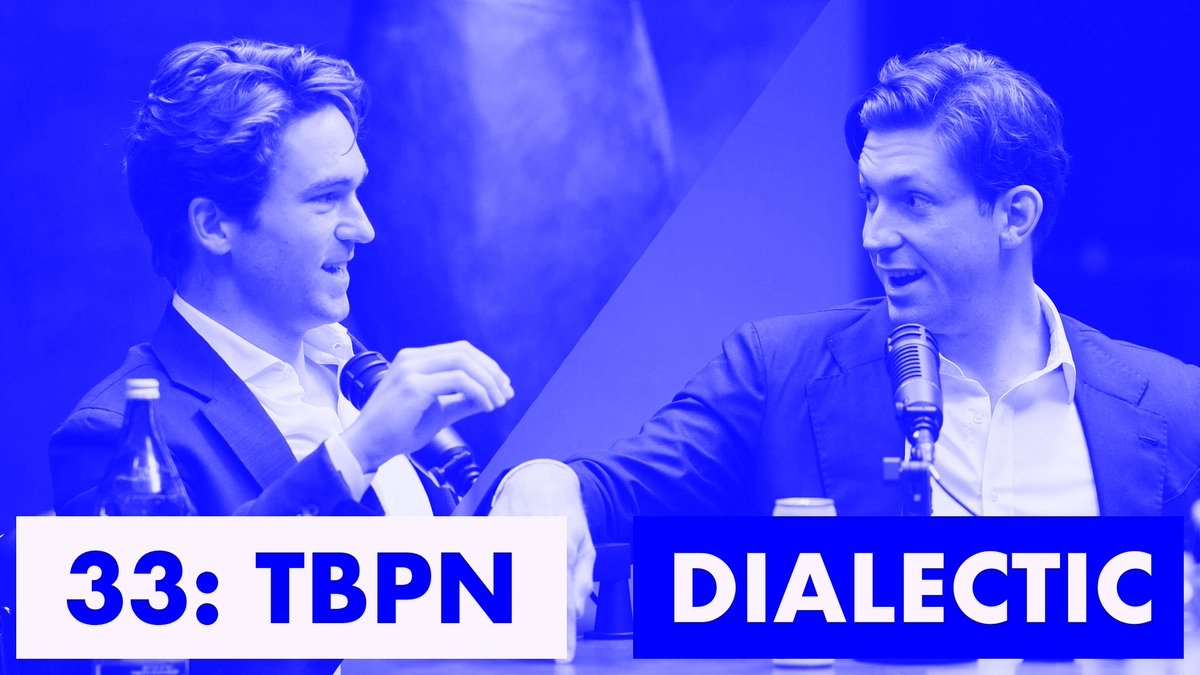
Ep. 33: TBPN (John Coogan & Jordi Hays) - Inside Tech's Water Cooler John Coogan and Jordi Hays are the hosts of TBPN, a daily live show covering the technology business. TBPN was launched only about a year ago, but has become a mainstay in tech culture and a center of gravity for terminally online technologists. John was previously an EIR at Founders Fund and tech YouTuber. He co-founded Lucy Nicotine and Soylent. Jordi has co-founded and invested in many business including Party Round/Capital and Branded Native, a podcast and youtube ad network. We cover the origins of TBPN, or the Technology Business Programming Network, from its beginnings as "Technology Brothers" to the interplay between John's love for technology and Jordi's for business. They share how they've built a media business in an era of infinite competition by leaning into high volume and constant iteration, all while treating media as the "main thing." We discuss brand building and innovating on form by borrowing ideas from outside the tech industry—from Formula One and SportsCenter to Hollywood films—to avoid tech's tendency toward circular references. We also talk about their focus on X/Twitter and a niche, highly informed audience, rather than trying to go too wide. We also chat about what makes their partnership work and how they take the work incredibly seriously while not taking themselves seriously at all. Timestamps: 0:00 - Opening Highlights 3:18 - Intro & Background 6:08 - Technology vs. Business and the Strategy behind TBPN 12:08 - Building a Media Business when Distribution is not Scarce 22:26 - Being Entrepreneurs and Talent 30:33 - Avoiding Audience Capture 35:57 - Why Advertising is a Good Model 44:04 - Technology's Circular References and Borrowing Ideas from New Places 53:20 - Narrow vs. Wide Appeal 59:44 - X (Twitter)-First Content and Other Platforms 1:14:35 - Making Content People Want to Share and Taking Yourself Seriously and Unseriously 1:20:28 - Valuing Brand 1:30:10 - Balancing Focus and Iteration 1:35:25 - Endurance & Evolution 1:40:34 - A Day in the Life of TBPN & Learning to be Newscasters 1:49:59 - Jordi & John as a duo, Will Manidis, and the beginnings of TBPN 2:02:57 - Grab Bag: Bias to Action, 15 Minute Interviews, Not Journalism, Talent, and Domination of Spirit Available on all platforms. Full transcript and all links available below.

Dialectic with Jackson Dahl

170,839 Aufrufe • vor 8 Monaten

Thought experiment for people regarding the concept of Absolute Time. Absolute means NO EXCEPTIONS. We are NOT looking back in time when we see galaxies and stars. We are NOT looking back in time 1.25 seconds when we see the moon. We're Not looking back in time 3 minutes when we see Mars. We're Not looking back in time 8.33 minutes when we see the Sun. If an astronaut lit a matchstick on Mars, the distant observer would see predator heat waves at the top of the matchstick in real-time while the matchstick started to blacken towards the astronaut's fingers. But there would be no orange light from that chemical reaction or flame seen. If the matchstick burnt out before the packet of orange light from that particular chemical reaction made it to Earth… then the distant observer would just see a disembodied orange flash of light with a lag. But the Earth-bound observer would never actually see the flame associated with the orange wavelength it put out. The wavelength of color emitted by the flame is not a recording of reality. If the orange light is 650 Thz, that means there are 650 trillion individual and separate bursts of orange light pulsating in 1 second. NOT that "the same light" is "waving" 650 trillion times a second and that light is a recording of reality. There are 650 trillion brand-new lights flashing in 1 second. Each Hertz is a brand-new emission and packet unto itself. Time does not re-emit 650 trillion times a second, nor is a photon a particle or a packet of reality acting like the frame of a reel of footage. The orange light that already left the flame will continue to propagate out until it meets the electrons making up the distant observer. But remember, it is never the same light within that packet. And the electrons making up the observer will absorb all of those different lights within that packet and re-emit brand-new lights that produce the product of illumination. A photon is a massless packet of energy, spherically expanding at the rate of c from the source it comes from. Illumination is the result of that energy being absorbed and RE-emitted by any other electrons that did not output that primary packet. But time is not associated with the same light. It's never the same light and time does not re-emit between packets. Time is not relative. Do NOT allow your mind Carte Blanche to think along the lines of relative time. DROP IT for this thought experiment. We are thinking along the lines of ABSOLUTE TIME/ Galilean VARIANCE. What does absolute time mean? It means time is constant in ALL frames of reference. Any frequency shifts between atomic clocks IS a literal change in the speed of light. But relativity forbids the speed of light from Ever changing, so relativity (Lorentz INVARIANCE) invented the concept of the 4th dimension and space-time. Because Relativity doesn't allow light speed to shift.. they interpret the same frequency shift between atomic clocks as being conclusive, irrefutable evidence that time and reality itself shifts. Rather than say it's just that ONE clock being affected by Earth's gravity and the oscillation of that ONE cesium clock is being altered compared to other clocks. People don't realize that in relativity... time dilation is SYMMETRICAL! Not even most relativists know their own theory. If Clock A and Clock B are synchronized and together... and then they accelerate apart... Einstein said Clock A would see Clock B as being slower itself. And Clock B would view Clock A as slower than ITself. NOT that only one observer would see back in time and the other would see forward or not at all. No... BOTH observers are supposed to see each other BACK in time relative to each other according to Einstein and the consequence of the math. It doesn't make ANY sense!! But relativists toss that part of time dilation under their 4th dimensional rug. The rug is woven from threads of gold that only the smart people can see apparently. So... here's a thought experiment/ Gedankenexperiment for absolute time. NO paradoxes... no nonsense or confusion. What do you see in a club? You see disco lights changing and a color wheel effect. You see everyone in REAL-TIME. Not just because they are so close to the lights. Light is not a recording of reality. Light is simply color. Illuminating reality in a certain color. Just because you can't see something yet or the color hasn't reached you doesn't mean it isn't happening in real-time. Zoom out and look at the people in the club through binoculars a mile away. You are still looking at them in real-time. The colors are shifting with a delay in the club. Now look at the club through a telescope from the surface of the moon. You're still looking at the people in real-time. But now there is a lag of the colors shifting by 1.25 seconds because it takes light 1.25 seconds to travel from the Earth to the moon. Now look at the club through an even bigger telescope from the surface of Mars. You're still looking at the people in real-time, but now there is a lag of the colors shifting by 3 minutes because it takes light 3 minutes to travel from Earth to Mars. fr you are a third hypothetical observer zoomed out and watching the person from Mars AND seeing the club on Earth... you're still seeing everything happening in real-time as well. But you see the colored wavepackets traveling with a delay to the observer on Mars. And the disco color wheel effect is just lagging before it affects the observer from Mars and the observer on the Moon. It doesn't matter how far you zoom out! There is only now to observe. But there WILL be a lag and delay for a given color/wavepacket to reach distant observers. But all points in space are already illuminated by other starlight. So if you're too far away... you'll just see the club in real-time but without any disco lights. Just see them in white light because that's the source already illuminating the scene. This is where it gets the most difficult because people think light itself is a recording of reality that replays a scene from where it came from. But another punch in the gut of relativity is that in order to see REFLECTED light... that would require a TWO-WAY transit. Which means the light would have to be sent out... record the scene of a distant event and then RETURN in order to REplay the event. Which means it would take 6 minutes to see the club from Mars by that logic and 2.5 seconds to see the club from the moon by that logic. The difference in tick rates between clocks has NOTHING to do with time dilation. Wait.. what?! How can that be? Because a clock itself doesn't represent all of time and reality. The difference between clocks is a "Transverse relative time shift." If the only light in the universe was from the lighter… the only way a distant observer would be able to see the astronaut on Mars is if the astronaut held down the button of the lighter for longer than 3 minutes. It takes 3 minutes for the packet of light to travel from Mars to Earth. The distant observer would never be able to see Mars, unless the light stretched from Mars all the way to Earth, and illuminated the path between Mars and Earth. And that would take 3 minutes for the boundary and first part of that wave packet to reach Earth. But if the distant observer wanted to observe Mars in real-time… then that packet of light would have to be on for longer than 3 minutes. So if the astronaut on Mars flicked the lighter at 12:00, the distant observer on Earth wouldn't see anything until 12:03. If the light was on for 3 minutes and 10 seconds, and the distant observer is 3 light minutes away... the distant observer would be able to see Mars in real-time for 10 seconds starting at 12:03. In the 20 second video clip of the rotating planet with shifting colors... just imagine you're a couple light minutes or light seconds away. You're still seeing the planet spin in real-time. But there is simply a delay of switching colors. You are Not looking back in time. It's just a color wheel effect from a great distance away. That's it!! There are many major flaws which tarnish people's critical thinking on this thought experiment. 1. Light does NOT ricochet or bounce. Electrons absorb, emit and re-emit ALL electromagnetic radiation. The electrons, making up the glass of a mirror will absorb the incoming light and re-emit a brand-new light as an equal and opposite reaction. NOT that "the same light" bounced off the mirror and continued on within the same frame of reference.  2. Light is NOT a recording of reality. 3. It is NOT the same light being observed from a source. It's never the same light. Each Hertz is a new light. Think of half of a sine wave as being its own emission. On an oscilloscope, a stimulus generates a peak which initiates an equal and opposite trough. Or vice versa. That repeating process is not "the same light." If you cut and paste that sine wave to another sine wave, the boundary between the waves will always be in phase. (thus refraction) 4. The speed of light is NOT the same in ALL frames of reference, no matter what. 5. Light is NOT made of particles and waves that flip back-and-forth. 6. Time is NOT connected to the speed of light. Time remains constant regardless if you accelerate towards or away from a clock. The clocks themselves will indeed be off! But that's an affect on the electrons making up the atomic clock affecting the oscillation of the isotope which is ASSUMED to ALWAYS be the same. So ANY difference in oscillation is treated as a literal distortion in space-time. 7. Space and time are not linked at all. That is a mathematical artifice under Lorentz invariance. Time is relative under Lorentz invariance. But time is absolute under Galilean VARIANCE. When people hear or see the word GALILEAN... their brains switch to auto pilot to "aether theory" and "classical physics." What people don't realize is that aether theory used Galilean INVARIANCE. Rather than space-time being used as an excuse to explain the difference in frequencies between atomic clocks... it was originally aether being used as an excuse to keep the speed of light the same. But None of those things are valid! We are thinking under the framework of Galilean VARIANCE! Completely new revolutionary model returning to Isaac Newton and Classical physics but without the corpuscular theory (particle) theory for light... without a particle-wave duality... without an aether... without a 4th dimension. Just good ol elementary math within 3D Euclidean space. Everything happening in real-time, right now. This reformulation of Galilean transformations was offered by Dr. Edward Dowdye in 1991 called The Extinction Shift Principle. Effectivity as opposed to Relativity. If light required a two-way transit, in order to travel out… Record an event, and travel back to replay the recording…  then it would take 6 minutes to see the astronaut on Mars instead of 3.  Remember… They say the SAME light is a recording, and must travel there and travel back in order to REplay. Relativity says time is relative: t' ≠ t time is NOT the same from all frames of reference) and t = tₒ / √1 - v²/c² but Galilean Variance says time is not relative: t' = t (Time IS the same from all frames of reference) and τ_tr = τₒ / √1 - v²/c² Relativity says c' = c (The velocity of light is the same from all frames of reference) but Galilean variance says c' ≠ c (The velocity of light is NOT the same from all frames of reference) and that c' = c ± v (The velocity of light in one frame of reference is dependent upon the velocity of the light source relative to an observer in another frame of reference. Whether that light source is approaching or receding away from that observer) Relativity says E = mc² (Energy and mass are universally equivalent and literally interchangeable under All conditions.) but Galilean variance says E = Δmc² = mₒc² (Energy changes in a system are the result from changes in mass. mₒ represents the original mass. Mass and energy do not literally interchange. There is an equivalence, not an interchange.) The Rebirth of Classical Physics: Time, Light & Gravity Star light and illumination: Flicking a Lighter on Mars visual example:

TheRealVerbz (Jason Verbelli)

16,608 Aufrufe • vor 1 Jahr

🚨 OPERATIONAL UPDATE: ISRAEL U.S. WAR WITH THE ISLAMIC REPUBLIC - Reporting Window: Last 24 Hours ✳️The war is entering its final phase, but the battlefield is becoming more dangerous, not less. For the first time since the conflict began, the United States has signaled that its objectives against Iran have largely been achieved and that military operations could conclude within 2 to 3 weeks. At the same time, the operational picture tells a more complex story. Strikes inside Iran are intensifying, not slowing. Iran’s responses are becoming less concentrated but more geographically expansive. And across the region, the risk of broader escalation remains very real. This is no longer an open-ended war. It is a race between final military objectives and the risk of wider regional destabilization. ━━━━━━━━━━━━━━━━━━ 🏁 POLITICAL ENDGAME SIGNAL EMERGES President Donald Trump stated that the war could end within weeks, indicating that core objectives have been achieved, including the degradation of Iran’s strategic capabilities and the disruption of its leadership structure. He also signaled that the United States does not intend to remain indefinitely engaged, suggesting that responsibility for securing critical global nfrastructure, particularly the Strait of Hormuz, may shift to regional and international stakeholders. At the same time, tensions with NATO allies are surfacing. Frustration over limited allied participation in the war has raised the possibility of a broader fracture within the Western alliance structure. Parallel reporting indicates that elements within Iran are signaling openness to a ceasefire framework, particularly if maritime access through Hormuz is restored. Taken together, this marks a clear transition: the war now has a defined political end state, even as military operations continue. ━━━━━━━━━━━━━━━━━━ ✈️ FINAL PHASE STRIKE CAMPAIGN INSIDE IRAN The intensity of strikes over the past 24 hours reflects what appears to be end-stage shaping operations. Israeli and US-aligned strikes targeted a wide range of sites across Iran, including weapons production facilities, research and development centers, and critical infrastructure nodes tied to the regime’s military capabilities. Tehran remains a central focus. Approximately twenty military-industrial sites were struck, along with infrastructure at Mehrabad Airport and locations linked to Basij coordination. A senior Quds Force engineering figure, Mahdi Vafaei, was eliminated in a precision strike. His role in developing underground weapons infrastructure across Lebanon and Syria made him a key long-term asset for Iran’s regional military network. Additional strikes hit industrial targets, including steel production facilities and a site identified as supporting materials linked to Iran’s chemical weapons development pipeline. This is not a campaign aimed at symbolic damage. It is a systematic effort to dismantle Iran’s ability to produce, coordinate, and sustain war over time. ━━━━━━━━━━━━━━━━━━ 🎯 IRANIAN RESPONSE AND CIVILIAN IMPACT Iran continues to launch missiles toward Israel, but at a reduced scale compared to earlier phases of the war. Limited salvos were recorded over the past 24 hours, causing injuries and localized damage. One of the most significant developments was the reported use of cluster munitions in central Israel, critically injuring a child and causing multiple casualties. At the same time, Iran appears to be adapting operationally. Rather than attempting large-scale saturation attacks, it is increasingly relying on smaller strikes, drones, and diversified targeting strategies. This does not indicate de-escalation. It reflects an effort to remain operational under sustained pressure. ━━━━━━━━━━━━━━━━━━ 🌍 REGIONAL EXPANSION: THE WAR SPREADS While direct attacks on Israel have become more limited in scale, Iran is expanding the conflict across the region. In the Gulf, infrastructure in Kuwait and Bahrain was struck, including fuel storage facilities at Kuwait International Airport. Fires and damage were reported, adding to a growing pattern of attacks on energy and logistical nodes. A commercial tanker was also struck near Qatar, further extending the conflict into maritime space. These developments mark a continued shift where Iran is targeting not just Israel, but the broader economic and energy architecture of the region. ━━━━━━━━━━━━━━━━━━ 🚢 THE STRAIT OF HORMUZ The strategic center of gravity in this war is now unmistakable. The Strait of Hormuz remains contested, with ongoing disruption to global shipping and energy flows. The United States is actively evaluating options to reopen and secure the waterway, including potential direct military action against Iranian coastal capabilities. At the same time, Gulf states, particularly the UAE, are pushing for a coordinated military effort to ensure the strait is reopened. However, regional positioning remains complex, with some actors balancing public caution and private pressure. Notably, the United States has signaled that it may not take long-term responsibility for securing Hormuz, instead shifting that burden to global stakeholders. The implication is clear: control of Hormuz will determine not only the outcome of the war, but its aftermath. ━━━━━━━━━━━━━━━━━━ 🔥 NORTHERN AND PROXY FRONTS Iran’s proxy network remains active, but increasingly strained. In Lebanon, Israeli strikes continue to target Hezbollah leadership and infrastructure, including the reported elimination of a senior commander in Beirut. Rocket fire persists, but Israeli operations are steadily degrading launch capabilities. In Yemen, the Houthis have formally entered the fight against Israel and are likely contributing to the expanding pattern of regional attacks, including those affecting Gulf infrastructure. Across Iraq and Syria, Iranian-aligned militias remain engaged, while underlying instability continues to create openings for additional actors. This is now a multi-front conflict, but one in which Iran’s network is under pressure across every axis. ━━━━━━━━━━━━━━━━━━ 🧠 WARFARE EVOLUTION A critical and often overlooked development is the role of advanced targeting systems. Israel is employing AI-assisted capabilities to identify threats, prioritize targets, and synchronize strikes across multiple theaters in near real time. This has significantly compressed the operational cycle, allowing for rapid follow-up strikes and reduced recovery time for Iranian forces. The result is a battlefield environment where Iran has less time to act, less time to adapt, and fewer opportunities to rebuild degraded capabilities. ━━━━━━━━━━━━━━━━━━ 📊 THE BIG PICTURE The trajectory of the war is now coming into focus. The United States and Israel are executing a campaign designed to dismantle Iran’s ability to function as a coherent military actor. Iran, in response, is expanding the conflict geographically in an attempt to impose broader costs. At the same time, political signals indicate that the war is approaching a defined end state. Markets are already reacting to this expectation, with oil prices declining and global indices rising on the assumption that the conflict may soon conclude. However, the final phase carries its own risks. As Iran’s conventional capabilities degrade, its reliance on asymmetric and regional tactics is increasing. The decisive question is no longer how the war is fought day to day. It is whether the final objectives can be secured before broader escalation overtakes them. ━━━━━━━━━━━━━━━━━━ 📘 BOOK RECOMMENDATION If you want a deeper understanding of the history, narratives, and strategic realities behind this conflict: Contested Land, Uncontested Truth This book breaks down the ideological, geopolitical, and historical forces that led directly to moments like this, with clarity and evidence. 👉 If you found this report valuable, share it. Follow for daily operational updates.

Inside_Israel_Intel

60,835 Aufrufe • vor 4 Monaten

Disappointed to say that in my 10th year of commentating competitive Tekken 7, I will not be involved in its conclusion at the TWT Finals. Telling the story of these players and building this community has taken up the majority of my life this past decade so I put together a video to reflect back on it (👇bottom of this post). I've been telling this story since Evo 2015 with Nobi and AO in the grand finals of Evo. We saw the Echo Fox boys dominate the scene, then the Knee/JDCR era, to Qudans returning to win the first TWT (Hei-ha-chi! Hei-ha-chi!). In 2018 we had the Knee/Qudans era which concluded with Rangchu winning the TWT Finals. Then in 2019 Arslan Ash flipped the planet upside down at Evo Japan, Ryan Hart owned me up, Pakistan showed up through the rest of that year, and we saw Chikurin become TWT Champ. Then came Leroy Japan 2020 (shoutouts to Book) before the pandemic online era, online Evo's, Tekken Online Challenges and the creation of ICFC. More recently Arslan closed out his 4 Evo Titles, we witnessed the Knee/Arslan era, and now its the Atif Butt era, with him winning TWT Finals and closing out Gamers8 this year. So many players, new and old, will converge on New Orleans this weekend to conclude this story of what I believe has been THE BEST ARC IN FGC HISTORY. Personally, this past decade has been an incredible journey that I will forever be grateful for. I got to travel the world (Amsterdam, Japan, France, Australia, Philippines, Romania, Saudi Arabia, Dubai, Pakistan, Canada, Chile, Singapore, Indonesia, Thailand and Germany) with my friends and make new friends across the globe. I helped start UYU and was their VP as we gave opportunities to players like Jeondding, LowHigh, Yuyu, Qudans etc. Jinhee and Drew showed so much love to the FGC during that time and I'm grateful they gave me the opportunity to guide the team internally. This past weekend the ICFC Championship was my last commentary for Tekken 7, marking a bittersweet end for my Tekken 7 commentary journey. The beginnings of ICFC were notable though. By 2018, Wednesday Night Fights Tekken 7 was dying. We were down to 4 entrants and there was no stream. I asked Valle if I could take over the Tekken 7 portion, I put together all the equipment, setup the stream going forward and we grew to 64 man weeklies offline. It COULD NOT have been done without Tanman, #BeeLDeaL | B:L, Billy, Suiken, Michael Y. Kwon and 上原 rickstah, who all held it down once the ball got rolling. Then the pandemic hit, we pivoted to online tournaments and ran everything ourselves. We had expanded our local to the entire west coast and after T7's netcode update, the entire USA. 10/0 reached out with the idea of taking what we had built and expanding it to EU and Asia. It was a difficult decision to step away from WNF, but I moved our tournaments to 10/0, ICFC began, and we now have a new generation of top players built ONLINE. That was unprecedented for Tekken. A HUGE thank you to all of the community for participating in these events and donating to the prize pools. Without the players and the community, none of this would exist. Never forget that. Big thanks to Chris Ceg and 10/0 for expanding what we started and pushing it to new heights. I have to also thank Katsuhiro Harada and Michael Murray for the amazing game that is TEKKEN 7. HUGE thanks to Aris for everything hes done for TEKKEN 7 and LUYG. To Mirage | Spag for connecting all of us more closely to the EU (NA>) and Pakistan (NA<) scenes. To Mark Julio 『マークマン』 for always being inner circle⭕️, pushing Tekken forward, and being an amazing co-commentator throughout these years. And of course Steve Scott for being my main duo these last few years. We got into a good ass groove the last 5 years and its always a damn good time. Lastly, 10 years is a long time. When I started this, I was a pro player, I was in a long relationship, I had a part time job, I had all black hair and minimal wrinkles. None of those things are true anymore😆. I know that commentary as a profession is hugely unpredictable and unreliable, so I honestly have NO CLUE what the future holds. One thing I know for certain though, is that I love TEKKEN. I've NEVER been a shill, but dealing with this has made me feel like one these past 4 months. So THE BIGGEST THANK YOU I want to give is to everyone who has stood by me, supported me, and never doubted me for a moment this decade. I'm sad I didn't get one last "FINAL FINAL round" at the FINAL FINALS for Tekken 7, but I'm sure everyone at the finals will say it for me anyway. I love you guys! Have fun in New Orleans

Rip

365,805 Aufrufe • vor 2 Jahren

Moneytaur study blueprint 🗺️ The process I used to go from not knowing what an order block is to pulling cash from the crypto markets in under 6 months using 🎯 Master concepts. Proof of performance, past 120 days👇 Start date: 09/03/2025 Requirements: - A PC/laptop - Wifi - A basic understanding of trading. ( What candlesticks are, how to actually place trades , etc ) - A free mind - Time or the ability to free up time. Starting: - Structure and routine - Stick to that routine + Pre mortem plan. - Notion / Obsidian setup. The first thing you need to create is a clear routine moulded around how you intend to approach this very large and complex task. This will not be linear and you will naturally adapt it as you progress but especially in the beginning some resemblance of structure each day is vital. This is an individual process but it is important to understand from the beginning that this will require a majority of your free time assuming you work a full time Job or study as a student. For me in the beginning this looked like: - Wake up at 6:30. - Shower - Study/work for 1h 45m before leaving for work. - 09:00 -> 17:00 work - 17:30 Exercise / Train - Eat - 19:00 resume study/work - 22:30 Start to wind down and get ready to sleep. It changed several times over the months and especially now I am full time but this is irrelevant, the only thing that matters is sticking with what you choose. Whatever your own routine may look like, it is important to understand it will inevitably require sacrifice. --- The next thing once you have established a draft framework of your routine is ensuring you will actually stick to that routine. Something I implemented which I found particularly beneficial was the concept of a Pre-Mortem plan. This involves creating several scenarios of a future in which you have failed and working backwards from each of these to find where it went wrong. Here is a video which explains it fully: When I did this I came up with 3 scenarios as well as prevention and cure for each. In the 6 months that followed each scenario presented at some point but I was able to catch them early due to having done this. The last thing is to not over complicate this, don't hyper focus on systems and loose momentum optimizing each detail. Just ensure you do the fucking work. I was a little guilty of the above at times, trying to craft the perfect routine. In reality the person who just gets up, drinks too much coffee and works his ass off out performs the workflow perfectionist who visualizes and repeats affirmations, any day of the week. --- Next you need somewhere to store your notes, journal your trades and build your knowledge. For me this was Obsidian but I have also used Notion before and it is an equally viable option. Whichever one of these you choose be warned you will inevitably want to bang your head against a wall trying to use them for the first few days, but they will both click pretty quick and are 100% better options the word document or paper alternative. Here is my full obsidian setup tutorial: Here is a link to MisterPA 's notion Journal: Here is how I create "Meta-Notes" using obsidian: The process: - How I did it. - How I would do it if doing it again. Now I did things the "hard way" and manually worked my way back through each of MT's tweets starting in 2021, reading every one and logging those that I felt where relevant. You can see in my first post: the very first system I used to do this. I quickly adapted though after about a week and focused less on just logging each relevant tweet but trying to find and focusing on those which contained the most information. There where a lot of charts I looked at then skipped over because especially at the start of his timeline they contained little useful information and my time was better spent finding those where there was something to decode. Now this does not mean skip out on "work" just use your time efficiently. -- If however if I was to start from the beginning again with the goal of levelling up technical understanding as quickly as possible I would take a different approach. To start with I would familiarise myself with all relevant SMC concepts, I have linked the best free recourses for this below 👇 CryptoChase beginner friendly index: Barncore's "The Moneytaur Way" series: Gian Luca's Trading bootcamp playlist: Following this I would then work through all of Taur's subscription posts working backwards, recreating his charts and taking notes on his logic. The subscription feed has the highest value density and least noise. Video example of my notes from his subscription posts 👇: --- Okay so now once you have a basic understanding of concepts and can re-recreate them on charts of your own it is time to put this in to practice. The next step is vigorous backtesting, you can use the trading view tool but I think trade Zella offers a more use friendly option if you pay for the subscription. Especially as it allows you to change timeframes without skipping ahead to candle close time of the timeframe you change too ( like Trading view does ) *my only note would be that their LTF/Micro TF data feed with be different to brokerage charts you will use on Trading view, to start with though you should not be going low enough that this is an issue. When you backtest in this context, treat it like real trading. That means journal and logging like you would if real cash was on the line. Take time, do not rush and focus on quality. Stick to BTC, ETH, Major FX pairs or indices as these assets are less reliant on confluence, backtesting a shitcoin is near useless as whether levels work or not will be highly dependent on Majors PA. Go on HTF, scroll back a couple years and try not too look at chart while doing so and then begin. Start with HTF analysis and work down to 2H or wherever you feel comfortable, chart it fully and then identify setups. Make rough notes / plans and then press play, execute the setups as they hit, log and journal trade management as well as observations and key notes. It is very important to not cheat when you do this, do not skip back and adjust your stoploss because it hit by 0.1%, do not skip back and adjust plan because you missed a block and your TP got frontrun. Instead these are the things you journal, embrace these mistakes because they are the cheapest mistakes you are going to make. Grind this, do it for hours, put some music on and enjoy. To start with focus on HTF's, as you get better and start netting $ on paper you can drop the timeframes and increase the difficulty. HTF = Normal, MTF = Medium, LTF = Hard. Even if you do not intend to day trade, learning how to read the lower TF's that force you to think faster, harder and prepare you for lower win rates / loss streaks can greatly improve your ability on higher TF's. While you are doing this as you start to have concepts click you now want to build up your real trading experience, take a sum of money that you care about but will be okay loosing and dedicate this to live trading. Start taking real trades and expect net losses in the beginning. This is where you will make you 2nd cheapest mistakes. This is also where you can begin to learn about your psychology. You may encounter some elements already in backtesting but the real market is where true colours really start to show. Mental issues are inevitable and part of the game, get used to them and start working to identify and fix them. Reading and applying books like Trading in the Zone and Mental Game of Trading are important and will help a lot but there is no easy fix, for some stuff you I believe you just have to get used to it and it goes away with experience. Losses suck at the beginning but after you loose 100 times you starting getting pretty numb to it, same goes for the winners. To accelerate the learning process, build connections and get advice there is also always the option of private groups, while I never personally chose this route and committed to learning everything through my own endeavours there is no denying that having nearly all the information you need structured and compiled in one place is valuable and can save time. Beyond this having access to real time thoughts and opinions of profitable traders can accelerate performance, however it carries the risk of being a double edged sword if not used properly, if relying on it like a crutch and using it as a substitute for real work you will not succeed. With that said if you take it for what it is, a learning opportunity then I believe it can be very beneficial. I am not a member of, nor affiliated with any paid group. There are now many options available within the community, all run by different people with different styles, tailored to different needs. If I was to make a recommendation though, as a non-member, it would be Albert & Co's 618'ers simply due to the diversity in styles of the traders running it and results I have seen from members I know personally. It is important that as you start to trade with real capital you reduce noise in your social feeds or eliminate it all together. You do not need 5 different opinions, you also do not need 2 people telling you the same thing in their own way so you feel re-assured. What you do need is to develop your independent thinking as a trader and be comfortable making different decisions to others, even traders ahead of yourself if it fits with your system or understanding of market. Taur here is perhaps an exception as this is who you are learning from but down the line a real test of your own ability and independence will be being able to stick with your own plan even when it differs from his. Don't get me wrong, counter trading him is retarded but you must learn to adapt his gift to your own style. This will make sense at some point. The next stage is taking your understanding of specific concepts to higher level as you simultaneously snowball experience. Look back through your journal and review where you lost money and made money, do not over extrapolate from a small sample but start to take notes and observe if trends in performance emerge. This is the beginning of the transition to self reliance, you now understand the strategy but must learn for yourself when and where it works. Here you can also learn more nuanced secondary concepts such as VSA, orderflow etc and add these to your game where appropriate. Do NOT get lost in the sauce though and remember mastery of basics is key. IMO a big focus should be understanding correlation thoroughly but especially on HTF's this is the most important thing and what triggers the majority of large swings where most of your cash will be made and losses recovered. Some people will disagree with me here but IMO you should also not be *focusing* on Odd TF's. These are secondary at best and most people overweight their significance leading to avoidable losses while wondering why price did not care about their 327minute Breaker Block which they think is the key to the market. Study Taurs feed and take note of how he mostly uses: 3M, 1M, 3W, 2W, 1W, 5D, 4D, 3D, 2D, 1D, 12H, 8H, 6H, 4H, 2H, 1H, 30m, 15m + micro time frames. The only thing left is time and repetition, you must show up each day and really do this, for months. Maybe you start to see result's, you catch your first key swing and where able to trade where others froze. Congratulations. Learn from these winners and repeat the actions. Find what assets work best for you, find your style, refine and grow. --- The last thing I will include is a short list of tools or links that can be helpful. - Trading view tutorial: - Dictionary: - Market news Calendar: --- Thank you too all those who have read this, I hope this has been helpful for the beginners who want to start but are just not sure how. 🫶 Don't just bookmark this and move on, start 🙃

Ace

45,054 Aufrufe • vor 8 Monaten

//The Wire//2300Z November 3, 2025// //ROUTINE// //BLUF: TWO-DAY KNIFE ATTACK SPREE CULMINATES IN MASS STABBING ON TRAIN IN UNITED KINGDOM, PASSENGERS AND CREW DO THEIR BEST TO HALT THE ATTACK. FEDERAL JUDGE ORDERS SNAP FUNDING TO MATERIALIZE. GOLDEN HINDU IDOL 15 STORIES TALL TO BE CONSTRUCTED IN RURAL NORTH CAROLINA.// -----BEGIN TEARLINE----- -International Events- United Kingdom: On Saturday, a mass stabbing was carried out on a train bound for London from Doncaster. 10x people remain in critical condition as a result of the attack. The assailant has been identified as Anthony Williams. A separate individual who may have also been involved in some way was arrested at the scene. This individual has not been identified, but authorities have stated he is of Caribbean descent. Police also tased one man on the platform after the train arrived at the station, however this was a case of mistaken identity and the tased man was released without charge. -HomeFront- North Carolina: Local concern has emerged following plans to build a massive Hindu "temple" in the small town of Moncure, just west of Holly Springs. This extremely large and sprawling complex is planned to have a golden idol that will be roughly 155 feet tall...one foot taller than the Statue of Liberty. This project was announced earlier this year, but has gained notoriety as the construction plans move forward. Analyst Comment: Small towns in historically Christian rural areas are often targeted for the construction of golden idols due to the ease of bribing/influencing local officials to obtain permission to build commercial facilities. In this case, Moncure is an extremely small town that doesn't really engage in any zoning (they leave it to the county to decide), so it's easy to pencil-whip the re-zoning of private residential property to allow for the construction of a pagan idol that will dominate the terrain for dozens of miles. This idol is not even built yet, the area slated for it's construction is still just undeveloped land. However, (to the surprise of literally no one) it's already featured heavily in the Google search results for Moncure, NC as the top tourist destination for the town. Hindus have already spammed the reviews for the structure that doesn't exist yet, giving it top marks and praising the facility as great to visit...with the owners of the place celebrating the fake reviews of a non-existent facility, while simultaneously admitting that the facility doesn't exist yet. Washington D.C. - U.S. District Judge John J. McConnell Jr. has ordered the White House to ensure that emergency funds are used for the SNAP program, stating that "the USDA must distribute the contingency money timely, or as soon as possible, for the November 1 payments to be made". Analyst Comment: That brief description was more or less the entire order, which was oral in nature. However, a lot of other things have to click into place to make this order come to fruition, especially due to the complexities of the Judiciary ordering the Executive to do something that is technically the job of the Legislative. Despite the very obvious problem with this arrangement, the issue is now tied up in court, effectively stalling the distribution of at least some electronic deposits. However, some EBT recipients have reported getting their funds as they have before, so it's not clear as to what funds are being disbursed, or to whom. -----END TEARLINE----- Analyst Comments: The train stabbing attack in the United Kingdom is one of the most significant attacks in recent British history. A Major Incident was declared and a PLATO response was initiated (which is the colloquialism for an active terror attack in progress). The details of the attack itself are not entirely clear, but at the moment the eyewitness statements indicate this one was ugly. A train car packed with people who cannot escape makes for an exceptionally vulnerable target for malign actors. Witnesses state that the attack took a long time to complete, and that the stabbings were carried out over a period of 15-20 minutes. This was made worse by the fact that this mass attack was 100% preventable. The attack onboard the train was actually the *fourth* stabbing attack conducted by Williams within a 24 hour period. Authorities have not confirmed anything; all of this investigative legwork is being conducted by private citizens as the British government has been silent on the matter. However eyewitness statements indicate that Williams was likely the same man who stabbed a 14-year-old in Peterborough the day before (October 31). That same day, Williams was observed brandishing a knife in a barber shop in Cambridgeshire. Williams is also suspected in stabbing a different man in East London on November 1st. In all prior cases, either the police did not investigate at all, or did not circulate his photo or issue a BOLO notice. This was quite literally a case of a madman with a knife stabbing anyone he liked over a period of two days, before the final culminating attack took place onboard the train. Concerning motive, this meets all definitions for being classified as a terror attack. However, British authorities have very adamantly stated that it isn't a terrorist attack. Trust is nearly nonexistent with British authorities at this point, but the story told by the Transit Police is that this was a private dispute between two criminals, which devolved into one of them attempting to stab the other. Due to the tight quarters of a packed train car, this resulted in everyone in the car becoming unwillingly involved. At the moment, this version of the story appears to be false for many reasons, first and foremost is the detail that Williams had already conducted three stabbing attacks prior to the one on the train. What started the incident inside the train car remains uncertain. However, once violence had been undertaken the assailant tried to kill everyone on the train, and a general state of bedlam erupted as passengers fled up and down the train to escape the attack. This is confirmed beyond all doubt, by the CCTV footage that was leaked, showing Williams pursuing passengers down the platform after arriving at Huntingdon Station. This is about as smoking-gun as it can get, and confirms that the attacker did indeed attempt to target citizens deliberately, as opposed to people just getting in the way of a private murder attempt. As a reminder, there are at least two security cameras at each end of every car on the London North Eastern Railway trains. So footage of the attack (and importantly, everything that led up to it) does exist. Since this footage probably won't be released, the most important witnesses to consider when trying to figure out what happened, are those who at present cannot speak...the individuals still undergoing intensive medical treatment are the people who were closest to the attack and their testimony carries much weight. At the moment, there have been no fatalities, but prayers are strongly encouraged for the survivors to ensure their rapid recovery. More broadly, this attack highlights the extreme need for citizens who are not just prepared physically, but also mentally. Train driver Andrew Johnson became aware of the attack, and instead of stopping the train on the tracks (where police and medical would take some time to arrive), Johnson diverted the train to a different track which would take the train into the next-closest station (which happened to be Huntingdon) where police would be waiting, radioing ahead to ensure that the attack on his train could be stopped as soon as possible. One railway crew member onboard the train (who has not yet been named due to being wounded) also displayed great courage by blocking the passage of the attacker, delaying his rampage down the train for a time, sustaining severe wounds in the process. Several passengers also carried out the time-honored tradition of using violence-of-action to take the fight to the attacker (all of whom were wounded during the attack). Stephen Creen was wounded while attempting to stop the attacker, along with several others who attempted to do the same even though everyone except for the attacker was unarmed. In short, details may be hard to discern, but currently it looks like most people did the right thing; those who could fight, did so. Those who couldn't, fled and attempted to warn other passengers down the train, as well as caring for the wounded. This attack proves once again that almost everything can be done correctly, and the fight still be a hard one. Attacks will continue, this is unfortunately a certainty. If not from deliberately planned terror attacks, then from random outbursts of violence. But, the first steps in the British re-conquering their kingdom will be to foster a culture of using extreme violence, to stop extreme violence. Not out of malice or hatred, but out of the desire to stop the harm to innocent people. For far too long the British government has portrayed sheer survival instinct as hatred, which is pure gaslighting that couldn't be further from the truth. Attacks like this, while horrific, do a lot to show the British people that stopping a mass murdering lunatic requires violence, and exercising this violence to protect the innocent is a good thing. As such, considering this rampage will be in the news cycle for a while, it will be absolutely crucial to applaud the actions of those who did what they could to stop the attack. Focusing on the horror of the day is easy but fruitless; it is a far, far better thing to focus on the good that was done, and try to improve the lessons-learned for the challenging times ahead. They might not have been as successful as one would hope, but some gave it a try anyway and did the best they could. Which is the most anyone can hope for, and what we all should strive to achieve. Analyst: S2A1 Research: //END REPORT//

S2 Underground

16,592 Aufrufe • vor 9 Monaten