Загрузка видео...

Не удалось загрузить видео

На главную

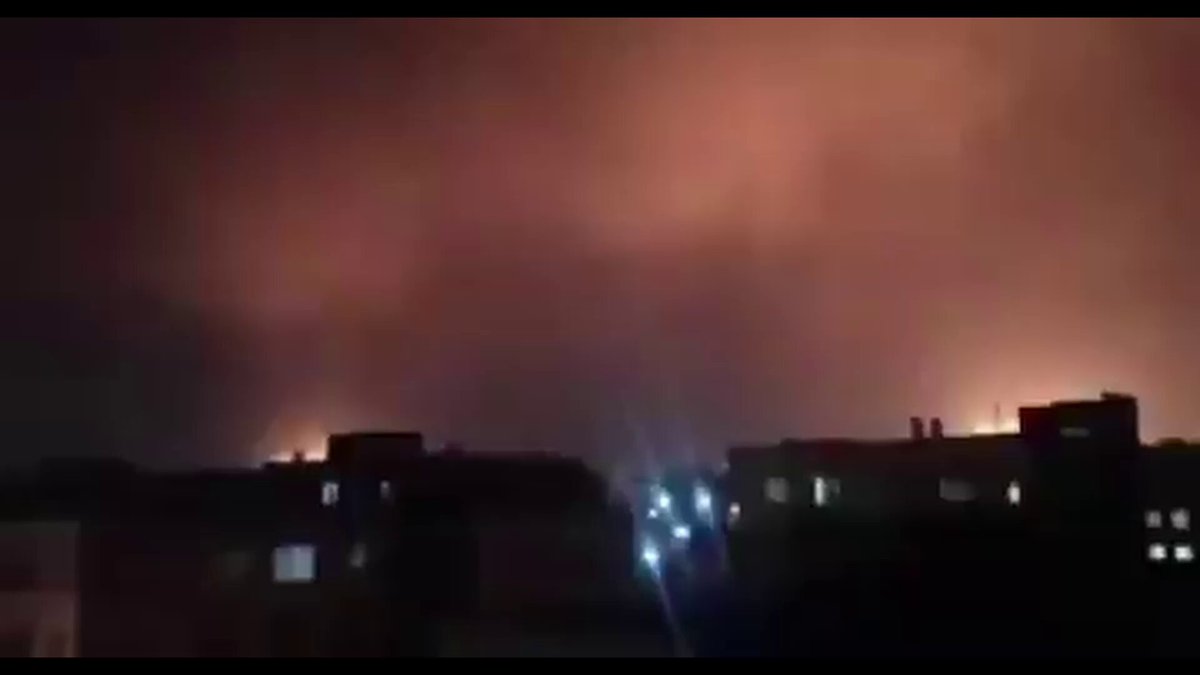
Trump’s unpredictability has become predictable. The pattern is now familiar: 1. Issue a maximalist threat or ultimatum 2. Prepare major military action 3. Pause or cancel the escalation 4. Announce that diplomacy could deliver a rapid breakthrough. Plus Iran’s more recent pre-emptive attack on a US base in Jordan...

27,633 просмотров • 1 месяц назад •via X (Twitter)

Комментарии: 19

Фото профиля Traci Burgess
Traci Burgess1 месяц назад

@RebeccaNel79339 Before this mess is over I want a vid of Trump on his knees begging Iranians for mercy.

Фото профиля gotz1981
gotz19811 месяц назад

Trump is joke a proper clown 🤡

Фото профиля Olive Green
Olive Green1 месяц назад

@MartineBBC Absolutely stunning in those magical glasses MC you are so special 👓❤️

Фото профиля Abdo Dameen MSc
Abdo Dameen MSc1 месяц назад

The issue i find with this take is that it’s very simple and lacks any depth and gains all of its momentum from a reactionary approach. The Iranian do not care what he says. The Iranian know what they need to do and they aren’t looking at war from a speculative narrative. They have control over the strait, no oil is going out, the US dollar will lose value, the American allies in the region can’t do anything and soon enough the American economy will suffer and then America will be force to make a favourable deal with Iran that will make Iran the 4 world power. Anything else and Iran will send the world back to 1910s and a global recession.

Фото профиля Zulqadar Rashid
Zulqadar Rashid1 месяц назад

TACO TACO TACO TACO TACO 🤣🤣🤣😂😂😂🤣🤣🤣🤣🤣 Regards from Pakistan 🇵🇰

Фото профиля Poria🇮🇷
Poria🇮🇷1 месяц назад

That BBC next to your name tells me I shouldn’t even listen to a second of you

Фото профиля Olive Green
Olive Green1 месяц назад

@MartineBBC Pretty in pink the lovely MC 💕

Фото профиля Truth Gunner
Truth Gunner1 месяц назад

So basically, Iran is threatening, so Trump has backed down abandoning the Iranian people for the benefit of Saudi Arabia and Qatar’s economies. He’s got his excuse

Фото профиля John Hill
John Hill1 месяц назад

SMF

Фото профиля DISPLAYMODE Media
DISPLAYMODE Media1 месяц назад

Military Vacuity, explained …

Фото профиля M. H
M. H1 месяц назад

How much damage has been inflicted on Iran? Do you know?? Many bombs have been delivered but no damage. It’s been 6 months. We will soon find out what’s been done

Фото профиля Shane O'Neill
Shane O'Neill1 месяц назад

And there's always the Huge blue and white elephant In the middle of the room Actually directing operations

Фото профиля Prikker
Prikker1 месяц назад

it is ridiculous

Фото профиля Pat Bruno
Pat Bruno1 месяц назад

AGREED 💯💯💯💯💯

Фото профиля Harry mcfalls
Harry mcfalls1 месяц назад

Threaten blink repeat enjoy your TACO

Фото профиля Whatevah
Whatevah1 месяц назад

Iran has spent decades building invisible supply chains and a hidden distributed military infrastructure. These "pulses" are designed to destroy key portions, not all, of what has become known. The "pauses" are critical for intelligence gathering. Identifying leadership, supply chain, data flow changes. Taking out a deeply entrenched opponent takes many such pulses at different pressure points.

Фото профиля simbimbindo
simbimbindo1 месяц назад

Are they not fighting militarily?

Фото профиля John Mills
John Mills1 месяц назад

Just another Groundhog Day

Фото профиля Texas Papa
Texas Papa1 месяц назад

BBC sucks cock

Похожие видео

🇺🇸🇮🇷⚡️ Donald Trump is changing course on Iran, ordering his senior representatives to halt negotiations with Tehran as Washington prepares to replace stop-and-start diplomacy with a longer campaign of sustained economic and military pressure. According to CNN, the administration is simultaneously moving away from the idea of immediately launching another massive wave of strikes. Instead, Trump wants to gradually “strangle” Iran through economic isolation and sustained military pressure, steadily increasing the cost for Tehran while denying it the relief it seeks. The objective is to weaken Iran’s position over time until its leadership becomes more willing to accept Washington’s conditions. CNN had previously reported that the administration was preparing a broader “economic isolation” strategy against Iran. This represents a shift in method rather than a reduction in pressure. Washington appears to be betting that Iran can be forced into concessions without immediately committing the U.S. to another expensive round of large-scale warfare. The strategy gives Trump room to preserve military escalation as a later option while sanctions, the blockade and economic pressure steadily erode Tehran’s ability to sustain the confrontation. The crucial question is whether Iran bends first, or decides that renewed escalation is preferable to being slowly squeezed. See the latest updates with us: Visioner

Visioner

13,610 просмотров • 1 месяц назад

🇮🇷🇺🇸 Glenn Diesen: Iran may no longer let America decide when the war starts For months, the U.S. has held one enormous advantage over Iran: escalation control. Washington can attack, pause, move toward diplomacy, then potentially attack again when conditions are more favorable. Glenn Diesen thinks Tehran is increasingly determined to take that option away. “If the U.S. know they can just stop the fighting whenever they want, then why not try another attack here or there?” His argument is that Iran may now move toward something considerably more dangerous: striking first when it sees preparations for another major U.S. or Israeli attack. Refueling aircraft assembling. Runways becoming active. Forces moving into position. “There's no reason to wait.” Diesen argues Tehran may not even consider such action a preemptive strike because, from its perspective, the war never actually ended. That may also explain the increasingly aggressive behavior around American warships. Diesen believes Iran may previously have avoided hitting them not because it lacked the capability, but because killing large numbers of U.S. sailors would force Washington dramatically higher up the escalation ladder. Now, he says, Tehran appears to be signaling that restraint may have limits. The strategic shift is subtle but potentially enormous: Iran isn't merely trying to deter the next American attack. It's trying to deny Washington the ability to choose when it happens. Glenn Diesen

Mario Nawfal

295,795 просмотров • 15 дней назад

🇺🇸🇮🇷 Trump's paused the bombing and replaced it with economic warfare, but Iran's response is that Washington no longer gets to decide when the shooting starts again. In a major escalation, Iranian Deputy Foreign Minister Kazem Gharibabadi says Tehran now considers pre-emptive strikes against U.S interests a legitimate option if it believes its national survival is threatened. His argument is remarkably direct: Why should Iran always wait for America to attack first? If Tehran believes another attack is coming, or that American pressure has become existential, Gharibabadi says Iran can act first. And the timing matters. Rubio is reportedly telling regional counterparts that Washington does not currently intend to launch new strikes on Iran, with Trump's pressure instead running through the naval blockade and Operation Economic Outcast. Military action remains available if Iran attacks first. That's precisely what makes Iran's new position so dangerous. Trump appears to believe he can freeze the military conflict while slowly tightening the economic noose around Tehran. But if the sanctions begin seriously biting, or Tehran concludes Washington is preparing another attack, it could choose to strike American interests first. And after the last war, Iran is considerably less intimidated by that prospect. Then there's Trump's other problem: China. Operation Economic Outcast only works if the countries keeping Iran economically connected can be pressured into compliance. But if Beijing refuses, Trump faces an ugly choice: tolerate a huge hole in the sanctions regime or confront China and risk retaliation involving rare earth minerals that are critical to U.S weapons production. Trump may have decided the military war is paused. Iran is warning him that decision is no longer his alone. Brandon Weichert

Mario Nawfal

317,029 просмотров • 1 месяц назад

My interview with Jim Sciutto CNN International: A. The fundamental question is: What is the administration’s endgame with Iran? Right now, that remains unclear. Is the objective to weaken Iran, bring down the regime, force Tehran to capitulate, or ultimately return to negotiations and reach an agreement? These are very different objectives that require very different strategies. Until Washington defines what success actually looks like, it is difficult to understand where this conflict is heading or how it is supposed to end. B. Economic pressure is a tool, not an objective, and certainly not an exit strategy. Without a realistic diplomatic off-ramp, maximum economic pressure is more likely to produce escalation than capitulation. The assumption that Washington can continue squeezing Tehran while indefinitely preserving the current status quo is simply unrealistic. Iran has agency in this conflict. Tehran will look for ways to impose costs on the United States and its regional partners. So even if the administration wants to freeze the conflict at its current level, Iran has no reason to accommodate that preference. Washington does not control the escalation ladder by itself. C. Meanwhile, much of the discussion in Washington is focused on the Strait of Hormu which, we should remember, was open before the war, while the strategic problems that helped produce this conflict remain unresolved. The most important is Iran’s nuclear program. In fact, the nuclear challenge may now be more dangerous than it was before the war. Ali Khamenei was deeply hostile to the United States and Israel, but he was also extremely cautious about crossing the nuclear threshold. His removal has changed the decision-making environment in Tehran. With the IRGC now wielding greater influence, the possibility that Iran could decide to move toward a nuclear weapon has become more serious. cannot build a strategy around the assumption that the Iranian regime will collapse. That is not a strategy; it is wishful thinking. Economic pressure, even severe economic pressure, does not guarantee regime change. In fact, it could produce the opposite effect: triggering a nationalist backlash, strengthening the regime’s narrative that Iran is under external attack, and giving the leadership additional justification to crack down internally. Regime change may happen, but Washington cannot make it the central assumption on which its Iran strategy rests. U.S. policy has to be built around the Iran that exists today, not the Iran Washington hopes might emerge tomorrow. E. For the nuclear thtrat - That creates an enormous problem for Israel. It is difficult to imagine any Israeli government simply accepting an Iranian nuclear program moving toward weaponization. So ending the current fighting without addressing the nuclear issue would not resolve the underlying conflict. It could leave Washington and Jerusalem facing an even more dangerous crisis down the road. #IranWar‌ #iran #thebrief

Danny (Dennis) Citrinowicz ,داني سيترينوفيتش

15,414 просмотров • 24 дней назад