Video wird geladen...

Video konnte nicht geladen werden

Zur Startseite

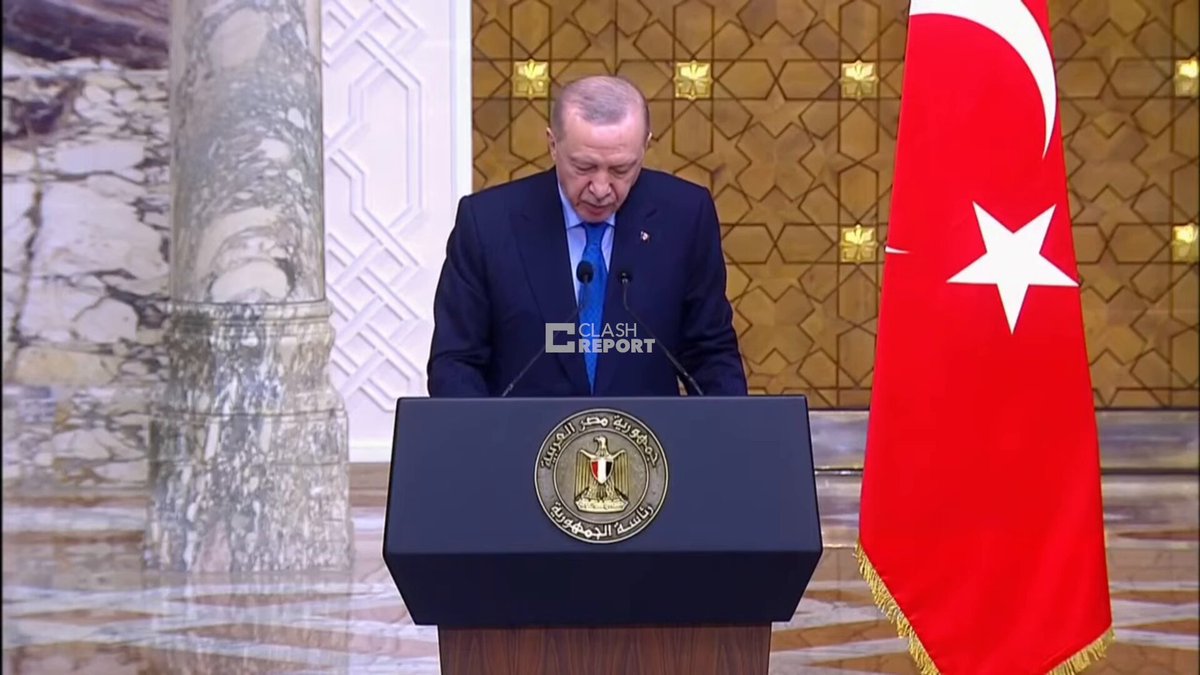
Turkish President Erdogan: The recent reciprocal attacks pose a serious threat to the safety of navigation in the Black Sea. Targeting commercial and civilian vessels brings no benefit to anyone. We are clearly conveying our warnings to both sides on this matter.

12,745 Aufrufe • vor 8 Monaten •via X (Twitter)

0 Kommentare

Keine Kommentare verfügbar

Kommentare vom Original-Post werden hier angezeigt

Ähnliche Videos

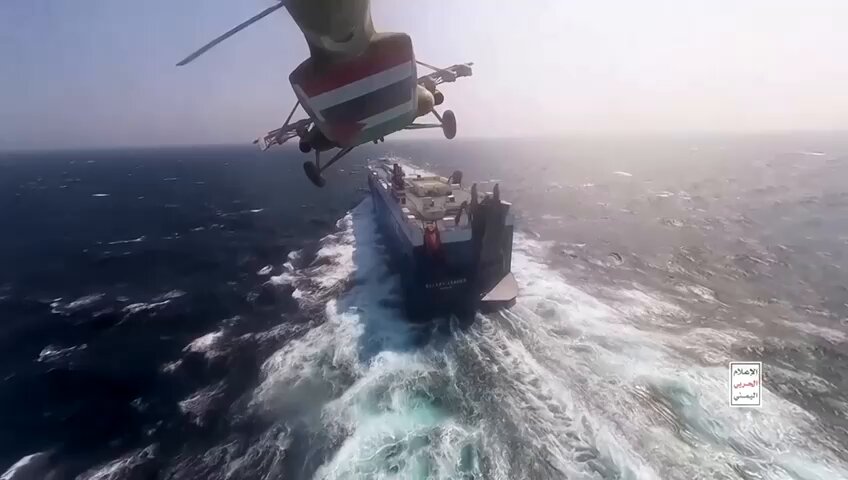
The Russia-Ukraine war has moved to the sea and effectively blocked the Black Sea for international trade. Trade logistics are blocked for both Russia and Ukraine. Russia is destroying Ukrainian ports and attacking commercial vessels, including those of third-party states. In July, Ukraine recorded 35 Russian attacks on ships in ports, 22 attacks on ships at sea, and 67 strikes on port infrastructure. On 19 July, a Russian strike on the corn-carrying merchant vessel Golden Leo near Odesa killed ten people. In response, Ukraine has expanded its campaign against Russian tankers, terminals, and routes through the Sea of Azov, the Kerch Strait, and Novorossiysk. Ukraine is clearly demonstrating goodwill toward peace, in contrast to Putin’s Russia. In particular, Ukraine, through Türkiye, submitted a proposal for a moratorium on attacks on commercial vessels in the Black Sea. Turkish FM Hakan Fidan said Türkiye had conveyed it to the Russian side and is now awaiting Moscow’s response. Ankara has effectively taken on the role of mediator and is trying to turn the Ukrainian proposal into an arrangement acceptable to both sides. For Türkiye, the war on maritime routes has already become a direct problem for its own security and economy. Turkish vessels, companies, and crews are coming under attack. After the 4 August attack on on a Turkish-owned vessel near Novorossiysk, which left three crew members seriously injured, the Turkish Foreign Ministry called on Russia and Ukraine to take measures to ensure the safety of civilian navigation. Türkiye also faces a mine threat: together with Romania and Bulgaria, it has created the Mine Countermeasures Black Sea Task Group to search for and destroy drifting mines. Türkiye’s strategic goal is to preserve a controlled balance of power in the Black Sea and its own central role in it. Ankara supports Ukraine’s territorial integrity, does not recognize Russia’s annexation of Crimea, and is interested in preserving Ukraine as a fully functioning Black Sea state. Russian control over the Ukrainian coastline would be disadvantageous for Türkiye. At the same time, Ankara does not want a rupture with Russia, which remains an important trade and energy partner. Türkiye is also not interested in a permanent large-scale naval presence by non-Black Sea NATO states. The 1936 Montreux Convention remains the foundation of its policy. After the start of the full-scale war, Ankara restricted the passage of warships belonging to the warring parties through the Bosporus and Dardanelles, making it more difficult for Russia to reinforce its Black Sea Fleet. However, Türkiye has far less room to maneuver when it comes to commercial vessels: the Montreux Convention does not allow it to arbitrarily block civilian transit as a means of political pressure. Türkiye has enough tools to organize a maritime agreement, but cannot itself guarantee its implementation. Ankara maintains direct channels with Kyiv and Moscow, controls the straits, has the largest naval potential among NATO’s Black Sea members, and has experience from the 2022 Black Sea Grain Initiative. At that time, Türkiye and the UN coordinated vessel movements and inspections through the Joint Coordination Centre in Istanbul. In 2026, Türkiye is also involved in preparations for a Maritime Component Command that could help secure a future peace in the Black Sea. In practical terms, Ankara could establish a new coordination center, maintain a registry of protected vessels, agree on routes, share information with the parties, and organize monitoring. But if Russia or Ukraine decides to continue strikes, Türkiye itself cannot ensure the security of a corridor without a significantly broader military-political agreement. What might the most realistic compromise look like? Most likely it would not be a general maritime ceasefire, but a narrower agreement covering grain, specific vessels, and designated routes. Protected vessels could be pre-registered through a Turkish coordination mechanism, listing their IMO number, flag, owner, cargo, and route. The first stage could cover grain, food, and fertilizers, as well as designated terminals in Odesa, Chornomorsk, Pivdennyi, Novorossiysk, and other agreed ports. For Ukraine, it is crucial that such protection not automatically extend to Russian oil tankers and the shadow fleet: strikes on oil logistics are an important means of putting pressure on Russian revenues. Russia, for its part, may try to tie its consent to sanctions relief, Russian Agricultural Bank’s access to international payments, vessel insurance, and fertilizer exports. The central issue in negotiations would therefore not be the principle of a moratorium itself, but its scope: which vessels, cargoes, ports, and routes would be protected, and what would remain a legitimate target. For Ukraine, an acceptable basis could be the safety of Ukrainian civilian agricultural exports in exchange for the safety of Russian civilian food exports, without automatically extending protection to all Russian maritime trade.

Anton Gerashchenko

28,130 Aufrufe • vor 9 Tagen