Video wird geladen...

Video konnte nicht geladen werden

Zur Startseite

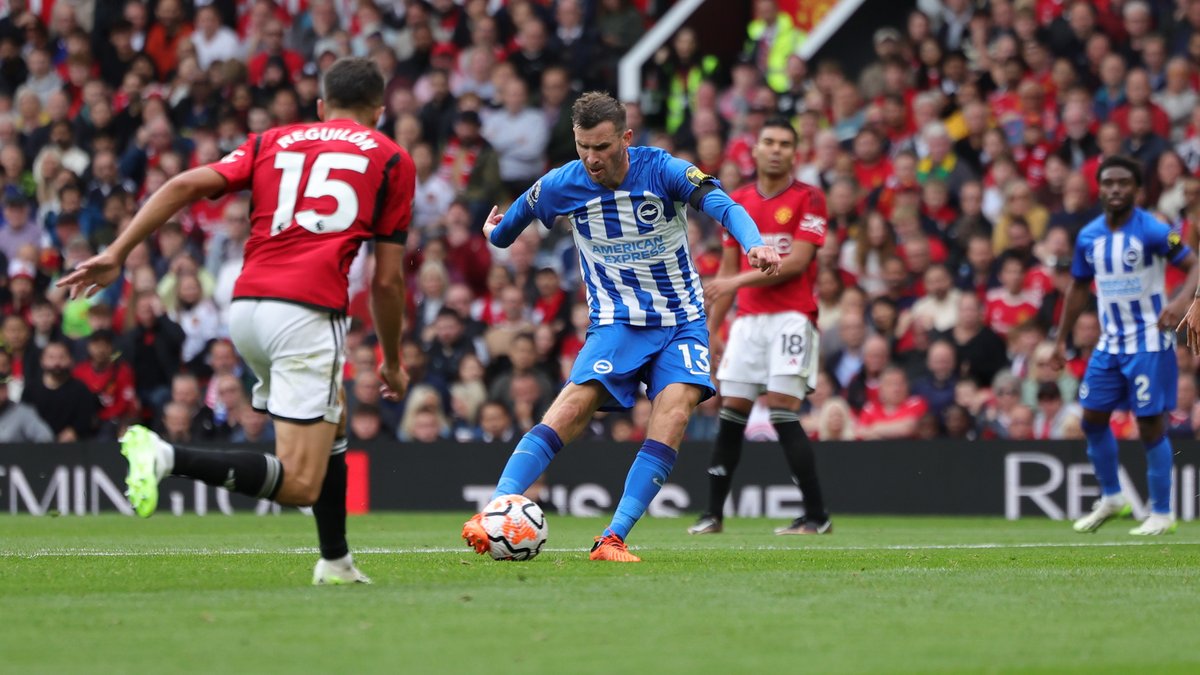
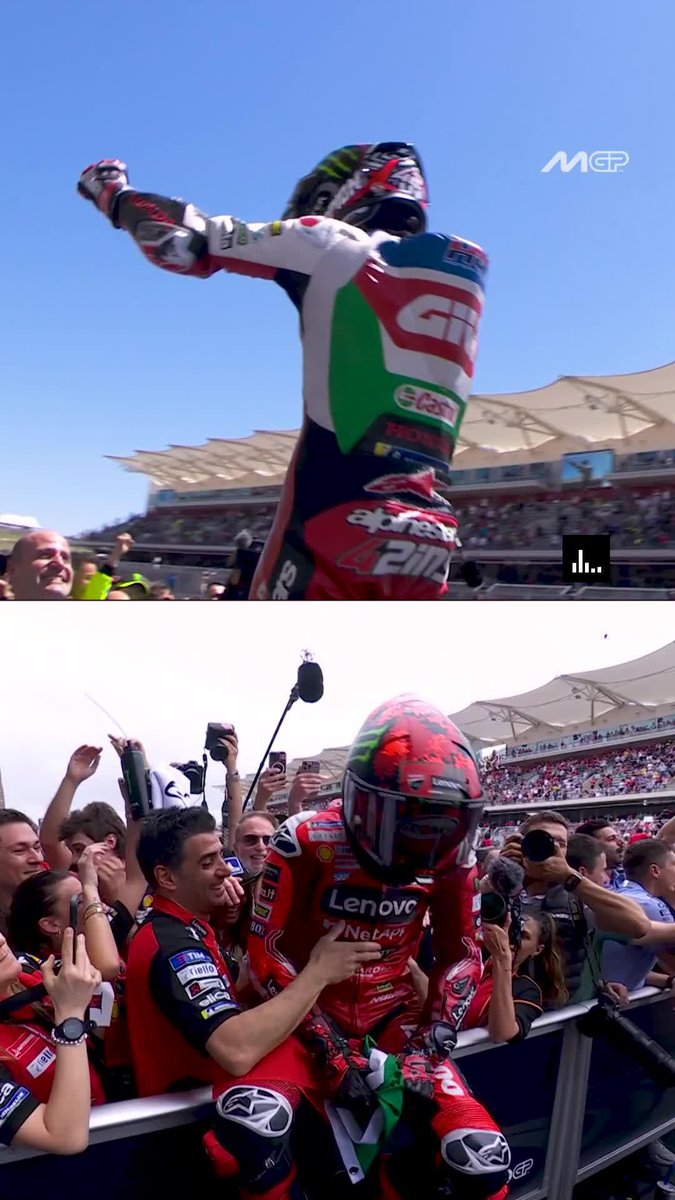
Two different ways to break through. Same end result. Danilo 🆚 Middlesbrough - Thirty-Six Passes. Patience. Passing. Purpose. Gassama 🆚 Panathinaikos - Three Passes. Precision. Pace. Power.

351,535 Aufrufe • vor 1 Jahr •via X (Twitter)

0 Kommentare

Keine Kommentare verfügbar

Kommentare vom Original-Post werden hier angezeigt

Ähnliche Videos

.Dylan Patel lays out how we know the hard upper bound on how much compute can be produced annually by 2030: around 200 GW/year. That’s a crazy number (there’s about 20 GW of AI deployed in the world right now), but it’s nowhere near enough to satisfy Sam/Elon/Dario/Demis’s ambitions. Lots of things in the supply chain can be scaled up over 4 years, including things that other people think are bottlenecks, like datacenter power or fab clean room space. But the thing that’s inflexible over that timeline is the number of EUV tools. Dylan forecasts that production of ASML’s EUV tools will scale from 60 per year now to about 100 per year by the end of the decade - which means something like 700 total machines running in 2030. For a fab to make a GW worth of the Rubin chips that NVIDIA is deploying later this year, it needs to make 55,000 3nm wafers, 6,000 5nm wafers, and 170,000 memory wafers. Each 3nm wafers needs about 20 EUV passes, so about 1.1 million passes per GW. Adding on 5nm and memory, you need two million passes. Each tool can do 75 passes per hour, so with 90% uptime that’s around 600k passes per year - so a single machine can make less than a third of a GW in a year. So in 2030, we have 700 total machines, each making 0.3ish GW a year, which means we can produce 200 GW of compute a year. That’s a lot. But Sam Altman wants a gigawatt a week by the end of the decade. Anthropic and Google will be wanting about the same. And Elon wants to be putting 100 GW in space every year. Any one of these players could maybe get what they need, but not all of them.

Dwarkesh Patel

114,538 Aufrufe • vor 6 Monaten

⚽ SOMETHING DIFFERENT FOR COACHES TO TAKE INTO THEIR OWN TRAINING Newcastle United used this possession and counter pressing rondo in training yesterday morning, but there was one detail that made the practice interesting. The setup was a 6v3 inside a 9 x 9 yard area. The six possession players looked to circulate the ball under pressure and, after completing six or more passes, could score into one of the mini target goals. The three pressing players had a simple objective. Win it and score quickly. But here was the twist 👇 At ANY moment, the coach could serve a new ball directly into the three pressing players. Immediately, the mentality of the six players had to change. From possession to aggressive counter press. No warning. No predictable trigger. Just instant reaction. The six players had to recognise the transition, sprint to reduce space, lock onto the nearest options, protect the target goals and prevent the three players from escaping or getting an early shot away. Counter pressing moments in matches are rarely scripted. Players lose possession in different areas, from different actions and in different body positions. The coach serving the ball creates unpredictable transition moments and forces the players to develop the habit of reacting immediately rather than waiting for the picture to become comfortable. The key behaviours coaches can demand: 🔥 Immediate reaction on the transition 🔥 Sprint to reduce time and space 🔥 Nearest player applies aggressive pressure 🔥 Supporting players lock onto passing options 🔥 Protect the direct route to goal 🔥 Force play away from the most dangerous space 🔥 Hunt collectively rather than pressing individually 🔥 Regain possession and immediately secure the next action A simple rondo with a really intelligent constraint. Possession. Transition. Counter press. Game realism. All inside one practice. For coach education videos, training videos and much more, access the member area on our website.

Keepitonthedeck

51,665 Aufrufe • vor 6 Tagen

If this canal gets built, every supply chain on Earth gets rewritten. And the price you pay for everything gets recalculated. Here's what the Ben Gurion Canal actually means for you: Right now, 12% of global trade flows through the Suez Canal. Every pair of sneakers. Every phone. Every car part. Every piece of furniture shipped from Asia to Europe passes through one 193 km Egyptian chokepoint. And that chokepoint keeps breaking. → March 2021: One ship got stuck. Six days. $9,600,000,000 in trade per day halted. → Late 2023: Houthi missiles started targeting Red Sea shipping. Hundreds of vessels rerouted around Africa. → Result: Your shipping costs spiked. Your delivery times stretched. Your inflation went up. Israel's answer? Carve a brand-new 250+ km canal straight through the Negev desert. Red Sea to the Mediterranean. Under Israeli control. No Egypt. No Houthi threat. No Ever Given repeat. The idea has been on the table since 1963. A declassified U.S. memo from that year explored nuclear excavation to build it. Estimated cost today: $55,000,000,000+. Insane? Yes. But here's why it matters to you personally: → If this canal opens, Egypt loses its leverage over global trade overnight → Shipping companies get a second route — competition drives your costs down → Israel becomes one of the most strategically important nations on Earth → The countries that own stakes in this route own a piece of every shipment between Asia and Europe The Suez Canal made Egypt a geopolitical power for 70 years. The Ben Gurion Canal would do the same for Israel. And every time a container ship passes through it — you pay less. Or you pay more if it never gets built and the current chokepoints keep breaking. Either way, this affects your wallet. Most people have no idea what's coming… I'll keep you updated. Turn on notifications. 🚨

🇨🇳 Liu Feng 刘锋

36,366 Aufrufe • vor 4 Monaten

🏴󠁧󠁢󠁥󠁮󠁧󠁿England v Argentina 🇦🇷: Pre-Match Analysis Spain awaits the winner but this tie needs zero billing & in it's own right with both teams ready to go to war and attack their way to the final: - Argentina are the Highest Scorers - England have missed the most Big Chances England - 13th Best Passers at the WC; More Direct and with Purpose: - 6.7 Shots on Target per 90 - 15 Big Chances Missed (2nd) Unlocking Argentina from Wide Areas - 6 Accurate Crosses per Match (3rd) > Kane v DR Congo > Underlapping Run for Kane v Panama > Bellingham v Mexico Transition Attacks from Deep or Pressing - Lowest Ave. Possession of Semi-Finalists & prefer to break on teams quickly: > Bellingham v Croatia > Bellingham v Mexico x2 Argentina - Highest Scorers with 2.8 Goals per 90 - Highest Accurate Passers - 2 Clean Sheets (14th) Unlocking England Centrally - Accurate Passing but with Purpose and using "Vertical Play" to break teams open through centre: > Messi v Saudi > Messi v Austria Transition from Low into Attack - Not a team that stand out with Pace but with willingness to do hard running > Enzo Fernandez v Egypt > Enzo and Messi v Austria Key Battles/Decisive Areas - England have to improve their distances in Midfield without the ball & watch for those Vertical Passes into Messi/Enzo/Alvarez that can get Argentina straight onto the Defence - Bellingham v Paredes: I could see a scenario where Paredes follows Bellingham around the pitch and sacrifices himself and the structure to protect against their star. - Messi Freedom: I am unsure how you cope with this because as he will float between Guehi(CB) and O'Reilly(LB) then deeper into midfield, it becomes about communication to pass on but that is risky. Let's F*cking Gooo

John Walker

92,012 Aufrufe • vor 1 Monat

Elon Musk thinks the entire education system is built on a broken assumption. That every student should learn the same thing. At the same speed. In the same order. At the same time. Musk: “Everyone goes through from like 5th grade to 6th grade to 7th grade like it’s an assembly line. But people are not objects on an assembly line.” The model was designed for a factory economy. Standardized inputs. Predictable outputs. That economy is gone. The assembly line is gone. But the education system still runs on its logic. A student who masters algebra in two weeks sits through eight more weeks because the calendar says so. A student who struggles gets dragged forward because the schedule doesn’t wait. Neither is being served. Both are being processed. Musk: “Allow people to progress at the fastest pace that they can or are interested in, in each subject.” AI doesn’t teach a classroom. It teaches a student. One at a time. Every time. It skips what a student already knows. It finds where they’re stuck and approaches it from a different angle. It adjusts in real time. Not at the end of a semester when the damage is already done. A student obsessed with basketball learns fractions through shooting percentages. A student who builds in Minecraft learns geometry through architecture. The subject doesn’t change. The entry point does. No teacher with thirty students can do this. Not because they lack skill. Because the math doesn’t work. AI doesn’t have that constraint. Musk: “You do not need to tell your kid to play video games. They will play video games on autopilot all day. So if you can make it interactive and engaging, then you can make education far more compelling.” The brain isn’t broken. The format is. Kids learn complex systems and strategic thinking for hours voluntarily. Then walk into a classroom and can’t focus for twenty minutes. That’s not a discipline problem. That’s a design problem. Musk: “A university education is often unnecessary. You probably learn the vast majority of what you’re going to learn there in the first two years. And most of it is from your classmates.” Four years. Six figures of debt. And the real value comes from the people sitting next to you. Not the institution charging you. The degree doesn’t certify knowledge. It certifies endurance. Musk: “If the goal is to start a company, I would say no point in finishing college.” The system was built to train employees. If you’re not trying to be one, it has nothing left to offer you. Every lecture. Every textbook. Every curriculum. Now available instantly. Personalized to any learner. Adapted to any pace. The question isn’t whether the old model survives. It’s how long we keep forcing students through it while the replacement already exists.

Teddy - PolyBackTest.com

317,912 Aufrufe • vor 1 Monat

Elon Musk thinks the entire education system is built on a broken assumption. That every student should learn the same thing. At the same speed. In the same order. At the same time. Musk: “Everyone goes through from like 5th grade to 6th grade to 7th grade like it’s an assembly line. But people are not objects on an assembly line.” The model was designed for a factory economy. Standardized inputs. Predictable outputs. That economy is gone. The assembly line is gone. But the education system still runs on its logic. A student who masters algebra in two weeks sits through eight more weeks because the calendar says so. A student who struggles gets dragged forward because the schedule doesn’t wait. Neither is being served. Both are being processed. Musk: “Allow people to progress at the fastest pace that they can or are interested in, in each subject.” AI doesn’t teach a classroom. It teaches a student. One at a time. Every time. It skips what a student already knows. It finds where they’re stuck and approaches it from a different angle. It adjusts in real time. Not at the end of a semester when the damage is already done. A student obsessed with basketball learns fractions through shooting percentages. A student who builds in Minecraft learns geometry through architecture. The subject doesn’t change. The entry point does. No teacher with thirty students can do this. Not because they lack skill. Because the math doesn’t work. AI doesn’t have that constraint. Musk: “You do not need to tell your kid to play video games. They will play video games on autopilot all day. So if you can make it interactive and engaging, then you can make education far more compelling.” The brain isn’t broken. The format is. Kids learn complex systems and strategic thinking for hours voluntarily. Then walk into a classroom and can’t focus for twenty minutes. That’s not a discipline problem. That’s a design problem. Musk: “A university education is often unnecessary. You probably learn the vast majority of what you’re going to learn there in the first two years. And most of it is from your classmates.” Four years. Six figures of debt. And the real value comes from the people sitting next to you. Not the institution charging you. The degree doesn’t certify knowledge. It certifies endurance. Musk: “If the goal is to start a company, I would say no point in finishing college.” The system was built to train employees. If you’re not trying to be one, it has nothing left to offer you. Every lecture. Every textbook. Every curriculum. Now available instantly. Personalized to any learner. Adapted to any pace. The question isn’t whether the old model survives. It’s how long we keep forcing students through it while the replacement already exists.

Dustin

21,757,183 Aufrufe • vor 5 Monaten

Gilbert Strang taught linear algebra at MIT for fifty years. His last lecture is on YouTube. It has fewer views than his worst lecture. Nobody told students it was the last one. He just walked in, said "the final class in linear algebra at MIT," and started reviewing old exams. Google built a $2,000,000,000,000 company on one concept from this course. He is 88 years old. He still answers emails. This is MIT 18.06. Linear Algebra. The most watched mathematics course in history. Then the Markov matrix. Strang writes a transition matrix on the board. Three states. People moving between them every step. After enough steps - the system locks into a steady state that never changes. That steady state is an eigenvector. Google's PageRank works the same way. Websites are states. Clicks are transitions. The importance of every page on the internet is one eigenvector of one enormous matrix. Then least squares. Three data points. No line passes through all three. So you find the line that minimizes total error. That is how every AI model on earth is trained - including the ones running inside Goldman Sachs trading desks. Then the projection. The closest point on a plane to a vector outside it. Strang draws it in 30 seconds. That same operation is how Netflix decides what to recommend to 280,000,000 subscribers. Watch the moment he gives back the final exam answer and asks students to work backwards to the question - the room solves it in silence faster than any other lecture all semester. A software engineer told me 18.06 was the course that got her from $90,000 to $200,000 in two years. Same company. Different title. Bookmark this and watch later - after this lecture every dataset you touch will feel like a geometry problem waiting to be solved. MIT 18.06 Lecture 34 | Linear Algebra Final Review | Gilbert Strang

Zyphor

56,433 Aufrufe • vor 10 Tagen

4v4 (+2) | Possession vs. Regain and Counter to Goal 🥅. ✅ Aim: ✔️ Regain Possession and Counter Attack Quickly. ✅ Set Up: ✔️ Space: 40 (L) x 30 (W) yards. All players start in one half of the pitch. ✔️Place 2 x mini goals 🥅 at one end of the pitch and 2x mini goals in one half of the pitch in diagonally opposite corners. ✔️⚫️s = Possession Team ✔️🔴s = Regain and Counter Team ✔️🟢s = Support Players for the team with the ball ⚽️. ✅ Scoring: ✔️ ⚫️s connect 5 passes or play a wall pass around a player = 1 goal ✔️🔴s regain the ball and 1️⃣ break into the other half and score quickly in a mini goal. Or 2️⃣ connect 4 passes in the half they are in and score in the corner mini goals. ✅ Session Guidance: ➡️ When the 🔴s break over over the halfway line 3 x of them can attack and 2x ⚫️s can recover to get the ball back into the possession half. (3v2). ➡️ Flip the roles of the teams every 3-5 minutes to allow them to practice possession and counters. ✅ Notes: ✔️ ⚫️s: Try keep the ball using controlled possession- spotting the right time to pause on the ball, play through opponents, or play a wall pass. ✔️ 🔴s: Try to win the ball cleanly using interceptions: THEN: 1️⃣ Counter quickly using forward passing and running 🏃‍♂️ 2️⃣ Secure possession and score in the mini goals in the half where the ball ⚽️ was won. Created On: TacticalPad® #SundayShare #SundayShare Temisan Williams @TheCoachesArea Lloyd Owers @FootballTrnng 205 Academy Conor Edwards Breakthrough Soccer The Sporting Resource Felix Lehmann Brett Godwin

JUST COACH

12,294 Aufrufe • vor 2 Jahren

Market Analyst Tom Luongo says Trump isn't fighting Iran to control the Strait of Hormuz; he's using the Strait to break Europe's ability to finance the Ukraine war. Most people see Iran and Ukraine as two separate conflicts, but Tom thinks they're the same war being fought on different fronts. His argument is that oil is the collateral that underpins the modern economy. The more expensive and uncertain energy becomes, the harder it is for European governments to borrow cheaply, keep their industries competitive, and continue funding Ukraine at the current pace. That's why he thinks the Strait of Hormuz matters so much, because whoever controls the world's most important energy chokepoint also influences the financial foundations that wars are fought on. Trump can't simply announce the end of the Ukraine war, even if he wants to, because too many powerful interests are invested in keeping the conflict going. So instead of attacking the war directly, Tom believes Trump is attacking the economic conditions that make the war possible. He also made one of the interview's boldest claims: Europe has poured so much money into Ukraine because many European leaders expected the war to eventually open the door to Russia's vast natural resources, providing the cash flows needed to justify years of borrowing and military spending. If that never happens, they're left with enormous debts and very few ways to pay them back. Most people think the shortest route to ending the war in Ukraine runs through Kyiv, but Tom thinks it runs through the Strait of Hormuz. And if he's right, we've been looking at the wrong map all along. Tom Luongo

Mario Nawfal

348,259 Aufrufe • vor 2 Monaten