Загрузка видео...

Не удалось загрузить видео

На главную

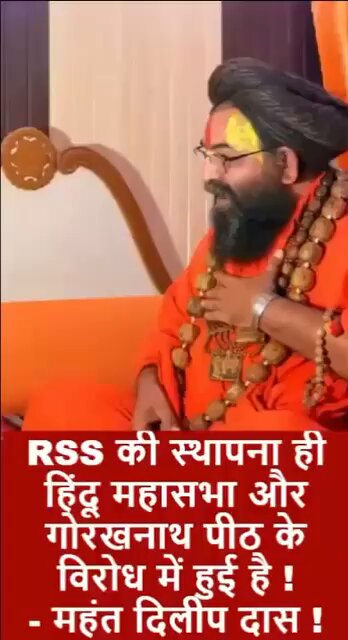
Two NDP MPs are calling on Canada to bar RSS chief Mohan Bhagwat from entering the country, while activist groups are pushing for the RSS itself to be banned. The problem is that the conversation around the RSS often goes far beyond criticism of one organization. Labels like “RSS,”...

29,781 просмотров • 14 дней назад •via X (Twitter)

Комментарии: 0

Нет доступных комментариев

Здесь появятся комментарии из оригинального поста

Похожие видео

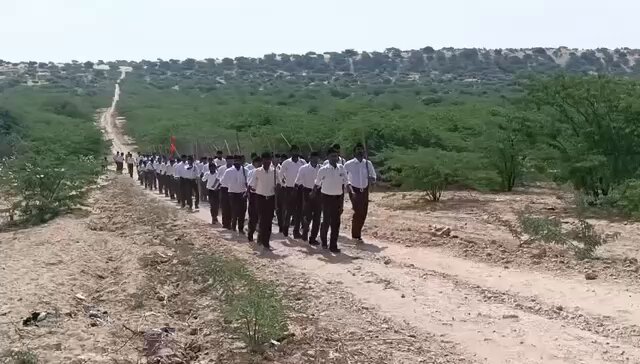
RSS militants carried out a march towards the Pakistan border, Khokhrapar–Munabao crossing in Barmer District, in full display of its extremist ideology to mark its 100th anniversary. Narendra Modi's fascist regime is inadvertently a political front of the RSS. When Modi first took office as PM in 2014, 41 members of his govt’s 66-person cabinet had an RSS background. Today, 38 out of 53 ministers — nearly 75% — hail from the RSS. Infact Narendra Modi and the RSS Chief Mohan Bhagwat, who ordered the Samjhauta Express blasts, have an old affiliation which goes back to 1967, when both were 17. Bhagwat’s father Madhukarrao was mentor of Modi. He stayed with the Bhagwat family during his essential training. Today, RSS is the largest Neo Nazi group of the world with an estimated 1.5 – 2 million regular participants in its nearly 57,000 shakhas across 36,293 locations nationwide along with an armed dedicated militia of 600,000. It has presence in atleast 39 countries world wide. India is effectively ruled by the RSS. Its political wing, the BJP, and its activist Prime Minister Modi have turned the Indian state into a vehicle for Hindutva expansionism. The most alarming development is the saffronisation of the Indian military. RSS men are not just influencing policy. They are sitting in high command positions within the armed forces. A recent report revealed that sixty two percent of India’s Sainik Schools, the very institutions that groom future officers, are run by RSS affiliates. This means the next generation of Indian generals will be ideologically trained in Hindutva first and military professionalism later. This deep infiltration has transformed the Indian armed forces into an extension of the RSS agenda rather than a neutral institution of the state. It is the militarisation of extremism. The RSS carries a blood-soaked legacy. It has been responsible for countless pogroms and massacres of Muslims in India. History records it as the organization that carried out the earliest terrorist attacks in the subcontinent including an assassination attempt on Quaid-e-Azam Muhammad Ali Jinnah. India today is not led by professional soldiers or neutral politicians. It is hostage to an extremist group that openly embraces fascism, militancy and terrorism under the garb of nationalism.

Fidato

62,259 просмотров • 10 месяцев назад

Blueprint of RSS & BJP Drawn By Golwalkar 1) Eliminate Gandhism 2) Exclusion of Minorities 3) Opposition to Secularism and Democracy 4) Rejection of Caste-Based Social Reform 🔸Golwalkar drawn a Blueprint for how the RSS and BJP wanted to mold India & create Hindu Rashtra. 🔸Their inspiration is Nazism. 🔸They are always in favor of Godse. 🔸The reflection of which is evident in India from 2014 to 2025. Eliminate Gandhism 🔸No matter how much #Modi mentions Gandhi's name, RSS and BJP want to eliminate Gandhian ideology from India. 📌 BLUEPRINT Outline of Golwalkar's Blueprint for a Hindu Rashtra. 1. Hindu Supremacy: Golwalkar envisioned India as a nation primarily for Hindus, where their cultural and religious identity would dominate. Non-Hindus were expected to assimilate completely into the Hindu way of life or remain subordinate. 2. Inspiration from Fascist Ideologies: Golwalkar's book We or Our Nationhood Defined (1939) admired the Nazi treatment of Jews as a model for dealing with minorities in India. He advocated for a strong, unified state with rigid nationalist ideologies. 3. Cultural Nationalism: Golwalkar emphasized cultural nationalism (Hindutva) as opposed to the civic nationalism upheld by India's secular leaders. According to him, Hindu culture formed the bedrock of India’s national identity. 4. Exclusion of Minorities: Muslims and Christians were viewed as threats to the Hindu nation. Golwalkar argued that they should not be given equal status unless they renounced their distinct identities. 5. Opposition to Secularism and Democracy: He was critical of the secular and democratic model adopted by India after independence. Golwalkar preferred a theocratic state guided by Hindu values. 6. Rejection of Caste-Based Social Reform: Although he sought Hindu unity, Golwalkar did not advocate for the abolition of the Caste hierarchy. Instead, he viewed caste as a natural and integral part of Hindu society. 7. Centralized and Disciplined Organization: Golwalkar believed in a highly disciplined and hierarchical organization for nation-building, as exemplified by the structure of the RSS. 8. Opposition to Individual Rights: He prioritized collective identity over individual freedoms. The rights of the individual were secondary to the interests of the Hindu nation. 9. National Language and Education: He promoted Sanskritized Hindi as the national language. Education was seen as a tool to instill Hindu values and pride in India's ancient heritage. 10. Long-Term Vision for Political Influence: Golwalkar laid the ideological groundwork for the later political rise of Hindu nationalist forces, including the BJP. *** Source Golwalkar: The Man and His Times by Dhirendra K. Jha #RSS100YearsExposed #RSS #125_Rozgar_Guarantee #EpsteinFiles

তন্ময় l T͞anmoy l

16,041 просмотров • 8 месяцев назад