Video yükleniyor...

Video Yüklenemedi

Ana Sayfaya Dön

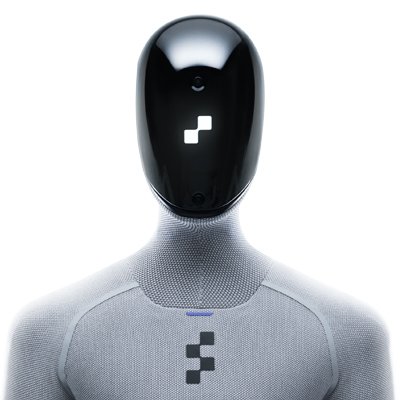
Unlike LLMs, we can’t scrape the internet for robot data Announcing Project Go-Big: we’re building the world's largest humanoid pretraining dataset This is accelerated by our partnership with Brookfield, who owns over 100,000 residential units
614,581 görüntüleme • 10 ay önce •via X (Twitter)

0 Yorum

Yorum bulunmuyor

Orijinal gönderinin yorumları burada görünecek

Benzer Videolar

A Letter to Our Community: The Road Ahead for Robotics To our Community and Partners, As we step into 2026, our mission at Axis is clearer than ever: Constructing the definitive End-to-End Scaling Layer for Robotics. Our goal is to accelerate the transfer of diverse human intelligence into Robotics General Intelligence (RGI). By owning the critical path of intelligence creation, we are turning the physical limitations of robotics into a scalable, software-driven future. Here is our strategic outlook and roadmap for the year ahead. The Core Thesis: Simulation is the Only Way Out The path to RGI is currently blocked by Data Scarcity, Generalization Fragility, and Hardware Fragmentation. At Axis, we believe Simulation is the only way out. Our Simulation Data Platform and Data Augmentation Engine transform raw data into "Synthetic Gold". Backed by academic milestones like Roboverse, Skill Blending, and GraspVLA, we have proven that pure simulation can achieve the generalization required for the real world. We don’t just collect data; we architect it. The Engine: Why Crypto? We believe RGI should come from all, not a few. Crypto is not just a feature; it is the primitive that powers our entire ecosystem flywheel: - Incentive Mechanism: Democratizing contribution and rewarding the trainers and developers. - Assetization: Turning proprietary data and refined models into liquid, ownable assets. - Verifiable Workflow: We are opening the "Black Box" of AI. By bringing total transparency to the Task Generation → Data Collection → Model Training pipeline, we ensure every byte of intelligence is verifiable, traceable, and secure. 2026 Strategic Deliverables This year, we are committed to delivering three foundational pillars: - The World's Largest Training Dataset for Robots: A robot training set—diverse, high-quality interaction data at an unprecedented scale. - A Robotics Foundation Model: A universal robotic brain trained on our pure simulation and synthetic data, capable of robust cross-embodiment transfer and open-world adaptability. - Evolvable Robot Hardware: Robots deployed with Axis models that autonomously evolve through continuous interaction, turning every deployment into a self-improving node within our RGI network. The Ultimate Vision We are building more than models; we are architecting the Distributed Machine Economy. A future where every dataset, model, and robotic embodiment is a verifiable asset in a global, autonomous network. Thank you for building the future of intelligence with us✌️📷

Axis Robotics

27,858 görüntüleme • 6 ay önce

LongWriter Unleashing 10,000+ Word Generation from Long Context LLMs discuss: Current long context large language models (LLMs) can process inputs up to 100,000 tokens, yet struggle to generate outputs exceeding even a modest length of 2,000 words. Through controlled experiments, we find that the model's effective generation length is inherently bounded by the sample it has seen during supervised fine-tuning (SFT). In other words, their output limitation is due to the scarcity of long-output examples in existing SFT datasets. To address this, we introduce AgentWrite, an agent-based pipeline that decomposes ultra-long generation tasks into subtasks, enabling off-the-shelf LLMs to generate coherent outputs exceeding 20,000 words. Leveraging AgentWrite, we construct LongWriter-6k, a dataset containing 6,000 SFT data with output lengths ranging from 2k to 32k words. By incorporating this dataset into model training, we successfully scale the output length of existing models to over 10,000 words while maintaining output quality. We also develop LongBench-Write, a comprehensive benchmark for evaluating ultra-long generation capabilities. Our 9B parameter model, further improved through DPO, achieves state-of-the-art performance on this benchmark, surpassing even much larger proprietary models. In general, our work demonstrates that existing long context LLM already possesses the potential for a larger output window--all you need is data with extended output during model alignment to unlock this capability.

AK

50,995 görüntüleme • 1 yıl önce

To replace animal testing with AI, we need MASSIVE human datasets. Today, we're thrilled to share Axiom's new data exploration tool, providing the ability to visually explore the world's largest primary human liver toxicity dataset. Built with Axiom's proprietary wetlab protocols, our dataset includes detailed liver toxicity profiles for over 100,000 distinct molecules. The key to this dataset is our ability to do high-throughput, multiplexed high-content screening with primary human liver cells. Traditionally, toxicity assays either sacrifice throughput or sacrifice biological relevance (using easy-to-grow immortalized cell lines instead of real human cells). We managed to combine throughput, physiological relevance, and multiplexing in one platform. The assays run in a high throughput format using automation, meaning thousands of compound-dose conditions can be tested in one experiment. We achieved this using pooled primary human hepatocytes, which are often fragile and expensive. By systemizing our automation and quality control processes, we were able to run over 120+ batches on the same donor pool with incredible reproducibility and consistency. We did this while integrating many readouts per well, whereas many existing toxicity assays only do a single readout. Our multiplexed approach provides far more data per experiment enabling us to measure 10-20 different toxicity phenotypes such as apoptosis, necrosis, mitochondrial fission, endoplasmic reticulum stress, stress granule formation, microtubules, and more all from a single well on a 384-well plate! The combination of scale, high content information, and data quality is exactly what is needed to train highly accurate AI models in biology. If you're interested, please explore the dataset in the comments below and let me know if you want to chat about the details!

Brandon White

25,117 görüntüleme • 1 yıl önce