Video wird geladen...
Video konnte nicht geladen werden
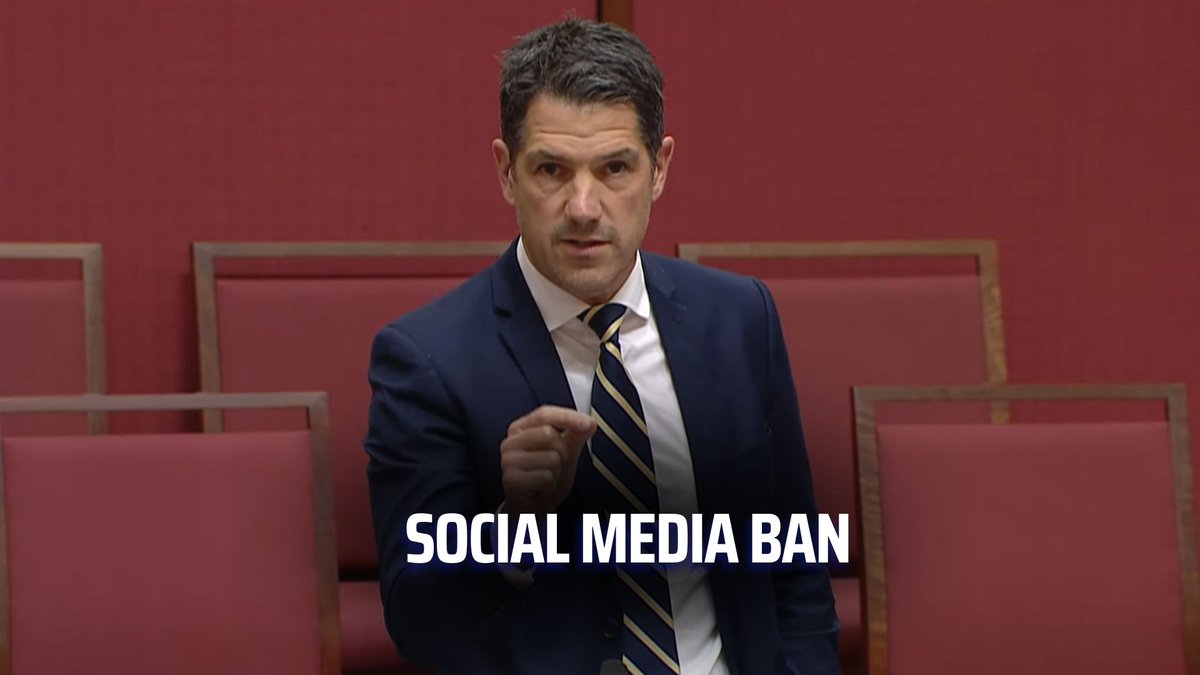
🚨URGENT CALL TO ACTION REGARDING “SOCIAL MEDIA MINIMUM AGE” LEGISLATION🚨 Submissions for inquiry to the ‘Social Media Minimum Age’ Bill have just opened and we only have 24 hours. This bill is a national Digital ID program dressed in a very poor disguise. Labor and the Coalition are trying... show more

127,408 Aufrufe • vor 1 Jahr •via X (Twitter)
10 Kommentare

MAKE A SUBMISSION HERE:
EMAIL YOUR LOCAL MEMBERS:

My submission - should it empower others: Senate Standing Committees on Environment and Communications PO Box 6100 Parliament House Canberra ACT 2600 21st November 2024 Dear Committee Secretariat, RE: Online Safety Amendment (Social Media Minimum Age) Bill 2024 [Provisions] My name is Paul Conlon, an Australian born senior electronic engineer and Information Technology professional. It is with grave concern that I write to the committee regarding the issue of enforcing minimum age for social media. Perhaps the best way I can communicate my complete opposition to this concept is to state that I have recently completed a three-year research project and published a non-fiction book on exactly the topic of digital identification and the general scenario of restricting digital resources at a national level – be it predicated on age or other identity markers. As novel as this idea may seem, it is a fundamentally flawed concept for many overarching reasons, including the following: cannot reach its intended objectives (legislation is an ineffective tool in some domains). cannot be implemented without radically changing the relationship of the individual and the state in detrimental ways that will be ill-understood for generations. cannot be enforced without imposing completely unreasonable and unsafe identification verification points for all Australians and potentially beyond. It is not the government’s purview to parent children. This proposal attempts to disempower the decisions of the household and strip from parents the unarguable burden and privilege that is parenting. It sets the stage for further unrestrained incursions into the family home. This is state overreach in its purest form and cannot be tolerated in modern Australia. Furthermore, this bill is very dangerous in that places too much power in the hands of the government of the time. My lengthy research study has identified that the symptoms of this well-trodden path, where identity traits are used to nationally restrict access to essential resources, have reverberated throughout history in the analogue world. The digital domain comes with even more powerful and dangerous implications. This abhorrent bill cannot be tweaked or modified to be made fit for purpose and must be rejected in its entirety – ideally with an apology from the government to all Australians for its very proposal. Sadly, there is little scope in a submission such as this to elaborate on the dangers of what is a nuanced and complex issue. I encourage you to explore some of the resources at my website should you wish to learn more. From a deeply concerned citizen looking to preserve the liberty of future Australians.
The Online Safety Amendment (Social Media Minimum Age) Bill 2024 strips from parents the unarguable burden and privilege that is parenting. It cannot be tolerated.

They won’t even allow me to upload my submission? I have been on this screen for 4 hours. Internet connection is fine tried multiple networks and multiple times. Is the Australian government scared of submissions?

Done, sharing to give everyone an idea of what to write

Here is a better email template Dear [Senator’s Name], I am writing to express my profound frustration and disbelief regarding the proposed legislation to ban social media access for individuals under the age of 16. This policy is not only misguided but also risks turning Australia into a global laughingstock. Unintended Consequences By imposing such a ban, we risk isolating young Australians from their peers and essential support networks. Social media platforms are integral to modern communication and community building. Depriving our youth of these tools could lead to increased social isolation and mental health issues. Enforcement Challenges and Privacy Concerns The practicality of enforcing this ban is highly questionable. Implementing age verification systems robust enough to prevent underage access without infringing on privacy rights is a complex challenge. Moreover, determined youths are likely to find ways to circumvent these measures, rendering the ban ineffective. Alternative Approaches Instead of resorting to draconian measures, we should focus on enhancing digital literacy education and encouraging parental involvement. Collaborating with social media companies to strengthen existing safety features and content moderation practices would be a more balanced and effective approach. In conclusion, I urge you to reconsider supporting this ill-conceived legislation. Let us not subject Australia to international ridicule by implementing a policy that is both impractical and potentially harmful to our youth. Sincerely,
Ffs you have to create a account

@Dawny44977980 What about the 1000’s of submissions that have already been lodged

My submission, for those that need help writing one. ..... I am writing to express my strong opposition to the proposed ban on social media access for individuals under the age of 16 in Australia. While the intent to protect young people from potential online harms is commendable, this legislative measure presents several significant drawbacks that could outweigh its benefits: 1.Undermining Parental Responsibility: The ban suggests a governmental overreach into the realm of parenting, potentially undermining the role of parents in deciding what is appropriate for their children. Parents should retain the right to guide their children’s internet use based on individual maturity levels and family values. This approach reflects a more nuanced understanding of child development rather than a blanket policy. 2.Limiting Educational and Social Opportunities: Social media platforms serve as vital spaces for educational content, peer-to-peer learning, and global connectivity. For many young people, especially those in remote or isolated areas, these platforms are their primary means of interaction with the world beyond their immediate environment. Removing access could limit their educational opportunities and their ability to engage with diverse cultures and perspectives. 3.Privacy Concerns with Age Verification: Implementing such a ban would necessitate age verification, raising serious privacy issues. The technology for age verification might involve collecting sensitive personal information, which poses risks of data breaches or misuse. This could expose young users to greater privacy risks than what they currently face through regular social media use. 4.Potential for Increased Secretive Behavior: History suggests that bans often lead to secretive and potentially more dangerous behavior. If young people cannot access social media legally, they might turn to less secure, unregulated platforms or find ways to bypass the restrictions, thus engaging in activities without parental oversight or safety measures inherent in mainstream platforms. 5.Impact on Mental Health and Support Networks: Social media can be a double-edged sword, but it also serves as a platform for mental health support, community building, and expression for many young Australians. A ban could isolate those who rely on online communities for support, particularly those dealing with issues not readily understood or supported in their immediate physical environment. 6.Economic and Technological Innovation: Young people are not just consumers but also creators on these platforms. They develop skills, engage in entrepreneurial activities, and even start small businesses. Restricting their access could stifle innovation and creativity at a stage where they are most likely to experiment and learn from technology. 7.Enforcement Challenges: The practicalities of enforcing such a ban are fraught with difficulties. With VPNs and other tools readily available, the enforcement would be near impossible, leading to an environment where the law is selectively followed, which could exacerbate digital inequality. 8.Lack of Empirical Support: There is a lack of conclusive evidence that a blanket ban would effectively mitigate the risks associated with social media. Instead, research often points towards the need for education about digital citizenship, critical media literacy, and safer use of the internet. In conclusion, rather than a ban, we should focus on enhancing digital literacy, improving platform safety features, and ensuring robust parental controls. These measures would better serve our young population by teaching them to navigate the digital world safely, while preserving their rights to freedom of expression and access to information. I urge the government to reconsider this ban and instead invest in educational programs and support systems that empower both children and parents in the digital age.