Video wird geladen...

Video konnte nicht geladen werden

Zur Startseite

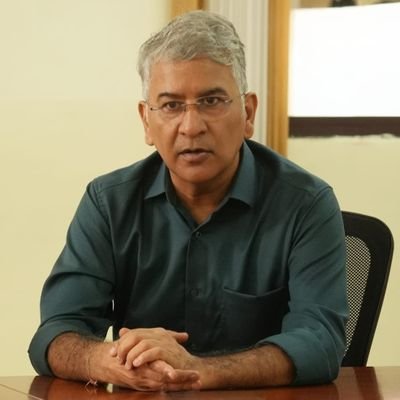
Using local knowledge for road widening and landslide prevention in #Uttarakhand : This landslide happened yesterday morning at a location that is around 25 km from #Uttarakashi on way to #Gangotri. I was informed by one of the nation's most well respected scientists and geologist Dr Navin Juyal that...

15,326 Aufrufe • vor 10 Monaten •via X (Twitter)

0 Kommentare

Keine Kommentare verfügbar

Kommentare vom Original-Post werden hier angezeigt

Ähnliche Videos

.David Deutsch: “There is an inherent conflict in the human condition—both individually and in society—between the need to preserve existing knowledge and the need to create new knowledge. For most of human history, preserving existing knowledge trumped any kind of attempt to improve knowledge. Because attempts to improve knowledge risk error. Or rather, to be exact, it risks error that has never occurred before. There were plenty of errors that had occurred before. Plenty of kings got overthrown because they couldn’t solve the problem of how to fend off the enemy. But they were in familiar territory conceptually, and they were afraid of changing culture. This fear of changing culture was built into culture itself. And this conflict exists to this day. The most extreme example known to me in the West, anyway, is the conflict in education between preserving existing knowledge and creating new knowledge. Even today, education—education theory—is conceived as the theory of how to decant existing knowledge from the brains that already know it to the brains that do not yet know it. And that’s what Popper calls the ‘bucket theory of the mind’—that the mind is a bucket and knowledge is a fluid. What he stressed, and what I always also want to stress, is that not only is that a mischaracterization of knowledge and of the use of knowledge, but it is the wrong way around. As a practical matter, even right back two million years ago, the transmission of cultural knowledge was not something done by the transmitter; it was something done by the receiver.”

Arjun Khemani

10,523 Aufrufe • vor 1 Jahr

.Logan on our latest piece in Human Progress about what unifies the enemies of civilization: What unifies all of the enemies of civilization is that they all slow down the growth of knowledge. Now, you ask, how can we take advantage of this fact, namely that all of the enemies of civilization share in common this feature that they curb the growth of knowledge? This fact tells us that we can, if we so choose and if we make the right decisions, outpace them in the growth of knowledge. So, one strategy to defeat the enemies of civilization is basically to outpace them in this great war of memes and growing wealth and knowledge, such that eventually, the memes that comprise the enemies of civilization, as well as the wealth that the enemies of civilization control, is an ever smaller fraction of the total meme pool and wealth that civilization has to offer. So, this is what success would look like if we think about outpacing them. But there's also the strategy of replacing the memes that comprise the enemies of civilization with better ideas. This is just a fancy way of saying we could also persuade people. So that would be a kind of inside-out approach, rather than the out-pacing, which is kind of from the outside in. And of course, we can walk and chew gum at the same time. We can continue to build and outpace the enemies of civilization while persuading people that the relevant ideas that curb the growth of knowledge are mistaken. And by the way, just to make the conversation a little less abstract, the enemies of civilization that we wrote about in our piece, which is an excerpt of the script we wrote for your upcoming documentary, those enemies are socialism, environmentalism, scientism, relativism, dogmatism, and doomerism. And I don't think I ever told you this, Arjun, but what I like about the list we came up with is that understanding the inner workings of each of these enemies of civilization, that is to say, understanding the how and why of how each enemy of civilization curbs the growth of knowledge, gives unique insights into the nature of progress and epistemology. This clip was recorded and made using Airchat.

Arjun Khemani

23,354 Aufrufe • vor 1 Jahr

Cracks Tearing Through Totaghati, Major Geological Threat Looms in #Uttarakhand: Before you start reading this post, here are a few important points to set some context. A. Totaghati is a critical stretch on the #Rishikesh–#Badrinath National Highway (NH-7) in Uttarakhand. It is considered one of the most challenging and sensitive parts of the #CharDhamYatra route and lies about 40 Kilometers from Rishikesh. B. The expert explaining the Totaghti situation in the video is one of the most well respected geologists of our state. His name is Prof. MPS Bisht and he is in conversation with Shri Ramesh Bhatt of Devbhoomi Dialogue. C. The video is recent, recorded in the aftermath of the August 5, 2025 #Dharali tragedy in #Uttarkashi. Now let's talk about the issue: A significant geological threat is looming over Totaghati,. Known for its narrow roads, sharp curves, and rocky terrain for decades, Totaghati is now emerging as a major challenge for the national highway due to the appearance of large cracks and fractures on the mountain rocks. Experts warn that if these cracks continue to widen, an entire section of the mountain may collapse, potentially cutting off access to Badrinath, #Kedarnath, and large parts of the #Garhwal region from Rishikesh. Senior geologist Prof. MPS Bisht, who has been studying the hills and internal structures of Uttarakhand for the past three/four decades has informed us all that multiple significant fractures have been discovered during the past few months of monitoring the rock formations in Totaghati. According to Prof. Bisht, the rocks in this area are made of limestone, which naturally develop fractures and clints (deep fissures) over time. He has issued a warning that the situation in Totaghati could pose a devastating blow, not just for Char Dham pilgrims, but also for the local economy and military transport. His team has been regularly identifying such critical locations and notifying departments including the National Highways Authority of India. Prof. Bisht explained that these cracks are hundreds of meters deep, cutting through the entire mountain, not just the surface. This indicates that the threat lies deep within the internal structure of the mountain. The formation of these cracks at Totaghati is such that if these cracks widen or break, an entire section of the mountain could slide down. I am sharing this important note/video and tagging PMO India NHAI NDMA India | राष्ट्रीय आपदा प्रबंधन प्राधिकरण 🇮🇳 Office Of Nitin Gadkari ADG PI - INDIAN ARMY Uttarakhand DIPR with the hope that in case this has not come to their knowledge/notice; and if they get to see this now; this grim challenge can be escalated and due/necessary action taken on urgency.

Anoop Nautiyal

28,320 Aufrufe • vor 10 Monaten

I think we've been deprived of a lot more than flying cars and Mars colonies. I think civilization is currently burdened by a debilitating pessimism. Not just prophecies of doom, because they've always existed. There's something deeper. The term technological fix has become as pejorative as Luddite used to be. The aspiration for technological solutions is now widely regarded as naive. A fantasy that ignores the inevitability of missteps and side effects. And that naivety is labeled optimism. Because optimism has come to mean something like the assumption that the best will happen, or probably will. And pessimism that the worst will. They're both false as general principles. No one adopts them. They're irrationalities that people accuse each other of having. And everyone classifies themselves as somewhere in the middle. And perhaps admitting to a slight bias in one direction or the other. And therefore admitting to slight irrationality. But in fact, both ends of the spectrum and the middle are predictions of success or failure. Maybe probabilistic. Derived only from an attitude or a principle. Not from explanations of why reality should match them. And prediction without explanation is prophecy. Which is reliance on the supernatural. Which isn't a rational attitude to planning for the future. So what is? Well, here's the bad news. Conventional pessimism is right that civilization has no guaranteed future. Nor does our species. The overwhelming majority of civilizations and species that have ever existed are now extinct. Including significantly every one of our cousin species. Every species that has ever tried to survive by creating knowledge that was not in their genome. New explanatory knowledge. How to make clothes and fire and farming. And to live the new ways of life that that enabled. That is our biological niche. To survive through the exercise of creativity. And we are the last species left in that niche. For such species, stasis is not available. We conquer problems by creating knowledge or they conquer us. So there's nothing new in our situation of all sorts of existential danger. It's undeniable that the worst can happen. Because the very worst has already happened many times. So now for the good news. All those civilizations who believed that their famines and droughts and disasters were divine punishment for their wickedness or whatever. In reality, it was just that they didn't know enough about irrigation, medicine, and so on. If the ancient Athenians had known about antibiotics or just about hygiene, they could have prevented the plague that contributed to the fall of their nascent optimistic society. And if they had, then as Carl Sagan speculated, we might now be at the stars. And technology would be regulating trivialities like the planetary climate. As automatically as it's now regulating the temperature in this room. We know that's possible because of a momentous dichotomy that follows directly from the rejection of the supernatural. Namely, every transformation of physical systems that is not forbidden by laws of physics is achievable given the right knowledge. And hence, the rational attitude to the future is what I call optimism. The principle of optimism, namely that all evils are caused by lack of knowledge. That isn't a prophecy of success. It's an explanation for failure. If we fail at anything that's physically possible, it's because of some knowledge that we fail to create. Admittedly, some of the dangers that we currently foresee are themselves side effects of knowledge creation. But trying to slow that down won't help because what do you slow down? In 1900, no one could possibly have foreseen that research in pure physics into the esoteric properties of the element uranium would within 50 years become the centerpiece of everyone's existential fear. Or that another half century later, the centerpiece would be carbon dioxide. In our future too, the greatest dangers will inevitably be unforeseen. And the only type of knowledge that's capable of dealing with those is fundamental knowledge of universal regularities in nature. Any area of fundamental research could suddenly become essential to our survival. Biology, engineering. In World War II, pure mathematics was. We also need knowledge of how to structure human institutions to retain the miraculous property of keeping civilization stable under rapid change. Traditions of criticism and error correction. And we need wealth, meaning the ability to deploy technology in practice. And there's a final consideration. The world doesn't just contain optimists and pessimists and wise and unwise technology users. It contains enemies of civilization as well. And knowledge is impartial. It can be used for good or evil. But the enemies of civilization all necessarily have one thing in common. They are wrong. And so they fear error correction and truth. And that's why they resist changes in their ideas, which makes them less creative and slower to innovate. So our defense against the existential danger from malevolent uses of technology, the only defense, is speed. The good guys must use their only advantage to stay ahead. David Deutsch

Deutsch Explains

38,220 Aufrufe • vor 1 Jahr

.Naval: You have a beautiful definition of knowledge, which most people don’t even try to tackle, about how knowledge perpetuates itself in the environment. You gave some really good examples. One was around genes. Successful, highly adapted genes contain a lot of knowledge and can cause themselves to be replicated because they’re survivors. In the same way, knowledge itself is a survivor, in that if you transmit to me the knowledge of how to build a computer, it’s an incredibly useful thing. I’m going to build more and more computers and that knowledge will be passed on. Your underlying point that you repeated here was if you want to understand the physical universe you have to understand knowledge, because it is the thing that over time takes over and changes more and more the universe—more than almost anything else. You have to understand all the explanations behind it. You can’t just say “particle collisions” because that explains everything, so it explains nothing. It’s not a useful level to operate at. Therefore, the things that create knowledge are uniquely influential in the universe. And as far as we know, there are only two systems that create knowledge. There’s evolution and there are humans. But is there a difference even between these two forms of knowledge creation, between evolution and between humans? David Deutsch: Yes. I have argued that the human way of creating knowledge is the ultimate one, that there aren’t any more powerful ones than that. This is the argument against the supernatural. Assuming that there is a form of knowledge creation that’s more powerful than ours is equivalent to invoking the supernatural, which is therefore a bad explanation—as invoking the supernatural always is. The difference between biological evolution and human creative thought is that biological evolution is inherently limited in its range. That’s because biological evolution has no foresight. It can’t see a problem and conjecture a solution. Whenever biological evolution produces a solution to something, it’s always before natural selection has even begun. This is Charles Darwin’s insight. This is the difference between Charles Darwin’s theory of evolution and the other theories of evolution that had been around for a century or more before that, including Charles Darwin’s grandfather and Lamarck. The thing they didn’t get is that the creation of knowledge in evolution begins before. That means that biological evolution can’t reach places that are not reachable by successive improvements, each of which allows a viable organism to exist. Creationists say that biological evolution has, in fact, reached things that are not reachable by incremental steps, each of which is a viable organism. They’re factually mistaken. The thing which they have in mind is the idea of a creator who can imagine things that don’t exist and who can create an idea that is not the culmination of a whole load of viable things. A thinking being can create something that’s a culmination of a whole load of non-viable things. Explanatory creativity makes humans unique Out of all the billions and billions of species that have ever existed, none of them has ever made a campfire, even though many of them would’ve been helped by having the genetic capacity to make campfires. The reason it didn’t happen in the biosphere is that there is no such thing as making a partially functional campfire; whereas there is, for example, with making hot water. The bombardier beetles squirt boiling water at their enemies. You can easily see that just squirting cold water at your enemies is not totally unhelpful. Then making it a bit hotter and a bit hotter. Squirting boiling water no doubt required many adaptations to make sure the beetle didn’t boil itself while it was making this boiling water. That happened because there was a sequence of steps in between, all of which were useful. But with campfires, it’s very hard to see how that could happen. Humans have explanatory creativity. Once you have that, you can get to the moon. You can cause asteroids which are heading towards the earth to turn around and go away. Perhaps no other planet in the universe has that power, and it has it only because of the presence of explanatory creativity on it.

Deutsch Explains

186,329 Aufrufe • vor 1 Jahr

"Today, we can see the futility of the political route and the bankruptcy of the political system writ large." "Scotland is annexed, a dominion under the English crown. And it is the English crown, not the fictional UK crown, that we're all told about. "Not a partner, not of any kind. In fact, the whole partnership story is a concoction fashioned to convince the world that Scots are part of a joint state and to disguise the fact that Scotland is, in reality, nothing other than a colony. "It's not a partner in a marriage, but a kidnap victim. And you do not escape from a kidnapper by filing for divorce from a fictional marriage. "Second, even if it were possible to break free through a referendum or an election, or to propose any other route that would be approved as lawful by the kidnapping state, the political system in Scotland would not guarantee any of the things that sing in our bones as Scots. We dream of justice, compassion, equality, prosperity and care for all without preference or privilege. "But what we have is an english system of concentrated power and privilege, which those Scots who enjoy it will not give up easily. Where the government sits in authority over the people, and the people surrender their hopes, their ambitions and their human and civil rights to the whims of their elected representatives. Where all that we hold dear, all that we depend on for decency, fairness and security, depends on the honor, honesty and good faith of those elected. "Because once it is elected, we have no means of curbing, challenging or preventing anything a government may choose to do, whether or not that's lawful, just, rational or humane. "Today, we can see the futility of the political route and the bankruptcy of the political system writ large. Our helplessness in the face of the state marching side by side with destitution and despair. "This is why liberation was born. Because the route to the Scotland we dream of neither can nor will come through the present political system, but through the restoration of the political, territorial and judicial rights, the constitutional provisions that belong to the people of this nation, in law and in justice, even under the terms of this fraudulent union, and certainly under international law. "They mean that we, the people, are sovereign, in fact, not in sound bite, the ultimate authority of this nation of Scotland. "They mean that the interests of the people, collectively known as the common good, are not only the primary purpose of government, but the only condition on which it's permitted to exist. "They mean that we are entitled to overrule, remove or replace a government that violates that condition of its existence, that fails to honour its promises, to consult the people or to act according to their wishes and welfare. "And in the modern world, that means the right to all the mechanisms that we see in a nation like Switzerland, which will make that sovereign power a reality. "All this is part of what we call decolonization, true Scottish self determination. And it is the soul and purpose of liberation Scotland. "Impossible? Other nations have trodden the path to decolonisation. Not one has bowed to the kidnapper and asked for permission. "We know now that we can gain our independence as a state by first gaining independence from a colonizing power. So that instead of waiting to reclaim real sovereignty of the people after independence, we gain our independence by first reclaiming our sovereign Scottish rights. "The next step on this road is establishing the committee of the Scottish Liberation Movement. This committee will be elected from the membership of Liberation and will operate under a ratified constitution. "And it will register Scotland's Liberation Movement with the United Nations." Sara Salyers @TheScotCongress Iain.lawson27 Salvo.Scot Colette Walker

ScotNews

20,333 Aufrufe • vor 2 Jahren

🎙️ Ash-Shaikh al-ʿAllāmah, Sālih al-Fawzān (may Allāh preserve him): Advice to students of knowledge who busy themselves with Takfīr, Tabdīʿ and seeking out the slips of the scholars and the Salafi callers to Allāh, claiming that this is the path of Shaikh al-Fawzān and others from the people of knowledge. A summary of the Shaikh al-Fawzān’s speech: This is a trial, and not permissible: busying oneself with the mistakes of the people, and causing people to flee from the scholars, the students of knowledge, and from the callers to Allāh. This is a fitnah—it is not permissible to act upon that, nor to follow the one who does that. Rather, it is obligatory for there to be mutual advising—the Religion is sincere advice—and cooperation upon righteousness and piety between the Muslims, and to act with knowledge. As for busying oneself with this person and that person, that is backbiting and repelling—and backbiting is among the major sins—and it does not rectify anything; instead, it corrupts and splits. If we see something in a person, we advise him, either by writing to him or by speaking to him. As for sitting and backbiting, that is harām. This leads to the splitting of the Muslims and causes people to flee from seeking knowledge. This behaviour is not permissible at all. They are lying, those who say that this is our way, or the way of others [from the scholars]—indeed, we warn against this in our lectures, our books, and we warn against this path. —Recorded about 12 years ago. “And remind, for verily, the reminding benefits the believers.” (Adh-Dhariyat: 55)

Abu Khadeejah SP

49,797 Aufrufe • vor 3 Monaten