Загрузка видео...

Не удалось загрузить видео

На главную

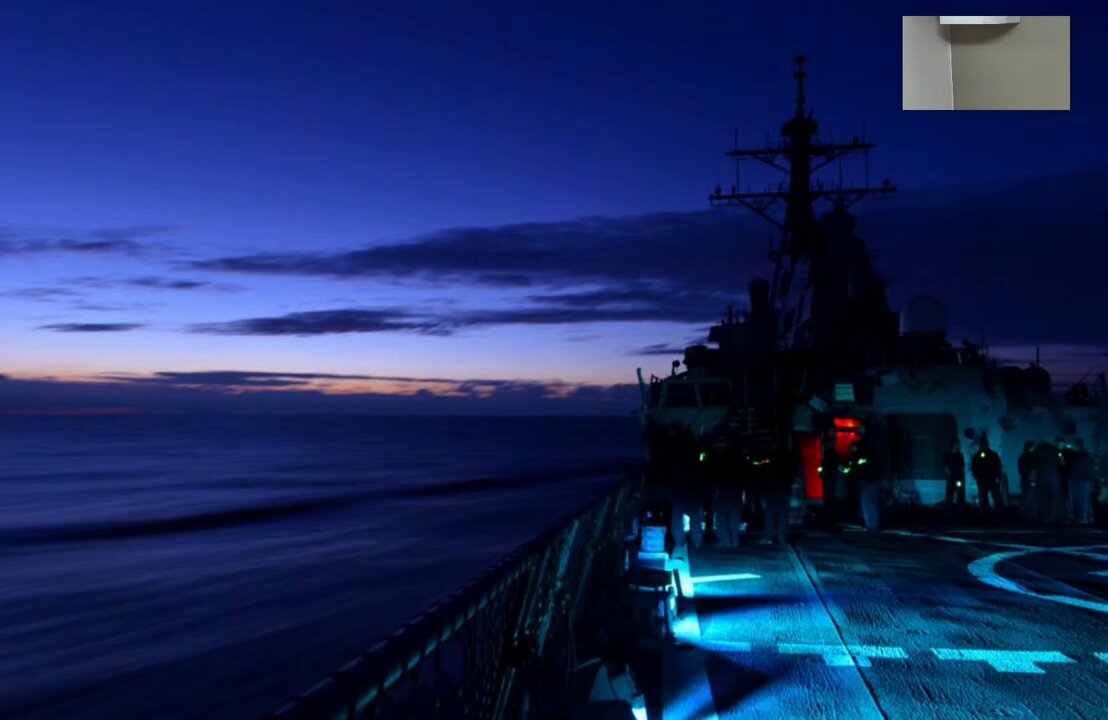
‼️🇺🇸 💥USS Arleigh Burke Class Destroyer | Precision Strike Platform The USS Arleigh Burke class destroyer is one of the most powerful surface combat ships in active US Navy service. In recent operations, these destroyers have been used to conduct long range precision strikes using the Tomahawk cruise missile....

25,526 просмотров • 8 месяцев назад •via X (Twitter)

Комментарии: 0

Нет доступных комментариев

Здесь появятся комментарии из оригинального поста

Похожие видео

🚨🇻🇪🇺🇸 If Washington launches a military operation against Venezuela, the opening phase is already clear. The United States always opens with long range stand off power. The goal is simple: blind air defenses, cut command links, then dominate the skies without sending troops early. 🔹 First wave: Stand off missile saturation Tomahawk cruise missiles launched from Arleigh Burke destroyers and Virginia class submarines target radar sites, SAM batteries, command bunkers, air bases, naval bases, and electronic warfare nodes. 🔹 Air power from distance B‑52H and B‑1B bombers fire JASSM‑ER missiles without entering Venezuelan airspace. These precision strikes focus on integrated air defense systems, early warning radars, and key military infrastructure. 🔹 Electronic suppression phase EA‑18G Growler aircraft jam surveillance radars and disrupt air defense coordination. RC‑135 Rivet Joint aircraft monitor signals and locate remaining air defense nodes. 🔹 Carrier aviation pressure If a carrier strike group is positioned in the region, F/A‑18E Super Hornet and F‑35C missions begin only after air defenses are degraded. Their focus shifts to secondary military targets, ammunition depots, and coastal defense systems. 🔹 Maritime dominance US Navy assets typically enforce wide area sea control. P‑8A Poseidon aircraft track submarines and surface vessels, while destroyers stand by for missile defense and follow‑on strikes. 🔹 No early ground entry The Pentagon avoids early landings. Any ground component would come only after full air dominance. The operation remains focused on precision strikes, command paralysis, and control of the air and sea. This is the standard US playbook: overwhelm sensors, isolate command structures, neutralize air defenses, and shape the battlespace without committing forces to a long ground fight.

Defence Index

1,201,840 просмотров • 8 месяцев назад

🚨🇨🇳 U.S. NAVY IN PANIC: CHINA ARMS ITS MAIN DESTROYER CLASS WITH YJ-20 HYPERSONIC MISSILES New PLA footage has shown a Type 052D destroyer launching the YJ-20 hypersonic anti-ship ballistic missile for the first time publicly. Previously demonstrated aboard the larger Type 055, the weapon has now reached the class that forms the backbone of China’s surface fleet. 🔸 The YJ-20 is a boost-glide weapon capable of speeds above Mach 5, with its range estimated at up to 1,500 km. Its manoeuvring bi-conic glide body can strike ships at a steep, near-vertical angle, making interception far more difficult. 🔸 The missile was cold-launched from one of the Type 052D’s 64 universal vertical-launch cells, ejecting above the ship before its motor ignited. 🔸 More than 35 Type 052Ds are already in service, with additional ships under construction. Unlike the smaller Type 055 fleet, these destroyers are produced in large numbers and routinely operate across the South China Sea and Western Pacific. 🔸 The YJ-20 does not need to replace the YJ-18. A mixed load allows Chinese destroyers to combine long-range hypersonic attacks with sea-skimming cruise missiles, forcing carrier defenses to confront different speeds, trajectories and approach angles. 🔸 This is what makes the integration more important than a single launch. Hypersonic anti-ship firepower can now spread beyond China’s largest destroyers to a far more numerous class, creating more launch platforms and attack directions. 🔸 The Pentagon’s leaked Overmatch brief found that American warships such as the Gerald R. Ford were often destroyed in Taiwan war games. Giving China’s primary destroyer class a hypersonic carrier-killer makes those scenarios even harder for the U.S. Navy. The threat is no longer one rare missile aboard a handful of large warships. It is China’s mass-produced destroyer fleet gaining the ability to attack U.S. carrier groups from extreme range. What threatens U.S. carriers more: the YJ-20’s speed or the number of ships that can launch it?

NewRulesGeopolitics

15,627 просмотров • 25 дней назад

🚨 BREAKING: U.S. MASSING CARRIER STRIKE GROUPS AS WAR WITH IRAN ESCALATES The United States is rapidly assembling an overwhelming naval armada in the Middle East as the conflict with Iran intensifies. The USS Gerald R. Ford — the largest aircraft carrier ever built — is entering the theatre, reportedly passing through the Suez Canal and heading toward operational waters. Behind it comes the USS Bainbridge, a guided-missile destroyer armed with Tomahawk cruise missiles capable of precision strikes hundreds of miles inland. Reports also indicate the USS George H.W. Bush carrier strike group is preparing to join them, which would place three American aircraft carriers within striking distance of Iran. That concentration of naval power would bring: • hundreds of fighter aircraft • cruise-missile destroyers and submarines • advanced missile defence systems • one of the largest U.S. naval deployments in the region in decades At the same time, the technological battle is evolving. Iranian drone warfare — once a major threat across the region — is now being reverse-engineered and turned back against Tehran, with cheaper counter-drone weapons replacing expensive missile interceptors. Meanwhile, reports suggest Russia may be providing Iran with intelligence on U.S. naval movements, raising the stakes even further. Iran’s missile launches are already collapsing — reportedly falling from around 100 per day to single digits as allied strikes dismantle launch sites and infrastructure. Washington’s message is clear: The campaign is accelerating — not slowing down. And according to senior U.S. officials… “We’re just getting started.”

Jim Ferguson

37,829 просмотров • 5 месяцев назад

The IRGC Navy transmits “final Iranian warnings” to US Navy Arleigh Burke-class destroyers USS Frank E. Petersen Jr (DDG 121) and USS Michael Murphy (DDG 112) in the Gulf of Oman near the port of Fujairah. IRGC: US Navy ship no. 121, this is the Sepah Navy unit. You must change course and immediately return to the Indian Ocean. If you do not obey my order, you will become a target. US Navy: USS Frank E. Petersen Jr: This is coalition military ship no. 121. We are conducting a transit passage in accordance with international law. We do not intend to provoke conflict. IRGC: This is the Sepah Navy unit. Final warning. Final warning. Final warning. 🔴Research has revealed that the American attempt was an extremely risky move that could easily have turned into a disaster for the United States and its military. — The destroyers were only minutes away from complete destruction after Iranian cruise missiles locked onto the ship and attack drones were deployed. — When the two destroyers and escort reached the mouth of the Persian Gulf, Iranian cruise missiles locked onto them, and the destroyers were given only 30 minutes to withdraw. The ships immediately retreated. — They tried to use electronic warfare tactics, including turning off the position reporting system, in an attempt to deceive the Iranian Revolutionary Guard Navy (IRGC) forces. — By faking their identity, they tried to present themselves as commercial ships from Oman, allegedly engaged in coastal traffic in the southern part of the Gulf of Oman, the investigation revealed. — The destroyers also chose a route very close to the coast and through shallow waters, taking a great risk to pass that way and enter the Persian Gulf by concealment and deception, expecting that Iranian forces might be negligent during the truce. — However, the IRGC naval forces, while patrolling around Fujairah, had already detected the deception and took swift action. — USS Frank Peterson first tried to continue its course but immediately realized that the radar systems of the cruise missiles had locked onto it and was stopped by IRGC ships. — At the same time, IRGC drones were flying over the two destroyers. USS Peterson then received a notification on international channel 16 that it must either return and leave the area within thirty minutes or become a target of Iranian armed forces. — As the destroyer insisted on continuing, it was given a final warning, so the destroyer was only minutes away from destruction. — According to the investigation, the conversation between the IRGC naval forces operators and the American destroyers indicates their full compliance with the IRGC warning. — The investigation further revealed that the failed operation was specifically designed to exploit the truce to test the readiness of the Iranian naval forces. — It also aimed to influence negotiators in Islamabad, where important talks between Iran and the US were taking place under Pakistani mediation. — According to the investigation findings, the operation of the two American destroyers failed and did not achieve any of the set objectives. — Support helicopters also flew over the destroyers. At the same time as the warning to these destroyers, all ships in the area were ordered to stay at least 10 miles away from them so that, in case IRGC fired at them, surrounding ships would be protected. — The investigation also stated that the highly risky and failed American operation was the result of the dismissal of the highest military generals from the army by order of Secretary of War Hegset in the last days.

Sprinter Press Agency

19,476 просмотров • 4 месяцев назад