Video wird geladen...

Video konnte nicht geladen werden

Zur Startseite

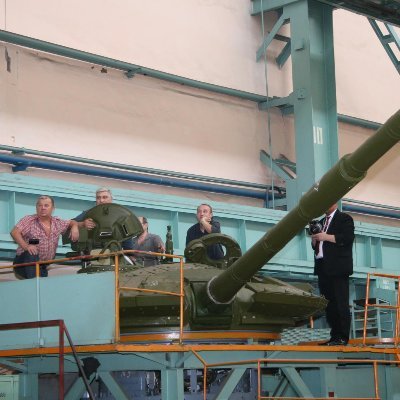
Versuchsträger Scheitellafette VT-S1 during testing, WTS-Koblenz, 1978. The vehicle is not in its full intended configuration, which is perfectly normal for a running mock-up based on the MARDER chassis. As early as 1977, Thyssen-Henschel began developing a concept with externally mounted armament (Scheitellafette) on the MARDER chassis. The MARDER...

51,409 Aufrufe • vor 1 Monat •via X (Twitter)

0 Kommentare

Keine Kommentare verfügbar

Kommentare vom Original-Post werden hier angezeigt

Ähnliche Videos

The video shows the trials of the VT-1-1, a turretless tank with 2 x 105 mm guns, firing on the move at the Putlos training ground in 1976. The casemate (turretless) tank, designed for combat while moving, was introduced in Germany in the mid-1970s as a twin-gun casemate tank (the Soviet term for a "turretless tank"). For practical firing tests in the "target pass" mode, two prototypes were built in the mid-1970s. The first prototype, VT 1-1, was armed with two 105 mm guns, while the second, VT 1-2, was equipped with two 120 mm smoothbore guns. Additionally, the VT 1-2 featured a functioning autoloader behind one of the guns, with a firing rate of 10 rounds per minute. The vehicles were developed as part of the KPz 3 or Leopard 3 project. In both prototypes, the main guns were semi-fixed (with aiming and stabilization only in elevation). The chassis solutions were derived from the KPz 70 (MBT 70) program, with the running gear shortened by one road wheel (five road wheels per side). The vehicles weighed 36.8 and 43.5 tons, respectively, with a chassis rotation speed of 60 degrees per second. To achieve high maneuverability on rough terrain, 12-cylinder diesel engines from the MB 873 series with enhanced power were used, equipped with four turbochargers: 2000 hp for VT 1-1 and 2200 hp for VT 1-2. This provided an impressive power-to-weight ratio of 54 and 50 hp/ton, respectively, with acceleration to 55 km/h in 11 seconds, though only in a temporary "turbo" mode, as the standard power was 1600 hp. The accuracy of firing with two guns was unmatched by single-gun tanks, as confirmed by the tests. However, due to the novel combat approach, this revolutionary tank concept was rejected by the customer after trials in favor of the conventionally designed Leopard 2. In essence, although the project was developed as the Leopard 3, a tank for the future, it was, in reality, a parallel project and a potential competitor to the Leopard 2. Achieving the firepower, protection, and mobility of the Leopard 3 within reasonable weight limits was impossible with a conventional layout. At the same time, a significant tactical drawback of the casemate concept (including twin-gun casemate vehicles) is the linkage between the direction of fire and the direction of movement, which in many cases could complicate unit and formation control (according to German experts in the 1970s). Moreover, the VT 1-1 and VT 1-2 can hardly be considered balanced vehicles—they could have been simpler. The vehicles' mobility was exaggerated, with the main engine, transmission, auxiliary engine, batteries, and other systems occupying two-thirds of the vehicle's length. Pros and Cons of VT 1-1 and VT 1-2: Considering the key challenges, the twin-gun casemate concept can be evaluated as follows: Pros: Compact design due to a small internal volume. Two guns provide high firepower and hit probability. Cons: The weight advantage of the casemate design is largely offset by the integration of a second gun. Fire control alone results in high complexity, leading to increased maintenance costs and overall expenses. In 1975/76, five Gefechtsfeldversuchträger (GVT, combat test platforms) were developed and built for further mobility and concept trials. These were smaller than the VT 1-1 and VT 1-2, weighing 30 tons. The GVT 01-05 were equipped only with mock-up guns and laser firing simulators (TALLISSI) and telemetry systems, built using chassis components from the Leopard 1. The GVTs were used at the IABG facility in Lichtenau and the tank training school in Munster to test the twin-gun turretless tank concept in realistic exercise conditions, which is why five vehicles were built. However, the Leopard 2 was already in production, and tank crews showed little enthusiasm for this unconventional vehicle requiring a new approach.

Andrei_bt

81,636 Aufrufe • vor 11 Monaten

🇬🇧 Lotus 102C Isuzu V12 Test In 1991, Team Lotus secretly tested an experimental V12 Formula One engine developed by Isuzu. This project, which remains a fascinating "what-if" in motorsport history, centered on the Isuzu P799WE engine. The Engine (P799WE): A 75-degree, naturally aspirated 3.5-liter V12 designed by a small, four-person team at Isuzu. It was impressively powerful, producing between 640 and 765 bhp depending on the stage of development, which was competitive with the top engines of the era. The Chassis (Lotus 102C): To test the engine, Lotus modified its 102B chassis to accommodate the V12, renaming the resulting car the Lotus 102C. The Test: The car underwent system checks at the Hethel test track in late July and early August 1991. The primary on-track evaluation took place at Silverstone in early August 1991, with drivers Johnny Herbert and Mika Häkkinen conducting the tests. Performance: During the Silverstone test, the car was reportedly around six seconds off the pace of Ayrton Senna’s McLaren-Honda. Several factors contributed to this: the engine lacked an alternator (requiring heavy onboard batteries), the chassis was not optimized for the new V12, and the car was not running on specialized racing fuel or tires. Reliability: Despite the gap in lap times, the engine proved remarkably reliable during testing and was considered easy to work with by the Lotus mechanics. Economic Collapse: The project coincided with the collapse of the Japanese asset price bubble. This economic instability, combined with Isuzu witnessing the struggles of other Japanese manufacturers (like Yamaha and Subaru) in F1, led them to cancel their entry into the sport. Isuzu eventually displayed the P799WE engine in a concept vehicle called the Isuzu Como F1, a radical mid-engine pickup truck unveiled at the 1991 Tokyo Motor Show. While the F1 program never materialized, the P799WE remains a symbol of Isuzu's ambitious engineering capabilities during that era. Today, one of the few surviving examples of the engine is kept at the Tamiya headquarters and the Isuzu Plaza museum. 🎥 Formula 1 #cars #japan #Isuzu #lotus

WRCPAST

643,735 Aufrufe • vor 5 Tagen

David Simon on the barriers "The Wire" (2002-2008) faced: "Interviewer: Do you think the fact you're telling stories in different ways than is traditional, and it has this darkness to it, was that the big barrier to the show becoming more popular than it was? Would you say it was the racial makeup of the cast? Simon: There were a lot of barriers. The racial makeup of the cast was problematic and we knew that going in. The complexity of the serial itself -- the fact that you couldn't miss a couple of episodes and feel comfortable watching it. Though I think that HBO was a wonderful vehicle for that with the multiple viewings, the DVDs and ultimately with On Demand. It was less of a problem as the show went on. It was also less of a problem as people who watched the show got used to its rhythms. The first season was on some level training the audience to watch television a little bit differently, and reducing the expectations in terms of pacing, in terms of cliffhangers, in terms of the requirement to absorb detail or even to look for symbolism. Those were problems. The other problem is, no easy gratifications, other than some real effort at careful characterization and humor. That was it. Without the humor, it would have been unbearable. Without an acknowledgement of the humanity of the characters, despite all their flaws, their vanities, their absurdities -- if on some level, you can't make people care about the characters, you've got a problem no matter what you're doing. We had some obligations to people if they wanted to watch, but a happy ending was not among the list of obligations." (David Simon's interview with Alan Sepinwall, 2008) P.S: On this day, 24 years ago, the first episode of "The Wire" was aired worldwide.

DepressedBergman

33,114 Aufrufe • vor 1 Monat