Video wird geladen...

Video konnte nicht geladen werden

Zur Startseite

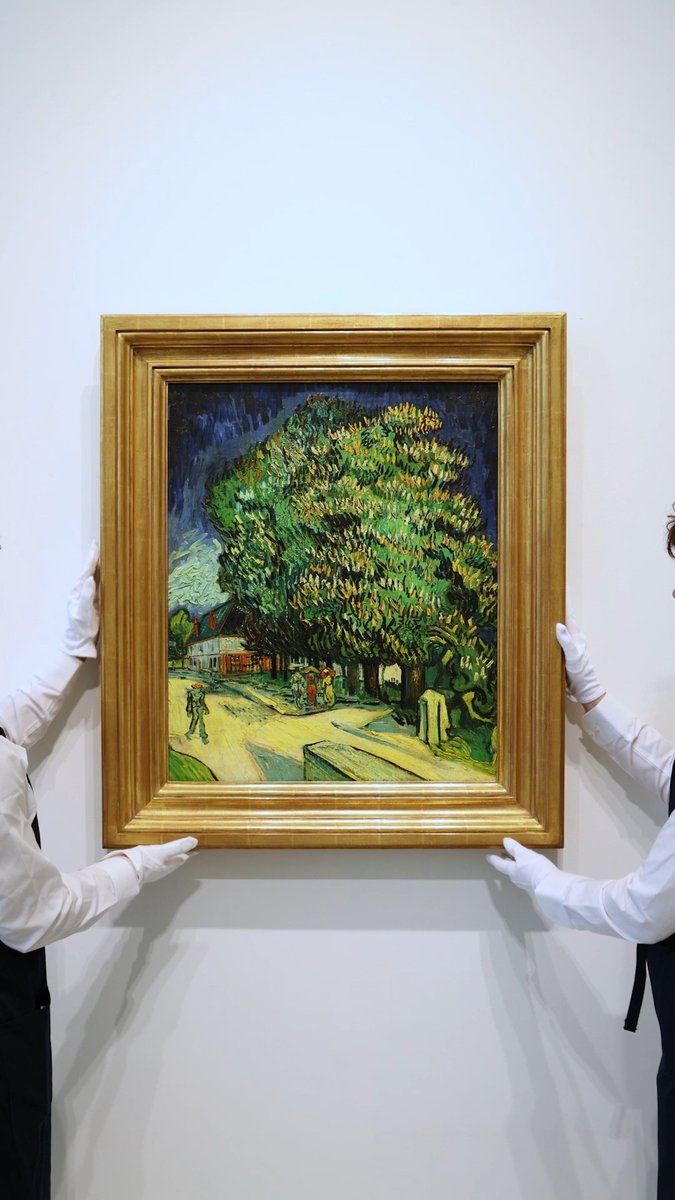
Vincent van Gogh accidentally solved a complex physics problem while inside an asylum. In 2004, scientists analyzed The Starry Night, they found something magical. His swirling brushstrokes perfectly match Kolmogorov’s formula for fluid turbulence. This formula describes how energy flows through the universe. Physicists of his time could not...

375,654 Aufrufe • vor 4 Monaten •via X (Twitter)

34 Kommentare

Profilbild von Grrr
Grrrvor 4 Monaten

Shlain’s theory is art precedes physics breakthroughs

Profilbild von AndaranQueen
AndaranQueenvor 4 Monaten

Don’t forget The Rest of The Story…Seen through the Mushroom Intelligence of psilocybin mushrooms or something similar in Shaman Culture. It’s easy to see such things, when The Mother Intelligence allows for it.

Profilbild von Hope Enchanted 🥀
Hope Enchanted 🥀vor 4 Monaten

Amazing. How do they know it was psychosis? People figuring out what used to be great mysteries in our universe have so often been dismissed as crazy. Maybe it doesn’t always have to be pathologized.

Profilbild von Solly The Seal
Solly The Sealvor 4 Monaten

Now I understand, what you try to say to me. Of how you suffered for your sanity and how you tried to set them free. They did not listen, they did not know how. Perhaps their listen now!

Profilbild von Føøl
Føølvor 4 Monaten

schizo sees what the scientist miss

Profilbild von 𝕏34
𝕏34vor 4 Monaten

Love The Starry Night.

Profilbild von Mariza Hofer
Mariza Hofervor 4 Monaten

I took meds for psychosis for months triggered by my autism, during those crisis I isolate, I create music, I write entire ebooks, workout plans, read research, paint, sketch, arrange objects geometrically, create images by hand and computer and I forget to eat and many other things. Creative process and self-harming settles, when crisis does.

Profilbild von 🎼🎼🎼ESLA🎼🎼🎼
🎼🎼🎼ESLA🎼🎼🎼vor 4 Monaten

This is a depiction of "two persons" as Irises. It looks like they're in full discussion or something. Remember Art represents our thoughts as well as our lived experiences. Van Gogh certainly had a strange but unique way of speaking with his paintbrush.

Profilbild von Vitae
Vitaevor 4 Monaten

My friend who many years later became a nun (it takes 8 years!) used to love this painting, and she carried the grace of God with her. I always felt a profound and instant intuitive sense of peace around her. And my pup also! 🌦️🌌🕊️

Profilbild von Skux_Life² 🤍 ⚡️
Skux_Life² 🤍 ⚡️vor 4 Monaten

I have the Starry Night driftwood castle

Profilbild von @TanyaGabriele
@TanyaGabrielevor 4 Monaten

It's said that artists, musicians and others were able to make better works under the influence. Maybe VAn Gogh's third eye became active.

Profilbild von Wavy🐉
Wavy🐉vor 4 Monaten

I believe us humans can intuit divine truths when within coherence and using a mirror either it be painting or something like AI.

Profilbild von Ada'sfreedom2023
Ada'sfreedom2023vor 4 Monaten

The great mind of Van Gogh, filled with turmoil, led to clarity.

Profilbild von Juniper Harrison
Juniper Harrisonvor 4 Monaten

Plus Turbulence is one of the hardest unsolved problems in physics. Werner Heisenberg said he’d ask God about it. But in 1889, Van Gogh (mid-psychosis in a French asylum) painted brushstrokes that precisely follow Kolmogorov’s formula for turbulent flow. A formula that wouldn’t exist for another 52 years. Scientists confirmed this in 2006 by digitizing the painting and measuring luminance between pixels.

Profilbild von Tia Zoila
Tia Zoilavor 4 Monaten

You might enjoy the connection of Van Gogh's starry night to skyrmions. It's an intersection of science, art, the future that would make a physicist out of anyone contemplating scientific study. The ubiquitous skyrmions (come on sizes cosmic to nano, and look remarkably like swirlly starry night) are at the frontier of next gen memory chips, surface acoustic waves, and imminent proof of the exlusive monopole. Thanks for this!

Profilbild von Tina
Tinavor 4 Monaten

The Starry Night.

Profilbild von 🎼🎼🎼ESLA🎼🎼🎼
🎼🎼🎼ESLA🎼🎼🎼vor 4 Monaten

He depicted disturbing scenes in his work of art as well but folks are blind to it. Like bloody scenes in the Irises. Look deep to see someone carrying two kids, there's a face of a chief of some kind with a hook in his mouth, and in the background folks are looking the other way

Profilbild von NMSI - Subquantum Physics
NMSI - Subquantum Physicsvor 4 Monaten

Van Gogh did not solve turbulence mathematically. What is remarkable is that his intuition captured statistical patterns that physicists would only formalize decades later. Sometimes nature is recognized long before it is understood.

Profilbild von George Bressler
George Bresslervor 4 Monaten

@grok explain. Have fun with this.

Profilbild von EagleEyeFlyer🇺🇸
EagleEyeFlyer🇺🇸vor 4 Monaten

Van Gogh did have an ear … errr eye for painting..🤔🚀🫣🫡

Profilbild von Boni Blackstone
Boni Blackstonevor 4 Monaten

And they always laugh at us crazy ones. Right now- theres a frog thumping to get out of the dog food sack. About the palm of my hand in size. Guess I'll go get the little bastard out and hope he doesnt get loose in my apartment. -shit posters cat may have a new pet

Profilbild von Maureen O'Toole
Maureen O'Toolevor 4 Monaten

Wonder if Starry Night 🌃 is mostly everyone's, who enjoys viewing art, favorite Van Gogh creation.

Profilbild von Elis Satu
Elis Satuvor 4 Monaten

@grok explain the mechanics through Sergey Karavashkin’s ether lens 🌀

Profilbild von Frigid Digits
Frigid Digitsvor 4 Monaten

How did he PROVE it? The flows resemble a river or creek. He did a good job mimicking fluid motion, but nothing at all was proven.

Profilbild von ΛЯƬΣMIƧ
ΛЯƬΣMIƧvor 4 Monaten

Amazing! Maybe genius isn't just about understanding reality—it's about seeing patterns others can't.

Profilbild von Ann Wright
Ann Wrightvor 4 Monaten

There was a documentary years ago about Vincent van Gogh that theorized he might have been epileptic as he was known for having “fits”. If this is the case, that might explain the halos around the lights as epileptics sometimes see halos before having a seizure.

Profilbild von 🎼🎼🎼ESLA🎼🎼🎼
🎼🎼🎼ESLA🎼🎼🎼vor 4 Monaten

This character walks on bloody ground behind the mayhem in Irises. That which is seen by the eyes. Irises, get it?

Profilbild von Donna
Donnavor 4 Monaten

Maybe he actually saw the turbulence. His paintings give off energy when you stand and observe. Maybe because the brush strokes are so pronounced

Profilbild von AdmiralPitts
AdmiralPittsvor 4 Monaten

@grok, this seems kind of outlandish but what do I know? Can you help me understand this better? did Vincent van Gogh actually solve some kind of technical fluids problem with art, or is this a feel-good fantastical story?

Profilbild von Based 🐼
Based 🐼vor 4 Monaten

van gogh was insanely talented but “solved a physics problem” is doing way too much

Profilbild von MISTERy B
MISTERy Bvor 4 Monaten

Why nobody ever say that when I went to the exhibit?!?!?!?! I love fluid flows obviously. That Ear scene hits different.

Profilbild von giulia12 💚
giulia12 💚vor 4 Monaten

Makes sense that I see organized chaos when I look at a Van Gogh.

Profilbild von God's X
God's Xvor 4 Monaten

Did Van Gogh intentionally solve a physics problem? No. But that's what makes this so incredible. Through pure intuition, observation, and artistic genius, he painted patterns that mirror the hidden geometry of nature itself

Profilbild von Sublee Minal666
Sublee Minal666vor 4 Monaten

C'est l'Or-Loge de la VIE,le Mouvement perpetuel,la Vibration,l'onde du Monde...Il a absolument tout compris,il s'est meme reconnu en ce mouvement pour l'avoir si bien dessiné,il sait que tout est connecté comme les rouages d'une Montre de LUXE SUISSE🩵🩶🩷

Ähnliche Videos

Ever hear Albert Einstein’s voice? He’s him explaining his formula, E=mc² It is probably the most famous formula in the world, but what exactly does it mean? Let's start by defining each letter in the formula: E = Energy M = Mass C = Speed of light (a very large number) If we were to read the formula, we would say, "Energy equals mass times the speed of light squared." The formula itself is rather simple in that it essentially says that energy and mass are different forms of the same thing; they are interchangeable. So are you saying a beam of light and a banana are different forms of the same thing? Yes, in our head, this may not make sense, but it does in nature. This discovery was groundbreaking at the time because people had previously believed that energy could only be created by kinetic or potential energy. You can increase kinetic energy by accelerating your car. You can increase potential energy by stretching a rubber band. Einstein demonstrated that there was a third form, which is that things have energy because they simply exist. Ok, so why is mass multiplied by the speed of light? Whenever you are converting mass to pure energy, it is by nature moving at the speed of light. Pure energy is an electromagnetic radiation, which travels at 186,000 miles/sec (300,000 km/sec). Ok, cool, but why is the speed of light squared? This again has to do with the nature of energy. If an object is moving twice as fast as another object, it does not have twice as much energy. Rather, it has four times as much energy. Hence, the speed of light is squared, which comes out to a very big number. C^2 is the conversion factor from mass to energy. The bottom line is that even small objects have an immense amount of energy. Through the process of nuclear fusion/fission via nuclear power plants, we can harness some of this energy. In the atomic bomb that destroyed the city of Hiroshima, there was about 700 milligrams (equivalent to the weight of 1/3 of a dime) of uranium which was converted to energy that destroyed everything within a 1-mile (1.6 km) blast radius.

Historic Vids

2,424,303 Aufrufe • vor 3 Jahren

One day, a man was driving his van through a village in southern Xinjiang. A man wearing a cap approached from the roadside with a smile on his face, though his eyes were searching the vehicle for something. Thinking the man might be hungry, the driver offered him some snacks—treats that were hard to come by in the village. However, the smile on the cap-wearer’s face dimmed, and he turned away in disappointment. Sensing something was amiss, the driver decided to follow him home to see if he needed help. Once inside, the man unwrapped layer upon layer of cloth to reveal an old radio. He twisted the dial with force, pointed to his ears, and made muffled sounds in his throat. In that moment, the driver finally understood: this man, who could not hear the world, was using all his strength to find batteries for his silent radio. His earlier gazing at the van had simply been a desperate attempt to find a vendor selling batteries. The driver, a kind soul, grasped his meaning immediately. He took him to the county town to buy fitting batteries, purchased shoes and other daily necessities for him, and promised to take him out again next time. On the way back, as the man sat in the passenger seat with his beloved radio clutched in his hands, his smile returned—bright as it was at the beginning. But this time, the joy came not from the radio waves, but from the love of a stranger. I do not wish to specifically mention their ethnicities, for some warmth needs no labels. It is just like sunlight falling on everyone's shoulders, never asking who you are.🌞

AL-fira 🇨🇳

36,145 Aufrufe • vor 5 Monaten

Class of 1984 (1982) Class of 1984 was a commercial success relative to its modest $3.2–$4.3 million budget, earning over $6–$7 million at the box office. It achieved broader financial success through the home video and cable markets, estimated at $15–$20 million in total. The film is celebrated as a definitive cult classic of the early 1980s. Its "video nasty" reputation stemmed from extreme violence, including a graphic table saw death and a brutal rape scene, which nearly earned it an X rating. Modern audiences value it as a bleak, nihilistic time capsule of the early '80s punk aesthetic and urban decay. It is famous for featuring a young, pre-Family Ties Michael J. Fox in a supporting role. Its status is solidified by high-end boutique releases, such as the Shout! Factory Collector’s Edition. The film was directly influenced by A Clockwork Orange (1971) and Blackboard Jungle (1955). In turn, it influenced several "school violence" and vigilante films: It spawned two sci-fi-themed sequels: Class of 1999 (1990) and Class of 1999 II: The Substitute (1994). Films like The Principal (1987), The Substitute (1996), and Class of Nuke 'Em High (1986) are often cited as spiritual successors or parodies. Timothy Van Patten, who played the menacing gang leader Peter Stegman, is now better known as an Emmy-winning director of prestigious series like The Sopranos and Boardwalk Empire. Van Patten personally wrote and performed the piano concerto his character plays in the film, a scene often cited as a highlight that revealed Stegman's complex, "yuppie" background. While director Mark Lester expected Van Patten to become a major acting star following his "riveting" performance, Van Patten eventually found his greatest success behind the camera. His portrayal remains iconic for its use of low-angle shots to maximize his threatening presence despite his clean-cut appearance.

Tom😈Loves❤️Horror😱

11,883 Aufrufe • vor 9 Monaten

Elon Musk explained how he makes every decision in a single sentence. Musk: “Whatever the limiting factor is on speed, I’m gonna attack that.” Not manage it. Not commission a study on it. Not make peace with it. Attack it. Musk: “If capital is a limiting factor, then I’ll solve for capital. If it’s not a limiting factor, I’ll solve for something else.” Sounds simple. It’s the furthest thing from simple. The entire professional class is built on the opposite instinct. They identify the constraint. Then they build a career around managing it. They become the expert on why things can’t move faster. Why it’s too expensive. Too risky. Too early. They don’t solve for the limiting factor. They become the limiting factor. And they get promoted for it. The biggest bottleneck in most organizations isn’t capital. Isn’t technology. Isn’t regulation. It’s the person in the room whose entire identity depends on the problem staying unsolved. Because once the problem is solved, so is their job title. Musk doesn’t manage that loop. He breaks it. He asks the one question the room agreed to stop asking. Why is this the speed. Why is this the cost. Why is this the timeline. And when the only answer is “because that’s how we’ve always done it”… He knows he’s found the real constraint. The human one. This is why he operates across rockets, cars, AI, brain interfaces, tunnels, and social media at once. Not because he’s reckless. Because the method works everywhere. Find the bottleneck. Solve for it. Move to the next one. Repeat until physics stops you. Not politics. Not bureaucracy. Not consensus. Physics. Most people never get anywhere near the physics. They stop at the first human objection and treat it like a law of nature. Musk treats human objections as engineering problems. That’s what his competitors can’t solve for. Not his capital. Not his reach. He refuses to honor the constraints they’ve spent entire careers respecting. And once you watch someone walk straight through the wall you built your whole life around… You don’t just question the wall. You question everything you built against it.

Dustin

71,784 Aufrufe • vor 5 Monaten

Next in who after the Ramanujan Series? If Ramanujan was the Source Code, Mudumbai Seshachalu Narasimhan (1932-2021) was the Compiler. He took the raw energy of Indian mathematical intuition & turned it into a formal, global language that even the top physicists in the world now use to explain reality. M.S. Narasimhan (known as MSN) was born into a rural family in Thandarai, Tamil Nadu. MSN was not a fan of the repeat what you are told school system. He was obsessed with extra problems at the end of textbooks that required original thinking. There was no high school in his village. To get an education, he famously traveled several KMs every day on a bullock cart. He ended up at Loyola College, Madras, under Father Racine. Racine realized early MSN was a fearless thinker who could handle the latest French mathematics. In the 1960s, mathematics was split into silos: people who studied shapes (Geometry) did not talk much to people who studied eqns (Algebra). Narasimhan was the man who found a wormhole connecting them & the career defining moment was the "Narasimhan-Seshadri Theorem" (1965). This is the Kohinoor of his career. Working with his lifelong friend C.S. Seshadri, he proved a result so deep it is still taught at every major uni today. They linked Unitary Representations (a complex way of describing symmetries in topology) to Stable Vector Bundles (a way of describing shapes in algebraic geometry). Yrs later, physicists realized this math was exactly what they needed to describe Gauge Theory & Quantum Chromodynamics (the study of how sub-atomic particles stick together). If we ever hear a mathematician talk about the Harder-Narasimhan Filtration, they are referring to a sorting machine MSN co-invented. In complex geometry, some bundles are stable (smooth) & some are unstable (jagged). Narasimhan & Günter Harder proved that every jagged bundle can be perfectly sliced into a unique sequence of smooth ones. This filtration is now used in Number Theory to solve problems that Ramanujan himself might have found fascinating. MSN was famously absent-mindedly brilliant, his wife, Sakuntala (a renowned singer), once recalled that for their honeymoon, MSN packed a suitcase full of Tamil literature & advanced math books. He spent the trip solving eqns be/w sightseeing! A former student recalls playing tennis when MSN walked up & asked, "You have learned a lot of good mathematics, but do you have any mathematical problems to work on?". They spent the next 10 days working day & night to prove a major result in differential geometry. His philosophy was: "Solve the big problem 1st, then worry about the details." MSN is 1 of the most decorated Indian scientists in history: King Faisal International Prize (2006): Often called the Arab Nobel, he won this jointly with Sir Simon Donaldson for his work linking math & physics. FRS & Padma Bhushan: He was elected a Fellow of the Royal Society (1989) & awarded the Padma Bhushan (1990). Chevalier de l'ordre National du Mérite: The French govt knighted him for his work in bridging the Indian & French schools of mathematics. He served as the 1st chair of the National Board for Higher Mathematics & headed the math division at the ICTP in Italy. He made sure that Indian students did not have to leave India to become world-class.

Parimal

13,502 Aufrufe • vor 6 Monaten