正在加载视频...

视频加载失败

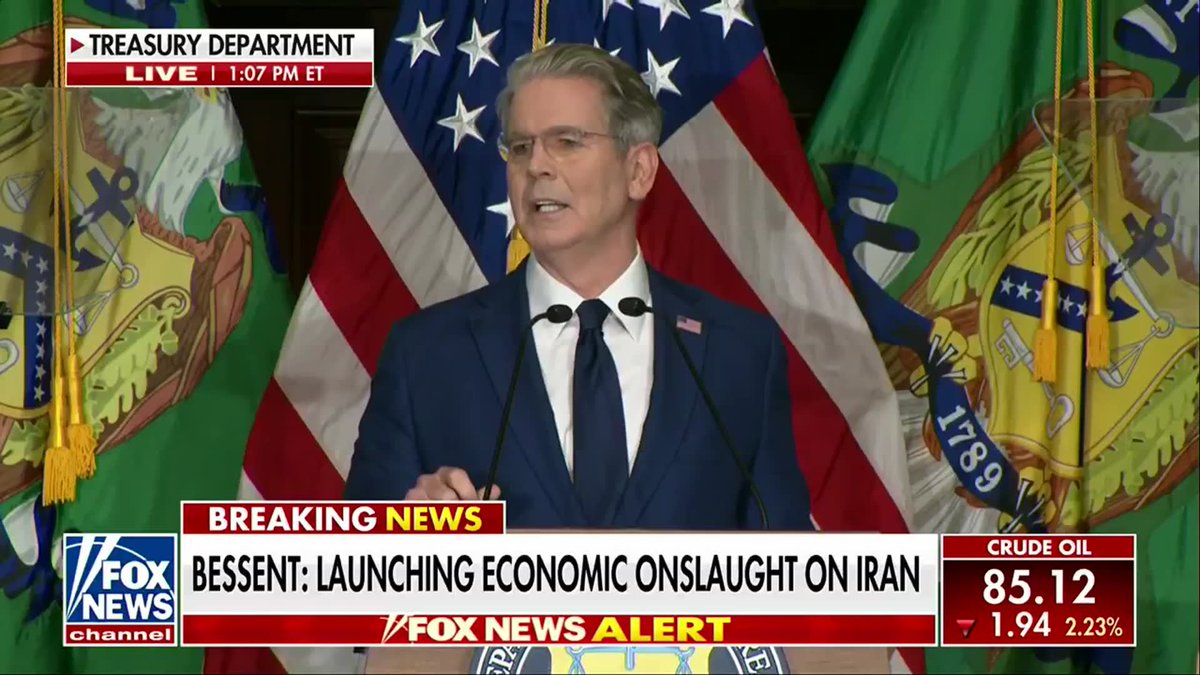
Wait… GOLD?! 🤣 Bessent says the new sanctions will target aviation, maritime shipping, digital assets and — of course — gold. Gold? That useless barbarous relic? The shiny yellow rock that supposedly belongs in museums while modern finance runs on dollars, credit and screens? Funny how whenever the financial...

64,046 次观看 • 12 天前 •via X (Twitter)

0 条评论

暂无评论

原始帖子的评论将显示在这里
相关视频

🚨 STOP RIGHT THERE. Did the U.S. Treasury Secretary really just say this? “Why would I want to blow up the global financial system?” Read that again. Not some gold bug. Not some doom-porn account on X. Not some guy sitting in a basement surrounded by silver bars. The United States Secretary of the Treasury. And the context matters. Bessent was explaining why Washington is giving foreign entities time to comply before unleashing secondary sanctions. His reasoning? Secondary sanctions are an extraordinarily powerful tool. They must not be used lightly. Comply with Washington's expectations — or, in his own words: “They should expect that they will leave the dollar system.” Think about what is being acknowledged here. The dollar system is simultaneously being presented as: the weapon, the enforcement mechanism, and something whose disruption must be handled carefully enough that the Treasury Secretary invokes “blowing up the global financial system.” No, Bessent did NOT predict the collapse of the global financial system. That's not what he said. But when the man responsible for the world's most important reserve currency even puts those words into the conversation while discussing the weaponization of that currency's financial network… I pay attention. Especially when the same offensive targets: Gold. Digital assets. Shipping. Foreign financial institutions. And anyone helping Iran circumvent the dollar system. You can call gold a barbarous relic. You can call de-dollarization a fantasy. You can tell the world that exclusion from the dollar system is the ultimate financial punishment. But there is a question Washington may eventually have to confront: How many times can you threaten to throw people out of a club before they start building another club? And perhaps an even more uncomfortable one: What happens when the threat is aimed at someone too big to throw out without breaking some of the furniture yourself? China, I'm looking at you. 🇨🇳🍿 Bessent's sentence may have been rhetorical. But some sentences should make markets listen. “Why would I want to blow up the global financial system?” Indeed, Mr. Secretary. Why did that possibility enter the conversation at all? #Dollar #Gold #Iran #China #Sanctions #DeDollarization #FinancialSystem #Geopolitics #Treasury

Honza Černý

111,440 次观看 • 12 天前

In 1971, the U.S. literally ran out of money. Back then, the dollar was backed by gold, which meant every paper dollar represented real gold sitting in U.S. reserves. The problem was the country was spending way more than it earned, printing dollars that didn’t have enough gold to back them. As other countries realized this, they started trading their dollars in for gold. The gold reserves began to drain fast. That Sunday night, President Nixon went on TV and told the world the U.S. was “suspend temporarily convertibility” of dollars into gold. What that really meant was the U.S. couldn’t pay what it owed in real money anymore. At that time, Ray Dalio was a young clerk on the floor of the New York Stock Exchange. He thought markets would collapse the next day. Instead, stocks soared. The U.S. had just made money worth less, and when that happens, asset prices usually rise. He later found out the same thing had happened in 1933 when FDR also cut the gold link. Both times, the U.S. printed more paper money to keep spending, and each dollar ended up buying less. That moment in 1971 changed the entire global system. From then on, money wasn’t something you could exchange for gold, it became a promise backed only by trust. And that’s where the connection to today comes in. Trust in that promise is fading again. Inflation is running above target, the dollar is sliding, and people are moving into things that don’t rely on faith in any government such as gold and bitcoin. Foreign investors aren’t pulling away from America, but they are protecting themselves. They’re still buying U.S. assets, just not without hedging the risk. They don’t want to be caught holding paper that keeps losing value. Dalio’s story shows how this cycle keeps repeating. The system runs on confidence until it doesn’t. And every time it slips, people turn back to hard assets, not because they want to, but because they have to.

StockMarket.News

95,018 次观看 • 11 个月前