Video wird geladen...

Video konnte nicht geladen werden

Zur Startseite

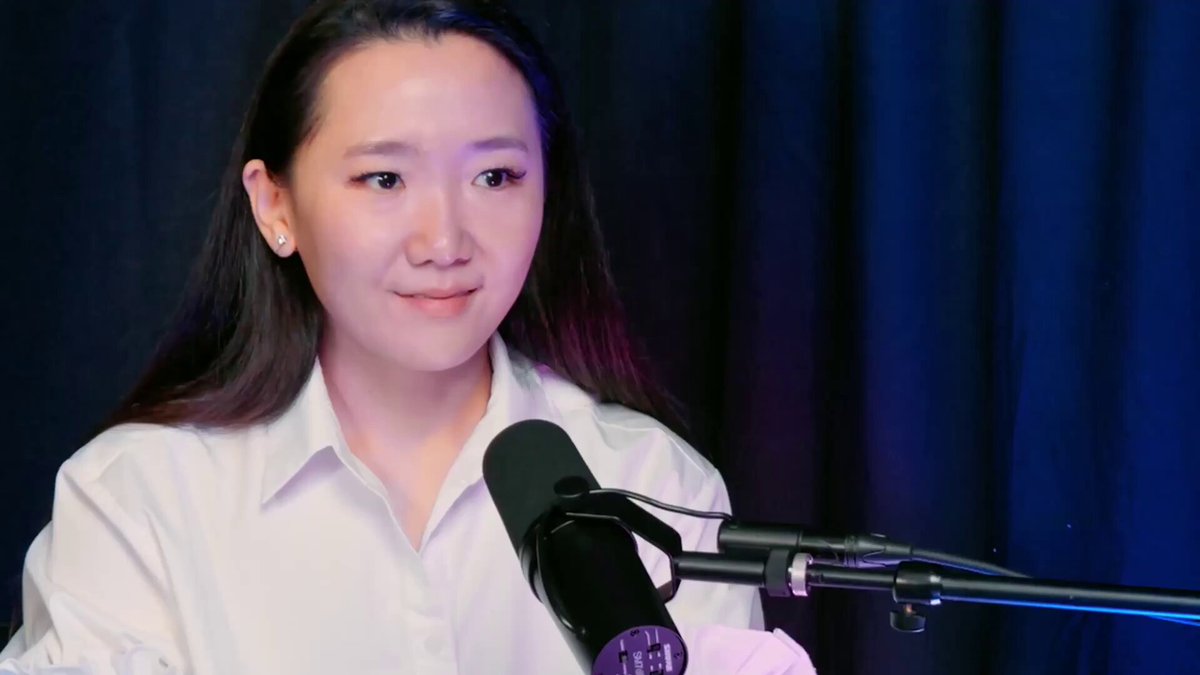
Want to win hackathons or buildathons? Watch this first. It wasn’t about pitching. It was about building. microChess & microMeme share how they became top teams from a $50K total grant pool at the Linera x AKINDO Buildathon. Linera ⛓️ Host : Heelim - AKINDO Guest : Zhao KK,...

11,366 Aufrufe • vor 6 Monaten •via X (Twitter)

0 Kommentare

Keine Kommentare verfügbar

Kommentare vom Original-Post werden hier angezeigt

Ähnliche Videos

ETH/ACC at Devcon 8 | Mumbai, India 🇮🇳 wasn’t just a Demo Day. It was a statement about where Ethereum is going, and who is building that future. 22 teams stepped onto one stage, and the ecosystem listened. As Losi opened the room: “We’re not just here to see founders or meet investors. We’re here because we believe in what’s possible when technology is used for good.” Odisea, alongside partners across the ecosystem; Founder School, Ethereumfndn’s Founder Success Team, Base, Uniswap Foundation, Agora, Protocol Labs, Arbitrum, Octant, Mantle, OpenZeppelin, Alchemy, Virtuals Ventures, Ledger, Founder School, Rayo Capital Group (Rayo), AKINDO | The world’s first Buildathon Platform🌊⚒️, and Founders Forge came together to spotlight founders building with clarity, intention, and ambition. And they delivered. For our Acelera cohort, BitFinding, Bu Finance, Kompensa, Safu, A0x, and Lid, this was the culmination of six intense weeks of product work, GTM, storytelling, and pitch practice. For the 16 additional teams who joined us on stage; DerbyFish, Alphix, Upshot, Index Network, Seedy Frens, Lumis, Openbands, PistachioFi, 𝗞𝗛𝗨𝗚𝗔, mimic, skyFall, Talentir, gm tribe!, Peanut, Delta and neurobro this was a chance to stand shoulder to shoulder with world-class founders, to pressure-test their narratives, and to share the work that will define the next cycle of crypto and AI innovation. ETH/ACC was about proof. Proof that LATAM builders are not playing catch-up, they are setting the pace. Thank you to every founder who took the stage, to every partner who backed this vision, to every judge and panelist who brought rigor, clarity, and high-trust feedback, and to the entire Odisea team whose months of work made ETH/ACC possible. latam/acc

Odisea Labs

17,897 Aufrufe • vor 8 Monaten

New pod is live for the idea builders out there I sat down with Amjad Masad, the CEO of Replit, for what I thought would be a typical tech chat. Instead, I got a front-row seat to the future of building startups. You've got an idea. Maybe it's the next Airbnb, or just a simple tool to solve a problem you've been grappling with. Normally, you'd need to learn to code, or find a technical co-founder, or burn through your savings hiring developers. But what if you could just... describe your idea and watch it come to life? That's what Replit's new "Agent" does. It's like having a tireless junior developer at your fingertips, 24/7. You chat with it, describe what you want, and it starts building. Right there in your browser. For 20 minutes, Amjad walked me through the process. We built an app from scratch, debugged it, and deployed it. All without writing a single line of code. And he's the perfect guy to walk us through this. Amjad gave some examples of how it's changing people's lives at the end of the pod. Like Adeel Khan who went from being a teacher to a founder of Magic School an AI startup that just raised $20m. This isn't just a new tool. It's a fundamental shift in who gets to build the future. Is it perfect? No. And I'm glad we spoke about it. Amjad was candid about the limitations. It struggles with complex projects, and you'll still need coding skills for advanced tasks. But for getting an MVP off the ground? For testing an idea without burning through your savings? It's a game-changer. As I wrapped up the podcast, I couldn't help but think: We're witnessing the democratization of tech in real-time. The gatekeepers are on notice. The future is up for grabs. And the best part is it's all happening in a browser. No fancy setups, no complex installs. Just you, your ideas, and a tool that can bring them to life. The podcast is live now. Give it a listen. Whether you're a seasoned dev or someone who's always had ideas but never the means to build them, I promise it'll change how you think about what's possible. And I don't think Amjad has given a masterclass/demo like this. (btw i read 100% of comments on YT and respond to most and subscribe for more stuff like this) Gets you thinking... The next big thing might just come from someone who, yesterday, thought they could never build it. Doesn't matter how old, young, where they live. As long as they've got a decent internet connection. And that's pretty exciting.

GREG ISENBERG

108,038 Aufrufe • vor 1 Jahr

Elon Musk tells the story of his early career Elon recounts building his first startup Zip2 after dropping out of his PhD program at Stanford: “In 1995 I basically wrote the first — or close to the first — maps, directions, and yellow pages on the Internet. I just wrote that personally and didn’t use a web server (I just read the port directly) because I couldn’t afford one. The original office was on Sherman Avenue in Palo Alto. There was an ISP on the floor below, so I drilled a hole through the floor and ran a LAN cable directly to the ISP. My brother joined me and another co-founder (Greg Kouri who passed away). At the time we couldn’t even afford a place to stay, and the office was $500 per month, so we just slept in the office and showered at the YMCA.” However, Elon did not intend to start a company at first: “I tried to get a job at Netscape. I sent my resume into Netscape and nobody responded. Then I tried hanging out in the lobby to see if I could bump into someone but I was too shy to talk to anyone. So I was like, ‘Man this is ridiculous. I’ll just write software myself and see how it goes.’ It wasn’t actually from a standpoint of ‘I want to build a company.’ I just wanted to be part of building the Internet in some way. And since I couldn’t get a job at an Internet company, I had to start an Internet company.” In 1999, Zip2 was sold to Compaq for $307 million. After the acquisition, Elon took the $20 million he earned from it and invested it into a new payments company called X, which eventually merged with Peter Thiel’s Confinity to form PayPal. “I kept the chips on the table,” he recalls. “I got that $20 million check for my share of Zip2. At the time I was living in a house with four housemates and had like $10,000 in the bank. Then this check arrives in the mail and my bank account went to $20,010,000. I had to pay taxes on that, but I ended up putting almost all of that into X.” In 2002, PayPal was acquired by eBay for $1.5 billion. Elon earned ~$175-180 million from the sale based on his ~11.7% stake. In the subsequent decade, he would keep his chips on the table again and invest it all into Tesla and SpaceX. Video source: Y Combinator (2025)

Startup Archive

59,016 Aufrufe • vor 9 Monaten

💬 Do any of you still remember RealPlayer™? Back in the 1990s, websites were just text, links and if you were very lucky some images, but definitely NOT video or audio Internet speeds were extremely slow (think 2.5kb/s, so about 10,000 times slower than an average connection now) so it was simply impossible or it'd take ages to load RealPlayer changed that, they made a heavy compression codec for video and audio where a video could be just a few kilobytes, and with that it instantly became the first app that let people play real audio and video inside websites, it integrated into browsers like Netscape or Internet Explorer so people could embed video and audio on sites, and they did! RealPlayer was so successful that by the year 2000 more than 85% of all audio or video content on the web was in the RealPlayer format The app itself was free for people to use, and they made money by charging for the server software that would stream the video and audio They IPO'd during the internet bubble of the late 90s and were valued at $550 million dollars, which would be $1B inflation-adjusted now, so they were a billion dollar company (That internet bubble by the way has endless parallels with the AI bubble we're probably in today) So why don't you hear about them these days anymore? Well, Microsoft started bundling Windows Media Player with Windows, just like they did bundling Internet Explorer, and they gave away the server software for streaming Windows Media content (like .wma and .wmv) for free This overnight nuked RealPlayer's business, so they sued Microsoft for unfair competition, they won in court in 2005, and Microsoft agreed to pay them $761 million to settle, so I think the founder still got rich from it That same year in 2005, YouTube started and around 2008 the HTML standard added the tag while making most video streaming tech open source, so it wasn't a business anymore RealPlayer stayed public as a company though until actually recently, 2022, when the original founder Rob Glaser bought it back and took it private for about $25 million Obviously nobody needs a video streaming app anymore, it's integrated in all platforms, software, and devices now, so now they seem to be focusing on "AI-powered facial recognition for security professionals" On my site I've installed RealPlayer for you go back into time and try and managed to the get streaming part working too, so you can listen to actual radio show from the 90s about UFOs at Roswell which I found on Jason Scott's Discmaster archives These days we all watch video on YouTube, Instagram, X and TikTok etc. but it all started with RealPlayer 😊

@levelsio

203,157 Aufrufe • vor 7 Monaten

Jack Dorsey on becoming a better storyteller: "I found myself very early on thinking about something like thinking about this early idea for Twitter and saying to myself, I could build this awesome. You have those shower-like moments, or you're walking at midnight in some town in New York City, and you've got these amazing brand ideas. And then you start thinking, well, I could really start doing this if only X and if I had this person or if this technology existed or if this happened or this happened. And what I realized was that I was constantly making excuses for not working on it. And then the window had passed, and then I couldn't do anything. So I think it's really, really important to write it out or to draw it out or to code it. But you need to get it out of your head. And the reason you have to get it out of your head is that you need to be able to see it on a surface that is not in your mind. And once you can see it, and once you can step back from it, then you can also decide this passes my filter, my constraints, so maybe I can show it and share it with some other people. And then they will be like that's the stupidest idea ever and or that's somewhat interesting, but maybe this and this and this. So the sooner you can do that, then you have a lot of momentum around it, and you can really decide if you want to commit to it and work on it more or put it on the shelf for a later date. And the realization that I think everyone needs to have about that latter option, putting it on the shelf, is that you can come back to it and it will surface back up in another piece of work or another idea at some point in your life. So having that ability to close off a chapter and move on is really, really important. You can't have all these open threads, and that's what I realized I was doing. And that also encouraged me to really write more and to really think about what's the story? How are people coming to this? And like when I show my friends this, how are they going to react and I would write it down. I would actually treat it like a play. And when I realized that I was writing plays, I read a lot more plays for style and for substance and for technique and I think it's really good. I think there is another company that I have always looked towards for inspiration and I know a number of people in this room probably have a similar company in mind, which is Apple. Apple, I think, is run like a theater company. It has a great sense of pacing, has a great sense of story and has a great sense of execution and it's all about event-driven, it's all stage-driven, the stage being a billboard or the stage being a keynote or the stage being a product launch. All of it has a very, very cohesive end-to-end story. I mean you think about what happened when Steve Jobs came back to the company. The first thing he did was kill every product line the company was working on. And for two years,rs they had no product on the market whatsoever. All they had were a bunch of posters all around the world with Steve Jobs' heroes, and it said, think different. And it was just focused on bringing up the brand and making people aware of the brand again and how the brand is aligning to this particular feeling and story. And then they came out with the iMac and then built iTunes and then the iPod, and they realized that, wait a minute, people are carrying music on their phones now, so we better build a phone, an iPhone. And so this unfolding of the plot and the epic story has been very, very interesting to watch, especially if you look back to that time when he came back to the company. So I've learned a lot from that company and other companies that operate in a similar fashion."

Founder Mode

107,213 Aufrufe • vor 8 Monaten

I’ve made a short film. Look at the things around you: doors, bins, staircases, furniture, railings, doorhandles, windows. Do you like how they look, or not? Modern design has become boring, but it doesn’t have to be this way. The word “beautiful” is overused. We don’t need “beautiful” lamps, bus stops, and water fountains – we just need lamps, bus stops, and water fountains that are interesting, that actually mean something. Or, at the very least, not boring. Because the aesthetics of architecture and urban design aren’t just a bonus; they totally change how we think, feel, and behave. Boring environments make us more stressed and less productive; they erode our sense of community; they make us sadder, less trusting, and lonelier. A boring world is one where we spend even more time online and where our addictions are even harder to battle. The Problem There is global, widespread dissatisfaction with how the world looks. In this film, and the series it will lead to, we want to investigate that feeling and give it a voice. The point isn’t that we should return to the past or get rid of modernism. It’s about learning from the past in order to improve the present, and about giving the public what they very clearly want, which isn’t the eradication of modernism but the co-existence of modernism AND traditionalism. Just look where tourists go, where they take their photos, and that tells you everything you need to know about what most people find interesting or beautiful. And look at where people go on holiday. It’s always to cities filled with old architecture and design, with churches and mosques and palaces, with charming little alleyways and stone staircases and wrought-iron railings. Of the world’s fifty most visited buildings, only four were made in the 20th century, and they’re all museums or memorials. There’s a reason why posts about this go viral online all the time. Regardless of why the change happened, it is clearly the case that we no longer make things how we used to. People are rightly confused by the fact that old lamp posts (to take the example we focus on in the film) are usually so pretty, while modern ones are usually so boring. Some people say this is just an example of survivorship bias… and they’re mostly correct. But that’s the whole point! Saying old buildings are usually prettier than modern buildings is not to say that architecture used to be better, or that the past was better. It is simply to say that certain kinds of buildings, because they have been preserved, are good examples of what people like most. In which case... shouldn't we try to design at least some buildings in a way that we know people like? A Unifying Cause Everybody, from all sides of the political spectrum and all backgrounds, stands to benefit from a world that is designed more thoughtfully and imaginatively. The world could be such a colourful, meaningful, and thrilling place! So this isn’t about left versus right or conservatism versus progressivism; it’s about making our world a more interesting and meaningful place to live in. This should be a unifying cause, because everybody loses out when our homes and cities are badly designed. I want this film to unite people who think they’re on opposite sides, and to create a consensus that we need to change our approach to how we design our buildings and the objects – benches, bus stops, bins, lamp posts, aircon units – that fill our cities. The Importance of Details We are incredibly rich and have a sprawling choice of shows to stream, phones to buy, or shoes to wear… but everything feels more and more generic all the time. If you want to understand a society, don’t listen to what it says about itself – look at what it creates. You can learn everything about the Victorians – the good and the bad – just by looking at their lamp posts. And what do the ordinary details of the modern world say about us? That we are technologically advanced, very efficient… and care more about making money, about making things as quickly and cheaply as possible, than making our world an enjoyable place to actually live in. It’s important to learn about why and how things have changed, but that’s for another time. The first step is establishing that the public aren’t happy with modern architecture and design, and that something needs to be done. But what we need isn’t a total revival of so-called ‘traditionalism’; the truth is that traditionalism and modernism can (and should) co-exist. The trouble right now is that we only have one, and that people are tired of it. The Power of Noticing But this film (and the series it will, all being well, lead to) is about more than the specific argument it presents. Above all it’s about a way of seeing the world around us, a way of noticing and thinking. “How you do anything is how you do everything.” That is probably true, and it also applies to whole societies, not just individuals; a single doorbell implies everything else about the whole socio-economic and political system that gave rise to its creation. And, beyond being merely “useful”, the ability to notice details makes the world a richer place to live in, and life a richer thing to lead. This is what the film is about, more than anything: the power and joy of noticing. A Bigger Project This short film is just the beginning. We want to make a full series about the history of art and architecture, both for their own sake and also to see what we can learn about life in the twenty-first century and how to improve it. To keep updated you can join our email list over at our website, linked in the reply below. Final Words You can watch the film here on X, or over on YouTube, also linked in the reply below. So… this is where the dream begins, the dream of a new series and the dream of a more charming, more interesting, more meaningful modern world. Spread the word.

The Cultural Tutor

2,738,312 Aufrufe • vor 10 Monaten

[JP→EN]250917 JO1のオールナイトニッポンX Part.1 *They were conversing quite fluently in Japanese, so I wasn’t able to translate everything in full. Some parts have been omitted or summarized🙏🏻 🐶 This is Yunho from ATEEZ. I’m happy to meet you. 👑 Thank you! The first thing I’d like to ask is, why did you want to appear on this radio show? Did you know about this radio show? 🐶 Yes, I did. I’ve watched many of JO1’s stages too. Since this is my first time doing a live broadcast at this hour, I’m nervous. 👑 Please don’t be nervous at all. As long as you enjoy yourself, ATINY will be happy too. 👑 The first thing I want to ask is… you worked part-time at an aburasoba restaurant, right? Do you like aburasoba? 🐶 All members like it. 👑 Aburasoba is really popular among Koreans, isn’t it? 🐶 I’ve told ATINY that “my dream is to be the manager of an aburasoba restaurant.” 👑 So that’s why you worked part-time there. How was the part-time job? 🐶 It was my very first part-time job. Being able to work in Japan, in Japanese, was a good experience. I enjoyed it. 👑 I wish I could have tasted aburasoba you made. 🐶 I’ll make it for you. Thank you. 👑 Oh~ thank you. At KCON, when aburasoba was served as catering, it was really popular. When I saw the ATEEZ members lining up for it, I thought, “They really love aburasoba.” 🐶 At our recent concert in Saitama, aburasoba was the very first thing to come out in catering. 👑 So it’s popular even in catering. For us (JO1), we usually eat the local specialty food of the place we visit. For example, ramen in Hakata. But for you guys in Japan, is it usually aburasoba? 🐶 That’s right. 👑 You really love it, don’t you? That’s great. If we have time, let’s definitely go eat it together. I’ll introduce you to a good restaurant. 🐶 Let’s go eat together! Thank you. YUNHO ON JO1 ANNX #ATEEZ #에이티즈 #YUNHO #윤호 #JO1ANNX #JO1 #RUKI

❄️

20,806 Aufrufe • vor 11 Monaten

WATCH The WATER: The River That Was Always There For generations, people whispered about free energy. Some said it was hidden in machines that were suppressed. Others said it was locked behind patents, vaults, or secret sciences. Still others mocked the idea entirely, insisting energy must always be controlled, metered, taxed, and rationed by someone in power. But the elders used to say something different. “You’re looking for fire in the wrong place. The energy you seek already moves the world.” They called it human effort. Human time. Human creativity. Human faith made visible through work. And when humans worked, they created value. And when value moved, civilization breathed. They called that movement currency - because like electricity, it only mattered when it flowed. The Dams Over time, a small group learned how to build dams on the river. They didn’t create the water. They didn’t create the rain. They didn’t create the land. They only controlled the gates. They charged tolls. They slowed the current. They skimmed endlessly. They told the world the river was dangerous without them. Wars were fought downstream. Poverty grew where the water no longer reached. Entire nations dried up - not from lack of effort, but from lack of flow. The people were told: “This is just how it is. Energy must be centralized. Trust us.” The Watchers But a few engineers, mathematicians, and quiet observers noticed something strange. They weren’t watching the sky. They weren’t watching the machines. They were watching the water. They noticed that value didn’t need dams. It needed rules - immutable ones. It needed paths, not masters. It needed truth, not trust. So they built a ledger, not a throne. A rail, not a gate. A riverbed, not a dam. It didn’t create energy. It didn’t promise miracles. It simply let value move - cleanly, instantly, without asking permission. The “Free Energy” Revelation When the river finally flowed freely, something unexpected happened. People realized: • Energy had never been missing. • Abundance had never been scarce. • Peace had always been blocked, not absent. The old prophecies weren’t about machines that defied physics. They were about systems that honored it. A system where: • Human effort could move without friction • Nations could trade without coercion • Wealth could circulate instead of being siphoned • No one needed permission to participate • No one could secretly change the rules It felt like free energy, because the cost of movement approached zero. Not free to create. Free to flow. The X and the P Some remembered a wise voice that once said: “There will be an X… and a P… Something of great value… Something akin to energy.” Many disregarded at first. Then they watched as: • Water returned to dry places • Trade replaced conflict • Transparency replaced force • Ledgers replaced lies • Cooperation outperformed control And they understood. The prophecy wasn’t about profit. It was about peace through flow. The Quiet Ending No parade announced the change. No empire surrendered in a single day. The dams simply became irrelevant. Because when energy moves freely, when effort is honored, when truth is embedded in the rails themselves - Usury starves. Fraud withers. Cartels collapse under their own weight. And the world remembers something it once forgot: Peace isn’t enforced. It emerges when value flows as freely as rain. The river was always there. We just finally stopped damming it. Drip-Drop-Ripple-Swell-Flow-Liquidity XRPL is the Riverbed. XRP renders all the damns obsolete so all the world can be refreshed with infinitely created, freely shared human energy, by un-damning the Central Dams built to control all humanity Got XRP? Got Ripple? Got Faith?

Rob Cunningham

82,457 Aufrufe • vor 8 Monaten

AI legal startups are a thing in 2024. But as Ironclad’s Jason Boehmig puts it, “nobody was trying to buy an AI legal assistant back in 2015.” Ironclad has one of the most interesting and underexplored stories out there IMO. As we were developing First Round's PMF Method, we learned so much from their journey — super grateful Jason took the time to share his insights for other builders. 🙏 Here were a few of my takeaways: 🔬 Zoom in to find focus “It was actually fairly easy to sign up early customers — what was difficult was finding a product that could address that market. That took us several years of iteration. We had to try to figure out what pieces we could peel off into a repeatable, discrete software product. We quickly realized the really interesting part of the problem was in repeatable business transactions — sales agreements, employment agreements, NDAs licensing agreements, partnership agreements. A lot of our competitors tried to do everything that corporate legal teams do. But we were only doing the contract part.” 📣 Expand an existing category (with an existing buying cycle) But the initial AI legal assistant positioning wasn’t resonating. I’ve talked to 100s of founders about PMF and the story of how Ironclad got unstuck is one of the wildest ones I’ve heard. “100% of the time I had to explain what an AI legal assistant was. We had a [email protected] email on our site. One day I got a one-liner message that said, ‘Hello, are you a CLM?’ I was so close to hitting archive, but it was from someone at a publicly traded company. But what was a CLM? Turns out it’s a Contract Lifecycle Management platform that helps enterprise companies create and manage their legal contracts. By that definition, we were. So of course I wrote back, ‘Yes, we are definitely a CLM, we would love to come demo our CLM for you.’ But while we were really great at creating contracts with our AI legal assistant product, we hadn't put a lot of thought into how you deal with contracts afterwards, with a feature called a repository. And so we had set up this demo with the legal team from this publicly traded company, and I turned to my co-founder Cai, and said, ‘By the way, we have 3 hours to build a repository.’ We took the train from SF to San Jose and he built the first version of a repository, which we demoed live at the end of the train ride. This customer was in a CLM evaluation cycle that had 12 other solutions in it, but they loved the demo. So we went and actually built the full product, and we won. And after that, of course, we changed our messaging. We got serious about building CLM functionality and that's our flagship product to this day. There were lots of people out there trying to buy a CLM so we just got to participate in a lot of buying cycles, but with the AI legal assistant buying cycle, we had to create every one of those.” 👥 Artificially constrain the buyer and build community early “One of the things that we did which was really helpful in hindsight was we artificially constrained the buyer we were going after. Once we decided to make the shift to enterprise, instead of trying to address the whole US market or the whole global market, we decided we only cared about being the number one CLM in SoMa. We got a list of every company that could use the CLM in SoMa and got intros to them — it just provided a ton of focus for us. It's how we also stumbled into doing community. We would host these community dinners and if you were a general counsel of a company based in SoMa, you probably knew other people that were coming to them. We just started to get this buzz of ‘Are you going to the Ironclad thing tonight?’ There's a ton of value if you can discover a part of the organization that no one cares about, and connect that part of the organization to a larger business problem.” 📚 Founder-led sales is learnable I was impressed to learn that Jason still sends cold outreach himself to this day. But founder-led sales didn’t come naturally. “A misconception I had about early-stage startups was that the cartoon character salesperson who's slapping everyone on the back and is a total extrovert is the best salesperson. And it's actually the person who's almost like an engineer in their mindset — super methodical, sends great follow ups, could be very shy. It's a very learnable skill.”

Todd Jackson

50,683 Aufrufe • vor 2 Jahren

When I was 8 years old, growing up in Taipei, I called my aunt in San Francisco and asked: What is the best science and technology school in the world? She said MIT. I went on the internet, found it, and decided that was where I was going. All because of a Steven Spielberg movie about a little robot boy who wanted to find his mom. I grew up as an only child. What stayed with me from that movie was not just the technology. It was the possibility that one day, an artificial companion could understand how I felt. That was the first time I remember being moved by a technology that could change how humans experience reality. Years later, I did get to MIT. I studied AI before it became obvious. I became a machine learning engineer, built my first company, joined a $3.5B VC fund, left to build again, failed, started again, moved to New York alone, and built through one of the hardest crypto markets as a solo founder after the collapse of FTX. I kept going because I have always been drawn to technologies that change how humans understand the world. AI was the first version of that. Crypto and prediction markets are the next. I believe the future I am building toward is inevitable. The only question is whether I get to be one of the people who helps realize it. That future is a world where markets become information-first. The old model of trading was asset-first. It rewarded people with capital, financial education, institutional access, and better tools. But the next generation of markets will be shaped by information flow, narrative, attention, politics, culture, sentiment, and collective belief. Prediction markets make this shift obvious. They are one of the first asset classes where the value is informational, not purely financial in the traditional sense. Your edge does not have to come from technical analysis or a traditional finance background. Your edge can come from knowing something before it becomes consensus. From seeing reality shift before the market prices it in. Someone with firsthand knowledge of an unfolding event can have more alpha than an institution with a much bigger balance sheet. They turn belief into price. But price alone is not enough. Polymarket shows what the market thinks will happen. ARES is built to understand why the market is changing. We are building an information-first trading platform for prediction markets and other narrative-driven assets. One that does not just show traders what is moving, but helps them understand why odds are shifting, why narratives are forming, and why the future is moving in a certain direction. But the bigger vision is not just a better trading terminal. We want to turn every trade into an information object. Every position can become a piece of content. Every market view can become a signal. Every trader can build a reputation around conviction and accuracy. Most feeds rank information by engagement. Who got the most likes. Who already has the biggest audience. Markets allow us to rank information differently. How much are you willing to stake on what you believe? How often have you been right? That creates a fundamentally different kind of media feed. One powered by conviction, track record, and market incentives. One that becomes harder to fake. One that can help people understand not just what the market thinks will happen, but why reality is changing. I also believe prediction markets are one of the few markets where humans can still have a real edge over AI. AI knows what is already on the internet. But humans experience reality before it becomes data. We see things before they become headlines. We hear things before they become reports. We feel shifts before they become consensus. If those signals can be priced, organized, and made legible, then more people can gain access to financial opportunity, information agency, and power. That is what Ares is building toward. I spent years watching founders from the VC side of the table, always thinking: I wish that was me. Now it is. I talked about this journey and the thesis behind Ares in my conversation with Dmitry on Predict Time If you are building, trading, investing, or thinking deeply about prediction markets and information markets, I would love for you to watch it. And if you want to collaborate on what we are building, contribute to the vision, or join the team, we are always open to exceptional people across functions. DMs are open.

Morgan Lai

302,663 Aufrufe • vor 3 Monaten

Interviewer: "Men cheating is way worse than women cheating." First Woman: "Men cheating is way worse than women cheating." Interviewer: "False. Why?" First Woman: "A man cheats without a reason. A woman always has a reason." Man in Mesh Top: "When a man cheats, it's because he's thinking about one thing and that's all it is. A woman has to be fed up, tired, done, before she emotionally even gets close enough to a man for her to want to cheat with him." Third Speaker (Guy in street): "Men and women cheat for different reasons. Men cheat because they're impulsive James J. Sexton: "I mean, I got to tell you, I don't like the phrasing of it, but I can't argue with the concept." Host: "Really? I thought you were going to disagree with that one. James J. Sexton: "No, I mean, look, I don't think the way they parsed it is correct, which is that women never like, men, it's always an impulsive act, and women, it's never an impulsive act. Because I think sometimes alcohol gets involved, and sometimes people make bad decisions. But I will say that, yeah, I mean, I have had a lot more women I've dealt with a lot of, I've had a lot of clients that have cheated that were male, a lot of clients that have cheated that were women, okay? And have been caught, or who left for the paramour or whatever it might be. So I've seen this from every angle. I represent the cheater and the cheated-on. I've really been through all of the permutations of this." "A lot of the men, by an order of magnitude, say, 'Yeah, this had nothing to do with my wife. This was just like, yeah, I was just distracted. It was like a shiny object and I went after it. Like it really was like a moment of weakness.' Or it was like, 'Yeah, I just like, I don't know, I wasn't getting enough s*x, and I didn't have the courage to have the conversation about that, so I just ended up meeting my needs outside of...' Host: "But isn't that a reason?" James J. Sexton: "Of course! I mean, there's a chapter in my book called 'Go Without or Go Elsewhere.'" Host: "Yeah." James J. Sexton: "Which basically says like, if your partner's not meeting your needs sexually, you either have to go without which no one likes or go elsewhere, which always ends in bad things. So the goal should be to try to keep your relationship in a place where you don't ever have to go without or go elsewhere, where you can share with your partner what it is that you need s*xually, and openly and honestly have discussions about how you can meet each other's sexual needs, especially if you've decided, 'We are going to only sleep with each other'bwhich you don't have to decide! But you've decided that. So if you've decided that, and you've said, 'You're the only person allowed to do this job,' then take the job seriously and try to be good at it. Because if you're the only person if you're saying to me,'The only person I'm allowed to sleep with is you,' then you have to sleep with me. That's how that works! Because otherwise, we're going to delegate that responsibility to somebody else. Because the other option is just 'go without,' and nobody wants to go without."
3:12

Sensitive content

Interviewer: "Men cheating is way worse than women cheating." First Woman: "Men cheating is way worse than women cheating." Interviewer: "False. Why?" First Woman: "A man cheats without a reason. A woman always has a reason." Man in Mesh Top: "When a man cheats, it's because he's thinking about one thing and that's all it is. A woman has to be fed up, tired, done, before she emotionally even gets close enough to a man for her to want to cheat with him." Third Speaker (Guy in street): "Men and women cheat for different reasons. Men cheat because they're impulsive James J. Sexton: "I mean, I got to tell you, I don't like the phrasing of it, but I can't argue with the concept." Host: "Really? I thought you were going to disagree with that one. James J. Sexton: "No, I mean, look, I don't think the way they parsed it is correct, which is that women never like, men, it's always an impulsive act, and women, it's never an impulsive act. Because I think sometimes alcohol gets involved, and sometimes people make bad decisions. But I will say that, yeah, I mean, I have had a lot more women I've dealt with a lot of, I've had a lot of clients that have cheated that were male, a lot of clients that have cheated that were women, okay? And have been caught, or who left for the paramour or whatever it might be. So I've seen this from every angle. I represent the cheater and the cheated-on. I've really been through all of the permutations of this." "A lot of the men, by an order of magnitude, say, 'Yeah, this had nothing to do with my wife. This was just like, yeah, I was just distracted. It was like a shiny object and I went after it. Like it really was like a moment of weakness.' Or it was like, 'Yeah, I just like, I don't know, I wasn't getting enough s*x, and I didn't have the courage to have the conversation about that, so I just ended up meeting my needs outside of...' Host: "But isn't that a reason?" James J. Sexton: "Of course! I mean, there's a chapter in my book called 'Go Without or Go Elsewhere.'" Host: "Yeah." James J. Sexton: "Which basically says like, if your partner's not meeting your needs sexually, you either have to go without which no one likes or go elsewhere, which always ends in bad things. So the goal should be to try to keep your relationship in a place where you don't ever have to go without or go elsewhere, where you can share with your partner what it is that you need s*xually, and openly and honestly have discussions about how you can meet each other's sexual needs, especially if you've decided, 'We are going to only sleep with each other'bwhich you don't have to decide! But you've decided that. So if you've decided that, and you've said, 'You're the only person allowed to do this job,' then take the job seriously and try to be good at it. Because if you're the only person if you're saying to me,'The only person I'm allowed to sleep with is you,' then you have to sleep with me. That's how that works! Because otherwise, we're going to delegate that responsibility to somebody else. Because the other option is just 'go without,' and nobody wants to go without."

Hecto Crypto | NetLink ⛓

232,922 Aufrufe • vor 1 Monat

That was an interesting interview between myself and The Glarer tonight, as always. "If Aidan Kearney recorded Karen Read, and Kate Peter wants people to support Aidan, then I'm backing Karen." "So, I think Kate Peter, Brian Tully, Jen McCabe, Michael Morrissey—whatever—psychologically profiled Aidan and used Lindsey as an unwitting honeypot. She wasn't an agent. Kate Peter was the state agent. Lindsey was the honeypot who didn't know she was the honeypot, and Aidan fell victim to it because he doesn't think straight when he has a woman in front of him for some reason." FULL TRANSCRIPT: **Will:** You're on. Who is calling? **Grant:** Will, it's Grant. How you doing? **Will:** Grant. Is this Grant Smith Ellis, the Towel? **Grant:** Yes, it's Grant Smith-Ellis. Will, I told you [in the comment section] I'd call in, so I called in. *Will:** What's up, homie? **Grant:** Well, we got some stuff going on, and I don't know how I found myself in the position where I'm defending Karen Read. But here we go. **Will:** Of course you are, because you hate TurtleBoy, bro. Like, it's not rocket science. **Grant:** That's not really what it comes down to. I just don't like people... **Will:** Isn't it though? Come on. **Grant:** I don't like people who take advantage of women and who look at women as less intelligent than men. That's what it's about. **Will:** Okay. That's... that's all that's about, okay? So why... why... why are you exactly Team Karen Read right now? Because, actually, I'm still Team Karen Read, believe it or not. I'm just telling her: if she's accusing people, accuse them and show proof. That's all I'm saying. Is that unfair, Grant? **Grant:** No, I think you're right to ask her for the receipts. But then you have to consider the implications of if she actually shows up and proves that he was doing this to her—not just recently, but for a year and a half. What the hell was going on, Will? Why was he doing that, and why was she tolerating it? ***Will:** Why do you care? **Grant:*** Because I think that it's completely inappropriate for people to leverage a criminal trial for political purposes. **Will:** Would you care if it was two other people in the movement? Like, anybody. Like, just random. Would you care if it was Erica Walsh and Dina? **Grant:** I would care if it was Kate Peter, Jason Broyles. It doesn't matter. It's the principle. You've seen me call them all out equally. **Will:** I mean, sure, fair enough. But I mean, I stand by my position that it's a personal thing between the two of them, and it's not my fucking business. And I'm not gonna be dragged into it. **Grant:** Yeah, that's fair. And it's a zero-sum game, Will, right? So I really do believe that the filings by Bederow are true: there is an ongoing investigation of Karen and Aidan, and Kate Peter wants Aidan to flip on Karen. Okay, and so it's a zero-sum game. Someone's getting charged. Is it gonna be Karen or Aidan? I think it should be Aidan. **Will:** How do you know someone's gonna get charged? **Grant:** Because look at the filings. Look at what Bederow said. Look at the.... **Will:** What did Bederow say exactly? That... that said that somebody's gonna be charged? What are you talking about, Grant? Come on. **Grant:** Bederow, in the affidavit that I found on Defense Diaries's X within the past two days, said that there is a 2025 active investigation of Karen Read and Aidan Kearney. Thus, if one of them flips... **Will:** You don't know how to say Kearney yet. It's Carney, dude. Let's pronounce... **Grant:** Oh, I've always said Kearney. **Will:** I know, but it's actually pronounced Carney, dude. I just... I just... I just want you to look good when you're doing your live streams, dude, with all your fucking epilepsy-inducing shit that you got going on in your stream. That's fucking scary, dude. Like, I'm not even epileptic, and I go into seizures every time I watch your streams, bro. **Grant:** Hey, I remembered your name, Will, right? I try to remember how to pronounce names that matter. **Will:** I appreciate that, man. Appreciate that. Um, let me ask you this since I got you on the phone. Like, uh, what happened, dude? Why didn't you, uh, attend the deposition, bro? What happened? **Grant:** No, last week was terrible, Will. I was out in the sun and collapsed, and I'm working on actually getting a lawyer for that. So there's some rule about when you're getting counsel—there's a little bit of a delay. **Will:** So are you gonna sue God for Him being hot? **Grant:** I don't know how to respond to that question. **Will:** That's because it's sarcasm, my friend. **Grant:** Oh yeah, autistic people don't always pick up on sarcasm. **Will:** Fair enough, fair enough. **Grant:** Did you see me down at the Moakley courthouse the other day? Miss Leslie's mom called me a towel. **Will:** Wow. Wow. Um, I don't know who Miss Leslie is exactly, but... **Grant:** Oh, Jessica Leslie was the person on the Karen Read federal grand jury who leaked information to a friend, who then sent it to TurtleBoy via DM on X. **Will:** Oh, okay. Oh, okay. All right. Um, yeah. So I mean, are you... are you stoked for this deposition? Are you gonna... like, are you like... are you ready for it, bro? Are you ready to drop some bombs or what? **Grant:** I think I'll have to wait till I talk to my counsel to give you an answer on that, Will. **Will:** That's actually a very, very intelligent response. I agree with you. You should probably... I mean, because, you know, let's... let's just hear real quick. **Grant:** Will, [on the other topic], what it really comes down for me...it really comes down to; if Aidan recorded Karen, and Kate Peter wants people to support Aidan, I'm going to back Karen, alright? **Will:** Okay. So, say that one more time, please. **Grant:** So, if Aidan Kearney recorded Karen Read, and Kate Peter wants people to support Aidan, I'm backing Karen. **Will:** Okay. If Kate... if Kate Peter wants people to support Aidan, you're backing Karen out of the principle that Kate Peter is backing Aidan. So, you're backing— **Grant:** Out of the principle that I think the criminal charges brought against Aidan were brought by Kate Peter working as a PI for Marty Kraft and Brian Tully, not to actually convict Aidan, but to actually get him to flip on Karen from the jump. That was the whole point. That's why she's trying to get the Free Karen Read movement to turn on Karen now, and I think it's bullshit. **Will:** I mean, Grant, I think that what you're thinking is absolute bullshit, bro. I don't know how you're so smart and you just miss shit. It's crazy to me. You're fucking incredibly intelligent. **Grant:** So, what if I'm right on this, Will, and that the charges against Aidan were brought... the criminal charges... against Aidan weren't a setup by Lindsey; they were a setup by Tully, Kate, and Marty Kraft to flip Aidan on Karen? I'm going to be right about that. **Will:** But there's evidence—evidence that dictates that Lindsey worked as an agent and was used—used, by the way, by Tully and Mello to have Aidan's bail revoked. There's evidence to prove this. **Grant:** Yeah, but let me lay it down like this. Do you know what a psychological profile is? **Will:** Uh, I've heard of them. I've heard of them, yes. **Grant:** So, I think Kate, Tully, Jen McCabe, Morrissey—whatever—psychologically profiled Aidan and used Lindsey as an unwitting honeypot. She wasn't an agent. Kate Peter was the state agent. Lindsey was the honeypot who didn't know she was the honeypot, and Aidan fell victim to it because he doesn't think straight when he has a woman in front of him for some reason. **Will:** Grant, you're projecting, my friend. I mean, that. To be fair, though. [what you just said] might be true. But, homie, you're not thinking straight because you are fucking blinded by Lindsey. What is it with your fucking... Do you not see how crazy she is, dude? I feel like she should throw you a piece. Personally, I feel like with all the work that you're doing to support her, I feel like she should throw you at least a handy, bro. Like, come on. **Grant:** Well, let me back it up. Two questions. One, have you ever spoken to the girl for ten minutes? **Will:** No, no, I wouldn't. **Grant:** Two --well, okay-- two, the other thing is, I think we live in an overly sexualized culture. Okay, I really feel... **Will:** Is that just because you're not getting any? **Grant:** No, let me finish. I really like what Erika Kirk has been saying, and I really think that if we're going to focus on the American family and the values that made this country great, then we have to get away from this bullshit that every human interaction is about sex. That's bullshit. That's wrong. It degrades women and it degrades men. **Will:** Doesn't it always boil down to sex, though? Doesn't it always boil down to sex? **Grant:** Maybe for 97% of the population, but you want to make policy, reform the justice system? **Will:** 70%? That's generous. I'd say a good 90%. **Grant:** Yeah, but you want to reform the justice system, write policy, do good things, and do good work? You cannot be focused on sex. That's why priests don't get married. It's about more than sex. **Will:** Yeah, but priests fuck kids. So... **Grant:** Some of them do, but, listen, those people are the most egregious sinners because they take advantage of a sacred trust. **Will:** I agree. I agree. They're the worst. Absolutely, [punish] them all. **Grant:** Yeah, of course. More than [punish] them all, [punish] the people who moved them around. **Will:** Exactly. Grant, I knew I liked you, bro. I knew I did. **Grant:** Well, we're on the same page about a lot of stuff, and I'm telling you, Karen Read was... We may not agree on what happened [to John O'Keefe], but she was treated wrong by those cops as to how they texted about her. They were misogynistic, and she was treated wrong by Aidan. And I back her as to how Aidan treated her. That's the bottom line. **Grant:** Okay, so you support Karen Read because she's at odds with Aidan, basically? **Will:** Because she was treated as less than a human being by Aidan. She was degraded. She was dehumanized. **Grant:** How do you know that? **Will:** I got good sources. **Grant:** Okay. All right. **Will:** Grant, I'm going to take the next caller. Dude, thank you for calling in. Seriously, I really enjoyed our conversation. I always enjoy our conversations, dude. I appreciate you calling in. **Grant:** Anytime. We'll talk soon. **Will:** All right, bud. I'm giving Grant Smith-Ellis the Towel a fucking round of applause."

Grant Smith Ellis

62,644 Aufrufe • vor 10 Monaten