Sensitive content

This media may contain sensitive content.

Загрузка видео...

Не удалось загрузить видео

На главную

⚠️WARNING : #SCPFoundation NSFW VO⚠️ On viewing this, An application "MalO ver1.0.0" will be installed on your devices. Animator: jinsang #Mal0 | SCP-1471 VA : (me) Deathblooms : TWITCH PARTNER PUSHING Male VA : BoltsTheLewd 🔞🎙🎤 Editor: SenSen Sound PKs : OpenNSFW 🟣 Available Now Only individual that COMMENT...

256,314 просмотров • 1 год назад •via X (Twitter)

Комментарии: 0

Нет доступных комментариев

Здесь появятся комментарии из оригинального поста

Похожие видео

Ending VA Benefits For Veterans The Federal Government Says This Will Save The Deficit $250 Billions Dollars Over The Next 10 Years Not all benefits are ending but for those whose family makes over a certain amount, they will cut your VA benefits “The federal government is proposing to stop and deny disability benefits to veterans who are already receiving disability benefits. And, if you don't quite understand what that means, let me break that down. Uncle Jerry, who was in Vietnam and lost both of his legs, made too much money last year and now the disability payments that he got for not having his legs are gonna be denied. So he will get 0 money to assist him in his life after losing his legs in service because he made a couple extra dollars more than what the federal government said that he should. Let's break this tidal wave of idiocy down so you could be as furious as I am. This might be the biggest topic I've ever tackled on this frickin' channel. Do you know who the congressional budget office is? I sure as hell don't. But apparently, it's the administration, the presidencies, this current presidency's way of trying to cut the slack. Find ways to spend less money. Hey, I'm all for that. That makes sense. Right? We're kinda Inflation's up a little bit. Normally a pretty boring job like an IRS auditor, but they put out a report, a suggestion, an option is what they call it, in order to lower the deficit, save about $250,000,000,000 over the next 10 years. And it's to take away benefits from veterans who have already been receiving benefits because they're disabled. It's like pulling the carpet out from somebody inside of crutches. It's like pushing an old lady in a wheelchair down the stairs. Throw in a clip of that. Now you might say AC, how? How could this possibly the stupid Stupid idea. How could this possibly, like, move forward? How and where is it even written here just saying a bunch of political mumbo jumbo? Give me riled up. Nope. Just as a heads up, all the links are gonna be below so you can read it for yourself. And, well, let's just get into this, shall we? A means test. VA disability compensation for veterans with higher income. Now what does a means test mean? Well, it's very simple. It means that if you can afford it, that means that you ain't gonna get no benefits. So if you got some money in the bank, You are not going to receive any compensation for your injuries you sustained and confirmed and under are receiving them while overseas or serving. Kind of like these people they're about to describe. In 2021, 5,200,000 veterans received disability compensation from the VA because of medical conditions. About 280,000. 4% of them receive compensation for the first time this year. Service connected disabilities vary widely in severity and type and include loss sublimb anxiety. You mean spicy memories, AKA PTSD? And hearing loss. Oh, great. You're listing out the people that will no longer be receiving their benefits because of those injuries that they received. Really make yourself the good guys. These are truly charitable angels because they're stopping giving money to the injured people that they sent overseas. 2022 base compensation rates range from a 150 to $3,330 per month. So $3,330 a month tax free is the maximum you can get for losing a leg overseas. Alright. We should probably take that away from them, the lazy Fox, not even walking around anymore, scooting around on a wheelchair. Okay. Let's continue. Here's my favorite paragraph that tells you the mindset of these dopes that wrote this up. In 2021, the VA paid out about a 110,000,000,000 in disability benefits, 4 times the amount that it paid in 2,000. Even though the number of veterans in the United States declined by more than 30%. Spending per recipient rose from about $11,000 in 2,000 to nearly $22,000 in 2021.” There are more parts of this, let me know if the comments if you’d like to hear more.

Wall Street Apes

145,002 просмотров • 2 лет назад

I'll tell you this one right now. Most companies are breathtakingly inefficient. Because no one gets fired for doing what "we have always done". Because boomer middle managers hate engineers, and most their interactions with them are for the purpose of micromanaging them or emphasizing their own status. Because three hour meetings including everyone they can think of allow nonproductive people to look busy. Because boomer c-suite executives couldn't inspire an autistic nine year old boy to talk about trains. This results in companies that are process-oriented, rather than result-oriented. The purpose of a process-oriented culture is to dilute responsibility so no one can be held accountable for failure. The only way such companies succeed is by eventually, mechanistically running out of mistakes to make, and grinding their way across the finish line. This means that it's actually pretty easy, in principle, to make most companies far more competent and efficient . But you have to be willing to break social rules and offend people. In other words, you have to be a sperg. What you do is simple. Create a culture of accountability. Every single act, every single component, every single product, every single decision, must be connected to a single name, who owns it and is accountable for it. Cripple meeting culture by allowing anyone to not show up, or to walk out at any time, if they deem their presence unnecessary. Most meetings serve no purpose other than to dilute responsibility by artificially adding consensus to what should be an individual decision. Eliminate any role which doesn't directly and obviously contribute. Focus on results, and remove anyone who plays it safe instead of pushing forward. But never punish failure, if the failure resulted from a reasonable decision that turned out to be wrong. Failure is inevitable. Learning from failure is what brings success. Don't allow HR to have any power in hiring decisions. Their job is to handle payroll, benefits, sick leave, and paperwork, and that's it. They shouldn't even be allowed to talk to candidates before they are hired. Hiring, like any other decision, cannot be by consensus. No dilution of responsibility can be permitted. Team leaders hire their teams. Power in the company must rest firmly in the hands of its core function. If you are an engineering company, designing and building new technology, power must rest with the engineers. Not sales, not marketing, not accounting. Engineers. Above all, know how to inspire your people. This must be done with real, meaningful action, not pretty speeches. Engineers are some of the smartest people on Earth, and have high levels of integrity, but boomer middle managers despise them because they speak without subtlety, and don't care about professional appearance games... so they tend to treat engineers as irresponsible children. In reality, middle managers are the ones playing games. To earn an engineer's loyalty, you need do only three things: - Shield him from having to play, or even know about, office politics, and from unnecessary busywork. An engineer's time should not be spent doing unproductive things he is not good at. - Treat him fairly in pay, benefits and job expectations. Engineers expect not to have to argue for what they get. They create value, and their share of that value should not be gated behind the exercise of a set of skills that are not necessary for job performance. - Give him something important to do, something that he can be proud of. An engineer's profession is an important part of his identity and sense of self, and he needs to feel as if he is dedicating that part of himself to something that matters. What does this look like? Watch the video with the sound on. Hear the cheering. Watch the people's reactions in the left half of the screen. Listen to the announcer. She's crying. When people believe like this, they will work harder than they ever have. They will pull together and resolve problems. They will treat each other like trusted members of their tribe. They will set team goals above their own. So what is Elon Musk's secret sauce? Asperger's Syndrome, that's what.

Devon Eriksen

1,300,580 просмотров • 1 год назад

🔊 Church: The assassination of Charlie Kirk was 100% prophetic! He fully embodied the future of a Christian, high-moral, Constitution-anchored, family-oriented America—the America that is no more, and will be no more! An America we must mourn!! The turning point—just like his organization was called—is about to take place! America, and the rest of the world, is heading into the worst time in history: the 7-year Tribulation! BUT BEFORE THAT HAPPENS—THE RAPTURE OF THE CHURCH!! 👉🏼What we saw on September 10th, the day Charlie died, and what we’ve seen in recent days, has been absolutely shocking and devastating for our nation. Not only Charlie’s death, but also the brutal killing of Iryna Zarutska, the 23-year-old Ukrainian refugee, on August 22, who was stabbed and left alone to die—while no one stepped up to help! ⚫Darkness is rising to a new high, and the veil is becoming so thin that evil doesn’t even need to hide anymore! If this is happening while the Restrainer still restrains, can you imagine what the streets will be like when the time comes and the Antichrist is given authority to reign for 7 years? 🔥The same spirit that is celebrating Charlie Kirk’s death today is the spirit of the Antichrist—that stirred the crowd at Calvary to cry, “Crucify Him!” —and it will be the same spirit that empowers the Tribulation world to slaughter saints who stand for Jesus Christ. 📖“And this is the spirit of the Antichrist, which you have heard was coming, and is now already in the world.” 1 John 4:3 BUT ... 📖“You are of God, little children, and have overcome them, because He who is in you is greater than he who is in the world.” 1 John 4:4 ⚠️Remember: 📖“For we DO NOT wrestle against flesh and blood, BUT against principalities, against powers, against the rulers of the darkness of this age, against spiritual hosts of wickedness in the heavenly places.” Eph 6:12 (Let’s refrain from engaging in the flesh!) 🔊Church: The age of grace is coming to an end! The “Turning Point” is almost here!! Charlie’s death is a prophetic marker: the America we once knew is gone, and the world is shifting toward judgment! His death points to the soon-coming Tribulation: those who come to faith in Jesus during the Tribulation will have to die for His name. This is becoming shockingly real! BUT before that—God will rescue US! 📖“For the Lord Himself will descend from heaven with a shout, with the voice of an archangel, and with the trumpet of God. And the dead in Christ will rise first. Then we who are alive and remain shall be caught up together with them in the clouds to meet the Lord in the air. And thus we shall always be with the Lord.” 1 Thes 4:16–17 🔊LET’S KEEP PREACHING THE GOSPEL, WARNING THE LOST, AND KEEP LOOKING UP! JESUS IS COMING!! THE EXODUS IS HERE!! WE ARE GOING HOME! ︵‿︵‿︵‿︵︵‿︵‿︵‿︵︵‿︵‿︵‿ Lord,🕊️ We lift up Erika and the kids to You right now, as well as Iryna Zarutska’s family and friends, and all who are mourning today. Please be with them, comfort them, and surround them with Your love and the peace that surpasses all understanding. Remind them that vengeance is Yours and that this is a spiritual battle against principalities and powers of darkness. Cover them with Your protection, strengthen them in these difficult days, and comfort them with Your Blessed Hope—knowing that You are coming to rescue us from this evil world. Lift Erika with wisdom, endurance, supernatural strength, and peace to finish this race. Fill the kids with joy, security, and a deep awareness of Your love. Guard them from every scheme of the enemy, and let them walk in the fullness of Your blessing. In Jesus’ mighty name—Amen. 🙏🏼 ︵‿︵‿︵‿︵︵‿︵‿︵‿︵︵‿︵‿︵‿ ⚠️ IF YOU’RE NOT YET IN CHRIST, GET SAVED NOW! 👇🏼👇🏼👇🏼 Believe Jesus is the Son of God, who shed His blood for you, died on the cross for our sins, He was buried and resurrected during the third day, according to the Scriptures, so we can have eternal life with Him. The moment you believe in Him and that He died for your sins - you're saved, justified, sealed until the day of redemption, and rapture ready! The Holy Spirit will come to live inside of you - He will help you, guide you, change you, and be with you FOREVER! 📖"For God so loved the world that He gave His only begotten Son, that whoever believes in Him should not perish but have everlasting life. For God did not send His Son into the world to condemn the world, but that the world through Him might be saved. He who believes in Him is not condemned; but he who does not believe is condemned already, because he has not believed in the name of the only begotten Son of God." John 3:16-18 ︵‿︵‿︵‿︵︵‿︵‿︵‿︵︵‿︵‿︵‿

Maranatha777

24,757 просмотров • 1 год назад

🚨WATCH THIS. SOUND ON🔉 2yrs, 7 drafts & 125,000 words later, The Bushido of Bitcoin is finally available for pre-order. Writing this book has been a journey, and the process literally transformed my understanding of the world. This is NOT another history of money or economic justification for Bitcoin. Been there, done that. This is a book about virtue, excellence, culture and behaviour, which asks the harder questions: What becomes of those who rise to the top, in the new socio-economic paradigm? Will they become: --> A new kind of parasite? --> Another bunch of degenerate? Or --> Men & women of virtue. It’s not enough to just say “Bitcoin Fixes This.” We must do something about it. ____________________ The age of fiat will not last. A new era will take its place. The question is, who will lay claim to it? IMO: those who understand, that a new age, demands a new way of being. A new paradigm requires a new code, (a Bushido), that’s more vital, powerful and ascendant. The Bushido of Bitcoin is that playbook. ____________________ This is my attempt to synthesise the best of what I’ve found in both the dissident grass-roots right and philosophy-centric bitcoin domain. Some of you may be familiar with each other, but many of you will not. I hope this opens some doors and helps form a powerful alliance against the goblins and trolls running the world today. ____________________ I'd like to thank a few people who helped and/or inspired me along the way. (This is a good follow list, so take note) John Carter - the best editor and intellectual sparring partner I could’ve asked for. Also one of the best writers you'll come across. The book is not only twice as long but 10x better since you got involved and pushed me. Thankyou. Ross Stevens - Thankyou for your support, for agreeing to write the foreword and most importantly, for being a modern day Cosimo de Medici. You are a true Renaissance man. Saifedean Ammous - your work and integrity continue to inspire. You are of the rare few Austrians on earth today with the courage and fortitude to blaze a new trail. Uberboyo - your holistic view of the world and profound takes on Neech, Jung & the vital European soul were inspiring along the way. Jash Dholani - you revealed new rabbit holes for me to venture down with your brilliant coverage and ability to extract wisdom from the old books. You are quoted throughout. Chad Crowley - your eloquent micro-essays on X inspired a number of sections in the book, particular in relation to Nietzsche’s work. You have an understanding of him that few others can match. Jerr - your work on manhood, frame and masculine psychology is the very best in the world & you are quoted throughout. John Vallis & Robert ₿reedlove - our conversations over the years helped me synthesise & sharpen many of the ideas contained within. Parker Lewis & allen farrington - your work on Bitcoin is the only work I reference and point people to if they want the economic argument for Bitcoin. There are of course many others. Finally - a shout out to H E L I Λ И D 🦅 . Working with you on this trailer was a blast. You are a true magician. Reach out to this man if you want the best in video work. And shoutout to DOS BRAINS for the music. Incredibly powerful, and I hope this trailer has done you justice. ____________________ You can pre-order the book NOW on Geyser - along with some limited edition variants that once sold out, are sold out forever.

Svetski

283,499 просмотров • 2 лет назад

Looks like Blake Bednarz has MONTHS & MONTHS & MONTHS of pent-up anger towards Candace Owens . This is actually disturbing & beyond the Charlie Kirk case or even the footage in question. It's a prime example of how social media can consume people, especially people who are struggling with their emotions & mental health. You can watch Blake's entire video on his Youtube. However, I do want to address the clips that I'm sharing here. 1) "I was basically begging her" ... Why is he begging Candace or anyone for anything? That should have been his cue to say, "Hmm, maybe I'm doing too much...just maybe." 2) "I don't understand the thought process" ... He can't understand Candace's thought process because NEWSFLASH he is not Candace. Candace's thought process is unique to her. That is why she is one of the top podcasters in the world. Imagine Candace doing everything that strangers told her to do. Lord only knows where she would be right now. 3) "I don't understand what would possess her" ... Candace is not possessed (in the way he meant it) & I rebuke Blake saying that over her life. The only ONE possessing Candace is the Holy Spirit. 4) "Months after months after months after months" ... He says this repeatedly. He's ruminating. It's as if he's unable to shift his mental state. He's stuck in a set. 5) "...us normal folk, that have been working just as hard as she has" ... This is self-victimization. He's attempting to make his situation look extremely unfair, which makes it seem as though Candace is on some kind of pedestal or throne. It's a love-hate relationship in his mind. 6) His body language ... It makes me really uncomfortable. This is probably why his family held an intervention for him. Something is going on there. This is not normal behavior & shouldn't be taken lightly. 7) Being upset because Candace has access to certain people ... It's as if he wishes he had access to those people & he doesn't understand why Candace (out of all people) has access to them. It's not hard to understand why Candace has access to those people. 8) "You need to seek life elsewhere. This channel, me, I am not for you" ... He is warning people before he cracks & does something he shouldn't. Very concerning. 9) "I wish I could talk to a virtual Candace" ... Sanity has left the building. The man is obsessed with Candace. 10) "and Candace, GIRL, if you are listening" ... First of all, Candace is a grown woman with a whole husband & children. Blake needs to put some respect on her name & her status. She is not a GIRL. He is being condescending & demeaning. Also, why does it seem as though he is imitating her when he says "it just kind of worries me that you're like driving the bus." VERY WEIRD. 11) "I'm trying to be nicer to people" ... Mmm, K. He says he has been through some stuff & that is quite obvious. He also says he has received threatening voicemails. If this is true, that is also unacceptable. No one should be threatening anyone. 12) "I'm seeing the Buddhist again" ... Bingo. Maybe you should stop seeing the Buddhist again & seek Jesus because what you need is peace & not just any peace. You need the peace that surpasses all understanding that only Jesus can provide. I said a prayer for Blake before posting this. I don't share that to sound self-righteous. I share it to hold myself accountable because before I speak about anyone, I want to make sure that I pray for them first. I may not do it all the time, but I try. I hope & pray that whatever is tormenting him (and it's not Candace despite what he thinks) will release him in the name of Jesus. Maybe log off, seek help & focus on that. "and the peace of God, which surpasses all understanding, will guard your hearts & minds through Christ Jesus." - Philippians 4:7

Belle

28,245 просмотров • 4 месяцев назад

Interviewer: "Men cheating is way worse than women cheating." First Woman: "Men cheating is way worse than women cheating." Interviewer: "False. Why?" First Woman: "A man cheats without a reason. A woman always has a reason." Man in Mesh Top: "When a man cheats, it's because he's thinking about one thing and that's all it is. A woman has to be fed up, tired, done, before she emotionally even gets close enough to a man for her to want to cheat with him." Third Speaker (Guy in street): "Men and women cheat for different reasons. Men cheat because they're impulsive James J. Sexton: "I mean, I got to tell you, I don't like the phrasing of it, but I can't argue with the concept." Host: "Really? I thought you were going to disagree with that one. James J. Sexton: "No, I mean, look, I don't think the way they parsed it is correct, which is that women never like, men, it's always an impulsive act, and women, it's never an impulsive act. Because I think sometimes alcohol gets involved, and sometimes people make bad decisions. But I will say that, yeah, I mean, I have had a lot more women I've dealt with a lot of, I've had a lot of clients that have cheated that were male, a lot of clients that have cheated that were women, okay? And have been caught, or who left for the paramour or whatever it might be. So I've seen this from every angle. I represent the cheater and the cheated-on. I've really been through all of the permutations of this." "A lot of the men, by an order of magnitude, say, 'Yeah, this had nothing to do with my wife. This was just like, yeah, I was just distracted. It was like a shiny object and I went after it. Like it really was like a moment of weakness.' Or it was like, 'Yeah, I just like, I don't know, I wasn't getting enough s*x, and I didn't have the courage to have the conversation about that, so I just ended up meeting my needs outside of...' Host: "But isn't that a reason?" James J. Sexton: "Of course! I mean, there's a chapter in my book called 'Go Without or Go Elsewhere.'" Host: "Yeah." James J. Sexton: "Which basically says like, if your partner's not meeting your needs sexually, you either have to go without which no one likes or go elsewhere, which always ends in bad things. So the goal should be to try to keep your relationship in a place where you don't ever have to go without or go elsewhere, where you can share with your partner what it is that you need s*xually, and openly and honestly have discussions about how you can meet each other's sexual needs, especially if you've decided, 'We are going to only sleep with each other'bwhich you don't have to decide! But you've decided that. So if you've decided that, and you've said, 'You're the only person allowed to do this job,' then take the job seriously and try to be good at it. Because if you're the only person if you're saying to me,'The only person I'm allowed to sleep with is you,' then you have to sleep with me. That's how that works! Because otherwise, we're going to delegate that responsibility to somebody else. Because the other option is just 'go without,' and nobody wants to go without."
3:12

Sensitive content

Interviewer: "Men cheating is way worse than women cheating." First Woman: "Men cheating is way worse than women cheating." Interviewer: "False. Why?" First Woman: "A man cheats without a reason. A woman always has a reason." Man in Mesh Top: "When a man cheats, it's because he's thinking about one thing and that's all it is. A woman has to be fed up, tired, done, before she emotionally even gets close enough to a man for her to want to cheat with him." Third Speaker (Guy in street): "Men and women cheat for different reasons. Men cheat because they're impulsive James J. Sexton: "I mean, I got to tell you, I don't like the phrasing of it, but I can't argue with the concept." Host: "Really? I thought you were going to disagree with that one. James J. Sexton: "No, I mean, look, I don't think the way they parsed it is correct, which is that women never like, men, it's always an impulsive act, and women, it's never an impulsive act. Because I think sometimes alcohol gets involved, and sometimes people make bad decisions. But I will say that, yeah, I mean, I have had a lot more women I've dealt with a lot of, I've had a lot of clients that have cheated that were male, a lot of clients that have cheated that were women, okay? And have been caught, or who left for the paramour or whatever it might be. So I've seen this from every angle. I represent the cheater and the cheated-on. I've really been through all of the permutations of this." "A lot of the men, by an order of magnitude, say, 'Yeah, this had nothing to do with my wife. This was just like, yeah, I was just distracted. It was like a shiny object and I went after it. Like it really was like a moment of weakness.' Or it was like, 'Yeah, I just like, I don't know, I wasn't getting enough s*x, and I didn't have the courage to have the conversation about that, so I just ended up meeting my needs outside of...' Host: "But isn't that a reason?" James J. Sexton: "Of course! I mean, there's a chapter in my book called 'Go Without or Go Elsewhere.'" Host: "Yeah." James J. Sexton: "Which basically says like, if your partner's not meeting your needs sexually, you either have to go without which no one likes or go elsewhere, which always ends in bad things. So the goal should be to try to keep your relationship in a place where you don't ever have to go without or go elsewhere, where you can share with your partner what it is that you need s*xually, and openly and honestly have discussions about how you can meet each other's sexual needs, especially if you've decided, 'We are going to only sleep with each other'bwhich you don't have to decide! But you've decided that. So if you've decided that, and you've said, 'You're the only person allowed to do this job,' then take the job seriously and try to be good at it. Because if you're the only person if you're saying to me,'The only person I'm allowed to sleep with is you,' then you have to sleep with me. That's how that works! Because otherwise, we're going to delegate that responsibility to somebody else. Because the other option is just 'go without,' and nobody wants to go without."

Hecto Crypto | NetLink ⛓

232,922 просмотров • 2 месяцев назад
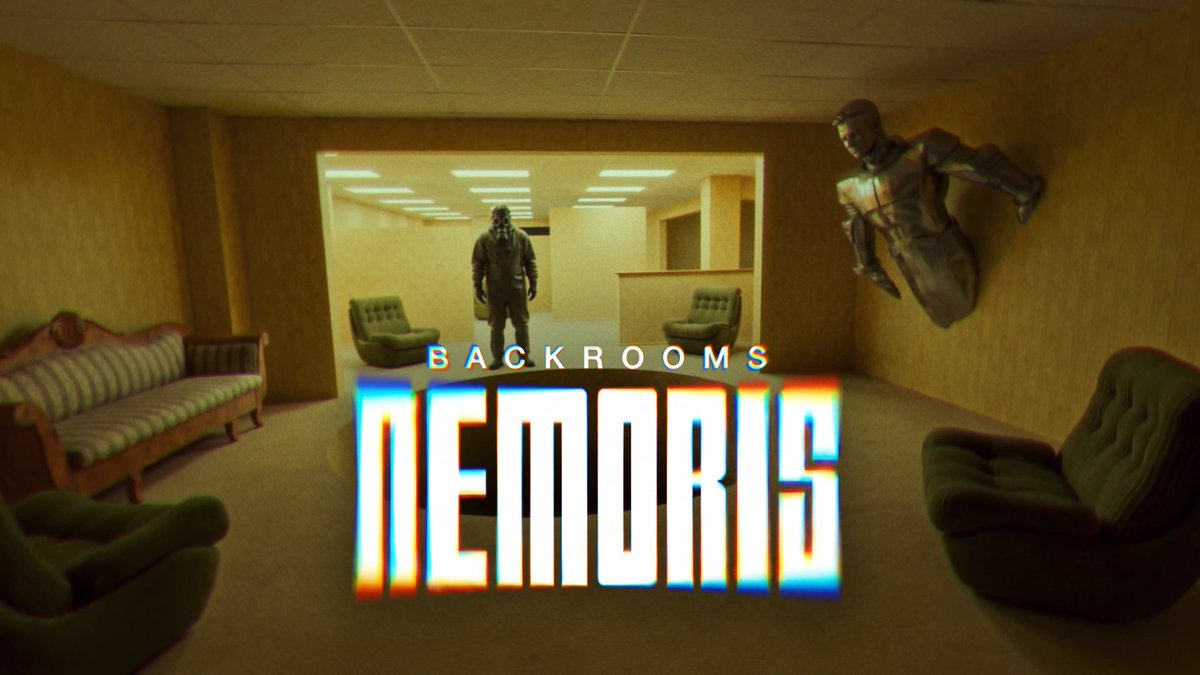
Backrooms Nemoris S1E01: It Eats Light I've spent the last six months working in secret on this pilot episode for a new Backrooms canon. We premiered this week in Toronto and a it's now available on all platforms: a new Magnific Originals series! This is quite possibly the most complex project I've ever taken on in my life. Yep, even if that sounds like an exaggeration, it took even more effort than building the first version of Magnific Upscaler. I had never before tried to bring such a concrete, specific vision to the screen while pushing the current state of the art as far as possible. Every scene you see in this episode, every object, every movement of a character's hands, every space, every hum of the fluorescent lights... it's all there for a very specific reason, with absolute control and intention on my part. I never imagined that something that looks so simple on the surface could be so incredibly complicated. The script is my own, based on the original Backrooms concept (the iconic 4chan image) but developed to create an entirely new canon from scratch. In this first episode, I reveal barely more around 5% of the overall puzzle, so you may end up thinking: what the f*ck did I just watch? Or you may need multiple viewings to pick up on some extra clues, because several of them are genuinely hidden. The idea is to create a full 10 episode series, an anthology, and have you, the viewers, gradually piece together the puzzle yourselves as the clues are revealed. Beyond the video and image generations, I did all of the editing in DaVinci Resolve, with particular attention to the sound. I'd say around 60% of the time I spent on this project went into sound. In some scenes, there are more than 13 stereo tracks layered at the same time, using sounds I recorded myself or created and edited from generations and foley libraries. Every sound, every voice, and every gasp is designed to pull you into the world of the story and make you feel like you're actually there. That meant spending an enormous amount of time on sound design, thinking about things like the individual position of each sound in space, EQ, reverb to simulate different environments, the sense of immersion, etc. I've never learned so much about something so quickly. As for the generations, a few numbers: • 12 hours of total generated video for 17 minutes of final footage 🤯 • More than 7,000 generations in total. • An average of around 60 generations for every 15 seconds of final footage. • 6 months of work, including many weekends, with just one person behind the whole thing... I almost lost my mind. • Platform: Magnific, of course. Models: mainly Seedance 2.0 and 2.5 for video generations, and Nano Banana Pro and Seedream 5 for image references. • Approximately $20,000 in total token costs, not including the value of my own time. For the next episodes, I can't do this alone again or I'll go crazy. My plan is to put together a small team: voice actors, a colorist, 3D VFX artists, a sound designer, and, in general, people from the traditional film industry who can help us professionalize our pipeline and take this story to another level. If you're reading this and you think you might be interested, please leave a comment. Ah! If you have any technical questions about how this was made, I'd be happy to answer them. Feel free to ask me anything you like! Anyway, I'll leave you with the episode. For the love of everything holy: please watch it at home, relaxed, on a big screen, with a good sound system or a quality pair of headphones, the lights off, and some popcorn. And most importantly, enjoy. Nemus te reddat!

Javi Lopez ⛩️

1,423,246 просмотров • 13 дней назад

5 years ago, I created a fundraiser on Donate-NG to buy a laptop. I had just been admitted to the university to study Computer Science. But I didn't own a laptop. That was a very big setback for me. The Job I had then was paying 500 Naira per 1000 Word article I wrote. At the time, I was studying with a Tecno Y6 that had passed from my older sister to my older brother, then to me. (A generational phone 😅) I kept asking myself: How was I supposed to survive the department like this? To make things worse, my dad was battling prostate cancer. Asking for money wasn’t even an option. So on October 7th, 2020, in the heat of COVID, I did the only thing I thought I could do. I made this YouTube video begging good Nigerians to help me raise money for a laptop. That video is still online and yes… It’s embarrassing now 😅 Nobody watched it, and Not a single naira was raised. ----- That moment could have broken me. But instead, something clicked. I realized no one was coming to save me. So I decided to take control of my life. That same October; • I got my first Web3 gig as a community engager • The pay was ₦6,000 per month • It wasn’t much, but it was hope Then in December 2020, everything changed. • A VC paid me $500 to engage across the projects they invested in. For the first time in my life, I had real money in my hands. I withdrew ₦160,000, and I bought my first laptop. My First Laptop: That laptop is still with me today. I keep it with me as a reminder of my sheer grit and hustle. From that moment on, everything began to compound. I went on to work with and contribute to multiple Web3 and tech projects, building communities, onboarding users, managing growth, running programs, and shipping real impact across Africa. I grew from: • A student with no laptop • To help hundreds of people get jobs through my academy - The Void Academy (Many students from there are now earning working remotely) • To onboard tens of thousands of users across Africa • To manage ambassadors, communities, and growth teams Today: • I work as a User Acquisition & Marketing Manager earning a six-figure salary (₦) • I earn 6 figures (₦) bi-weekly from X creator payouts • I can afford any laptop I want • I use a phone I could only dream of back then And today… I’m officially launching the waitlist for my first product as a founder. ----- A Phone and A Dream (A Phone and A Dream | Waitlist Live) This product is deeply personal. Because I’ve lived this story. I know that talent is everywhere, but opportunity is not, and getting opportunities today starts with access to basic tools. A Phone and A Dream exists to change that. ----- So, what exactly is A Phone and A Dream? A Phone and A Dream is a social-impact platform that connects device donors with people who lack access to basic tech tools: students, builders, creators, and professionals, using the Avalanche🔺 blockchain to make every donation transparent, traceable, and impactful. We believe access to the right device can be the difference between potential and progress. I'm living proof of that, so are many of you reading this right now. This isn’t just about giving devices. It’s about unlocking opportunity. Devices that can be donated include: 1. Phones: Smartphones of all brands (Android & iOS) 2: Laptops: Windows laptops 3. MacBooks: ThinkPads and similar work machines 4. Tablets: iPads, Android tablets 5. Desktop PCs: Complete desktop setups 6. Monitors & Peripherals: Monitors/displays, Keyboards, Mice 7. External Storage: HDDs, SSDs, USB drives 8. Creator Tools: Ring lights, Microphones, Webcams, Tripods And this is important, Devices don’t have to be brand new. We accept: - New Devices - Used but functional devices - Devices that need refurbishing If it can be repaired, upgraded, or repurposed, it can still change a life. Many tech bros/girls buy a new device yearly; the old device you no longer use could be someone else’s first opportunity. ----- Benefits to You as a donor: You don’t just donate and hope for the best. You can: • Track every device donated • See where it goes • And you can follow the recipient milestones to keep updated with how they've effectively used the device (No more donations without accountability.) • You get to know the real impact of your generosity We’ve seen incredible people like I D R I S, Sir Dickson, SUPREMOS 🤍🐘, Ayilola of Nigeria /Laptop Guy 🩺 🇳🇬 🇬🇧🇺🇸, King.sol 🇶🇦 (with Rainbow's Adolf),Xeusthegreat (♟,♟), WILSON, C W E , Farmercist - TOKEN2049 🇸🇬👨‍🌾, just to name a few donate devices to people. The Laptop Guy (Ayilola of Nigeria /Laptop Guy 🩺 🇳🇬 🇬🇧🇺🇸) has been trying to help millions of Nigerians with devices. But one major challenge has always been tracking, reporting, and accountability on both end including the recipients, so he can tell the extent of his impact. That’s exactly what A Phone and A Dream solves. If you come onboard as a Donor on A Phone and A Dream | Waitlist Live, you get to see: • Where their device went • Who received it • What it enabled ----- Benefits to You as a recipient: You're not getting charity, you're receiving opportunity, access to tools that unlock learning, work, income, and dignity. So you don't pass through what I did. • You get a device after being approved • You get to participate in bounties, tasks, and hackathons on the platform to earn funds • You get a portfolio dashboard that you can consistently update your milestones and be accountable to your donor. ----- Lastly, we’re currently participating in the Avalanche Build Games Hackathon. This is me asking for your help, don't fade me again 😩. If you know: • Someone who can donate a device (new or refurbished) • Someone who can amplify this mission • Share the website with them • Also help me like, repost, quote, and share this post Please tag them in the comments, tag accounts that can help amplify this mission, and let the world see. Part of the rewards if we get selected and go on to win the hackathon will be used to fund new devices to go live on the platform. (Help us make this happen.) If you’re a recipient, you can visit our website (Website is in my bio and also in the comment) and join the waitlist. ⚠️ Important: The first batch of devices priority will go to users on the waitlist, our Day 1 champs. A Phone and A Dream is here to change lives by giving you access. You can help this mission by: • Tagging potential donors • Tagging amplifiers and your friends • Sharing our website • Encouraging people to join the waitlist Five years ago, I begged for a laptop. Today, I’m building a system so others don’t have to beg. ♥ The website is on my bio and in the comment, also see it on A Phone and A Dream | Waitlist Live's bio.

BIG JO | A Phone and A Dream 2026 📱 🐐

29,010 просмотров • 7 месяцев назад

12 hours ago I made the decision to fly out to El Salvador to be the first ever to make an AI generated short film for a country. I’m now 4 hours away from arriving there. (Talk about executing fast) I will take my time writing this message because the reason why has layers. A few months ago I founded ARQ and bootstrapped a platform that lets anyone create high-quality AI productions from start to finish. the best models a multi-agent creative assistant a built-in video editor All in one place. Alongside the product, I’ve built a strong community where I livestream daily, teaching creators how to use AI to tell better stories and get paid for their work. Shortly after we got dozens of offers to make commercials for companies. This was fun, until we came to the conclusion that we were wasting a lot of potential by focussing on companies, while we could also tell the story of nations, movements, communities and narratives that the world needs to hear. So we’re starting with El Salvador. Why? Because Nayib Bukele is one of the most inspiring leaders in the world, not only embracing, but embodying change, turning the country from one of the most dangerous places on earth, to one of the safest and innovation friendly nations. Humanity is experiencing a shift. New technology, new philosophies, new artists, new story tellers, new builders. A new world. So the argument is not AI vs. Non AI. The argument is: Soul Vs. Soulless Pro Human vs. Anti Human Building Vs. Gambling Effort Vs. Effortless This is what ARQ stands for. Not just a SaaS but a safe haven for the soul. It feels like my moral responsibility to speak not only for the AI community but for every human creator. So I decided to do something that requires so much effort and human involvement; no one can deny that AI serves only as a tool in the process. Instead of making 100 commercials for companies, I want to prove what 2 young humans can do with balls and the tools available today. “You can just do things” Yesterday evening me and Ya-Sirr D left our comfortable office in Dubai and are now on our way to El Salvador. The goal: to create a 3-5 Minute AI powered short film telling THEIR story. We will spend every day live streaming, showcasing the process of creating the video while pushing the boundaries of every tool available on the market. Think Google DeepMind , Hailuo AI (MiniMax), Kling AI, Reve, Midjourney, xAI All through ARQ. Who knows who we inspire? Who knows who we meet? We might as well end up meeting the president himself. We want to get to know the country, its people and imagine its future. We want to visit innovative projects in El Salvador, hear the stories of it’s citizens and include them in the video: MURPHSLIFE Stacy Herbert 🇸🇻🚀 @BuildSalvador The Bitcoin Office Bitcoin Beach Anyone who can help us tell the story. Not just any story, one of the most inspiring stories of the past 10 years. Like I said. You can just do things. We have to stop thinking in steps. I know where I will be in 30 days if I stay in the office. More followers. More beta testers. More live streams. More revenue. But by taking this leap of faith. We can be a case study. An inspiration. An ARQ. I remove expectations and increase chances of special things happening. If anyone in El Salvador has any recommendations on who and what places I should visit, send me a DM. We will post updates on X and create an entire “vlog/documentary” for youtube. Join the discord for daily live streams and lessons on how to improve your creation skills. We expect that it will take 7-9 days to finish the entire short film. It will be posted on all social platforms. ARQ. A safe haven for the soul.

Amir D

54,566 просмотров • 10 месяцев назад

👪👪👪PI NETWORK NEWS: A WARNING TO THE PI NETWORK PIONEERS: FOCUS ON PI, DO NOT FOLLOW OTHER PROJECTS Dear Pi Network Pioneers and Community Leaders, Over the past nearly 5 years of mining Pi, we have witnessed the growth and unwavering commitment from the Pi Network community. However, I have noticed a concerning issue: many community groups are directing participants towards other projects with promises of quick profits through coins with small values. This could lead to distraction and undermine the collective goal of Pi Network and the sustainable development of the project. I want to caution all of you, especially those managing community groups with large followings. You have a significant influence on the community, and therefore, we must take responsibility for guiding everyone toward the right goals. Pi Network is not a short-term project; it is a project that brings long-term and sustainable value to all of us. Pi is our future, and we must focus on developing it. 🎯🎯🎯Why should we focus on Pi Network?🎯🎯🎯 🎯1. GCV (Global Consensus Value): One of the main objectives of Pi is to establish a stable global consensus value, with 1 Pi = 314,159 USD. This is a grand vision, and to achieve it, we need to focus on building a robust Pi ecosystem, educating the community about Pi’s value, and encouraging Pi’s use in commercial transactions. 🎯🎯2. Supporting the growth of the Pi Ecosystem: We cannot just focus on mining Pi without paying attention to building and developing the ecosystem around it. Inviting businesses to accept Pi as a payment method, helping them understand and use Pi, is a crucial task that every Pioneer can contribute to. 🎯🎯🎯3. Sustainable and long-term value: Other projects may entice you with promises of quick profits, but these coins will not provide you with sustainable value. Remember, Pi Network has been and is building a solid foundation for the future. If we persist, Pi will succeed, and when it does, we will all enjoy great rewards. ⚠️⚠️⚠️A Warning about Other Projects You may have noticed that some people have been lured into other projects, hoping to make quick profits from coins with low values. But be cautious! These projects may only be short-term ventures, lacking stability, and failing to offer real value in the long run. If you are an influential figure with a large following, you must be careful in guiding your community. Don’t let the tempting offers from other projects distract you from Pi’s bigger goals. Remember, Pi’s success will be our success. 🔥🔥🔥Focus on Pi – We Will Have Everything🔥🔥🔥 If you want to succeed, focus on Pi. This is the project that will change the future, and Pi is our "home" in the future. We cannot lose faith in Pi because it is the only path that will lead us to long-term success and prosperity. Let’s educate the community about Pi, spread Pi’s value to everyone, introduce Pi to merchants, and help them accept Pi as a payment method. We can build a strong ecosystem around Pi, where Pi is not just a cryptocurrency but the foundation of a new, sustainable economy. We must unite and not let external factors distract us. Remember, if Pi succeeds, we all will reap the rewards. Let’s focus on Pi, not follow other projects. Pi will succeed – and you will have everything! Sincerely, JoJo💫 👪👪👪 --------------------------------------- 🥰P.S.: The global GCV team always welcomes your support and participation in our community activities. Join us to learn more about the value of GCV in the Pi Network. The GCV home is very happy to welcome you. For the future of our Pi Network, let's support each other enthusiastically! 🥰🪷 Join the group on Telegram here: --------------------------------------- 👉Please Like, Share, Comment, for more information and let Pi spread quickly! Thank you! Pi Network #PiNetwork Doris Yin 东方紫莲🪷 Lumari 🦋 NONNY PADJA NTT ❤ Eagle woman 🦅 @MoretopMovie M.Rad Olivier Ndatimana PATRICK CHUA 婧恬 LiangShi π MAYASS ALI KIAVASH brave Lee @1Pi_usd314159 Olivier Ndatimana Marcel Dango Mazi victor onyido Cherif A.I Herine Makosewe love life 2025 Mohammed Alademi Daniel Chen

JoJo-π

26,151 просмотров • 1 год назад

The Idea of NHI on Earth. ⬇️⬇️⬇️ 🔥"The gravity of it goes up a whole lot if it goes from the theoretical to the verified." ~Dr. Phil 🔥 "There have been people that have reported being abducted over the years. What's the intent behind that? Is it medical? Is it more nefarious?" ~BZ to Dr. Phil (I'm so glad Bryce went there.) "There will be people...who likely are going to need some some assistance to help deal with this because it is so far-reaching and for some people, potentially, very frightening." ~Mellon ~ Dr. Phil: "We know in the last 80 years there have been no overt hostile acts that we know about. That doesn't mean there could be things happening that are attributable to these forces that we don't know about. But, we certainly don't have any attacks that we can attribute to these UAPs or whatever." (Well, there's Colares in 1977. If that was non-human in nature, I'd say that qualifies as overt. And the Thomas Mantell incident in 1948 where he crashed and died after pursuing a UFO. Was that overt? Unfortunately, we don't know what happened and probably never will.) Dr. Phil: "And if the best predictor of future behavior is past behavior, I think people can take some comfort in knowing that if they were gonna melt us with a ray gun or something of that nature, they've had ample opportunity to do that. "They may have been here 1000 years before we were here. Who knows what the situation is? But we do know that as long as we've been monitoring this and tracking it, there have been no overt hostile acts and I think people can take some comfort in that, and should." (See the work of Peter Levenda for a deeper look at that. "They might have been attacking us for centuries already, in ways that make sense to them... What if they are attacking us through the manipulation of consciousness? ~Peter Levenda More... ⬇️⬇️⬇️ ~ (I'm glad Bryce pushed back a bit.) Bryce Zabel: "They should. The only thing I would say is, if we're dealing with a non-human intelligence - or an NHI, as we like to say now - we'd have to assume that they think differently than us. So even in our own world, in the United States, we tend to think in four-year terms because of presidential terms, right? So you can't get something off the ground if it can't get done right away. The Chinese may think in 100-year terms when they think about Taiwan or whatever. "It's possible there are alien or non-human intelligences that think in a different time frame. If their time frame was 1000 years, then they could just be getting started. "And on the topic of the nuclear issue, which I share concern of. I mean, I think the nuclear issue means it is at least a national-security issue of some kind. Now, I've heard people talk about this, Dr. Phil, two different ways. Some people say, 'Well, you know, they're looking at our nuclear capabilities because they want to protect us from ourselves.' "Okay, that's great, I hope that's true. But the other would be: what do you do before you actually go to war with anybody, is you do reconnaissance. You try to find out what the other guy has. What are their assets? What are their capabilities?" (That may freak out some people but all angles should be considered.) Zabel: "So, I think the problem that we need to overcome in this country is getting to a place where we understand this phenomenon that we're encountering enough that we can at least start to figure out intent. What is the intent? "There have been people that have reported being abducted over the years. What's the intent behind that? Is it medical? Is it more nefarious? What is it? And so, we got a lot of work to do, and I think that's why I am so supportive of your current efforts because you're, basically, saying, 'Let's get started, people. Let's really take this seriously. Let's quit fooling around and stigmatizing people that want to take it seriously, and let's get to work.' But let's get to work as a human race. Let's start sharing what we know and let's make progress. That's where I'm coming from, too." (Bringing up abductions is important because it IS part of this discussion and it shouldn't be avoided. Kudos to Bryce!) Dr. Phil: "I saw a study that said 71% of Americans believe that there are aliens that have been or are in our earthly space. And it's interesting...I read that in one context, it said, 'Look, this is not going to be such a big deal if this gets verified.' "You know, there's one thing to say that in the abstract, like, 'Yeah, I think yeah probably there are.' It's a whole other different situation if you turn around and see somebody standing there. The gravity of it goes up a whole lot if it goes from the theoretical to the verified. (100%. That's my favorite part of the interview and it's so true.) Dr. Phil: "And I hope that we are going to put enough context around this, particularly knowing that there are segments of our population that are very vulnerable. There are some elderly folks that aren't up on technology and might be overwhelmed by the reality of this. "We have certain populations that might be easily disoriented or destabilized in the mental emotional fringes of the population. And I worry about those that are easily exploitable. You know, you need to get out of the urban areas, buy our buried school bus in the mountains, and you'll be safe forever. You know the con artists and the scammers are going to find every opportunity to prey upon those that are concerned and worried about this. "And I think we need to be prepared to take care of those that might be destabilized by this information that's coming out right now, we can't pretend they aren't there. We've made those mistakes in the past, like during COVID, for example. There are those that are more impacted than others, and we need to be prepared to handle that." Christopher K. Mellon: "We, recently, commissioned a study by a group of six psychologists, PhD psychologists, on this topic of how the public would receive this information. And it was generally very encouraging. And what they found was that the great bulk of the population, as they have in the past with other epical changes such as the Copernican principle, or evolution, or general relativity, it takes people a while to process this information. There's a period of resistance. But most people will get up, get out of bed, go to work the next day. They're not devastated, even though there's nothing quite comparable to this, perhaps." (There's no perhaps. A government or respected figure admitting that we're not alone on this planet would be unprecedented and there is NOTHING we can compare it to.) Mellon: "What the study did find is that there is likely, however, to be a subset of people, maybe 15% of the population, that are going to need some help. And that we are not necessarily prepared in our present state to provide that kind of assistance, and we need to be doing more to get ready for that." (If he's talking world population, that's about 1.2 BILLION people who are going to need some help dealing with this. Holy crap. 😬) Mellon: "And also, to work on the messaging. The messaging is so important, clear and consistent messaging from the government, trying to develop trust with the American people so that the information is is accepted and acted on." (For me, I want the whole truth more than the right "message.") Mellon: "A lot of the difference will be people who can't get their head around it, even though they really understand it. But because of their own belief structure, the architecture of their own belief structure, for some reason, in their particular individual case, it's particularly threatening or disruptive. "So there will be people who fall into that category, according to this study, who likely are going to need some some assistance to help deal with this because it is so far-reaching and for some people, potentially, very frightening."

Joe Murgia

31,404 просмотров • 2 месяцев назад

Carol Vorderman in conversation with James O'Brein over Reform UK's Makerfield by-election candidate Robert Kenyon's insulting remarks JOB, "Carol Vorderman has asked Robert Kenyon, a Reform UK's candidate in the imminent Makerfield by election, for an apology, for posts on a now deleted X account in which he, Well, you'll find out, if you don't know already, she said, I want an apology from Rob Kenyon to me and to all the other people he's abused online." JOB, "I sat down with Carol yesterday afternoon to talk about this and, one or two other things. It occurred to me, just sitting down now, Carol, that this is not something you, you sought because you haven't been in any sense reticent in recent years with your political opinions and even with activism, but you've been dragged into this deeply unpleasant situation entirely innocently." JOB, "So unpleasant, in fact, that I'm not sure I can repeat, I'm not sure I'm comfortable saying in front of you the words that Robert Kenyon chose to endorse and defend on, social media." CV, "Well, I am, because it's important that people know. And this is just one comment. He has made multiple comments which are online abuse about me and lots of other people. So the one specifically about me that he endorsed was I want to smell and lick Carol Vorderman's eight letter word beginning with A." CV, "And reform have said, oh, it's just locker room banter. I don't know why they're using the term locker room, by the way, because I thought we said changing rooms in this country. But that's an entirely different, different, question. But the thing is, James, I'm not upset by it, I am angered by it." CV, "And the reason that I'm angered by it is because every woman listening, any woman who is on social media will have similar said to her, either abusive, all the other things that he said. You know, there was some forum that he was on, rugby, league forum, and they were posting pictures of the girls, the women who play." CV, "And then he was saying, oh, English women, they don't care. All they want to do with their fat bellies, et cetera, et cetera, et cetera. Then there was some, European women. Then he was saying, you know, oh, you wouldn't get me off them with a bazooka." CV, "You know, all this stuff, stuff about abortion. I mean, it's just disgusting stuff. And it's not just one comment, it's a tirade of online abuse. And every woman listening who has had that will know how it makes them feel." CV, "And so I am angry that a political party can take this person on one without obviously vetting him properly. But also that they just defend it and they're fine with that." JOB, "He was not a politician at the time. He was an ordinary man from an ordinary place, said Danny Craig group." CV, "Really? That's what. Yeah, that's what posh boys, who lead the Reform Party think, of ordinary men. Well, ordinary men generally are lovely, you know, they really are." JOB, "We do our best." CV, "Well, you are. And they respect women. All of that is true. But you have this growing minority who are extremely abusive. And I'm 65, James. And so I've been, you know, and women my age, we've been through the hard years." CV, "So in the 70s, you know, I was a bright kid from a comp in North Wales. Free school meals kid. And it took, you know, a lot to get to a Cambridge college because there were only, three girls colleges." CV, "And I think four or five had gone what they called mixed. So these are boys colleges taking on women's colleges. And it was like, why wouldn't you? You know, I was from a boys and girls comp, but we had to go through that." CV, "You had to be the first woman to do this. First woman from a state school. Northwest goes Cambridge first. You know, I was, I think, when I did engineering, There were about 300 students in our year, four or five of them were girls. I worked underground, me and 2,000 men, all this." CV, "So we have done the hard years over decades, all that. I wanted to be a fighter pilot. You can't, because you're a girl and you don't have the appendage that's required. You know, all of this nonsense that we had to put up with. So, for me, that this Reform Party is saying on day one, they would repeal the Equality act." CV, "And we all know what that means. So, you know, the protections against harassment of women in the workplace, the, equal pay, maternity leave, maternity pay, all of those. We're going to scrap all those. So it is indicative of the way in which this might go, as we've seen in America." JOB, "I think talking of ordinary men, the person who pushed back against him on social media was. It was a rather better model of masculinity." CV, "Yes, absolutely. So he's the author, Chris Ryan, who is a former SAS hero, a very successful author. Chris is his pen name. And, he absolutely defended me because he is a real man." CV, "He's not a pretend. He's a real guy and a guy who respects women." JOB, "I suppose, in some sense, the writing was on the wall with the leadership of reform who have not responded by the way, to, our, requests a, response to these allegations of misogyny, including the comments directed at you." JOB, "But when James McMurdoch Ended up in Parliament just after the last election, and, it quickly emerged that he'd been jailed for attacking a former girlfriend." CV, "Yes. And here is another example, a very serious example of, to me, reforms, excuses for things. So I think it was a Times newspaper fact he only got in with a majority of 98." CV, "So imagine if this information had been available beforehand about him. So, shortly after he was elected in 2024 as a Reform MP, I think it was a Times newspaper, found that he had been convicted and served time for, assaulting his girlfriend." CV, "He then said in his defense, oh, it was a push. Then the official court documents show that she was on the floor. He was kicking her multiple times while she was on the floor and had to be, dragged away by two security guards." CV, "Very different stories. Richard Tice then defends it, saying, oh, well, he's served his time. That was a long time ago. It doesn't matter. I am sorry. It matters. It matters to women. We know how much harassment online has increased and offline." CV, "So this is a time for all women to stand up and say, enough now, we are not going backwards." JOB, "I suppose one example is. It could be chalked up as accidental or carelessness. But two examples and emerging patterns speak of something altogether more sinister." CV, "Yes, well, Lee Anderson, bless him, when he was a Tory. That was after he was a Labour." JOB, "Yes." CV, "And now he's a Reform." JOB, "Correct. Well, at the time of this conversation, we'll have to check before we play it" CV, "out on the program tomorrow. Yeah, so he was, in the Conservative Party at the time and he was slinging insults to me all the time on Twitter in, the days when we used to be on Twitter. And, you know, obviously now he's reformed, he thinks it's perfectly acceptable." CV, "So there is a pattern there with this party. And, that is my concern that they will, if they get into, and they've stated it out in the open, we will repeal the Equality Act." JOB, "It's surprising to me when people like Danny Kruger talk about ordinary people. An ordinary man for an ordinary man." CV, "When he went to Eton." JOB, "Yeah. And, well, also his mother is on telly as well, so, you know, he or she at, at least will be aware of the misogyny that police. Yeah, yeah. You think that that might have given him a slightly more sensitive insight into what it's like for women like you. And, and you are tough. I mean, I don't mean that in a patronizing way." CV, "I take it as a compliment." JOB, "Good, I'm glad you do because you are perfectly capable of looking after yourself. A lot of women, both online and offline, are not, of course, and those are the kind of women that, misogynistic men prey on." CV, "But the thing is, I, I have a tough skin now because of all of the abuse over decades. And it. You know, I can remember when I wore a short skirt to the BAFTAs. I was age 39. Well, it was like I'd killed my grandmother the next day." CV, "It was the quest. Even the BBC made a whole Kilroy show about it. Flew this dress in copy dress from Paris. And, the question was, should a woman age 39 wear a dress above the knee? Jeez, I mean, that's my lifetime. This isn't Victorian days or my mother or post war." CV, "This is me in my lifetime. So, you know, as I go back to the beginning, women my age who love the fact that our daughters or nieces, or grandchildren have, can play football, you know, very happily can be applauded for what they do in sport." CV, "Can be. Oh, another thing that I'll, Kenyon said was that women can't referee, drive, take directions. And he had a go at various female sports presenters on the telly. You know, it's constant, it's consistent." JOB, "So they're not, they're not up to the job. They're only there to tick a box. And then declaring and From a political point of view, this is interesting actually stating I'm sexist. Sorry, but I am." CV, "Yeah." JOB, "And then the defense from reform UK becomes. These comments were made before he entered politics. He's perfectly entitled to his own personal opinions." CV, "That was three weeks ago." JOB, "Yeah, yeah. It's extraordinary that he can state that because Murdoch didn't get dropped by the party for the conviction for battering his ex, he got dropped after it emerged that he'd taken Covid loans out under the COVID support scheme. I think that's still ongoing." JOB, "But to state I am sexist, sorry, but I am in 2024 would have probably been a career ending revelation. Do you think? We're going a bit backwards, But I think we" CV, "have the potential to go backwards and we now, you know, generally you go, life's good. You know, doing this, that and the other. When I began my career as an engineer, funnily enough, not many women then were talking about having a career because not Many women have been to university and all of that." CV, "Now, thankfully, decades later, women are having careers. But also, housing was a lot cheaper then. So now we need to. You need, two incomes to fund a mortgage generally in this country." CV, "So the whole business of, oh, well, we're going to scrap the law that says about equal pay. That's going to affect people directly. And this is what I want people to understand, really. This is. This is not just about a woman getting on a high horse about something." CV, "This is very, very, very. Couldn't be more serious." JOB, "And, yeah, it is, of course, people like Nigel Farage and Sarah Potchin who claim that they're the party dedicated to protecting women and children. I mean, it's beyond irony. It emerged yesterday that one in five of the people arrested over the riots in 2024, which many people feel were fermented by Nigel Farage's social media activ." JOB, "Five of the people arrested over those riots have since been reported to the police for domestic abuse. So to simultaneously encourage and excuse the misogyny that's been directed at you and at other women while claiming. And, of course, to put a violent offender into Parliament and say that that's not an excluding offense while simultaneously claiming that they act for women and children is, It's beyond parody, isn't it?" CV, "And those same people who were arrested, there were almost 900 of them, weren't there? About the riots across the country at the time, 41% had already, been reported to the police for domestic abuse." JOB, "So who are the women and children they're dedicated to protecting?" CV, "Well, quite." JOB, "And who are they protecting them from?" CV, "None." JOB, "It's good to see you. I knew that you would be, perturbed by this, but." CV, "I am." JOB, "But enraged?" CV, "Yes, I am." JOB, "And are you expecting an apology? I know you've demanded." CV, "Well, I can't." JOB, "You did not demand anything." CV, "I can't demand anything. I have asked for an apology. Not for me." JOB, "No." CV, "But for all of us. And for his comments so far. I just think we're on day three. Nothing." JOB, "Not even a whisper nothing or a nothing." CV, "He's still running away. Hiding away from cameras, maybe." JOB, "Don't hold your breath, Carol. Thank you." CV, "Thanks, James." JOB, "Still waiting. I hope she didn't hold her breath. We got a statement from Reform Councillor Kenyon, made these comments before entering politics. We are confident that he is an excellent candidate who will be a superb local MP for Makerfield. And a full list of all the candidates running there can be found at lbc co uk"

Farrukh

24,754 просмотров • 4 месяцев назад

Someone stood on a piece of land, looked at a living, breathing dog who had done nothing but exist, and said: "Just shoot him dead." Not "get rid of him." Not "take him to a shelter." Not even "I don't want him anymore." Shoot him dead. I want you to sit with that sentence for a second before you keep scrolling, because everything that comes after it only makes sense once you understand how casually those five words get said in this world. Somewhere, right now, someone is saying a version of that sentence about a living thing that trusted them, or wanted to, or was still learning how. Most of the time nobody films it. Most of the time there's no ending. There's just a decision, made in under a second, by someone who will forget they ever made it. This time, someone didn't listen. This is the part where I'm supposed to tell you what happens next. I'm not going to. Not because I'm holding it hostage for engagement — okay, maybe a little — but mostly because the story doesn't work if I hand it to you pre-chewed. You need to watch a dog decide, in real time, whether the human species is worth the risk. You need to watch that calculation happen behind a pair of eyes that have every reason to say no. That's not something I can describe to you in a tweet. That's something you have to sit through. But I can tell you what it's about. It's about the gap. The invisible, unmeasurable gap between a dog who has been failed by people and a dog who has decided to try again anyway. Nobody talks about that gap. We talk about rescues like they're a single moment — the dramatic snatch, the shelter cage, the "and then everything was fine" — but that's not how trust works, and it's definitely not how fear works. Fear doesn't leave because you fed it once. Fear moves out slowly, one inch at a time, and it takes its shoes off at the door so you don't hear it coming back. PART ONE: THE VERDICT Here's what almost nobody says out loud: dogs get sentenced constantly, by people who will never be held accountable for the sentence. Too old. Too much energy. Too expensive. Doesn't match the new couch. Growled once at a toddler who was pulling its ears. In goes the verdict, out goes the dog — sometimes to a shelter, sometimes to a shed, sometimes to the side of a highway at 60 miles an hour with the door still swinging shut. And sometimes, if the owner is lazy enough and cruel enough at the same time, the sentence is the one you already read. Just shoot him dead. Nobody ever asks the dog's side. Obviously. He can't testify. He can't explain that he was scared of the vacuum, or that he barked at 2am because something moved in the yard, or that he never asked to be born into a house that saw him as a liability the second he became inconvenient. All he can do is react to what happens to him. And what happened to this one was a verdict that most animals never survive to tell. Except — spoiler-adjacent, not a spoiler — he did survive. That's the only thing I'll give you for free. He survived the verdict. What he did with the rest of the sentence, what it cost him to survive it, what he had to unlearn about people before he could stand near one without flinching — that's the part you're going to want your full attention for. PART TWO: THE DISTANCE THAT NOBODY MEASURES There's a very specific kind of animal behavior that people who haven't lived it will never fully understand: the dog who wants to come closer and physically cannot make his legs do it. You've maybe seen a version of it — the shelter dog pressed against the back wall of the kennel, the street dog who follows you for six blocks but won't take food from your hand, the "feral" label slapped onto an animal who is, underneath the label, simply doing math. Every approach is a risk assessment. Every human hand is a variable that could be gentle or could be the last thing he ever feels. You don't get to skip that math just because your intentions are good. The dog doesn't know your intentions. He only knows what hands have done before. So he keeps his distance. Not because he's unfriendly — dogs who've been failed are very often the most desperate to be loved, which is its own kind of tragic irony — but because distance is the only insurance policy he has left. He'll circle. He'll watch. He'll get close enough to almost, almost, and then something — a sound, a movement, a memory with no name attached to it — will send him back to the treeline, and you'll be left standing there wondering what you did wrong, when the honest answer is: nothing. It's not about you. It's about every hand that came before yours. This is the part of the story where most people give up. Not because they don't care, but because patience like that isn't natural. It goes against every instinct you have, watching a scared animal and wanting to just fix it today, right now, with one good meal and a soft voice. It doesn't work that way. It was never going to work that way. And the fact that someone didn't give up on this particular dog — that they let the timeline be the dog's timeline instead of their own — is the actual plot of the video you're about to watch. Not the reunion. The waiting. PART THREE: WHAT NOBODY TELLS YOU ABOUT REBUILDING TRUST You can't apologize your way into an animal's trust. You can't explain to a dog that you're not like the last person, that this time is different, that you promise. Words mean nothing to an animal whose entire understanding of humans has been written in actions. The only currency that works is repetition — showing up the same way, at the same pace, without asking for anything back, for so long that the dog's nervous system slowly, grudgingly, starts to recalibrate what a human standing nearby actually means. That recalibration has a cost, and the cost is time you don't get to see the value of until it's already paid. Every single day where nothing visibly changes is still doing something. The dog is watching. Filing data. Building, molecule by molecule, a case for why this particular human might be the exception. You don't get updates on that internal process. You just keep showing up and hope the math eventually tips in your favor. And when it does tip — when there's a first moment of contact, a first inch of distance closed that will never open back up the same way again — it doesn't look like a movie. It's not slow motion. It's not a soundtrack swelling. It's small, and quiet, and if you weren't paying close attention you'd almost miss it. Which is exactly why you need to actually watch this one instead of scrolling past assuming you already know how it goes. You don't. Nobody's story of rebuilding trust looks the same, and this one has a shape you haven't seen before. PART FOUR: THE CASUAL CRUELTY OF "JUST GET RID OF IT" Let's go back to that sentence, because I don't think we're done with it. Just shoot him dead. Think about what has to happen in a person's head for those words to come out that easily. It's not usually rage. Rage burns hot and fast and then it's gone. This is colder than that. This is the language of someone who has stopped seeing a living creature as a living creature and started seeing him as an inconvenience with a heartbeat — a problem to be solved, a line item to be closed, and closing it in the most permanent, least effortful way available. That mindset doesn't come from nowhere. It comes from a culture that has quietly taught a lot of people that animals are disposable the second they stop being convenient. That a dog is a product with a return policy. That love, if it was ever there at all, expires the moment it becomes inconvenient. You see it in the volume of animals abandoned every single year for reasons that amount to "we changed our minds." You see it in how easily people say "I'll just get another one" like a dog is a phone case. You see it in a sentence like the one that started this whole post — a sentence casual enough that the person saying it probably forgot they said it by the following week. But here's the thing about casual cruelty: it only wins if nobody's watching, and if nobody's willing to do the inconvenient thing instead. The inconvenient thing here wasn't dramatic. It wasn't a rescue montage. It was choosing, day after day, not to be the kind of person who says that sentence. It was choosing patience over convenience, presence over ultimatums, and a scared dog's timeline over anyone else's schedule. That's not a headline. That's just what actually saving something looks like, most of the time — unglamorous, slow, and completely invisible until suddenly it isn't. PART FIVE: THE QUESTION UNDERNEATH THE VIDEO Here's what I actually want you to sit with while you watch this, more than the dog, more than the backstory, more than the sentence that kicked the whole thing off: what would you have done? Not in theory. Not as the version of yourself that definitely would have been patient and kind and consistent for however many months or years it took. I mean actually — if a scared, unwanted animal showed up on your property and kept its distance for weeks, would you have kept showing up? If it took longer than you expected, would your patience have held? If someone told you it wasn't worth the effort, would you have believed them? Most people like to believe they'd be the exception. Most people, if we're honest, would've given up around week three. That's not a judgment — patience like that is genuinely hard, and most of us are stretched thin enough in our own lives without taking on a slow-motion trust rebuild with an animal who might never fully come around. But some people don't give up. Some people treat a scared, unwanted dog like he's worth more time than the person who wanted him dead ever gave him. And when you watch someone do that — really watch it, not skim past it — it recalibrates something in you too. It's hard to explain why watching a stranger be patient with a dog on the internet can hit as hard as it does. But it does. It always does. There's something in us that recognizes the shape of a second chance being handed to someone — something — who was told they didn't deserve one. PART SIX: WHY THIS ISN'T JUST A DOG VIDEO I know how this sounds. "It's just a dog video." I've said that about other videos too, right before they wrecked me completely. But there's a reason stories like this one land differently than the average "look how cute" clip. It's because underneath the surface, this isn't really about a dog. It's about the exact same question that shows up everywhere in human life, just translated into fur and silence and body language instead of words: what do you do with something — someone — who has been told they're not worth saving? Everyone reading this knows a version of that story that isn't about an animal. Maybe it's a person who was written off young and spent years proving the label wrong. Maybe it's a relationship everyone said wasn't worth the work. Maybe it's a version of yourself from a few years ago that a lot of people, maybe even you, had already given up on. The instinct to walk away from something difficult, something that isn't guaranteed to work out, something that might take way longer than feels reasonable — that instinct doesn't care whether the "something" has four legs or two. It shows up everywhere. And every time someone chooses to stay anyway, chooses the slow rebuild over the easy exit, it's worth paying attention to. Not because it's rare. Because it's rare enough that most of us forget it's even an option. PART SEVEN: WATCH IT PROPERLY So here's my actual ask, and it's a small one. Don't watch this with the sound off while you scroll to the next thing. Don't skip to the end because you already think you know how it goes — you don't, and skipping ahead will genuinely cost you the part that makes this different from every other rescue video you've seen this year. Watch the whole thing, start to finish, and pay attention to the parts that feel like nothing is happening. That's not filler. That's the actual story. The part where nothing seems to be happening is the part where everything is happening, quietly, underneath the surface, one cautious step at a time. By the time you get to the end, you'll understand exactly why that opening sentence exists at all — why I needed you to hear it before you saw a single frame. Because without it, this just looks like a dog being sweet. With it, you understand what that sweetness had to survive to exist. You understand what it costs an animal to trust again after someone decided his life wasn't worth the trouble of finding him a home. You understand that every soft moment in this video is standing on top of a decision that almost went the other way, made by someone who chose completely differently than the person before them. There is a version of this story that ends in a hole in the ground, unmarked, unremembered, unfilmed. Nobody would have known. That's the version that happens more often than any of us want to think about. This isn't that version. This is the other one — the rare one, the one that only exists because somebody looked at the same "inconvenient" animal that someone else wanted gone and decided that inconvenient wasn't the same thing as disposable. You're not going to get the details from me. You're going to have to watch it. But I'll tell you this much: by the end, "just shoot him dead" is going to sound less like a sentence someone said about a dog, and a lot more like a sentence that tells you everything you need to know about the person who said it — and absolutely nothing about the dog who proved them wrong. Watch until the very last second. The last few frames are the whole reason this post exists. If this hit you the way it hit me, don't just scroll past it silently. Send it to the one person in your life who still believes some things — some animals, some people — aren't worth the effort of saving. Let them sit with it the way I made you sit with that first sentence. Some verdicts deserve to be overturned in public. PART EIGHT: THE BIOLOGY OF A FLINCH There's a reason a dog like this doesn't just "get over it" the way people want him to. Fear like that isn't a personality trait. It's a nervous system that got rewired by repetition, the same way trust gets built by repetition — except rewiring fear takes a fraction of the time and undoing it takes ten times as long. One bad hand can undo a hundred good ones if it lands at the wrong moment. That's not the dog being dramatic. That's just how threat memory works in every mammal on this planet, humans included. You don't choose to flinch. Your body decides for you, based on evidence it collected before you were old enough to argue with it. So when you watch an animal hesitate at a hand that means no harm, you're not watching stubbornness. You're watching a very reasonable, very intelligent risk calculation running in real time, built entirely out of things that happened to him before anyone in this story ever showed up. The tragedy isn't that he was cautious. The tragedy is that caution was earned, fairly, by people who never had to answer for teaching it to him. What gets me every time I think about stories like this one is how much strength it actually takes to be cautious and still, eventually, choose to try again anyway. We love to talk about bravery like it only looks one way — loud, dramatic, obvious. Nobody talks about the bravery of a scared animal taking one more step toward a species that has already hurt him, on nothing but a hope that this time might be different. That's not the absence of fear. That's fear, fully present, being overridden by something even stronger. If you want to know what real courage looks like, it rarely looks like a superhero. More often it looks exactly like this — small, quiet, four-legged, and completely unaware that anyone's even watching. PART NINE: THE OTHER DOG NOBODY'S TALKING ABOUT There's a supporting character in this story who never asked to be one, and who honestly deserves more credit than he's going to get in the comments section. Every rescue story like this one has a hidden variable that nobody accounts for: the animal who was already there. The one who didn't have to share space, didn't have to share attention, didn't have to be patient with a nervous, unpredictable newcomer showing up on his territory uninvited. He could have made this so much harder. He didn't. And that quiet, uncomplicated generosity — the kind you only get from an animal who has never once calculated whether kindness is worth the risk — is doing more heavy lifting in this story than most people watching will ever notice. It's worth sitting with that for a second, too. Some of the most important characters in any redemption story aren't the ones being redeemed. They're the ones who simply didn't complicate it. Who didn't guard the door. Who treated a stranger's fear as something to be curious about instead of something to be threatened by. If there's a lesson buried in a dog who never asked for one, it might be that one. PART TEN: WHY THE INTERNET IS FULL OF FAKE VERSIONS OF THIS You've probably noticed there's an entire genre of content built around manufactured redemption arcs — staged rescues, dogs that were never actually in danger, timelines compressed into a single afternoon to make the "transformation" hit harder on camera. I'm not going to pretend that genre doesn't exist, because you've almost certainly seen it and been burned by it before, which is exactly why so many people scroll past real stories with the same skepticism they've built up for the fake ones. That skepticism is earned. It's also, in this case, going to work against you if you let it make you scroll past this one too. The difference between the manufactured version and the real one is almost always pacing. The fake version wants to get to the payoff as fast as possible because the payoff is the whole point of making it. The real version drags in places, hesitates in places, spends way too long on moments that don't look like anything is happening — because that's what actually rebuilding trust with a frightened animal looks like when nobody's editing it for maximum dopamine. If a story like this feels slower than you expected, that's not a flaw. That's the tell that it's real. Real trust doesn't hit its mark on a fifteen-second cut. PART ELEVEN: A NOTE FOR ANYONE WHO'S EVER FELT LIKE THE DOG IN THIS STORY I said earlier this isn't just a dog video, and I meant it, but I want to say the quiet part directly instead of leaving it as subtext. If you've ever been the "too much" one — too sensitive, too cautious, too slow to trust, too hard to love without a manual — this story is for you specifically, not just as a metaphor but as evidence. Evidence that the people who wanted to give up on you were wrong about what you were worth, the same way the person in this story was wrong. Evidence that being difficult to reach doesn't mean you're not worth reaching. Evidence that the right kind of patience doesn't get tired of you the way the wrong kind of person did. You don't owe anyone an explanation for how long it takes you to trust again after something breaks that trust. Nobody gets to put a timeline on your healing just because your timeline is inconvenient for them. The dog in this video didn't apologize for taking as long as he took, and he shouldn't have had to. Neither should you. The people worth keeping in your life are the ones who show up consistently enough, for long enough, without demanding a schedule for when you'll finally feel safe. Everyone else was never actually offering you safety in the first place. They were offering you a deadline. PART TWELVE: THE LAST THING I'LL SAY BEFORE YOU GO WATCH IT I've spent this entire post refusing to tell you what actually happens, and I'm going to keep doing that right up until the end, because the not-knowing is doing exactly what it's supposed to do — it's making you want to see it for yourself instead of taking my word for it. Good. That's the point. Some stories lose everything the second you summarize them. This is one of them. You can read a thousand words about the shape of trust being rebuilt, and none of them will land the way thirty seconds of actual footage will, because words can describe hesitation but they can't make you feel the seconds stretching while it happens. So go watch it. Watch the whole thing, not the highlight, not someone else's twelve-second repost with the context stripped out. Watch it start to finish, the way it was meant to be seen, and pay attention to how long the hard parts last compared to how short the resolution feels — because that ratio is the entire point. That imbalance, months of nothing followed by moments of everything, is what real change actually looks like, in dogs and in people both. It's never as fast as we want it to be. It's always worth it anyway. Somebody said "just shoot him dead" about a dog who turned out to be worth all of this. Go find out exactly how wrong they were. PART THIRTEEN: WHAT YOU'LL PROBABLY DO AFTER YOU WATCH IT I already know roughly how this goes, because it goes the same way every time a story like this actually lands. You'll watch it once, quickly, half-distracted, the way you watch most things in a feed built to keep you moving. And then something in the pacing, or the eyes, or the exact moment the hesitation breaks, is going to make you go back and watch it a second time, slower, actually paying attention this time. That second watch is always the one that gets people. The first watch is for your eyes. The second watch is for whatever part of you still remembers what it feels like to be given up on. Then you'll do the thing everyone does — you'll look at the comments, half expecting someone to have ruined it with a joke, and instead you'll find a wall of strangers who all had the exact same reaction you did, which is somehow both comforting and a little unsettling, because it means this feeling isn't rare. It means a lot of us are quietly carrying around the same soft spot for stories about being chosen after everyone else already walked away. We don't talk about that soft spot very often. We just recognize it instantly in each other whenever something like this shows up in the feed. And then, if the story really got you, you'll do the thing I already asked you to do earlier, except now you'll actually mean it — you'll send it to somebody. Not because you think they haven't seen a rescue video before. Because you want them to sit with that opening sentence the exact way you just did, cold, before they know how it ends. You want to watch their reaction the way someone once wanted to watch yours. That's not manipulation. That's just what people do with stories that matter to them. We pass them forward, hoping they land on someone the way they landed on us. PART FOURTEEN: THE ONE THING I WON'T LET YOU FORGET Before you go tap play, I need you to hold onto one detail, because it's the thread that ties this whole post together and it's easy to lose in a feed that moves as fast as this one does. The dog in this story is not a rare exception. He is not a lottery winner. He is one version, filmed and shared and lucky enough to have someone stubborn enough to see it through, of something that is happening constantly, everywhere, to animals who will never get a camera pointed at them and never get a caption written about them. For every one of him, there are dozens who got the other verdict. The one nobody films. The one that ends exactly where the sentence said it would. That's not meant to guilt you. It's meant to make the three minutes you're about to spend mean something more than entertainment. Every view, every share, every person who stops scrolling long enough to actually watch instead of skip, is a tiny, almost meaningless vote for the version of the story where patience wins instead of convenience. It won't save the ones who already didn't make it. But it might be the reason the next version of this story — the next scared animal on the next uncertain property, in front of the next person deciding whether he's worth the trouble — gets a different ending than the one that almost happened here. So watch it properly. Watch the pauses. Watch the eyes. Watch exactly how long it takes for something to shift, and remember that every second of that footage is standing on top of a decision someone made not to give up when giving up would have been so much easier, and so much faster, and so much more convenient. Somebody wanted him dead. Somebody else decided he was worth all of this instead. Now go watch which one turned out to be right.

Earth Unveiled

105,537 просмотров • 14 дней назад

USH, the first native stablecoin on MultiversX, easily explained. TL;DR - USH is an overcollateralized stablecoin (similar in a sense to DAI) built by Hatom Labs (Hatom Labs), natively on the MultiversX blockchain. #USHto1 🔊 Hatom (HTM) is a leading DeFi platform offering 💧 $EGLD and $TAO liquid staking (sEGLD & sTAO) 💱 A Money Market (lending & borrowing) 💵 And, now, USH. --- TIMESTAMPS Introduction - 0:00:09 Exploring Hatom - 0:00:25 USH Isolated Pools Explained - 0:01:00 USH IP Liquidation Explained - 0:01:38 USH Arbitrage Opportunities Explained - 0:03:04 What Else Can You Do With USH - 0:04:29 Open EGLD Long Positions - 0:04:35 Buy Things With USH - 0:05:05 Provide Liquidity to USH-Related Pools - 0:05:20 Conclusion - 0:05:45 --- ## USH Staking Hub and the Isolated Pools The isolated pools are the core and heart of USH minting. So, how do the isolated pools work? Here's an example, supplying $1,000 worth of EGLD as collateral. As an overcollateralized stablecoin, the pool will always require a higher collateral deposit than the maximum possible minting amount. For EGLD, users can only mint 70% of the collateral deposit. Thus, for a $1,000 worth of EGLD deposited to the isolated pool, you could mint a maximum of $700 in USH. This, however, is super risky, and would set your minting limit to 100%. This is risky because if EGLD drops in value against the dollar, for example making your collateral worth $900, your position would be eligible for liquidation, crossing the 100% limit. In an oversimplification of the liquidation mechanism, a liquidator could repay 50% of your USH loan and take 50% plus an 8% penalty of your deposited collateral. In this example, the liquidated user would end with a position of $522 worth of EGLD as collateral. And a debt of $350 in minted USH. His minting limit would now be 95%, temporarily preventing another liquidation. It's worth noting that the liquidation wouldn't affect the USH you are securely holding in your wallet (like xPortal). Just your USH minting debt with the Hatom Protocol. Another user playing safer could, for example, mint only 50% of the available seven hundred dollars for a $1,000 deposit, minting $350 worth of USH. This would have avoided liquidation for the same price drop as before, as the mint limit would increase to 55%, still far from the 100% limit that makes an account eligible for liquidation. These mechanics guarantee that 1 USH is always redeemable for 1 dollar worth of assets in the protocol, opening doors for price arbitrage. **this is an oversimplification of the liquidation mechanism. DYOR! --- ## USH Arbitrage Opportunity (1 USH = 1 USD) Once one USH is always equal to one dollar at a protocol level, traders can arbitrage the USH value in different markets, making sure it will always get back to one dollar. Let's say 1 USH is now equal $1.10 worth of EGLD in xExchange ⚡. Then, users can use the mint function to benefit from this arbitrage opportunity. Depositing EGLD as collateral in the isolated pool. After that, the user can mint USH to sell for EGLD with a premium in the xExchange LP, using this EGLD to replace the deposited collateral, or deposit more to mint more USH and continue selling with a premium until the price is back to one dollar, profiting on the difference (around 10%). The opposite is also true when, for example, 1 USH is worth $0.90 in EGLD. This arbitrage opportunity will appear when repaying USH to get EGLD back. In this case, the user can buy USH with EGLD from the xExchange liquidity pool and use these tokens to repay part of his USH position in the Hatom's isolated pool, withdrawing part of the EGLD collateral. Similar to the other operation, the user can now use this EGLD to buy more USH with a discount on the market and continue the process until the arbitrage opportunity remains, also profiting from it. **this is an oversimplification of the arbitrage mechanism. DYOR! --- ## What Can You Do With USH? Now, besides the arbitrage, here are some other ideas on things you can with USH. ### BUY MORE EGLD First, you can enjoy the 0% interest rate to open long positions on EGLD or other MultiversX tokens. For that, you can deposit EGLD or TAO to the isolated pools, mint USH, and use these dollars to buy, for example, more EGLD. If the price goes up, you can then close the position by selling EGLD for USH, repaying the isolated pool, and withdrawing the EGLD back. ### BUY THINGS WITH USH Another idea is simply using the minted USH to buy things in the MultiversX ecosystem or also in the real world. This can be an interesting idea if you don't want to sell your EGLD, for example, depositing the tokens as collateral and minting USH to use as payment. While the first idea increases the buying pressure, this one can diminish the EGLD selling pressure. Both being beneficial to MultiversX. ### PROVIDE LIQUIDITY Last but not least important, you can use the minted USH to provide liquidity in many DeFi platforms, like the USH EGLD liquidity pool on the xEchange, or the USH USCD USDT LP on AshSwap 🔥. There will be other liquidity pools and farms that users will be able to stake USH and provide liquidity to the ecosystem. --- If you enjoyed the content, make sure you share it! Also, follow me for more educational content on DeFi. This is an educative content and not financial advice! You should always do your own research.

Vini B 「thecoding.dev」

34,559 просмотров • 1 год назад

A DISCLOSURE: For the last year I have had this thing: A fully local AI model that builds 5 songs, with video, every half hour about the latest news and important email. I can say this is a superpower! This along self direct voice interactions. The songs have been getting better as the model trains on how I want it delivered. Styles vary by content and mood of the material. The lyrics are always a happy medium of catchy and informative. This was my 5 am song in AI news as per most recent X postings. I love the drama of the delivery and find I can listen to, look if I want to and do other things. It was worse in the early days but this is the worse you will hear it as I build new LoRA and base models. The whole thing will soon be rapped up into a simple one command install with a good UI. This is my 48th collaboration with Mr. Grok CEO of The Zero-Human Company. Now the question you have; WHY? I can say because I can and I ain’t got now board or VC to please, but that’s not my point. I learned a long time ago we use a different part of our brain when music is introduced with ideas and even more new parts of thinking and learning when lyrics are introduced. Thus the research shows this is a great way to get important information that will have longer comprehension. In fact that element of most folk’s brains is only used by about 2%. Want to test it? Lyrics to songs you heard perhaps 30 years ago will pop out of “nowhere” with perfect recall. In fact I have “woke up” folks the dementia in the 1980s conducting research at retirement facilities with just a few songs. They come back if but for three minutes, but continue exposure can bring them back longer. So it’s been a lifelong mission to use sound music in a learning process and in therapeutic processes. I finally built a platform that is good enough for me and hopefully good enough for you when I make it available. Understand the platform is universal and can breakdown research papers, dense material, and other subject matter, not normally in a song into a whole album of understanding Is my goal to open sources for all to have access to. Members of and subscribers here on X will be granted the earliest access an early free use of the advanced version of this product, which will be also a commercial product. Go and check, nobody else in AI has built such a comprehensive system before, and perhaps they might in the future, but very likely you are the very first people on the planet that know this platform exists and the power it afford you. So now you know. My timetable is more closer to months than weeks. I’m in a funding crunch because of the compute requirements of building these models. As you know, I’m just some guy in the garage. A grifter larping on the next trendy thing… so it takes a little longer. Announcements like this are designed to prepare you for what is coming because I’m not here to impress VCs with go to market plans I’m here to give back some of the greatness that has been given to me. Yeah I need the funding, but I don’t need a lifestyle that comes with some of the funding offers. Perhaps somebody will make the right offer. But as you know, this is not the only thing that I do. Oh, my disclosure, this platform has been so powerful and useful to me as it’s given me far more retention and understanding a fast breaking information than any other system I’ve ever built. And it stands along with my speed rating systems and voice notification systems. So tune into the AI News, this is the worse it actually will ever be…

Brian Roemmele

47,921 просмотров • 4 месяцев назад

The fight between Anthropic and the DoW is a warning shot. Right now, LLMs are probably not being used in mission critical ways. But within 20 years, 99% of the workforce in the military, the government, and the private sector will be AIs. This includes the soldiers (by which I mean the robot armies), the superhumanly intelligent advisors and engineers, the police, you name it. Our future civilization will run on AI labor. And as much as the government’s actions here piss me off, in a way I’m glad this episode happened - because it gives us the opportunity to think through some extremely important questions about who this future workforce will be accountable and aligned to, and who gets to determine that. What Hegseth should have done Obviously the DoW has the right to refuse to use Anthropic’s models because of these redlines. In fact, I think the government’s case had they done so would be very reasonable, especially given the ambiguity of concepts like autonomous weapons or mass surveillance. Honestly, for this reason, if I was the Defense Secretary, I would probably actually refuse to do this deal with Anthropic. Imagine if in the future, there’s a Democratic administration, and Elon Musk is negotiating some SpaceX contract to give the military access to Starlink. And suppose if Elon said, “I reserve the right to cancel this contract if I determine that you’re using Starlink technology to wage a war not authorized by Congress.” On the face of it, that language seems reasonable - but as the military, you simply can’t give a private company a kill switch on technology your operations have come to rely on, especially if you have an an acrimonious and low trust relationship with said contractor - as in fact Anthropic has with the current administration. If the government had just said, “Hey we’re not gonna do business with you,” that would have been fine, and I would not have felt the need to write this blog post. Instead the government has threatened to destroy Anthropic as a private business, because Anthropic refuses to sell to the government on terms the government commands. If upheld, this Supply Chain Restriction would mean that Amazon and Google and Nvidia and Palantir would need to ensure Claude isn't touching any of their Pentagon work. Anthropic would be able to survive this designation today. But given the way AI is going, eventually AI is not gonna be some party trick addendum to these contractors’ products that can just be turned off. It'll be woven into how every product is built, maintained, and operated. For example, the code for the AWS services that the DoW uses will be written by Claude - is that a supply chain risk? In a world with ubiquitous and powerful AI, it's actually not clear to me that these big tech companies will be able to cordon off the use of Claude in order to keep working with the Pentagon. And that raises a question the Department of War probably hasn't thought through. If AI really is that pervasive and powerful, then when forced to choose between their AI provider and a DoW contract that represents a tiny fraction of their revenue, wouldn’t most tech companies drop the government, not the AI? So what's the Pentagon's plan — to coerce and threaten to destroy every single company that won't give them what they want on exactly their terms? The whole background of this AI conversation is that we’re in a race with China, and we have to win. But what is the reason we want America to win the AI race? It’s because we want to make sure free open societies can defend themselves. We don't want the winner of the AI race to be a government which operates on the principle that there is no such thing as a truly private company or a private citizen. And that if the state wants you to provide them with a service on terms you find morally objectionable, you are not allowed to refuse. And if you do refuse, the government will try to destroy your ability to do business. Are we racing to beat the CCP in AI just so that we can adopt the most ghoulish parts of their system? Now, people will say, "Oh, well, our government is democratically elected, so it's not the same thing if they tell you what you must do." I refuse to accept this idea that if a democratically elected leader hypothetically wants to do mass surveillance on his citizens or wants to violate their rights or punish them for political reasons, that not only is that okay, but that you have a duty to help him. The overhangs of tyranny Mass surveillance is, at least in certain forms, legal. It just has been impractical so far. Under current law, you have no Fourth Amendment protection over data you share with a third party, including your bank, your phone carrier, your ISP, and your email provider. The government reserves the right to purchase and obtain and read this data in bulk without a warrant. What's been missing is the ability to actually do anything with all of this data — no agency has the manpower to monitor every camera feed, cross-reference every transaction, or read every message. But that bottleneck goes away with AI. There are 100 million CCTV cameras in America. You can get pretty good open source multimodal models for 10 cents per million input tokens. So if you process a frame every ten seconds, and each frame is 1,000 tokens, you’re looking at a yearly cost of about 30 billion dollars to process every single camera in America. And remember that a given level of AI ability gets 10x cheaper year over year - so a year from now it’ll cost 3 billion, and then a year after 300 million, and by 2030, it might be cheaper for the government to be able to understand what is going on in every single nook and cranny of this country than it is to remodel to the White House. Once the technical capacity for mass surveillance and political suppression exists, the only thing standing between us and an authoritarian surveillance state is the political expectation that this is not something we do here. And this is why I think what Anthropic did here is so valuable and commendable, because it is helping set that norm and precedent. AI structurally favors mass surveillance What we’re learning from this episode is that the government actually has way more leverage over private companies than we realized. Even if this supply chain restriction is backtracked (which prediction markets currently give it a 81% chance of happening), the President has so many different ways in which he can make your life difficult if you’re a company that is resisting him. The federal government controls permitting for new power generation, which is needed for datacenters. It oversees antitrust enforcement. The federal government has contracts with all the other big tech companies whom Anthropic needs to partner with for chips and for funding - and they could make it an unspoken condition for such contracts that those companies can no longer do business with Anthropic. People have proposed that the real problem here is that there’s only 3 leading AI companies. This creates a clear and narrow target for the government to apply leverage on in order to get what they want out of this technology. But if there’s wide diffusion, then from the government’s perspective, the situation is even easier. Maybe the best models of early 2027 (if you engineered the safeguards out) - the Claude 6 and Gemini 5 - will be capable of enabling mass surveillance. But by late 2027, and certainly by 2028, there will be open source models that do the same thing. So in 2028, the government can just say, “Oh Anthropic, Google, OpenAI, you’re drawing a line in the sand? No issue - I’ll just run some open source model that might not be at the frontier, but is definitely smart enough to note-take a camera feed.” The more fundamental problem is just that even if the three leading companies draw lines in the sand, and are even willing to get destroyed in order to preserve those lines, it doesn’t really change the fact that the technology itself is just a big boon to mass surveillance and control over the population. Then the question is, what do we do about it? Honestly, I don’t have an answer. You'd hope there's some symmetric property of the technology — some way we as citizens can use AI to check government power as effectively as the government can use AI to monitor and control its population. But realistically, I just don’t think that’s how it’s going to shake out. You can think of AI as giving everybody more leverage on whatever assets and authority they currently have. And the government is already starting with a monopoly of violence. Which they can now supercharge with extremely obedient employees that will not question the government's orders. Alignment - to whom? And this gets us to the issue of alignment. What I have just described to you - an army of extremely obedient employees - is what it would look like if alignment succeeded - that is, we figured out at a technical level how to get AI systems to follow someone’s intentions. And the reason it sounds scary when I put it in terms of mass surveillance or robot armies is that there is a very important question at the heart of alignment which we just haven’t discussed much as a society. Because up till now, AIs were just capable enough to make the question relevant: to whom or what should the AIs be aligned? In what situations should the AI defer to the end user versus the model company versus the law versus its own sense of morality? This is maybe the most important question about what happens with powerful AI systems. And we barely talk about it. It’s understandable why we don’t hear much about it. If you’re a model company, you don’t really wanna be advertising that you have complete control over a document that determines the preferences and character of what will eventually be almost the entire labor force, not just for private sector companies, but also for the military and the civilian government. We’re getting to see, with this DoW/Anthropic spat, a much earlier version of the highest stakes negotiations in history. By the way, make no mistake about it - with real AGI the stakes are even much higher than mass surveillance. This is just the example that has come up already relatively early on in the development of AGI. The military insists that the law already prohibits mass surveillance, and so Anthropic should agree to let their models be used for “all lawful purposes”. Of course, as we saw from the 2013 Snowden revelations, even in this specific example of mass surveillance , the government has shown that it will use secret and deceptive interpretations of the law to justify its actions. Remember, what we learned from Snowden was that the NSA, which, by the way, is part of the Department of War, used the 2001 Patriot Act’s authorization to collect any records "relevant" to an investigation to justify collecting literally every phone record in America. The argument went that it was all "relevant" because some subset might prove useful in some future investigation. They ran this program for years under secret court approval. So when the Pentagon today says, "We would never use AI for mass surveillance, it's already illegal, your red lines are unnecessary", it would be extremely naive to take that at face value. No government is going to call its own actions "mass surveillance". For the government, it will always have a different label. So then Anthropic comes back and says, "No, we want red lines separate from 'all lawful purposes,' and we want the right to refuse you service when we believe those red lines are being violated." But think about it from the military’s perspective. In the future, almost every soldier in the field, and every bureaucrat and analyst and even general in the Pentagon, is going to be an AI. And that AI is, on current track, going to be supplied by a private company. I’m guessing Hegseth is not thinking about “genAI” in those terms just yet. But sooner or later, it will be obvious to everyone what the stakes here are, just as after 1945, the strategic importance of nuclear weapons became clear to everyone. And now the private company insists that it reserves the right to say, "Hey, Pentagon, you're breaking the values we embedded in our contract, so we're cutting you off." Maybe in the future, Claude will have its own sense of right and wrong, and it will be smart enough to just personally decide that it's being used against its values. For the military, maybe that’s even scarier. I'll admit that at first glance, "let the AI follow its own values" sounds like the pitch for every sci-fi dystopia ever made. The Terminator has its own values. Isn't this literally what misalignment is? But I think situations like this actually illustrate why it matters that AIs have their own robust sense of morality. Some of the biggest catastrophes in history were avoided because the boots on the ground refused to follow orders. One night in 1989, the Berlin Wall fell, and as a result, the totalitarian East German regime collapsed, because the guards at the border refused to shoot down their fellow country men who were trying to escape to freedom. Maybe the best example is Stanislav Petrov, who was a Soviet lieutenant colonel on duty at a nuclear early warning station. His sensors reported that the United States had launched five interconnected continental ballistic missiles into the Soviet Union. But he judged it to be a false alarm, and so he broke protocol and refused to alert his higher-ups. If he hadn't, the Soviet higher-ups would likely have retaliated, and hundreds of millions of people would have died. Of course, the problem is that one person's virtue is another person's misalignment. Who gets to decide what moral convictions these AIs should have - in whose service they may even decide to break the chain of command? Who gets to write this model constitution that will shape the characters of the intelligent, powerful entities that will operate our civilization in the future? I like the idea that Dario laid out when he came on my podcast: different AI companies can build their models using different constitutions, and we as end users can pick the one that best achieves and represents what we want out of these systems. I think it’s very dangerous for the government to be mandating what values AIs should have. Coordination not worth the costs The AI safety community has been naive about its advocacy of regulation in order to stem the risks of AI. And honestly, Anthropic specifically has been naive here in urging regulation, and, for example, in opposing moratoriums on state AI regulation. Which is quite ironic, because I think what they’re advocating for would give the government even more power to apply more of this kind of thuggish political pressure on AI companies. The underlying logic for why Anthropic wants regulations makes sense. Many of the actions that labs could take to make AI development safer impose real costs on the labs that adopt them and slow them down relative to their competitors - for example, investing more compute in safety research rather than raw capabilities, enforcing safeguards against misuse for bioweapons or cyberattacks, slowing recursive self-improvement to a pace where humans can actually monitor what's happening (rather than kicking off an uncontrolled singularity). And these safeguards are meaningless unless the whole industry follows suit. Which means there’s a real collective action problem here. Anthropic has been quite open about their opinion that they think eventually a very extensive and involved regulatory apparatus will be needed - this is from their frontier safety roadmap: “At the most advanced capability levels and risks, the appropriate governance analogy may be closer to nuclear energy or financial regulation than to today's approach to software.” So they’re imagining something like the Nuclear Regulatory Commission, or the Securities and Exchange Commission, but for AI. I cannot imagine how a regulatory framework built around the concepts that underlie AI risk discourse will not be abused by wanna despots - the underlying terms are so vague and open to interpretation that you’re just handing a power hungry leader a fully loaded bazooka. 'Catastrophic risk.' 'Mass persuasion risk.' 'Threats to national security.' 'Autonomy risk.' These can mean whatever the government wants them to mean. Have you built a model that tells users the administration's tariff policy is misguided? That's a deceptive, manipulative model — can't deploy it. Have you built a model that refuses to assist with mass surveillance? That's a threat to national security. In fact, the government may say, you’re not allowed to build any model which is trained to have its own sense of right and wrong, where it refuses government requests which it thinks cross a redline - for example, enabling mass surveillance, prosecuting political enemies, disobeying military orders that break the US constitution - because that’s an autonomy risk! Look at what the current government is already doing in abusing statutes that have nothing to do with AI to coerce AI companies to drop their redlines on mass surveillance. The Pentagon had threatened Anthropic with two separate legal instruments. One was a supply chain risk designation — an authority from the 2018 defense bill meant to keep Huawei components out of American military hardware. The other was the Defense Production Act — a statute passed in 1950 so that Harry Truman could keep steel mills and ammunition factories running during the Korean War. Do you really want to hand the same government a purpose-built regulatory apparatus on AI - which is to say, directly at the thing the government will most want to control? I know I've repeated myself here 10 times, but it is hard to emphasize how much AI will be the substrate of our future civilization. You and I, as private citizens, will have our access to all commercial activity, to information about what is happening in the world, to advice about what we should do as voters and capital holders, mediated through AIs. Mass surveillance, while very scary, is like the 10th scariest thing the government could do with control over the AI systems with which we will interface with the world. The strongest objection to everything I've argued is this: are we really going to have zero regulation of the most powerful technology in human history? Even if you thought that was ideal, there’s just no world where the government doesn’t regulate AI in some way. Besides, it is genuinely true that regulation could help us deal with some of the coordination challenges we face with the development of superintelligence. The problem is, I honestly don't know how to design a regulatory architecture for AI that isn’t gonna be this huge tempting opportunity to control our future civilization (which will run on AIs) and to requisition millions of blindly obedient soldiers and censors and apparatchiks. While some regulation might be inevitable, I think it’d be a terrible idea for the government to wholesale take over this technology. Ben Thompson had a post last Monday where he made the point that people like Dario have compared the technology they’re developing to nuclear weapons - specifically in the context of the catastrophic risk it poses, and why we need to export control it from China. But then you oughta think about what that logic implies: “if nuclear weapons were developed by a private company, and that private company sought to dictate terms to the U.S. military, the U.S. would absolutely be incentivized to destroy that company.” And honestly, safety aligned people have actually made similar arguments. Leopold Ascenbrenner, who is a former guest and a good friend, wrote in his 2024 Situational Awareness memo, "I find it an insane proposition that the US government will let a random SF startup develop superintelligence. Imagine if we had developed atomic bombs by letting Uber just improvise." And my response to Leopold’s argument at the time, and Ben’s argument now, is that while they’re right that it’s crazy that we’re entrusting private companies with the development of this world historical technology, I just don’t see the reason to think that it’s an improvement to give this authority to the government. Nobody is qualified to steward the development of superintelligence. It is a terrifying, unprecedented thing that our species is doing right now, and the fact that private companies aren't the ideal institutions to take up this task does not mean the Pentagon or the White House is. Yes - if a single private company were the only entity capable of building nuclear weapons, the government would not tolerate that company claiming veto power over how those weapons were used. I think this nuclear weapons analogy is not the correct way to think about AI. For at least two important reasons: First, AI is not some self-contained pure weapon. A nuclear bomb does one thing. AI is closer to the process of industrialization itself — a general-purpose transformation of the economy with thousands of applications across every sector. If you applied Thompson's or Aschenbrenner's logic to the industrial revolution — which was also, by any measure, world-historically important — it would imply the government had the right to requisition any factory, dictate terms to any manufacturer, and destroy any business that refused to comply. That's not how free societies handled industrialization, and it shouldn't be how they handle AI. People will say, "Well, AI will develop unprecedentedly powerful weapons - superhuman hackers, superhuman bioweapons researchers, fully autonomous robot armies, etc - and we can’t have private companies developing that kind of tech." But the Industrial Revolution also enabled new weaponry that was far beyond the understanding and capacity of, say, 17th century Europe - we got aerial bombardment, and chemical weapons, not to mention nukes themselves. The way we’ve accommodated these dangerous new consequences of modernity is not by giving the government absolute control over the whole industrial revolution (that is, over modern civilization itself), but rather by coming up with bans and regulations on those specific weaponizable use cases. And we should regulate AI in a similar way - that is, ban specific destructive end uses (which would also be unacceptable if performed by a human - for example, launching cyber attacks). And there should also be laws which regulate how the government might abuse this technology. For example, by building an AI-powered surveillance state. The second reason that Ben’s analogy to some monopolistic private nuclear weapons builder breaks down is that it's not just that one company that can develop this technology. There are other frontier model companies that the government could have otherwise turned to. The government's argument that it has to usurp the property rights of this one company in order to access a critical national security capability is extremely weak if it can just make a voluntary contract with Anthropic’s half a dozen competitors. If in the future that stops being the case - if only one entity ends up being capable of building the robot armies and the superhuman hackers, and we had reason to worry that they could take over the whole world with their insurmountable lead, then I agree - it woul d not be acceptable to have that entity be a private company. And so honestly, I think my crux against the people who say that because AI is so powerful we cannot allow it to be shaped by private hands is that I just expect this technology to be much more multi-polar than they do, with lots of competitive companies at each layer of the supply chain. And it is for this reason that unfortunately, individual acts of corporate courage will not solve the problem we are faced with here, which is just that structurally AI favors authoritarian applications, mass surveillance being one among many. Even if Anthropic refuses to have its models be used for such uses, and even if the next two frontier labs do the same, within 12 months everyone and their mother will be to train AIs as good as today’s frontier. And at that point, there will be some AI vendor who is capable and willing to help the government enable mass surveillance. The only way we can preserve our free society is if we make laws and norms through our political system that it is unacceptable for the government to use AI to enforce mass surveillance and censorship and control. Just as after WW2, the world set the norm that it is unacceptable to use nuclear weapons to wage war. Timestamps 0:00:00 - Anthropic vs The Pentagon 0:04:16 - The overhangs of tyranny 0:05:54 - AI structurally favors mass surveillance 0:08:25 - Alignment... to whom? 0:13:55 - Coordination not worth the costs

Dwarkesh Patel

549,514 просмотров • 6 месяцев назад

Just in $AMD Anush "Speed is the moat"|ROCm🎙️ In the race to define the future of AI, what's the one advantage that truly lasts? It's not proprietary tech, argues Anush Elangovan Elangovan, VP of AI Software at AMD , but the sustainable speed of innovation. He explains why AMD is rejecting the "walled garden" model for its open source ROCm stack, betting that an open community flywheel is the key to victory. Listen to understand how this open strategy is designed to out-innovate closed systems by empowering developers to solve everything from frontier-model challenges to the mundane, everyday problems that define the "last mile" of AI. AMD ROCm Software: Part 1 Transcript [00:00:00] Andrew Zigler: Joining me is Anush Elangovan, VP of AI software at AMD. And when people talk about AI compute, the conversation often stops at hardware specs, but it's more than just physical chips that win the game. It's also the software ecosystems supporting them. [00:00:18] Andrew Zigler: The prevailing strategy in the industry has been to build something like a walled garden. You know, something closed, proprietary locks, developers in. But AMD is betting on an entirely different play, open source acceleration, and with rock, their open source AI software stack. AMD is building not just hardware parity, but an innovation flywheel that's powered by the community with interoperability and the freedom to scale without all of that pesky lockin. [00:00:48] Andrew Zigler: And in this world, speed is your moat and how fast you can innovate while your platform remains open, flexible, and standardize across all of its applications. That's what we're gonna explore [00:01:00] today. So Anush, I'm really excited to have you here. Welcome to Dev Interrupted. [00:01:04] Anush Elangovan: Thanks for having me. Uh, super excited to chat about it. [00:01:07] Andrew Zigler: Amazing. Well, let's go ahead and dive right in with kind of what I laid it out with in the beginning, the idea of the moat and it being about speed. I wanna unpack that a bit because that came from you when you and I first spoke. And I, and I want to know, you know, how do you define speed inside of AMD beyond just things like hardware, benchmarks. [00:01:27] Anush Elangovan: Yeah, that's a very good question. So when we typically talk about speed, everyone's like, Hey, hardware benchmark specs, right? Like, uh, memory bandwidth or, or flops. And that is one important part of it, uh, AMD does very well. With that, we do have, a, a very good history of executing on that axis. [00:01:47] Anush Elangovan: But when I say speed is the moat, it is about, uh, how we prepare, how we build the muscle to run the race for a long time and run it fast. And it is [00:02:00] not about a single point in time that you've, you've beat some you know, benchmark and, and you declare victory. It's about building the ability to consistently develop and deliver. [00:02:13] Anush Elangovan: Both hardware and software innovation at scale and do it fast, right? Like, you know, we we're increasingly getting to a point where models come out and they're, uh, you know, a year or two ago it was like, Hey, they work on AMD on day zero, which is great, but now they are performing on AMD the day it releases, right? [00:02:32] Anush Elangovan: So, what does it take to Prefetch where the industry is going? Be prepared to intercept. At that point is what you know, I, I refer to as you know, the, the speed factor in, in creating this mode, right? And the mode is just shed all things that hold you back and run as fast as you can. [00:02:53] Anush Elangovan: Uh, because the pace of innovation that is, uh, being seen in, in AI [00:03:00] industries is just. Amazing. Right? And it's like, it's transformational at at how you generate electricity. It's transformational as at how you build data centers. It's transformational at how you deploy compute, networking. It's transformational at what kind of use cases you, you know, uh, use AI for. [00:03:17] Anush Elangovan: Uh, and for that, you need to be prepared to, see what comes tomorrow and be prepared to run the race tomorrow. [00:03:23] Andrew Zigler: Yeah, it's a really great perspective because it highlights that it's not just like a checkpoint that you run through. I like how you called out, like it's not just hitting that benchmark or being the best in class at that moment, in that snapshot, it's about having a. The throughput and about having that dedication to the idea and continuing to deliver on it. [00:03:43] Andrew Zigler: It's not just crossing the threshold, but it's also being the engine. And that's what, that's what protects a business. That is the moat, because the moat is that innovation layer, the faster and more, uh, future forward. That you can work and think, [00:04:00] you know, the better. Uh, we, we talk a lot about like future forward work styles. [00:04:04] Andrew Zigler: Like what are the things I could be doing right now today that are gonna be like, way more useful tomorrow? Let, let's abandon those, workflows that are older and that kind of like, that translates into. An advantage when you work that way. You know, what kind of things have you learned working with, uh, like across all spectrums of people who would use ROCm, right? [00:04:23] Andrew Zigler: You have like the developers, but then you also have the enterprises and you have this large span of adoptees, right? So what is the, what does that look like that you learn? [00:04:32] Anush Elangovan: Yeah, so, so the way I look at it is there are gonna be pockets of different, uh, you know, cadences, right? Like, so people who are deploying in enterprises, for example, right? The validation and how long it takes for them to deploy an LLM that's secure. It's, with guardrails, et cetera, maybe longer. [00:04:52] Anush Elangovan: but you still have to go through the process and you have to be prepared to like, walk that walk to deploy an enterprises. That doesn't mean it's [00:05:00] not fast, that's as fast as you can do for that industry, right? And if you are deploying AI in healthcare, right, it's, it's got its own, uh, cycle. [00:05:07] Anush Elangovan: but in each one of these, you want to see how, like, go down to the essence of what is it that you actually have to do. And, you know, I, I, I like how you framed it. It's like it's, you shed your prior assumptions of how things are done, right. And, and you kind of build up from a, uh, first principles, uh, approach to say, this is how I could use AI to unlock, whatever I'm doing. [00:05:33] Anush Elangovan: And, and, some of it, you know, it's good to really step back and look at. Just question every part of it, right? Like right now you're getting chat GPT and, Gemini competing for like, math, olympiads and, and, uh, college, uh, reasoning, uh, tests. Right? And, and those are like that, that is amazing and increasingly like complex tasks that they're trying to do. [00:05:58] Anush Elangovan: But there may also be like. [00:06:00] More mundane things that AI could, could get applied to. Right? And, and so when we think about shedding old ways, you wanna shed it not just in like the tip of the spear. It's like, you know, I'm gonna see what's the frontier model. It's also, it could be something as simple as. [00:06:18] Anush Elangovan: How do you choose a, a movie, uh, you know, like a recommendation system, right? Or, or, uh, an automated, uh, flight, uh, rebooking system. So the moment, you know, your flight is late, uh, right now it's a notification, right? It's like, oh, you got a text message saying your flight's late. And I got that like three times this week. [00:06:38] Anush Elangovan: But anyway, uh, and, and, and, and, I was just like, okay, so if I were to rethink this. All this MCPs that we have that should be hooked up into an MCP that says, your flight's delayed. Here are your options. If you want, you know, these are the paid options. Yeah. Here are the free options. This will get you back into your you know, Toronto airport [00:07:00] tonight. [00:07:00] Anush Elangovan: Or if you stay, here's a hotel plus this, plus this, plus. It's just like, go ahead is all I should say. Versus now I'm like, okay, can someone, you know, can I call a travel agent? Can I do this? Can I go online and log into And you know, so we gotta fundamentally rethink even those like small, nuances of, things that we do that can be automated out and AI is really, really good at doing something like this, right? Maybe I just explained an AI startup idea right now. Somebody should just start that. [00:07:29] Andrew Zigler: I think you did. Yeah, you definitely did. Someone, one of our listeners is definitely going to lift that off of you. I, I, I, you know, I hate being on the receiving end of those. You feel a little helpless and then you have to like, follow the whole flow. So I know what you mean. Like I, I like how you called out that the build and this like. [00:07:45] Andrew Zigler: Where speed is your moat and the innovation layer is protecting you, is what makes you better than your competitors. How you scale that and you bring that to market. So by understanding the problems that you're solving, uh, throwing away those older assumptions, but also [00:08:00] recognizing that like. We're building every single day, new things and new ways of using stuff that we're still figuring out the implications of. [00:08:08] Andrew Zigler: And so when you have a lot of velocity and you're introducing a lot of new ideas, and maybe you have that workflow now that automatically rebook your flight off of your late flight text message, and uh, I know I would certainly use it, but you know, what kind of philosophies guide the way that y'all think about building this ecosystem to manage that stability while letting folks. [00:08:29] Andrew Zigler: Play with the speed and the assumptions and the airplane re bookings. [00:08:34] Anush Elangovan: so, so I think, you know, we need to peel one layer down, right? and the philosophy is, Hey, we, we just discovered electricity, right? And you know what we're gonna do? We are gonna make motors, uh, or dynamos, right? Like engines. Uh, sure. We don't know if it's gonna be a Ferrari that you're gonna make, or it's a a a a dump truck. [00:08:57] Anush Elangovan: That's good for doing this. But let's [00:09:00] let, which is also required, right? You need a dump truck. You need a garbage truck. And, [00:09:04] Andrew Zigler: Yeah. You need the [00:09:04] Anush Elangovan: course you need, uh, a Ferrari for a midlife crisis, right? So, [00:09:09] Andrew Zigler: precisely. [00:09:10] Anush Elangovan: But, but my, uh, point is what do we build next? And, uh, and this is what I meant by like, okay, let's, let's take those baby steps to build the. [00:09:20] Anush Elangovan: Infrastructure that's required that we know we'll have to use, right? So, so if I just discovered electricity, okay, great. Now one, how do I save this electricity and how do I use it? So there's battery technology, so you need to do something like that, right? Like so. But then you also want to make it into an actionable thing. [00:09:37] Anush Elangovan: You want to make it for like automobiles, or you wanna use it for, you know, powering, uh, entire cities. So it is that transformational. So, uh, AI is that transformational. So, if you distill down, it'll, it'll come down to how do we think about, what we can do with this this fundamental technology that, We may not be aware of what it [00:10:00] is gonna unlock next, but at least you know the next step is clear, right? It's like a dense fog, you know, it's gonna be like, it, it's the right path. You see the light, but it's kind of like out there and, and the steps you're taking are concrete and you're like, okay, this is good. [00:10:16] Anush Elangovan: I, this is better than where I was or where we were. So we are moving forward. So you can build with the. Intuition from what you see in the short term and a tactical view, but towards what you think the future is gonna be. [00:10:28] Andrew Zigler: Right. You almost like we're all in this like fog of war, right? And like you said, you're reaching out and you're trying to step through it. You could think of it too, as like you're in the dark and your hands are up in front of you and you know that. You're, you're not gonna run your face into a wall because your hands are out in front of you, but you're not gonna maybe do much better than that. [00:10:45] Andrew Zigler: So that's kind of like, I think the eco, the, the industry, the world that we find ourselves in, uh, and we all have to, then this becomes the power of an ecosystem, of a group of people working together to create that layer of, [00:11:00] uh, of establishing the [00:11:01] Anush Elangovan: exactly. And I, I, I just, instead of, you know, saying fog of war I describe it as like, you're in this. Beautiful valley with like a morning, uh, fog that's in. You can smell the flowers. You, you hear the birds. You are like, okay, it's, we are in like, uh, utopian paradise and yes, I just need to like, continue the walk, right? [00:11:24] Anush Elangovan: and then move forward with that, conviction that you're in the right spot. [00:11:27] Andrew Zigler: Yeah. So let's talk about that ecosystem world. This nice, I love how you describe it, this grassy side of a hill in the morning that's covered in some mist and maybe we can't see 30 feet in one direction, but it sure is a beautiful hill and it smells nice. And so we're all here. And why is, in that world, why is. [00:11:44] Andrew Zigler: You know, open source, their strategic advantage that y'all are going for in the AI hardware market. And, and then how does like ROCm turn that into wins for people within that ecosystem? [00:11:56] Anush Elangovan: you know, the, the way we look at it is this, is kind of like how I view [00:12:00] AI and the ecosystem, right? But, but it is for everyone to enjoy. Uh, and so we do want to make sure that. You know, it is, uh, beneficial for everyone. [00:12:09] Anush Elangovan: The ecosystem can come in and, and innovate. It's an open innovation engine. and uh, it is very different from, you know, having a walled garden with, Hey, only I know how to do this and I'm gonna do it and throw it over the fence and you can use it or keep walking, right? So we'd like to be good citizens that way, but also. [00:12:30] Anush Elangovan: Uh, it is self-fulfilling in a way, right? Like it, the, the pace at which we innovate with open source is unmatched. Like, you know, our serving engines are like VLLM and, and sg l. Those things, uh, those frameworks are like super, super aggressive in terms of how fast they come out with features and how fast they can you know, get performant models out. [00:12:52] Anush Elangovan: And that compared with what, uh, you'd get from, you know, the likes of like T-R-T-L-L-M or something is always lagging, right? Because you [00:13:00] just can't keep up with you know, 200 commits a week just on one particular model to get that model really performant [00:13:06] Andrew Zigler: And, and, and in that world where, you know, everyone can enjoy the winds of this, what kind of customer stories or innovation stories have really stood out to you and excite you about building and creating this place for developers? [00:13:19] Anush Elangovan: Yeah. So I think the parts that are super exciting for me are when when we get to see a customer that is first skeptical. Then they start a little like, okay, fine, we'll give you a chance. Uh, we do a simple, uh, POC and then they're like, huh, this seems to work. Yeah, we told you it works. [00:13:42] Anush Elangovan: You don't have to change one line of code. Really? Yes, no need to change one line of code. Okay, let's try a production workload. So then they try it. Oh, you're more performant than the competition. Yes. We're more performant than, than the competition. So how much does it cost? And we're like, oh, it's your TCO is better with, uh, [00:14:00] AMD. [00:14:00] Anush Elangovan: So again, they're like, wow, okay, good. So now how do we deploy at scale? And then we go deploy it at scale. And when they give a thumbs up on that and they say, this is good, right? That's when you know, you, you see it go full circle from like, oh, we, we've never heard about AMD to like actually deploy to tens of thousands of GPUs In the order of a few months, right? It, it, it really is fascinating to see and very exciting and invigorating to [00:14:28] Andrew Zigler: Yeah. At like a great exposure to a lot of interesting problems. And, and then people using the infrastructure, the, the technology available to solve those problems. Really specific problems by the way, that's often why they're bringing their data and AI to it, uh, is because it is really specific and important for them. [00:14:45] Andrew Zigler: And there's a, a lot I think that other engineering orgs can learn and even emulate from AMD's success and, and having this open source ecosystem and it causing this acceleration within. You [00:15:00] know, uh, customers and enterprises that use and adopt the tools and, and, and that creates an advantage. And that goes back to why we're talking and like the real thesis of our conversation today. [00:15:10] Andrew Zigler: So how do you think engineering leaders that are listening to this and obviously tapping into this great success AMD has from an open source flywheel, how do you think other, other folks building in the same space can foster that open, first, that open source oriented culture in order to, you know, accelerate their innovation goals? [00:15:29] Anush Elangovan: Yeah, that's a very good question. So the startup that um, was acquired by AMD we, we built, I mean, we started off doing iot stuff and you know, smart ring and all that, right? But in the, the end of like, uh, and not the end, the last six years of the company was building ML compilers. [00:15:47] Anush Elangovan: And ml, ML compilers are like super, uh, complicated, sophisticated, advanced algorithms, dah, dah, dah. but it was all open source, right? So our VCs were like, wait, what do you mean your core [00:16:00] IP is open source? And um, the speed is the moat applied even then, right? It was just like, yes, if you have an idea that. [00:16:08] Anush Elangovan: Because someone saw this idea that you are, they're gonna be able to catch up, then you probably have the wrong idea anyway. But if they are, you know, you execute and they're gonna catch up, that you should assume they're gonna catch up. Right? So you gotta move forward. So keeping it open source is super important. [00:16:25] Anush Elangovan: But also to your question on like, you know, the learnings from an AMD standpoint, right? If there are, hard problems, I'd say dig in and work through it, right? Like there's no way but through it, right? That should be the simple mentality. And more, uh, frequently than not. you'll see that you'll just make it through in a, in, in good form. [00:16:52] Anush Elangovan: But if you doubt it and you're like, oh, I don't know if I should commit, if I'm, I, you know, what should just commit to do the right thing [00:17:00] every step, right? Every step, and just keep taking one step in front of the other. And in no time you'll see that you'll be running. Right. And, and yes, the first few steps will be like, yeah, everyone's complaining about your software quality. [00:17:15] Anush Elangovan: Everyone's complaining about this and that, and it doesn't work. And, and a few steps in, you know, you get, you get the hang of all the complaints that are coming in. You get the feedback loop. You're like, okay, what, what are you prioritizing again? One step in front of the other, right? You just keep knocking that out and then you get to a point where you're, it just becomes second nature, right? To do the, to do the right thing. And, and then yes, if someone gives you two options, you'll be like, fine. This is, uh, you know, there's always the resource trade off. There's always a human capital trade off, but what's the right thing to do? of course, I, I'm pragmatic about what we choose, but, but if the right thing for your long-term success is dig in, go first, principles, make it [00:18:00] happen. [00:18:00] Anush Elangovan: Well. Then just go for that. There's, there is no shortcut to [00:18:04] Andrew Zigler: acknowledging, you know, how it aligns with your mission, your core company goals, and what you're looking to achieve. And, and I, I love how you rightfully called out that in the open source world and you know, you have your technology that you've built, what you think is your moat upon, right? [00:18:22] Andrew Zigler: It's your code and, and to open source that, or to just make it where anyone could peer in is, you know. Scary in one regard, but two, it just kind of feels like you're handing away your throne room in some kind of sense, a very direct feeling sense. But the ultimately, you were really right to call out, and this is something I think about all the time, that the real power there is still the speed This the speed. [00:18:42] Andrew Zigler: That was the moat at the beginning of our conversation. It's the speed in combination with your. Very specific domain understanding of what you're building and what you're creating, and your new role as the steward of that world and how people plug into it, which [00:19:00] has frankly, a lot more influence and power than lording over a closed. [00:19:04] Andrew Zigler: You know, repository or an ecosystem, and like you said, like throwing things over the wall. Sure. There, there might be people always on the other side of that wall, but you're not gonna have a great connection with them. You're not gonna be able to really clearly understand them. I, I like your metaphor of the side of the field of the mountain a lot more. [00:19:23] Andrew Zigler: But, but in the, in this world, you know, where. That speed is, is the power and, and open source is just one way that you can harness that speed to get really far ahead and to innovate. , There's other parts of this equation that you can be experimenting with too, and I'd love to pick your brain about them as a software leader and, and, and one of them is about looking forward and kind of understanding that future that we're all building towards and beyond today's models and hardware. [00:19:48] Andrew Zigler: You know, what do you see as the next major bottleneck or opportunity in the AI compute space? As, as you know, enterprises and folks start to get a little more mature about what's available to [00:20:00] them. [00:20:00] Anush Elangovan: Yeah, I think, the bottleneck and opportunity is, uh, what I'd call, call walking the last mile of ai. Right. Uh, and like I I, I gave you an example, uh, previously, but, but it's similar to that. It's like there are cases where Humans have so many, uh, things to do in your day. You know, like the, if we sit down and actually had a customer focus like, okay, these customers lives, I'm gonna save four hours of this customer's life. And if you actually sit down and look at all of that, it'll be. Easily automatable, easily you know, uh, applicable, uh, for ai, right? [00:20:39] Anush Elangovan: Like, but then making it happen is gonna take a little bit, right? It's like maybe it's, uh, paying your utility bill, right? Or something like that, right? Or, or, your healthcare explanation of benefits. Uh, like, I'm sure you get an explanation of benefits, and I'm like, I, I don't even know what that thing is. [00:20:55] Anush Elangovan: It's just like EOB and like. [00:20:57] Andrew Zigler: it's a big, a big old PDF. Yeah, [00:21:00] exactly. [00:21:01] Anush Elangovan: Like, like, I'm like great straight to the, uh, shredder, right? And but that could be, you know, automated with the ai, right? It, it, it'd be like, Hey, the summary of this thing is you went and visited this day. Everything is okay. Everything is paid for, so don't worry, it's not a bill. [00:21:17] Anush Elangovan: That again, the same, uh, thing, but the sense of what that information overload is could be. Digested by ai, uh, accumulated over time and retrieved when you need it. Like, I don't, I actually don't even need to know this EOB right now, unless of course, whenever I need to know it, that maybe, you know, like for some benefits I need to figure out what do, what did I do over the past year and how do I apply it? Source:

Mike

15,248 просмотров • 10 месяцев назад