Загрузка видео...

Не удалось загрузить видео

На главную

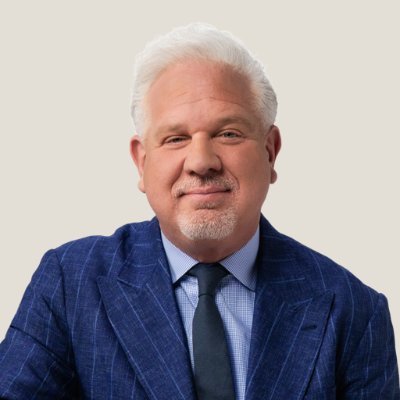
Was it just me, or did Barack Obama seem very passive-aggressive while lecturing us on how the Founders "fell short?" And I love how he threw in that the Founders only let "white men who owned property" vote. Because it proves that he has NO IDEA what he's talking...

652,717 просмотров • 7 дней назад •via X (Twitter)

Комментарии: 0

Нет доступных комментариев

Здесь появятся комментарии из оригинального поста

Похожие видео

Keith Rabois: “I tell founders not to worry about runway. Worry about lift.” “If you think about lift in a plane context, a company is only valuable if you achieve lift. Runway is a tactic for achieving lift, and you may need to extend the runway so that you have more time to get lift. But unless you’re actually achieving lift with that extra time, it doesn’t help you.” Keith continues: “I hate when a founder is like, ‘I want to raise this much money because it gives me two years runway.’… That is a stupid way to think about your fundraising.” Instead, founders should ask themselves what they need to achieve to achieve lift, and then work backwards from that. When Keith invests at Khosla Ventures and Founders Fund, they write internal memos about the three key risks to the company. Usually you can’t achieve all three in one financing, so founders should be asking themselves, What’s the most important inflection? And then structure their financing to achieve that. Keith advises founders that it’s ok to let their runway go very low if they feel like they’re approaching lift: “A lot of founders get very bad advice like ‘Oh, you need to have this much runway or you won’t be able to raise money from strength.’ That’s nonsense. If you have traction - if you hit a viral coefficient of 1 with three months of runway - almost every VC on the planet knows how to invest in that company, and it will not be a problem.” Video source: Khosla Ventures (2024)

Startup Archive

255,957 просмотров • 8 месяцев назад

Sam Altman: “No matter how great your idea is, no one cares.” Sam is asked what a founder should do if they have an idea but don’t want to talk about it because a big company might steal it. He responds: “Here is one of the things that takes founders a long time to learn: No matter how great your idea is, no one cares. Everybody is so distracted that you could probably put that idea with exact instructions for how to implement it on Tim Cook’s desk and take no risk.” Sam continues: “Extreme secrecy among founders is a bad sign. You want to keep some things secret for sure, but you should be willing to talk about the broad sketches of what you’re doing because you need that to recruit people, to get investors, to get customers.” Talking about your idea is also how you get feedback from other really smart people. Sam gives his own experience with Y Combinator as an example: “We at YC talk about everything we do. We talk about how to operate. We give our best possible advice. I have given talks before to rooms of people that want to start accelerators. And I say: ‘If you want to start an accelerator, here is exactly what to do step by step, and here are the mistakes to avoid step by step.’ And people always say, ‘Are you crazy? You’re giving away YC secrets.’ And we are, and yet no one ever listens… It was hard for me to learn this lesson of not fearing this… But don’t be afraid of telling people what you do.”

Startup Archive

212,623 просмотров • 4 месяцев назад

[Talking about self-worth and insecurities] 👨🏻‍🚀: I want everyone who has ever felt like they weren't pretty, they weren't attractive, they weren't good looking, they weren't strong enough, they had insecurities, or that they might feel like they're exploding from overthinking. And I'm not talking about one of these six, i'm talking about all of them. If you have ever had a situation where felt all six of these, I want you guys to type 1 into the chat. 👨🏻‍🚀: So, the point of that experiment wasn't to invalidate what you're feeling, because you're valid for feeling that. I think that is a common human emotion that we all have a problem we're dealing with. Our insecurities are the things that make us lash out, make us feel like we're not enough. And the thing about it, is no matter how rich you are, no matter how handsome you are, no matter how pretty you are, no matter how strong you are, no matter how great you are, no matter how intelligent you are, no matter how competent you are, there's always gonna be moments where this comes to you and I think the best thing to think in this situation is that yes i'm feeling this things, to validate yourself. You're not wrong for feeling this way. There's nothing wrong with you. Everyone feels this. 👨🏻‍🚀: But, during those times, i think it is very important to remember the moments in your life where you did feel worthy. Where you felt like you were just enough for that one person that you're talking to. Or you felt like you aced in a certain exam or you did really well in one thing. I think you remember those moments and then you push on for more of those moments so that eventually, in your life, you stop thinking about things that- or situation that made you think you're not worthy and start pondering more , recycling more of things that made you feel worthy. yunamseng?

nad

32,990 просмотров • 8 месяцев назад

Indyref 2014 was rigged, most of it happened in plain sight. Sara Salyers of Salvo.Scot explains how. "In a consultative referendum, an opinion poll, there's no contract, there's no actual requirement, which David Cameron did point out, to abide by the results of that referendum. "So they did not then set it up in the way that a proper constitutional referendum would have been set up according to international standards to begin with. "The people who would be voting in that referendum would be people who had a stake in the future of the nation whose future they were voting on. "We had every boy and his dog able to vote. So people who hadn't been in Scotland for, you know, more than maybe a few months, basically, all these people had a vote on the future of Scotland as an independent nation, which is, if you just think about it, think how absurd that is, people with no stake. "Now, had that been serious, you know, a real referendum, that we were going to be allowed to have a chance of winning, they would have applied international standards, they would have used something like the new Caledonia franchise, which is a really solid. "And it doesn't exclude people who've moved into Scotland. It isn't just ethnic Scots, it's, you know, it's people who have a genuine stake, interest in the future of that nation. That franchise, it shouldn't be a council... local council franchise, it should be one that reflects the stakeholders, who are the real stakeholders, and that's what that needs to be. That it wasn't, should have told us everything. "Then we had the Edinburgh Agreement, and the Edinburgh Agreement said that there was a Purdah period, during which no new policies were to be announced. There was no... you know, all the campaigning would go on and then it stops. You can rehearse the arguments and everything that's been put forward, but nothing new should be introduced. "Well, we got 'The Vow', 'Devo Max', less than two days before the vote. 'If you vote No, you will get this'. Of course, that did not deliver, but it completely breached the Edinburgh Agreement. "Well, what the sad afterwards was, 'Well, there's no evidence that it altered people's minds. Of course it did. Of course it told people, 'Well, if you don't want to go all the way to independence, we could have,' I think Gordon Brown said, 'it would be almost a federal relationship,' you know, blah, blah, blah. "And that that meant people could say, 'Well, if we're afraid of what will happen, afraid of being pulled out of the European Union, we'd like a lot more power, but we were not sure about a total break...'. Well, of course, then they voted No. "Then you also had the media. And in a properly run referendum, according to international rules, you make sure it's 50-50, that people get both sides of the argument, absolutely equally. "There was a full study done, and it took one guy, Glasgow University lecturer in particular, to go through everything and come back and say, 'Look, it was over 70%, 'No' media coverage', and that also breaches international standards. "So we didn't have any possibility of a fair referendum. And that wasn't coincidental. And had there been any kind of vote tampering, say, with the postal vote, because it was only consultative and there was no actual, therefore fraud, it makes it nearly impossible to get a judicial review. "And there is no way, no matter what they have said, no matter what they have told us, 'Get a majority of members elected to Westminster' and that 'You don't need a referendum', or if 'Scotland wants to leave, then it has the right to do so'. No matter what the British State has said, that was never true." Sara Salyers on the @untribalpol @TheScotCongress

ScotNews

21,466 просмотров • 1 год назад