正在加载视频...

视频加载失败

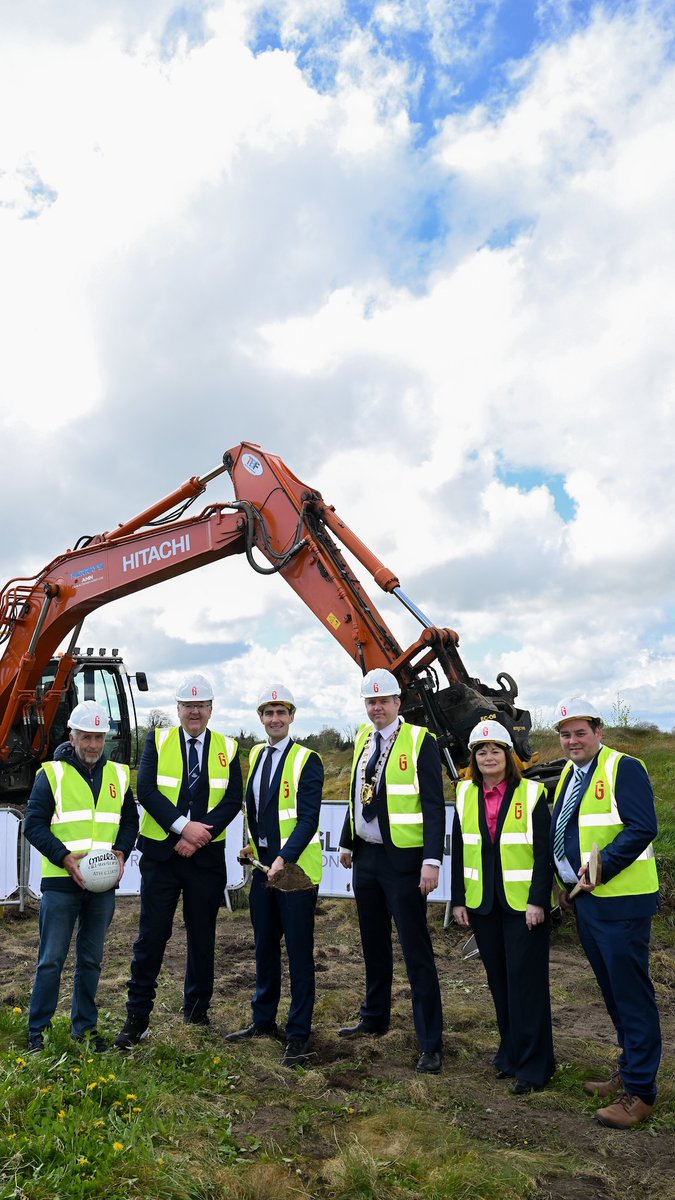
We are preparing the next phase of development at Dunsilly including terracing, new, full size, floodlit 4G pitch & 3/4 size training pitch; space for emergency vehicles, public toilets, kitchen facilities and meeting rooms, Inter county standard changing rooms, hurling wall
14,553 次观看 • 2 个月前 •via X (Twitter)

0 条评论

暂无评论

原始帖子的评论将显示在这里
相关视频

Public Safety Training Notification: June 3–7. During the week of June 3 through June 7, multiple Boulder County public safety agencies will be participating in a planned training exercise focused on responding to an active threat incident. This joint training involves law enforcement, fire, EMS, and dispatch personnel working together to practice integrated response protocols through realistic, scenario-based exercises. The training will take place in and around Nevin Platt Middle School, located at 6096 Baseline Road. Community members can expect to see a visible presence of first responders in the area, including police officers, fire trucks, ambulances, and other emergency vehicles. You may also see officers carrying training weapons and ambulances driving around the building as part of the exercise. The area of 55th Street and Baseline Road will have increased activity throughout the week. This is a planned exercise and not a real emergency. Please do not call 911 to report activity related to this training. However, if you see something in the area that you believe is unrelated to the exercise and poses a threat or emergency, please call 911 as you normally would. We encourage residents to share this information with friends and neighbors, especially those who live near the training site, to ensure everyone is aware and not caught off guard by the increased presence of emergency personnel. Thank you for your cooperation and continued support as we work to enhance public safety throughout Boulder County.

Boulder County Sheriff’s Office

23,245 次观看 • 1 年前

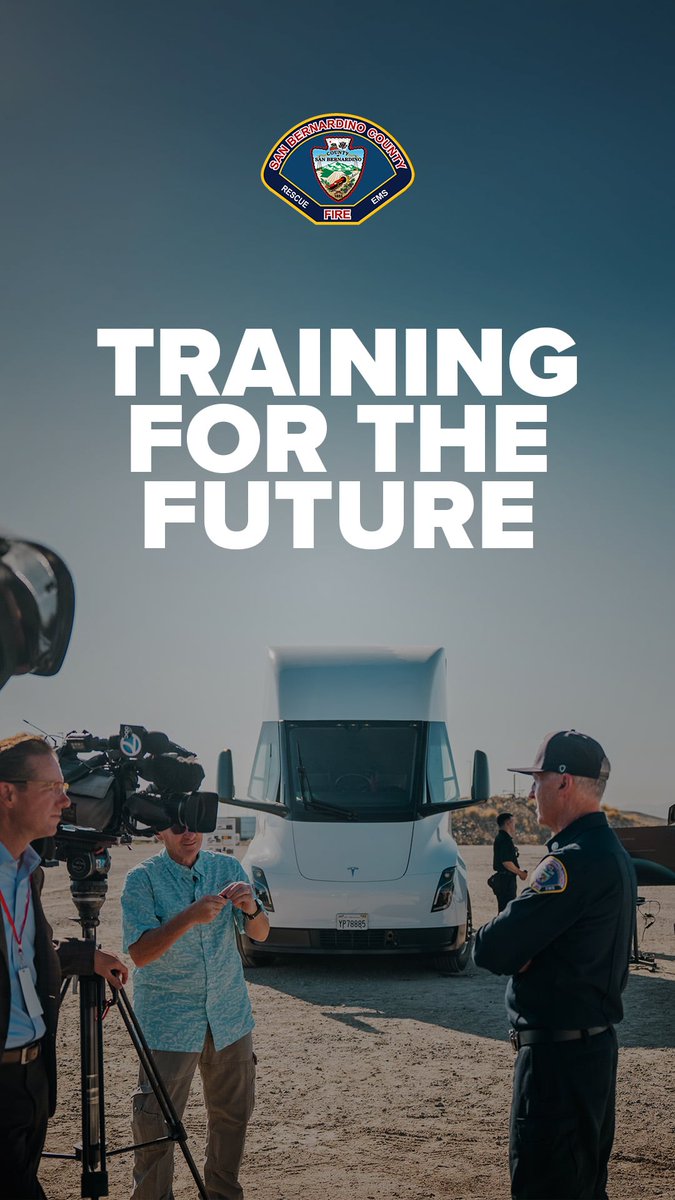
Tesla Joins San Bernardino County Fire to Train for the Future in Renewable Energy Safety SAN BERNARDINO, CA – San Bernardino County Fire in partnership with Tesla hosted a west coast training event designed to prepare first responders for the evolving challenges presented by modern energy systems. Over the course of two days, fire and law enforcement agencies, public safety stakeholders, and towing professionals from across the region gathered at the San Bernardino Regional Emergency Training Center to engage in hands-on training with Tesla’s suite of energy and vehicle products. Participants explored Tesla’s ecosystem firsthand, including electric vehicles, Megapack, Powerwall, Solar systems, and Supercharging infrastructure. Tesla engineers and product teams were on site to demonstrate current and next-generation products while facilitating discussions on responder and public safety. “Tesla reached out and said they wanted to bring in their engineers, their teams, and actual Tesla products, not just what’s on the road today, but what’s coming tomorrow,” said Fire Chief Dan Munsey. “This training gave our firefighters a chance to engage directly with the technology, ask the tough safety questions, and talk through the best ways to keep both responders and the public safe as the renewable energy industry continues to grow.” The event marked the first time Tesla has held this type of training event on the west coast. The only previous event of its kind was hosted in New York City with FDNY. Tesla brought production models, prototypes, and a full suite of energy storage components to the training grounds. The goal was clear: help first responders safely navigate incidents involving electric vehicles and energy systems with confidence and precision. With the increasing adoption of clean energy and electric transportation, San Bernardino County Fire is taking a proactive stance in ensuring public and first responder safety. The Tesla training event exemplified a forward-thinking approach, placing San Bernardino County Fire at the forefront of modern hazard mitigation and emergency readiness. San Bernardino County Fire is committed to preparedness, innovation, and forward thinking in response to the new challenges and emerging technologies we will be facing in the future.

San Bernardino County Fire

46,506 次观看 • 9 个月前

🚨🚨🚨Breaking! MN Somali childcare business ownership is no accident! At CAPI, illegal immigrants get Childcare business training and DC grants. And a Keith Ellison Division Manager, Lee Atakpu, J.D. at the Office of the Minnesota Attorney General works at CAPI in MN. This childcare businesss ownership stuff has been happening for decades. They also get help with home ownership via Home Ownership coaches, and just about every perk imaginable. Somali employees are even subsidized. They also run tons of voter and civic action projects. One of their brochures says that you must be a US citizen and live in the USA TWENTY DAYS to vote? Huh? “CAPI’s IOC 2.0 seeks to build wealth in BIPOC communities residing in Northwest Hennepin County. Key design features of CAPI’s expansion include spaces for (1) new entrepreneur training, technical assistance, and financial services to develop and expand BIPOC-led small businesses (including designated space for promising enterprises), (2) expanded public benefits eligibility screening and access assistance, tax assistance, financial coaching, and homebuyer services, (3) two social enterprises including a coffee shop/deli and an unattached greenhouse surrounded by community garden plots, (4) several community and training rooms, (5) work stations for 30+diverse staff including 2-3 tenant/ training partners, (6) patio, garden, and landscaping that connects the expansion to the neighborhood, and (7) an expanded parking lot.” “The expanded Immigrant Opportunity Center will create a community hub for a wide variety of wealth-building services that include public benefits screening and access assistance, individualized and group financial education and services, volunteer income tax assistance (VITA) services, homebuyer workshops/ counseling, and entrepreneurship incubation. To do this, the project will leverage highly-aligned community partnerships that bring new resources to Brooklyn Center while promoting regional sustainability.” Thank you to Ji〽️ Shaffer who altered me to this org and the Keith Ellison AG office division manager. I did the rest.

Bad Kitty Unleashed 🦁 💪🏻

65,485 次观看 • 6 个月前

Michael Seibel on how to create a great startup pitch In the clip below, former Y Combinator CEO Michael Seibel breaks down the two types of pitches every startup founder needs: a 30-second elevator pitch and a two-minute pitch for investors. “A lot of people practice 10-minute, 30-minute, hour-long, pitches. I think that’s all garbage. I think you can get all of your points across in two minutes. And one thing I like to tell founders is that the more you talk, the more you have an opportunity to say something that people don’t like.” 30-Second Elevator Pitch: You should be able to explain to anyone you come across what your company does in 30 seconds. This should be three sentences: 1. What does your company do? Assume the person you’re talking to knows nothing. This should be a 1-sentence explanation that your mom or dad can understand (e.g. “We’re Airbnb and we allow you to rent out the extra room in your house” NOT “We’re Airbnb and we’re a marketplace for space”). 2. How big is the market? Do a couple hours of research so that you can give investors a rough approximation of the size of the market you’re in (e.g. Airbnb might give the size of online hotel booking market) 3. How much traction do you have? Ideally you can say something like: “We launched in January and we’re growing 30% month over month. We have $ X sales and Y users.” If you’re pre-launch, you need to convince investors that you’re moving quickly (e.g. “the team came together in January. By March we launched our beta. By April we launched our product.”). Two-Minute Pitch: This pitch is for people you’re actually trying to convince of something (e.g. investors, potential employees, etc.). You basically want to simply explain what you do and then ask for money. There are 5 key components: 1. Clear 30 second pitch (everything mentioned above) 2. Unique insight—what do the biggest players in your market not understand? This should be 2 sentences. 3. How do you make money? 4. Team. If your team has done something that has made investors money, you should mention that (e.g. “we’re the founders of PayPal”). If you haven’t, don’t go on about the awards you’ve won or PhDs you hold. What investors want to hear is: how many founders? (hopefully 2-4) how many of the founders are technical? (hopefully 50% or more engineers) How long have you known each other? (ideally you’ve known each other either personally or professionally for at least 6 months) Are you all full-time? 5. The Big Ask ($$$). You have to know what you’re talking about when you ask for money. Are you raising on a convertible note or a SAFE? What’s the cap of the SAFE? How much money are you raising? What’s the minimum check size? If you don’t know these things, investors won’t think you’re serious or that you haven’t done your homework.

Startup Archive

80,490 次观看 • 2 年前

Michael Seibel on how to create a great startup pitch Former Y Combinator CEO Michael Seibel breaks down the two types of pitches every startup founder needs: a 30-second elevator pitch and a two-minute pitch for investors. “A lot of people practice 10-minute, 30-minute, hour-long, pitches. I think that’s all garbage. I think you can get all of your points across in two minutes. And one thing I like to tell founders is that the more you talk, the more you have an opportunity to say something that people don’t like.” 30-Second Elevator Pitch: You should be able to explain to anyone you come across what your company does in 30 seconds. This should be three sentences: • What does your company do? Assume the person you’re talking to knows nothing. This should be a 1-sentence explanation that your mom or dad can understand (e.g. “We’re Airbnb and we allow you to rent out the extra room in your house” NOT “We’re Airbnb and we’re a marketplace for space”). • How big is the market? Do a couple hours of research so that you can give investors a rough approximation of the size of the market you’re in (e.g. Airbnb might give the size of online hotel booking market) • How much traction do you have? Ideally you can say something like: “We launched in January and we’re growing 30% month over month. We have SX sales and Y users.” If you’re pre-launch, you need to convince investors that you’re moving quickly (e.g. “the team came together in January. By March we launched our beta. By April we launched our product.”). Two-Minute Pitch: This pitch is for people you’re actually trying to convince of something (e.g. investors, potential employees, etc.). You basically want to simply explain what you do and then ask for money. There are 5 key components: • Clear 30 second pitch (everything mentioned above) • Unique insight—what do the biggest players in your market not understand? This should be 2 sentences. • How do you make money? • Team. If your team has done something that has made investors money, you should mention that (e.g. “we’re the founders of PayPal”). If you haven’t, don’t go on about the awards you’ve won or PhDs you hold. What investors want to hear is: how many founders? (hopefully 2-4) how many of the founders are technical? (hopefully 50% or more engineers) How long have you known each other? (ideally you’ve known each other either personally or professionally for at least 6 months) Are you all full-time? • The Big Ask ($$$). You have to know what you’re talking about when you ask for money. Are you raising on a convertible note or a SAFE? What’s the cap of the SAFE? How much money are you raising? What’s the minimum check size? If you don’t know these things, investors won’t think you’re serious or that you haven’t done your homework.

Startup Archive

21,631 次观看 • 1 年前

SuperteamNG 🤝 Nigerian Founders Over the past week, we hosted the Pitch Clinic IRL and an incredible Demo Day 🔥 Here’s a full recap of everything that went down 👇 1. Pitch Clinic IRL – Kickoff Founders, mentors, and builders gathered in person for an immersive session. The day began with networking, introductions, and setting the stage for sharpening pitches. 2. Workshop Sessions We covered the fundamentals of a great pitch: - Framing the problem - Showcasing the solution - Market sizing & traction - Storytelling that sticks 3. Interactive Feedback Rounds Founders pitched in small groups, receiving targeted feedback from mentors and peers. Immediate, constructive advice helped refine their decks and delivery. 4. Live Pitch Practice Participants simulated real investor pitches. Mentors gave hands-on corrections, sharpening confidence, timing, and clarity. 5. Q&A Drills We pressure-tested founders with tough, investor-style questions, preparing them to answer confidently under the spotlight. 6. Demo Day – The Big Stage After all the practice, founders stepped up at Demo Day to showcase their startups to a wider audience of investors, mentors, and community members. 7. High-Energy Presentations The pitches were sharp, concise, and compelling. Every founder showed massive growth from the Clinic, proof of the power of preparation. 8. Engaged Audience Potential Investors and mentors asked thoughtful questions, gave feedback, and connected with founders on potential opportunities. 9. Closing the Loop The journey from Pitch Clinic ➝ Demo Day was designed to transform raw ideas into polished investor-ready pitches. And it worked. The growth was visible. Huge thanks to the mentors, partners, and founders who brought the energy and made this a success.

Superteam Nigeria

24,493 次观看 • 10 个月前