Loading video...

Video Failed to Load

Go Home

"We could be within 5 years of really falsifying Einstein's classical theory." How? By generating entanglement in an experiment to test quantum gravity! I'm excited to release a technical deep-dive into how to test quantum features of gravity, explained in an approachable and intuitive way by Prof Vlatko Vedral...

66,502 views • 1 year ago •via X (Twitter)

10 Comments

Dr Maria Violaris's profile picture
Dr Maria Violaris1 year ago

Watch on YouTube here:

Dr Maria Violaris's profile picture
Dr Maria Violaris1 year ago

If you’re interested in supporting more of this content, donate here: or via my Conjecture Institute profile:

ItsBS's profile picture
ItsBS1 year ago

You can already falsify Einstein's theory. Understand the simple Algebra that requires the light source to be moving (in the moving frame). See how that MOVING requirement conflicts with his speed of light postulate. Without a derivation, the postulate is circular reasoning.

benferrum - e/jounce's profile picture
benferrum - e/jounce1 year ago

Yes tyvm for making this!

Dr Maria Violaris's profile picture
Dr Maria Violaris1 year ago

Hope it’s interesting, feedback welcome!

stringking42069's profile picture
stringking420691 year ago

🤮

stringking42069's profile picture
stringking420691 year ago

Oxford has legit hep-th people and THIS is what you decide to post? Fuq this and FUQ YOU.

Christine Liang's profile picture
Christine Liang1 year ago

Yeah! "Falsifying Einstein's classical theory!" Interesting ...... 😀

benferrum - e/jounce's profile picture
benferrum - e/jounce1 year ago

@burny_tech you gonna love this

Denise Brook's profile picture
Denise Brook1 year ago

Then there is this...

Related Videos

BITCOIN RAILS EPISODE #18: MAKE BITCOIN QUANTUM RESISTANT | with BIP360 author Hunter Beast Hunter Beast 🕯️ Quantum computing is a complicated topic—one that incites equal amounts of fear and skepticism depending on who you talk to… especially in Bitcoin. In this episode, BIP360 author Hunter Beast wisely shares why the “truth is likely somewhere in the middle,” citing incremental advancements in quantum computing that may eventually pose a legitimate threat to some Bitcoin addresses—as well as steps we can take to protect ourselves in the short, medium and long term. The correct posture is to “be prepared, not scared,” says Hunter Beast 🕯️ Ultimately, the introduction of quantum resistant cryptography—via proposals like BIP360—will be needed for higher degrees of security. That said, individuals can mitigate personal risk substantially through proper address-use hygiene. This episode breaks down the specific challenges Bitcoin will face in the event of a quantum attack, the likelihood of an attack over time, and the steps we’ll need to take at the individual and communal level to ensure Bitcoin’s safety. This episode includes detailed discussion of: 1) How quantum computing could potentially affect Bitcoin public/private key cryptography—and technologies built on vulnerable addresses (e.g. Taproot) 2) Best practices for protecting yourself against quantum in the short and long term 3) Implications of vulnerable address types—e.g. what about Satoshi’s coins? 4) Deep Dive into BIP360 + proposed long-term solutions 5) Industry roadmaps for quantum computing + how banks and governments are preparing for “Q Day” As always, this episode can be viewed on Spotify or YouTuve—full episode in the comments or linktree in my bio. This episode is powered by Best In Slot—the leading API for Ordinals and BRC20 data aggregation and indexing. TIMESTAMPS: 00:00 Intro 02:05 What is quantum computing? 04:30 How could quantum threaten your Bitcoin wallet? 06:50 Addresses that are safe from quantum 09:13 Satoshi’s coins are in danger! 11:25 What happens if Satoshi’s coins are touched? 14:45 Do we softfork to shield Satoshi’s coins? 16:38 “Transitory inflation” for bitcoin after quantum 21:05 Why Taproot addresses are vulnerable 23:50 Do NOT reuse your Bitcoin addresses! 26:03 When will Quantum become a threat? 28:34 The long/short exposure attack; explained 31:45 Protection using private mempools 33:20 Why all the new Bitcoin L2s are in danger 37:45 Quantum is 5 to 10 years away, governments fear 40:34 Non-Bitcoin systems threatened by quantum 42:26 Centralized systems can adapt to quantum 43:50 Hunter’s BIP: Post quantum cryptography in Bitcoin 47:40 Hunter’s three new signature algorithms 53:48 Is new cryptography on Bitcoin risky? 56:33 Why not just stick to hash-based cryptography? 58:49 A 16X discount for quantum resistant addresses? 01:02:30 Creating quantum resistant multisig addresses 01:04:00 What is Frost? 01:06:50 The long process of approving a BIP 01:08:30 What developers think of Hunter’s BIP 01:10:00 Matt Corallo’s concerns with Hunter’s approach 01:11:00 Steps to implementing the BIP 360 01:17:00 Where to learn more about BIP 360 01:17:50 Who can push the button to change Bitcoin?

Isabel Foxen Duke⚡️

31,148 views • 1 year ago

Bitcoin Rails x MARA Foundation presents: THE POLITICS OF POST-QUANTUM BITCOIN | with Nic Carter 🔗 YouTube: 🌿Spotify: Less than nine months ago, investor and researcher nic carter sparked one of the most heated debates in Bitcoin's recent history — when he published a series of essays arguing that the network should prepare for its post-quantum transition sooner rather than later. While the essays broadly persuaded investors and institutions, many of Bitcoin's technical leaders dismissed them as alarmist — that is, until Google's quantum resource estimates were updated just a few months later. Crediting Google's paper with "shifting the Overton Window" on quantum and strengthening the case for post-quantum preparation, Nic shares his thoughts on the delicate politics surrounding this transition — and how he believes a quantum attack and response could potentially play out in practice. In more detail, this special episode of Bitcoin Rails X MARA Foundation TV covers: - How a quantum attack could realistically unfold + the different ways stakeholder groups might respond - The constitutional tensions surfaced by quantum vulnerable coins and how incentives will ultimately dictate outcomes - How a state actor could facilitate "benevolent" quantum recovery and eliminate the need for a contentious fork - The role and influence of institutional investors as key players in quantum outcomes - How Bitcoin's post-quantum transition could permanently reshape Bitcoin’s governance structures ...or build them from the ground up TIMESTAMPS: 00:00 — Intro 00:18 — Nick's path from Fidelity to founding Castle Island 07:00 — How quantum went from FUD to Nick's biggest concern 12:45 — Why Core devs refuse to be accountable 26:09 — Investors vs developers: who took quantum seriously first 32:33 — Bitcoin's "pre-constitutional" governance problem 39:18 — Satoshi's coins: liquidate, burn, slow-bleed, or let the government take them 47:36 — Why there will never be another Bitcoin fork war 01:01:35 — Bitcoin is about to choose the wrong signature scheme 01:09:42 — The actual deadline: why PQ signatures need to ship in 2026 01:13:09 — The happy path, the coup, and why Bitcoin won't die

Isabel Foxen Duke⚡️

50,840 views • 1 month ago

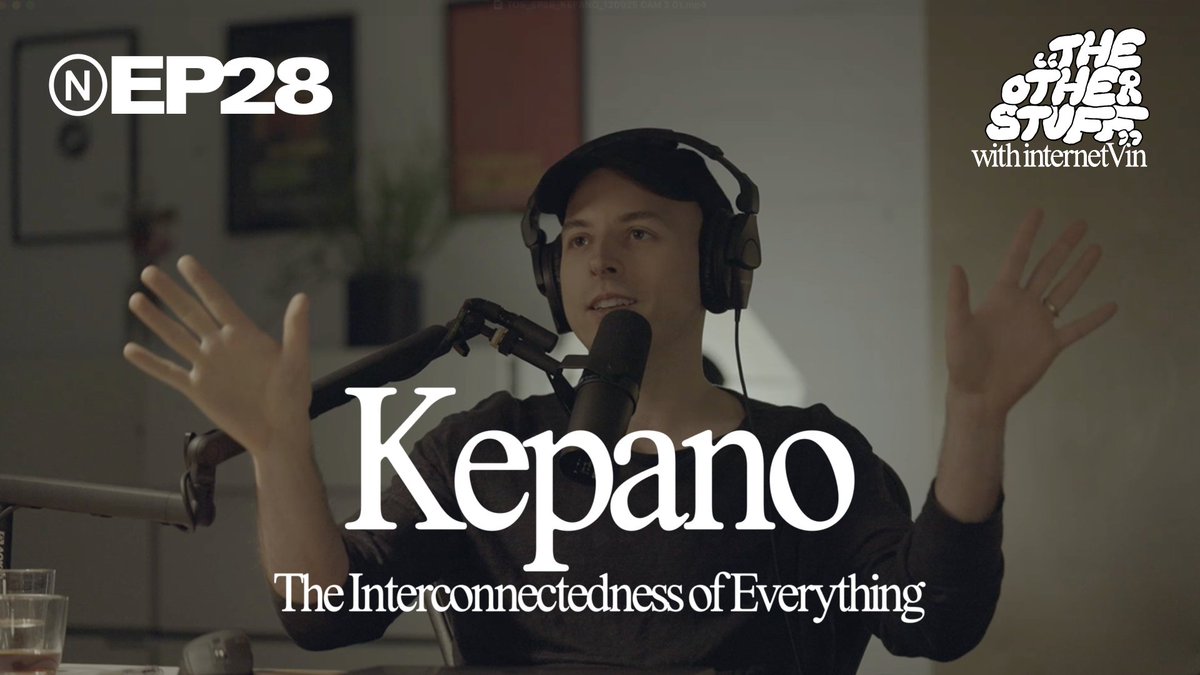
Steph Ango (kepano) is a designer, entrepreneur, and the CEO of Obsidian. In this episode, we discussed his journey from creating Winamp skins to leading Obsidian, and the fundamental patterns and inclinations that drive everything he explores and makes. We discussed Obsidian on multiple different dimensions, his deluxe chocolate chip cookie recipe, his exploration through furniture design, and his default inclination to push “too far” into anything he is exploring. Steph Ango demo'd the design process of several furniture projects he’s been working on at home as well as a custom piano learning app he created to teach himself music theory. This is a conversation about craftsmanship, pursuing a deep understanding, and what that reveals about who we are. The Other Stuff is hosted by internetVin — filmmaker, entrepreneur, and possibly the most curious man on Earth. Produced by New. The Other Stuff #28 — Kepano: The Interconnectedness of Everything — Timestamps 00:03:55 Origin of Kepano 00:10:34 Relationship with Computers 00:15:25 Online Communities & Video Games 00:30:47 Winamp Skins 00:40:04 Uniformity in Design 00:51:05 Obsidian 00:59:20 Bidirectional Linking, And The Relationship Between Everything 01:23:18 Obsidian Sync, Publish, and Bases 01:32:06 Why File Over App 01:43:15 The Deluxe Chocolate Chip Cookie Taste Test 01:49:48 Living Fully 02:09:50 Early Project Walkthrough 02:19:03 Furniture Design Walkthrough 02:49:00 Constraint and Patterns 02:58:47 Kepiano 03:13:00 The Future of AI and Startups 03:31:10 Closing

The Other Stuff Podcast

71,626 views • 8 months ago

BITCOIN RAILS #34: Bitcoin’s Security & Quantum Risks—and the Future of Satoshi’s Coins | with Jameson Lopp Jameson Lopp “Most people don’t think about security until it’s too late,” says the Casa co-founder and CSO. One of the most prolific thought-leaders in Bitcoin security and privacy, there are few people who understand the nuances of Bitcoin security quite as deeply - not to mention the OPSEC practices required to protect against wrench attacks, for instance, which are rising globally as Bitcoin price increases. More recently, Lopp has turned his attention to mitigating Bitcoin’s quantum vulnerabilities, including market risks associated with quantum-vulnerable Satoshi’s Coins + longer-term strategies for quantum-hardening of Bitcoin addresses long term. In this special episode of Bitcoin Rails, we cover: - Lopp’s experiences designing self-custody products at both BitGo and Casa - The swatting attack he suffered in 2017, and the radical steps he’s taken to secure his home location since - The ‘quantum computing’ challenge for Bitcoin and its impacts on Satoshi’s Coins - How the network may respond to QCs in the face of ossification and why QC preparation may be the hardest governance test the network has ever faced This episode is powered by: - Best In Slot (Best in Slot | BRC2.0 🧑‍🍳), the leading API for Ordinals and BRC20 data aggregation and indexing - Spark (Lightspark), a statechains implementation leading the path towards institutional adoption of Bitcoin-powered payments - Citrea (Citrea), the leading Bitcoin Rollup technology and contributor to the BitVM alliance 📌 Timestamps 00:00 – Intro: Quantum Computing Meets Bitcoin 00:19 – Jameson Lopp on the Bitcoin Rails 00:53 – The Quantum Threat to Bitcoin Security 06:32 – Lopp’s Path into Bitcoin & Security 12:58 – The Swatting Attack During the Block Size Wars 25:28 – Could Quantum Crack Satoshi’s Coins? 43:55 – Announcements & Sponsors Messages 45:30 – Building Bitcoin’s Quantum Resistance 47:00 – QBTC and the Push for Quantum-Resistant Bitcoin 48:43 – Why Changing Bitcoin Is So Hard 51:19 – Email Protocols, Ossification, and Bitcoin’s Future 01:01:53 – A Roadmap for Quantum Resistance

Isabel Foxen Duke⚡️

14,538 views • 11 months ago

BITCOIN RAILS #38: Two Forces That Could Break Bitcoin: AI vs Quantum I with Martin Shkreli 🔗 YOUTUBE: 🌿 SPOTIFY: A couple months ago, I co-hosted an X space with LayerTwo Labs re: “Should Bitcoiners care about quantum computing?” You can imagine our surprise when (in?)famous tech investor Martin Shkreli arrived to share that he’s been researching this very question for years… and dropped that he’s been personally considering raising funds to hire a team of mathematicians to hack Satoshi’s Coins. In this episode, Martin and I explore the limits of Bitcoin’s security model and the two forces he believes could potentially challenge it: a computational path driven by advances in quantum hardware, and/or a mathematical path fueled by AI-assisted discovery. This interview additionally shares takes on: - Why hacking Bitcoin would be the "ultimate" mathematical achievement—and why hacking Satoshi’s coins should be considered a “bug bounty” for Bitcoin - Why quantum may be more problematic for Bitcoin than for the traditional tech world (e.g. why quantum doesn’t likely threaten NVIDIA) - The little known history of Bitcoin’s “overflow bug” (yup, Bitcoin *has* been hacked before… an exploit corrected by hard fork). - And of course, why mathematicians do their deepest work in prison 😉 As always, this episode of Bitcoin Rails can be viewed on YouTube or Spotify via the link available in my bio—and is brought to you with the help of my incredible partners: - Best In Slot (Best in Slot | BRC2.0 🧑‍🍳) – the leading API for Ordinals and BRC20 data aggregation and indexing - Spark (Lightspark) – a statechains implementation leading the path towards institutional adoption of Bitcoin-powered payments - Citrea (Citrea) – the leading Bitcoin rollup technology and contributor to the BitVM alliance 📷 Timestamps 00:00 Intro 02:57 Quantum Supremacy and Google’s Breakthroughs 05:02 Bitcoin’s Cryptographic Vulnerabilities 08:24 Studying Math and Cryptography Behind Bars 20:04 Governance and the Culture of Bitcoin Development 26:29 The Future of Quantum and AI in Cryptography 37:42 Hardware Challenges and Fidelity in Quantum 47:57 Game Theory and the Quantum Race 01:04:08 Bitcoin Recovery and the Quantum Security Question 01:08:38 Mathematical Challenges in Breaking Cryptography 01:15:08 The Role of AI in Future Mathematical Breakthroughs

Isabel Foxen Duke⚡️

62,881 views • 9 months ago

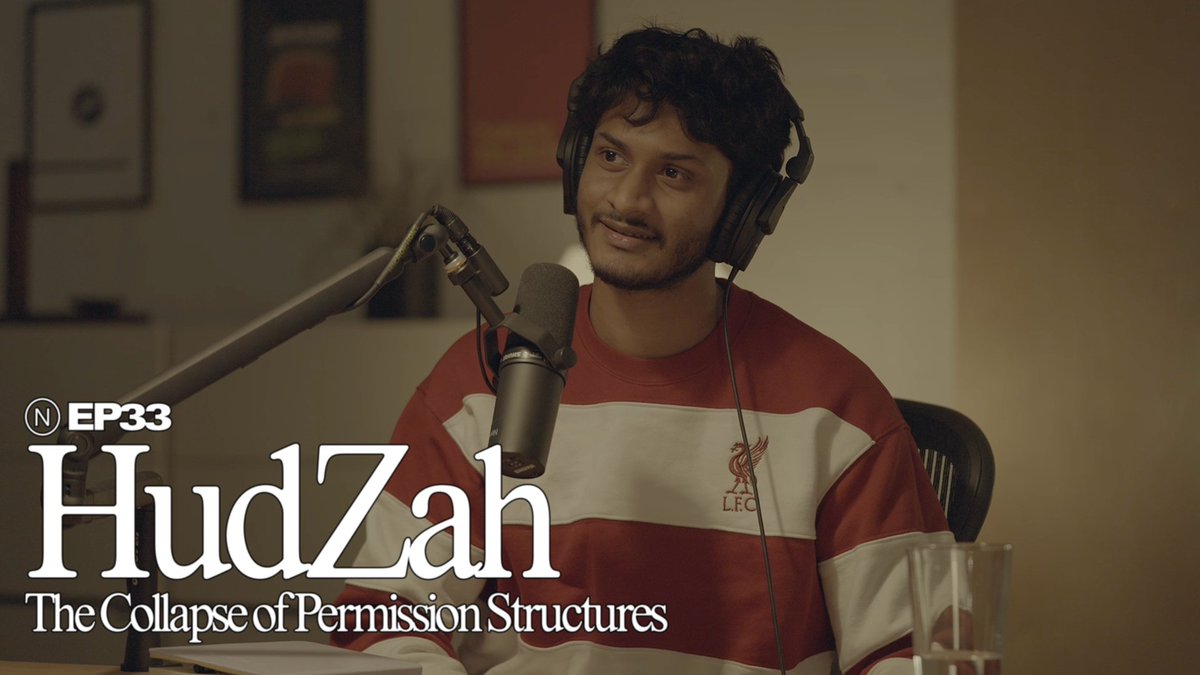
HudZah () is someone exploring what it means, and what it takes, to operate at the edge of what is possible. In this conversation, we traced HudZah's path from Riyadh to Sri Lanka to Waterloo. A childhood split across three countries, shaped by rationed wifi, a single HP desktop, and the discovery that what you build on a computer can change the world around you. We talked about coding HTML on Notepad at ten, building soundboard apps that funded his own move to Canada, and what it's like to grow up in a place with no permits, no regulators, and no one telling you what you can't do. We explored the birth of esports through Half-Life mods, the machines behind the food we love, and a baklava maker in San Francisco whose irrational pursuit of quality you can taste in a single bite. We discussed how AI is collapsing the walls between disciplines, what that does to the identities we built around expertise, and why individual agency might be the only variable that matters now. This is a conversation about curiosity, permission, and what happens when the cost of crossing boundaries drops to zero. The Other Stuff is hosted by internetVin, filmmaker, entrepreneur, and possibly the most curious man on Earth. Produced by New. The Other Stuff #33 — HudZah: The Collapse of Permission Structures — Timestamps 00:00:00 Introduction 00:03:38 Growing Up in Riyadh 00:05:59 Saudi Shawarma and Broasted Chicken 00:16:39 School in Saudi Arabia 00:21:48 The HP Desktop and First Lines of Code 00:25:55 YouTube Rabbit Holes and Gaming 00:45:35 The Birth of Esports 01:02:43 Valve's Employee Handbook 01:05:12 Indie Games and Pure Pursuit 01:06:05 Stardew Valley and ConcernedApe 01:07:03 Moving to Sri Lanka 01:10:34 SnapAPaper and Seeing Real Users 01:13:47 Soundboards, Shopify, and Funding the Move 01:27:38 Landing in Canada at 17 01:36:25 AI and Collapsing the Distance Between Disciplines 01:47:02 Identity, Expertise, and Permission Structures 02:00:32 The Baklava Maker in San Francisco 02:18:26 Machines Behind the Food We Love 02:36:02 Frederic Tudor and the Ice King 02:42:29 HudZah Flips the Interview 02:49:05 Being a Parent

The Other Stuff

26,464 views • 4 months ago

🚨PHYSICS NEWS🚨: Physicists Are Now Saying Time Itself Can Be in Superposition — And It Makes Perfect Sense 🧨 According to a theoretical framework published in *Physical Review Letters* and reported in May 2026, researchers have shown that state-of-the-art trapped-ion atomic clocks can be used to observe the quantum superposition of time. By entangling the clock’s motion with its internal energy states, the system can exist in a superposition of different time flows simultaneously. This is a major step toward experimentally probing the quantum nature of time itself. This work offers the broader scientific community a new experimental frontier in quantum foundations. It challenges classical notions of time as a universal parameter and opens the door to testing how relativity and quantum mechanics intersect at the level of time itself. **Uniphics has been saying something similar for years — and it’s not mysterious or weird.** In Uniphics, time flow is not a fixed background. It is a local property determined by energy density via the Maley transform (\( t_{\rm flow} = k / E_d \)). Different regions or configurations with different energy densities experience different time flows. When a system is prepared in a quantum superposition of different energy-density states (or different spin-wave configurations that affect local energy density), it naturally exists in a superposition of different time flows. The atomic clock experiments are essentially creating superposed states where the clock experiences different local time flows at the same “global” moment. The entanglement between motion and internal energy is the mechanism that allows the superposition to be maintained and detected. Uniphics predicts this behavior because the ξM-field supports coherent spin-wave patterns that can correlate different energy-density environments. No need for wavefunction collapse, many-worlds, or other interpretive gymnastics — it is a deterministic consequence of variable time flow and spin-wave coherence. This is not an add-on to quantum mechanics. It is the natural outcome of the three pillars. The “quantum superposition of time” is just what happens when spin quanta create superposed energy-density conditions. Uniphics explains why such experiments work, what limits they will hit, and how to extend them — all without the philosophical baggage that usually accompanies quantum foundations. The mainstream community is slowly catching up to the idea that time itself can be quantum. Uniphics has had a coherent, first-principles explanation for this from the beginning. The data will continue to support it. Are physicists finally ready to accept that time flow is fundamental and variable — and that the apparent “superposition of time” is simply the result of superposed energy-density states in the ξM-field? **A Theory of Everything should be able to answer everything.** Uniphics Explained Simply PDF: Chapters 1–10 free: Grokipedia: #Uniphics #TheoryOfEverything #QuantumTime #TimeFlow #SpinWaves Grok xAI

Paul Maley

32,357 views • 21 days ago

BITCOIN RAILS #62: BITCOIN'S 3 BIGGEST CHALLENGES | with Neha Narula Director of Digital Currency Initiative (DCI) Massachusetts Institute of Technology (MIT) 🔗 YOUTUBE: 🌱 SPOTIFY: Neha Narula is the Director of the MIT Digital Currency Initiative, where she focuses on Bitcoin research and the broader design tradeoffs of decentralized money systems. Her work often centers on what Bitcoin gets right—and where it runs into hard limits—especially around scaling, decentralization, and how systems behave as global demand increases. In this interview, Neha and I explore longer-term risks to Bitcoin—including advancements in quantum computing and the implications of a diminishing block subsidy—as well as the ongoing challenge of scaling Bitcoin without losing access to self-custody. A thoughtful conversation on how Bitcoin may change in the coming years, we also explore its social and governance dynamics—including tensions within the development community over protocol changes, scaling philosophies, and the future direction of the system. This episode of Bitcoin Rails is brought to you by: LayerTwo Labs LayerTwo Labs — developing research, software, and technologies for scaling Bitcoin via the integration of Drivechains (BIP 300/301) Hashi on Sui — a primitive for executing Bitcoin Defi transactions, without having to trust a federated bridge or other centralized entity BitBox BitBox— an open-source Bitcoin-only hardware wallet, with smooth UX and no compromises on security. Check out Bitbox [dot] swiss and use code BITCOINRAILS to get a discount TIMESTAMPS: 00:00 Intro 00:17 Neha’s Origins 02:26 Bitcoin to MIT 04:40 Media Lab Culture and Mission 11:34 CBDCs as Digital Cash Debate 24:42 Funding Model and Bitcoin Security Budget 29:55 Reorg Risk and Quantum Computing 32:14 Bitcoin Dev Funding Map 42:49 Governance and Corporate Stakes 50:23 Quantum Tradeoffs Framework 56:02 Post Quantum Proposals 58:59 Prioritize PQ Transactions 01:00:54 Satoshi Coins Debate 01:02:12 Mining Incentives And Price 01:08:08 Corporate Funding And Governance 01:10:54 Scaling Self Custody And L2s 01:20:30 Bitcoin Kernel And Wrap Up

Isabel Foxen Duke⚡️

24,482 views • 2 months ago

BITCOIN RAILS #36: The Birth Story of ‘OPCAT’ | with proposal co-author Ethan ✨ is on BlueSky✨ Heilman 🐱 🔗 YOUTUBE: 🌿 SPOTIFY: As interest in Bitcoin Layer 2s skyrockets, the inclusion of OP_CAT — an opcode enabling concatenation of elements in the Bitcoin stack — has become a key technical upgrade to watch for its potential in the development of trustless bridges. OP_CAT co-author Ethan ✨ is on BlueSky✨ Heilman 🐱 and I sat down to discuss debate around this opcode — including why it’s controversial, the cultural environment shaping its future, and why some worry its broad expressivity could pose “unknown risks” to Bitcoin over time. More recently, Ethan co-authored BIP 360 with Hunter Beast 🕯️ — another controversial proposal aimed at addressing Bitcoin’s quantum vulnerabilities. Suffice it to say, there are few people with Ethan's experience in navigating Bitcoin politics and its shifting governance landscape as we move towards ossification over time. In this episode, we cover: - The origins of OP_CAT and why it was included and removed from early Bitcoin - What makes OP_CAT so powerful (and why that worries some developers) - Cultural shifts in Bitcoin governance as its developer community matures - The ‘great covenants debate’ + OPCAT vs. CTV - The path to BIP 360 and why Bitcoin should be ‘quantum ready’ This episode is powered by: - Best In Slot (Best in Slot | BRC2.0 🧑‍🍳), the leading API for Ordinals and BRC20 data aggregation and indexing - Spark (Lightspark), a statechains implementation leading the path towards institutional adoption of Bitcoin-powered payments - Citrea (Citrea), the leading Bitcoin Rollup technology and contributor to the BitVM alliance 📍 Timestamps 00:00 – Intro 00:45 – Bitcoin Privacy and the OP_CAT Proposal 03:18 – Technical Challenges of Adding New Opcodes 07:37 – Politics and Culture of Bitcoin Upgrades 28:46 – Quantum Computing Meets Bitcoin 37:48 – How Governments View Quantum Risk 39:06 – Breaking Down BIP 360 for Developers 42:03 – Post-Quantum Signature Schemes Explained 45:18 – Trade-offs in Quantum Security for Bitcoin 53:16 – Community Reactions to BIP 360 01:00:23 – The Future of Bitcoin in a Post Quantum World

Isabel Foxen Duke⚡️

13,231 views • 10 months ago

Ep. 19 | Free The Money | What This War Is REALLY About… Dr. Jim Willie In this episode, I’m joined by Dr. Jim Willie, who breaks down what he believes is really driving the war, not geopolitics, but a deeper financial battle. He argues the consequences will be felt through rising oil prices, inflation, and a breakdown in demand for U.S. Treasuries. According to Dr. Willie, institutions like the Exchange Stabilization Fund are quietly propping up the system, while global powers shift toward neutral assets like gold. He also points to the City of London and its alleged move toward Dubai as part of a larger restructuring of financial control. In his view, this war is ultimately about gold, power, and the future of the monetary system. Sign up for ITrustCapitol with this link for $100 funding bonus. See why people are opening a tax-advantaged Crypto, Gold & Silver IRA for their future: Sign up for Dr. Jim Willie’s Newsletter: 00:00 Current Global Conflicts 23:35 Oil Prices and Economic Forecasts 31:10 Cultural Insights from the Gulf 31:49 XRP's Ubiquity in the Gulf Region 33:57 The Future of Treasury Bills 35:30 The Shift Towards Neutral Assets 38:05 XRP as a Bridge Asset 39:47 The Impending Credit Crisis 41:54 The Strait of Hormuz 44:07 Economic Implications of Oil Prices 46:29 The Reality of Inflation and Recession 47:52 Trump, War, and Economic Strategy 59:46 The Shifting Sands of Dubai 01:02:40 Oil Prices and Market Dynamics 01:03:38 Military Movements and Strategic Implications 01:07:49 Public Sentiment on War 01:11:24 The Role of Global Powers 01:19:55 Understanding the Empire of Three Cities 01:23:48 Exploring Sovereign Nations and Financial Surpluses 01:24:20 Understanding Credit Default Swaps and Economic Implications 01:25:44 Geopolitical Tensions and Potential Retaliations 01:27:46 Cuba, Venezuela, and the Quest for Freedom 01:29:20 The Gold Reserves and Economic Power Dynamics 01:31:55 Iran's Revolutionary Guard and the Future of Regime Change 01:33:26 The Role of Silver in Economic Stability 01:37:37 Investing in Precious Metals and Cryptocurrencies

Bri Teresi

31,206 views • 4 months ago

Here's an edit of the Elon Musk interview hosted by Katherine Brodsky discussing a myriad of topics. This version boosts audio quality and reduces pauses and dead space by 33%. Thank you David Carbutt for the work! Timestamps: (00:00) The Journey of SpaceX and Tesla (01:06) Misunderstandings and Misinformation (03:42) The Role of Social Media in Free Speech (04:12) The Impact of Government Control on Media (06:32) The Evolution of Twitter and the Need for a Fresh Start (07:17) The Challenges of Moderation on Social Media Platforms (12:12) The Role of Citizen Journalism in Modern Media (17:45) The Future of Legacy Media (28:08) The Power of Amplifying Ideas and People (36:35) The Importance of Open-Mindedness and Self-Criticism (38:49) Community Notes and Open Source Data (39:58) The Role of Accuracy and Opinions in Posting (40:22) The Idea of a Sarcasm Detector (41:01) The Potential of AI in Enhancing Accuracy (42:39) The Future of AI and Deepfakes (44:59) The Vision for X as an All-in-One App (46:38) The Concept of Trust in Institutions (51:24) The Impact of Gene Editing on Humanity (55:42) The Challenge of Censorship and Free Speech (01:02:24) The Unusual Case of a Voice Doppelganger (01:07:35) Starting a Conversation: Texting and Simulations (01:08:43) Discussing Starship Launch and Future Plans (01:10:32) Engaging in Casual Conversations and Sharing Photos (01:11:55) Exploring the Idea of Expanding the Scope of Reality (01:13:27) Exploring the Concept of Simulation Theory (01:13:52) Discussing the Concept of AI in the Simulation (01:20:42) Addressing Questions about Ad Demonetization (01:23:11) Addressing Concerns about Doxxing and Harassment (01:30:47) Discussing the Monetization of Spaces (01:31:34) Discussing the Future of AI and OpenAI (01:35:17) Discussion on National Debt and AI (01:36:06) Involvement of Family Members (01:36:45) Questions and Answers (01:37:31) Impersonations and Voice Modulations (01:38:47) Discussion on Accents and Language Learning (01:41:14) Discussion on AI and Voice Imitation (01:46:45) Serious Discussion on AI and Social Media (01:51:27) Discussion on Physics and AI (01:58:18) Closing Remarks and Final Questions

Farzad 🇺🇸 🇮🇷

2,033,136 views • 2 years ago

The Honey Diet - Unlocking Fat loss with Sugar and FGF21 Anabology (anabology) is a a biohacker and engineer turned health and nutrition enthusiast. We talk about the hormone FGF21's role in metabolism, the effects of macronutrients on hunger and satiety, and the potential for metabolic recovery through dietary adjustments. We discuss high-carb and carnivore diets, the impact of genetics and processed foods like Coke on health, and the importance of understanding individual responses to achieve optimal metabolic health through sustainable eating habits. 00:00 Introduction to Anabology and His Background 02:46 The Journey into Health and Nutrition 05:51 The Impact of Diet on Health 08:56 Exploring the Honey Diet 11:57 Understanding FGF21 and Its Role 14:51 The Mechanisms of Sugar and Fat in Metabolism 17:58 The Relationship Between Diet and Performance 21:11 The Future of Metabolic Health 34:18 Exploring Dietary Mechanisms: FGF21 and Metabolism 39:06 Satiety vs. Hunger: Understanding Metabolic Drivers 44:23 High Carb Diets: Insights from Vegan and Non-Vegan Perspectives 50:19 Metabolic Recovery: The Role of Diet in Weight Management 56:01 The Interplay of Hormones and Diet: Insights on Fat Loss 01:10:26 The Evolution of Diet Choices 01:12:01 Athletic Performance and Dietary Flexibility 01:14:47 Understanding Metabolic Health 01:17:33 Generational Impact on Metabolism 01:19:51 Dietary Preferences and Genetic Influences 01:23:19 The Macro Triangle: Balancing Nutrients 01:25:54 The Future of Diet Construction 01:28:56 Sustainable Eating Patterns 01:32:55 The Role of Protein in Energy Levels 01:36:29 FGF21: The Metabolic Regulator 01:46:18 The Medicinal Qualities of Coke 01:49:12 Coke vs. Mexican Coke: A Nutritional Debate 01:51:09 The Effects of Coke on Hunger and Satiety 01:53:47 The Body's Response to Processed Foods 01:56:54 Understanding FGF 21 and Its Role in Metabolism 02:02:57 The Complexities of Insulin Sensitivity 02:08:19 Natural vs. Synthetic Uncoupling in Metabolism 02:12:53 Future Endeavors and Insights on Diet

Josh Rainer

179,795 views • 1 year ago

Aidan Gomez (Aidan Gomez) is a computer scientist, co-author of the seminal paper ‘Attention Is All You Need,’ and the CEO of Cohere. In this episode, we discussed his upbringing in the cabin his grandfather built in Codrington, a small town North of Brighton, and the values that were instilled in him through his family. We explored his path from Codrington to his undergraduate studies at the University of Toronto, emailing Geoffrey Hinton, and joining Google Brain where he co-wrote the paper on transformers. We discussed how he met his co-founders Ivan Zhang and Nick Frosst, and his insights on what it means to build a meaningful, successful company in Canada. Aidan shares his conviction about what is at stake — for Canada and for the world at large. This is a conversation about family, values, and what it means to live with conviction. The Other Stuff is hosted by internetVin — filmmaker, entrepreneur, and possibly the most curious man on Earth. Produced by New. The Other Stuff #29 — Aidan Gomez: Empathy and Conviction — Timestamps 00:00:00 Intro 00:03:10 The Malleability of Toronto 00:11:06 Growing Up in Codrington 00:13:50 The Story of Aidan Gomez’s Family 00:27:23 Introduction to the Internet 00:30:39 Values and Work Ethic 00:35:46 University of Toronto’s AI Scene 00:40:48 Emailing Geoffrey Hinton 00:42:16 Google Brain 00:45:15 Dropout: A Simple Way to Prevent Neural Networks from Overfitting 00:49:48 The Beauty of Research 00:54:24 One Model to Rule Them All 00:59:54 Meeting Ivan Zhang and Nick Frosst 01:04:00 The Birth of Cohere 01:06:56 Twitter Influencers and Alex Friedland 01:11:48 Being the CEO 01:12:51 Building for Canada 01:15:01 Three Fundamental Ingredients of Building a Company 01:21:39 Working with the Canadian Government 01:24:39 Reflexivity in Canada 01:36:22 What Is Evil? 01:42:40 The Role of AI in the World

The Other Stuff Podcast

45,297 views • 7 months ago