Video yükleniyor...

Video Yüklenemedi

Ana Sayfaya Dön

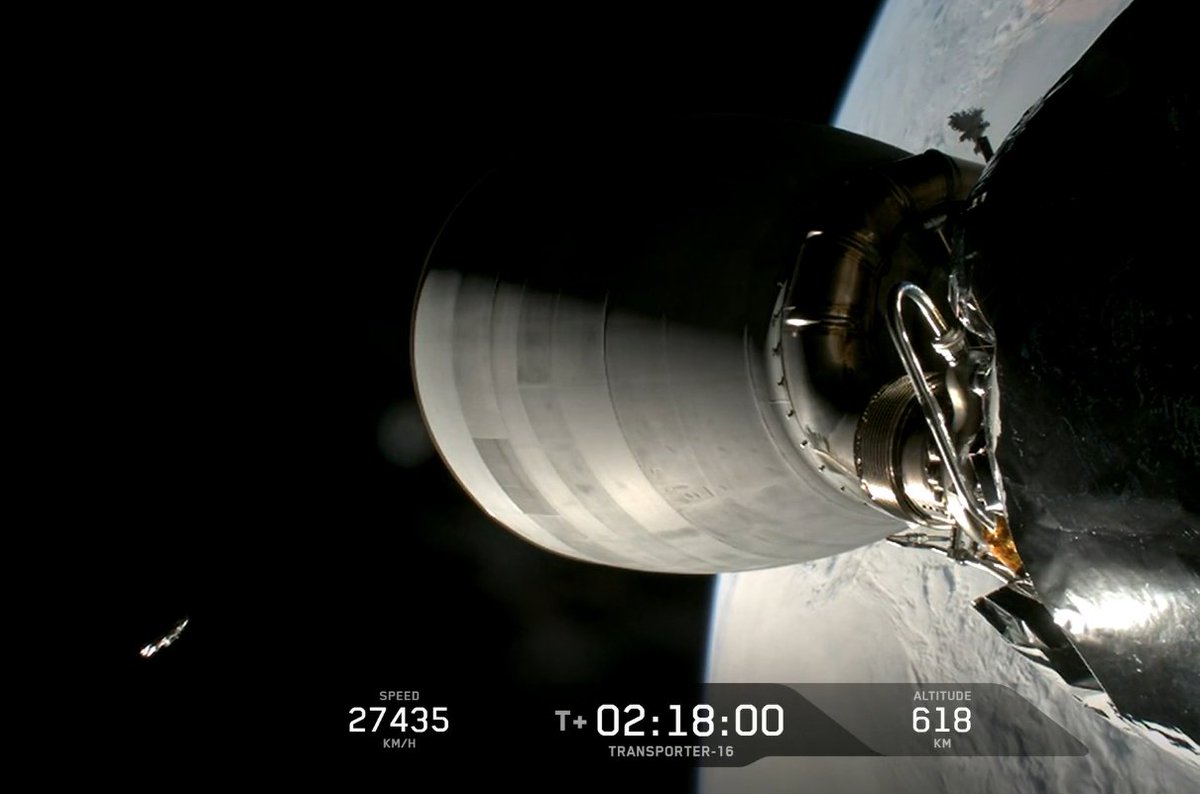
We have officially completed initial commissioning for our Block 2 mission — and all four satellites are working as expected. Next up: orbit raise. It's time to go to GEO.

40,082 görüntüleme • 1 yıl önce •via X (Twitter)

5 Yorum

Christian Keil profil fotoğrafı
Christian Keil1 yıl önce

LET'S GOOOOOOOOOO

Filip Brnadic profil fotoğrafı
Filip Brnadic2 yıl önce

𝗘𝘃𝗲𝗿𝘆𝗼𝗻𝗲 𝘄𝗮𝗻𝘁𝘀 𝘁𝗼 𝗺𝗮𝗸𝗲 𝗺𝗼𝗻𝗲𝘆 𝗶𝗻 𝗰𝗿𝘆𝗽𝘁𝗼, 𝗯𝘂𝘁 𝗺𝗼𝘀𝘁 𝗽𝗲𝗼𝗽𝗹𝗲 𝗱𝗼𝗻'𝘁 𝗵𝗮𝘃𝗲 𝗮 𝗽𝗹𝗮𝗻. Here is your plan 👇🏽 25+ tools to exit near the top of the cycle. It's updated weekly and you won't find this anywhere else. You're welcome.

Turbo profil fotoğrafı
Turbo1 yıl önce

Satcat shows objects 62454-62457 are in HEO orbits. If the sats are destined for GEO, can you share why you injected into HEO vs directly into GEO?

CyberFarms 🇺🇸 profil fotoğrafı
CyberFarms 🇺🇸1 yıl önce

💯

Sam 🌻 profil fotoğrafı
Sam 🌻1 yıl önce

Cheers what yall are doing is amazing 👏

Benzer Videolar

Huge update from Astranis Mission Control: all four Block 2 satellites have successfully completed initial commissioning and are now headed to GEO using their on board ion thrusters. This is a huge deal. Here are some highlights from our first week and half on orbit: - Nominal deployment in our target orbit: 400km x 65,000km x 12.5 deg inclination (thank you SpaceX) - All pre-separation logic and separation autonomy worked perfectly, and all autonomous deployments (solar arrays, ion thruster gimbals, and secondary antenna reflectors) successfully completed - Checkouts of thermal management systems, power subsystems, software, and GNC - Reaction wheel, SADA, and monopropellant thruster commissioning - Monoprop detumble and transition to fine pointing control using reaction wheels and star trackers - Sun-pointing mode achieved for maximum power generation - High rate TTC downlink and download of onboard data - Subreflector boom deployment and verification via photodiode telemetry - Ion thruster gimbal commissioning, demonstrating successful gimbal deployment - Simultaneous command of all 5 Astranis satellites, using 9 different ground stations across 4 continents - 100% successful deployments: all solar arrays, booms, gimbals, reflectors, splashplates — 60x total hold down release mechanism deployments without issue - Test-fired and characterized all 8 monoprop thrusters on all 4 satellites (32x thrusters total) - Commissioned the Electric Propulsion (EP) system, including successfully test-firing each satellite's ion thruster - Conducted an initial payload checkout on all 4 vehicles— the Software-Defined Radios, RF front end electronics, high-power amplifiers (TWTAs), and LNAs have all been checked out and are performing nominally - Executed long-duration EP burns on all four vehicles, and have beginning orbit raises to GEO from our current GTO orbits In short: the satellites are working great and are on their way to GEO where they will start their missions for our customers. All of our hard work — designing, testing, manufacturing, and operating — is paying off. LET’S GO.

John Gedmark

64,190 görüntüleme • 1 yıl önce

I'm excited to announce we have achieved our Tier 1 mission success criteria and have begun gathering a tremendous amount of data on how this brand new spacecraft performs. On March 30th, 13:17:08Z, the Gravitas spacecraft separated from the SpaceX Transporter-16 stack to begin its mission as one of the highest power free-flying satellites ever launched. Immediately after separation, the spacecraft autonomously: - Executed detumbling maneuvers - Established two-way communications with the ground (on our very first ground station pass) - Deployed its 20kW solar arrays - Slewed to a safe and stable attitude to await further ground commands These actions alone are a testament to the incredible work of our in-house engineering, software, and GNC teams to build a robust spacecraft. Since then, our operations team completed all initial system activations and checkouts, confirming the vehicle is in a power positive and thermally stable state with no major anomalies observed at this time. We completed this phase of the mission ahead of schedule. Next up we will be powering up and downlinking data for all payloads aboard the Gravitas spacecraft in support of our customers and partners while continuing to put the spacecraft through its paces. As we noted ahead of launch: The goal of this mission is to experiment and push our systems to the limit to inform future missions. I look forward to sharing more on our successes and challenges as the mission proceeds. Video of our satellite below; link to full T-16 webcast:

Neel Kunjur

89,661 görüntüleme • 3 ay önce