Video wird geladen...

Video konnte nicht geladen werden

Zur Startseite

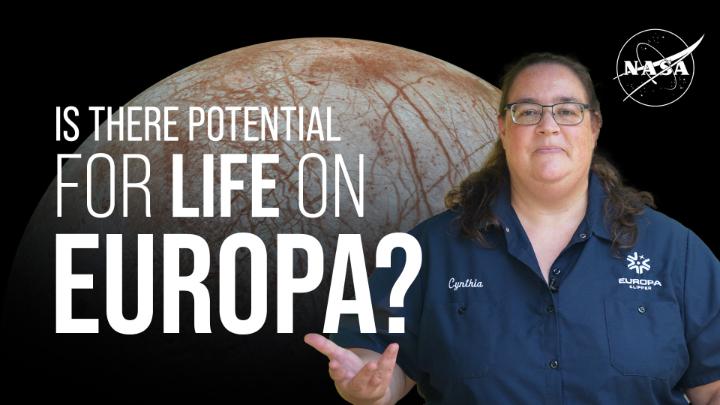
We have questions about Europa: How thick is its ice shell? How deep is its ocean? Is it somewhere life might thrive? To find out, we've assembled a whole suite of science instruments, and now they're loaded aboard our spacecraft ahead of our Oct. launch!
46,267 Aufrufe • vor 2 Jahren •via X (Twitter)

9 Kommentare

Profilbild von NASA Europa Clipper
NASA Europa Clippervor 2 Jahren

Explore the fascinating exterior and mysterious interior of Europa, and how each of our science instruments will help solve the enigmas surrounding them:

Profilbild von NASA Europa Clipper
NASA Europa Clippervor 2 Jahren

You can watch live as our spacecraft goes through the the final stages of preparation before our launch slated for later this year

Profilbild von Bhargav Mahesh
Bhargav Maheshvor 2 Jahren

Hey @NASA! 🚀 I have 2 questions about the Europa Clipper mission : 1. How does the spacecraft tackle Jupiter's harsh radiation for detailed Europa observations? 2. How will the clipper's data contribute to our understanding of icy moon evolution and the possibility of life?

Profilbild von NASA Europa Clipper
NASA Europa Clippervor 2 Jahren

@NASA 1. Rather than directly orbit Europa, which is bathed in radiation, the spacecraft will instead perform dozens of fast, close flybys of the moon. Also, Europa Clipper's most sensitive electronics will be enclosed in a thick-walled vault. 2. Details here:

Profilbild von Dwayne James
Dwayne Jamesvor 2 Jahren

And for our next trick..a drone, a drill rig, probes and a submarine!

Profilbild von Controversies of Science
Controversies of Sciencevor 2 Jahren

This should have been a mission to test the hypothesis of electric discharge machining. The features which have been labeled as "cracks" upon close inspection are really trenches, which is supported by the obvious observation that they do not even interact w one another.

Profilbild von TP - Vinny
TP - Vinnyvor 2 Jahren

Europa's magnetic field (MF) is considered as evidence for sub-surface ocean But Enceladus does not have a MF & YET, sub-surface oceans are claimed for it ! And why the MF logic is not applied to Mercury ? Care to explain ?

Profilbild von Laelanie Larach
Laelanie Larachvor 2 Jahren

@NASASolarSystem Post pictures of life at other planets...... no clue why you guys hide that information from the public.

Profilbild von KCC
KCCvor 2 Jahren

Fascinating

Ähnliche Videos

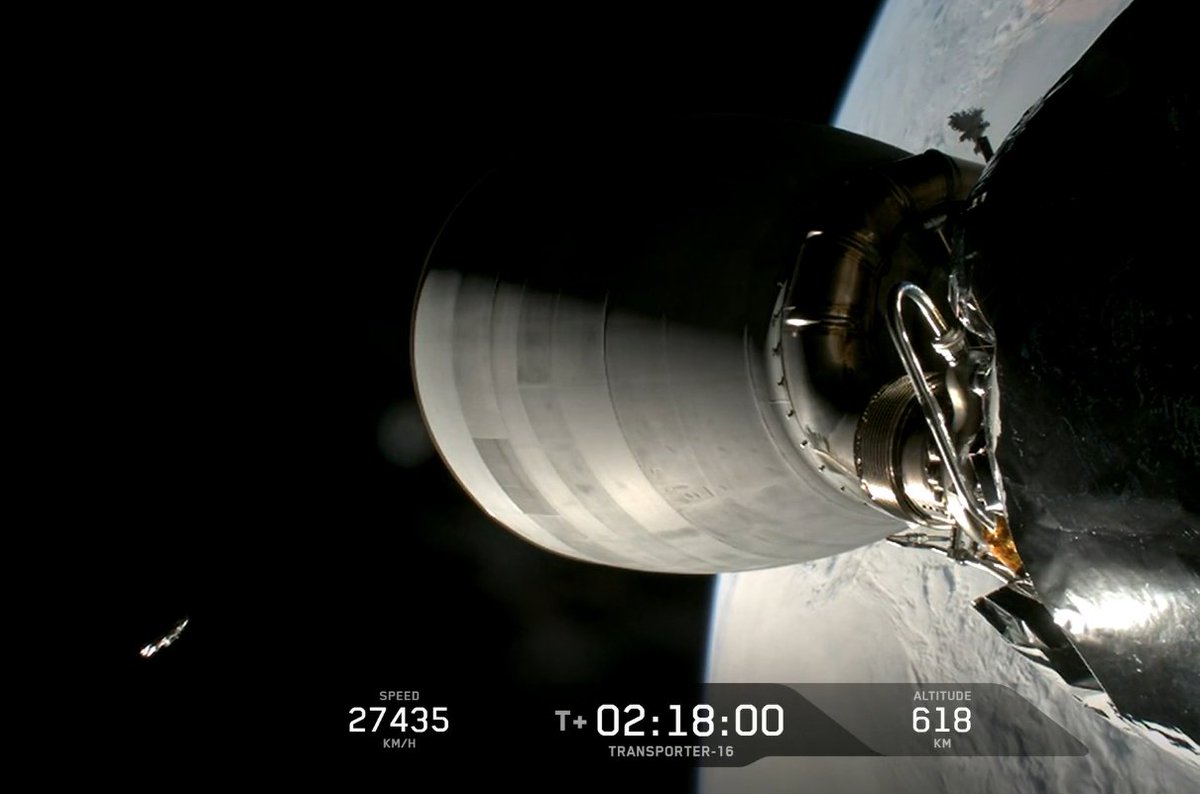
I'm excited to announce we have achieved our Tier 1 mission success criteria and have begun gathering a tremendous amount of data on how this brand new spacecraft performs. On March 30th, 13:17:08Z, the Gravitas spacecraft separated from the SpaceX Transporter-16 stack to begin its mission as one of the highest power free-flying satellites ever launched. Immediately after separation, the spacecraft autonomously: - Executed detumbling maneuvers - Established two-way communications with the ground (on our very first ground station pass) - Deployed its 20kW solar arrays - Slewed to a safe and stable attitude to await further ground commands These actions alone are a testament to the incredible work of our in-house engineering, software, and GNC teams to build a robust spacecraft. Since then, our operations team completed all initial system activations and checkouts, confirming the vehicle is in a power positive and thermally stable state with no major anomalies observed at this time. We completed this phase of the mission ahead of schedule. Next up we will be powering up and downlinking data for all payloads aboard the Gravitas spacecraft in support of our customers and partners while continuing to put the spacecraft through its paces. As we noted ahead of launch: The goal of this mission is to experiment and push our systems to the limit to inform future missions. I look forward to sharing more on our successes and challenges as the mission proceeds. Video of our satellite below; link to full T-16 webcast:

Neel Kunjur

89,923 Aufrufe • vor 4 Monaten