Загрузка видео...
Не удалось загрузить видео
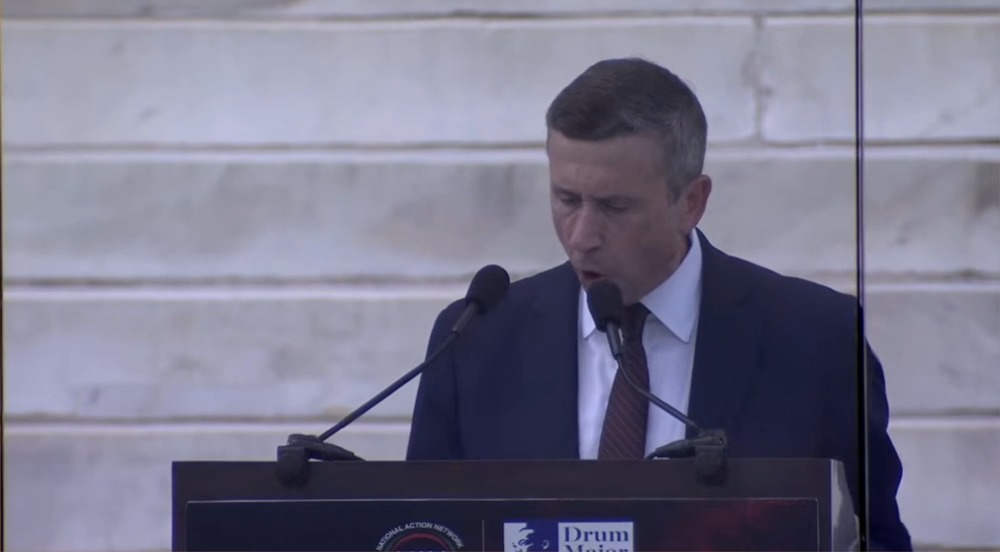
We keep inheriting knowledge we’re not ready to survive! I spent a few days putting this presentation together, that explores the recurring pattern found across ancient civilizations. Where knowledge is given, humanity advances, and then destabilizes when wisdom fails to keep up!. It looks at how this same structure... show more
31,996 просмотров • 6 месяцев назад •via X (Twitter)
Комментарии: 52

This explains how & why AI can be a catalyst for growth or a catalyst for destruction of human life, freedom & meaning… It IS imperative at this moment in history that we make a massive & global effort to stabilize Truth, God, Life & Consciousness…Awaken as many Spirits as possible…develop this discernment & bring back wisdom to humanity & daily life… It was lost & has now been found & embodied by more & more each day. Staying aligned during the hardest times will help You develop & find the Truth & wisdom You seek.

Bingo!

I look forward to watching it. By and large, humanity spends all of their time developing outwardly and never developing inwardly, on the whole. Basically vibrating themselves into cyclical cataclysms every 6000 years ish.
Inward excellence always leads to outer excellence. Outer excellence never leads to inner excellence.
Yes, developing from the inside out will allow everyone to have their cake and eat it too. It’s put precisely in the concept of seek first the kingdom of God and all things will be added to you. But people like to never turn inward because it means taking responsibility. And that’s not because they’re not capable, but they don’t believe in themselves. If they could only see themselves the way the source of all creation sees them. Because they are it and when humanity realizes it collectively, they will sprint away from the darkness faster than a cheetah through the plains.
Yes, it can be a very destabilizing experience .... it takes one to the depths of their suffering only to find freedom on the other side. Most won't do it.
Absolutely they won’t do it because it’s easier to find enemies lurking around every corner outside. Instead, there’s no true external enemy. The enemy lies within, but even then it’s not truly an enemy, but a teacher to allow oneself to become its greatest expression.

Great in knowledge Weak in wisdom
Yeah .. that's it. Pretty much every single time we get a little too far ahead ..we get crushed back.

On purpose you might note. Check out the strategic castration if our public school curriculum and teaching techniques.
Well aware, it makes my stomach turn.

Oh lord Jason, this should be mandatory viewing for all. This is how I see it in an image. NO, we are not mature enough to be at the controls. If we equate it to human life span, we are babies who think we are adults. We are 'not there yet'. And unfortunately, not by a long shot.

Necessary recent KNOWLEDGE is definitely suppressed... Has anyone been reading the UN Charter or the Charter of the Org.of American States? Been to several 'law libraries', originals not to be found, no TREATIES collections... So depressing... Millions of lawyers, thousands of courts - madmen somehow keep hypnotizing the masses into cruelties+wars.

This video helped me put together more puzzle pieces. 🧩 Thanks for sharing!
Very welcome!

Say, We live in a simulation, without saying we live in a simulation! ;) some deep thoughts right there.
yup .. you're tracking.
Question.. Why us? what makes us so damn special?? The planet I could see being important, but us? why? :D
We’re not special. We’re just the current carriers of awareness on this planet, the part of the system that can question itself. The real pattern isn’t about us being chosen...not ever, it’s that consciousness keeps showing up somewhere… and right now, it’s showing up as us.
I'm guessing you were withholding necessary information in your book bcs of the 2011 Florida case of principle Kenney practicing hypnotherapy, self-hypnosis (75 indiv) and seen as related to 3 students' deaths.
No. Hypnotherapy is not related to these writings.

In recent time a spark of interest drew me to reading about the Sumerians, old history. I'm aware of controversy about Z. Sitchin. Now I am curious about what you refer to as the Abcalo. Please could you give me a source for this point of reference. I appreciate your posts.
Apkallu - they are the fish like half human sages that arrived from the water in ancient times to teach primitive humans law, culture, irrigation, farming, writing and such ... probably not fish people, but survivors of another culture that were just a little bit "ahead".
Thanks for replying. So I have learned something new. It helps to have the spelling right for Apkallu. Also brings to mind Vishnu? I've been into Hindu mythology for several years prior to Mesopotamia occupying my attention.

I think we humans wanted to become like the gods who were our teachers. We needed to be protected from ourselves. That's why they sent the flood and did a reset. This divine knowledge is only available to us when we act with complete awareness and live in peace, love and harmony.

Correct. There is a delicate balance where "proof without belief" and "belief without proof" exists. They are virtually different sides of the same coin. Science/Faith. Historically they evolved each other. Science is the study of the creation to understand the creator.

While I concur teachers retreated, others didn't, they merely blended or are invisible. A thought provoking presentation, shared. "We alone - individually learn to surf illusion, keys unlock the shackled anchor of form. Blessings in Tao🙏"
I tried to order your new book on Amazon, the review they posted is BRUTALLY EXCELLENT... but could not deliver to my address. Very strange.

@JasonWilde108 thank you for your excellent pattern recognition. Could you overlay this knowledge with religious text from the Bible, Quran and other religious scripts. I'd like to understand how language is preventing shared patterns emerge from these texts.

Giants! and Vampires! and Werewolves (inherited domestic abuse)! OH! MY! No more giants....

Always a pleasure to see your nuanced approach and insights into the phenomenon..you sir are a thought leader and diamond in the rough 🙏🏼🧡🪬
Thank you Mack!
No thank you Jason.. I am but a student 🙏🏼

🤌🏼

Brilliant!
Thank you!

DHARMA 🧘🏽♂️

Incredible experience Jason!!🛸 This is how my father explained to me his sightings in Costa Rica 🌟
thanks for listening!!! I'm glad it can make some sense to others.

WOW What an incredibly thoughtful and intelligent presentation Ty for the 🧠 food
Haven't listened to this yet Jason, but I know it will be share worthy (and them some). Will watch later!

Just subscribed to your yt How did I not know you have a youtube? 🤣 Looking forward to listening to this tonight

"This has all happened before, and will all happen again, so say we all." ~ Laura Roslin, President of the 12 colonies of Kobol.
Yes!! Did you know that the pyramids will activate with an incoming planetary system...
Can I send your boys my colorful handmade bath squares. I call them VIRUS CATCHING , QUANTUM ENTANGLERS, based on that elusive 'string theory'...?

The same question came to mind as I was working on this project. But I'm an optimist.

Knowledge is what you know — facts, skills, information you’ve gathered. Wisdom is knowing what to do with it, especially when the facts don’t cover the situation. Wisdom is the judgment layer on top maybe we have lost that layer in this tech world

I have or hold the Serpent Scepter ... please DM me when you can.

So very true💕☮️🧚

A good reason for the Prime directive.
Why no HELP with meditations, yoga, affirmations, prayers... MI CBT DBT bla,bla,bla?!

🔱⚓️