Video wird geladen...
Video konnte nicht geladen werden
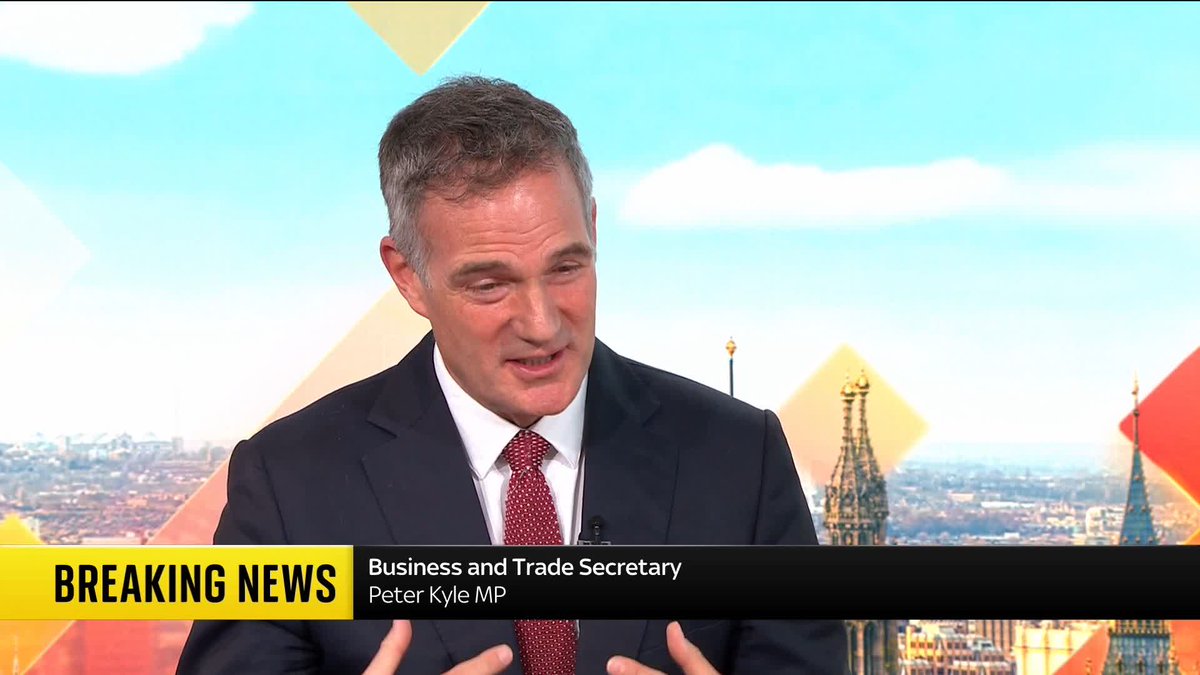
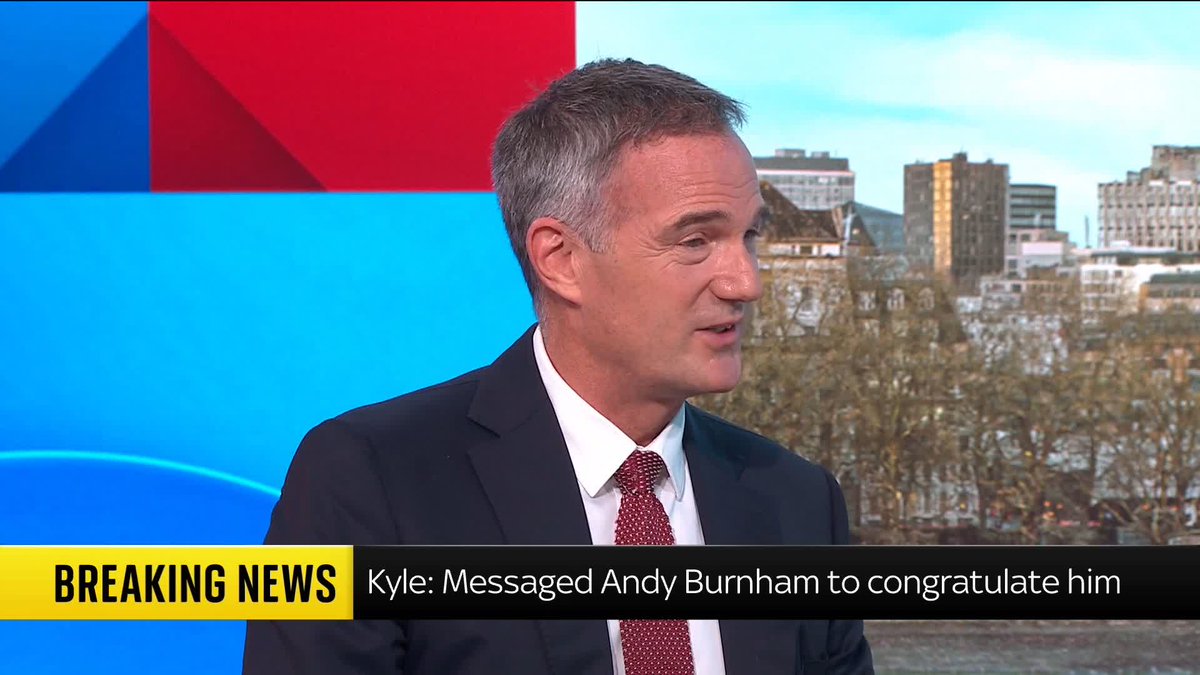
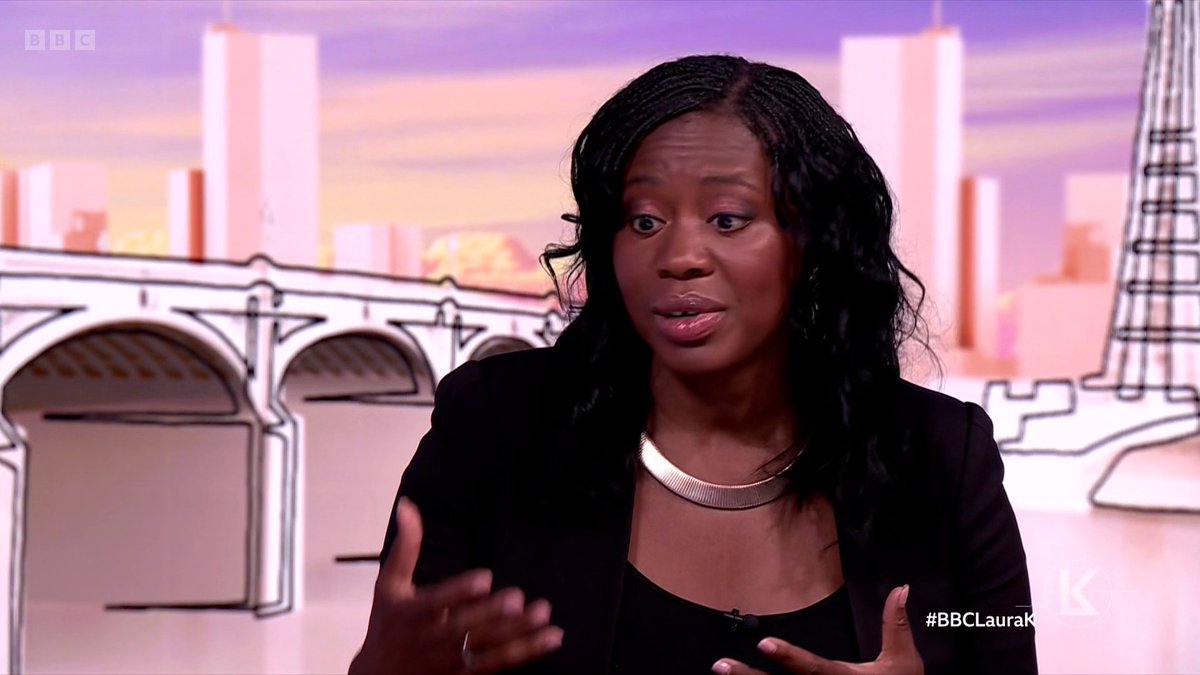
"We need act with more urgency when it comes to economic growth” In his first interview since being asked to leave cabinet by Andy Burnham, former Business Secretary Peter Kyle tells #BBCLauraK that there isn't enough focus on growth in government.
188,655 Aufrufe • vor 10 Tagen •via X (Twitter)
13 Kommentare

This is hilarious; BBC’s Laura Kunessberg listening intently to the Labour ex business secretary complaining about his own party not doing the right things to stimulate growth a few weeks after he was sacked for not doing enough to stimulate growth as business secretary. Everyday you just couldn’t make this BS up.

What does he know. Another grifting politician... In business one day, defence the next, health the day after. They know 'nothing' about their role and plod along milking the trough....

Growth. How about he bins the policies that are destroying industry. He won’t do that though will he, just like he won’t create any real growth beyond mass migration.

Kyle epitomises the low IQ , no business experience, nothing to offer type of MPs were now expected to just accept .

He had a chance why did he not do it?

Taking business/economic advice from Kyle is hilarious (unless asking about where to put the bath bombs in The Body Shop. Saying that, we now have Reynolds...

Totally unqualified for the job. Kyle speaks in platitudes and sound bites.

Peter Kyle, the UK Gaslighter-in-Chief, who did not hesitate to say ‘children will be harmed unless you upload your ID’ in order to push the Online Safety Act.

BBC NEWS IS INSTITUTIONALLY TORY. The BBC tells us it is politically impartial. But impartiality is not simply a matter of whether a presenter declares for Labour or Conservative. It is about what stories are chosen, which questions are asked, whose arguments are treated as serious, who gets invited into the studio, whose statistics become the headline figures and whose voices disappear. Look at the people who have dominated BBC political journalism: Nick Robinson, Laura Kuenssberg, Chris Mason, Justin Webb, Sarah Montague and the senior editors and correspondents around them. Several have privately educated or highly selective educational backgrounds. Robinson was chairman of the Young Conservatives before becoming a political journalist. None of this proves that these journalists are Conservatives. It doesn't need to. The deeper problem is the extraordinary lack of intellectual and social diversity at the BBC's political centre. A newsroom can reproduce the assumptions of a particular social class without its journalists conspiring to do so. In fact, that is precisely how ideological conformity usually works: assumptions become so familiar that nobody thinks of them as assumptions. Listen to the questions. A Labour politician proposes spending more on public services: How will you pay for it? A Conservative proposes cutting spending: How much will you save? A Labour government proposes intervention in the economy: Will business be frightened? Will the markets react? But where is the equivalent interrogation of the opposite assumptions? What is the economic cost of starving public services of investment? What does inadequate NHS treatment cost the economy? What is the cost of poor housing, insecure employment and inadequate childcare? What is the economic value of public ownership? What happens to productivity when millions of people cannot obtain timely healthcare? Why should inherited wealth receive such favourable treatment? These aren't "left-wing questions". They are perfectly legitimate questions about competing economic philosophies. Yet one set of assumptions is routinely presented as political common sense while the other is required to justify itself. And then there is the extraordinary BBC obsession with the populist right. Reform receives enormous political attention. Nigel Farage is repeatedly given a national platform. Reform's provocations become news stories in themselves. Again, there may be perfectly legitimate reasons for this. Reform is electorally significant. Farage is politically consequential. News organisations are entitled to cover both. But where is the equivalent sustained curiosity about the Greens? Where are the long interviews examining public ownership, wealth taxation, redistribution, environmental investment and the transformation of public services? Why does an incendiary statement from the populist right so readily become "the story", while serious arguments from the left are so often treated as positions requiring explanation or justification? This is not necessarily a conspiracy. It is more interesting than a conspiracy. It is a culture. A culture in which the political centre of gravity has moved so far towards accepted establishment assumptions that those assumptions no longer look political. The BBC will protest that its journalists are required to scrutinise everyone. Good. They should. But scrutiny isn't only about asking difficult questions. It is also about deciding which questions exist. It is about the assumptions contained in the question itself. It is about who gets interrupted, who gets challenged, who is allowed to complete an argument, who is introduced as an "expert", which think tank's figures are quoted, which polling result leads the bulletin and which piece of evidence never makes the programme at all. It is about the difference between treating an argument as a serious proposition and treating it as something that needs to be rebutted. And it is about representation. The BBC does not need "champions of the left". Journalists are not party politicians. But a supposedly impartial national broadcaster surely needs enough social, educational and intellectual diversity among its journalists to prevent one particular conception of political reality becoming the default. That is the problem. There are plenty of BBC journalists capable of interrogating the left from the assumptions of fiscal caution, market confidence, individual responsibility and private enterprise. Where are the equally prominent journalists who instinctively interrogate politics from the standpoint of public ownership, redistribution, social equality, collective provision and the economic interests of working people? Where are the journalists who regard concentrated wealth as a political question rather than simply a fact of life? Where are the journalists who ask Conservative politicians, with the same persistence applied to Labour, what their policies will cost ordinary people? Where are the journalists who challenge the assumption that markets are the natural solution and public provision the exceptional one? This matters because the BBC is not merely reporting politics. It is helping to define the boundaries of respectable political thought. A political idea repeatedly placed at the centre of the BBC's coverage becomes normal. An idea repeatedly pushed to the margins becomes eccentric. A politician repeatedly given a platform becomes significant. A politician rarely invited becomes peripheral. A statistic repeatedly quoted becomes part of the national conversation. Another statistic can effectively cease to exist. That is political power. And it is exercised long before anyone casts a vote. The BBC's defenders often respond: "But these journalists aren't Conservatives." That misses the point. The question isn't what political party they secretly support. The question is whether BBC News provides genuine ideological pluralism. At present, it is perfectly possible to watch BBC political coverage for weeks without encountering a prominent journalist whose intellectual starting point is recognisably socialist. That should concern anyone who believes in impartial broadcasting. Because impartiality isn't achieved by putting two politicians in front of a microphone. It requires a newsroom capable of seeing the political world from more than one direction. Otherwise the BBC can remain formally impartial while producing something quite different: a national political conversation in which Conservative assumptions are treated as common sense and arguments from the left are treated as arguments. That is the problem. Not conspiracy. Not secret party membership. Powerful institutions reproducing the assumptions of the world from which their journalists overwhelmingly come.

Can you believe the last Conservative Gov't deemed car washers and vape shop employees, highly skilled workers, and were in power for over 14 years, shame they couldn't leave the country in a better state than they found it #BBCLauraK #BBCPolitics

We know. Most people predicted this before Labour came to power. How does increasing taxes, increasing state control, increasing welfare lead to growth. Typical Labour.

@bbclaurak Their answer is always spend more and tax more and they wonder why there’s no growth. Morons.

another one @peterkyle who didnt have the backbone to speak up when actually in the cabinet...utter coward...this government is full of them..


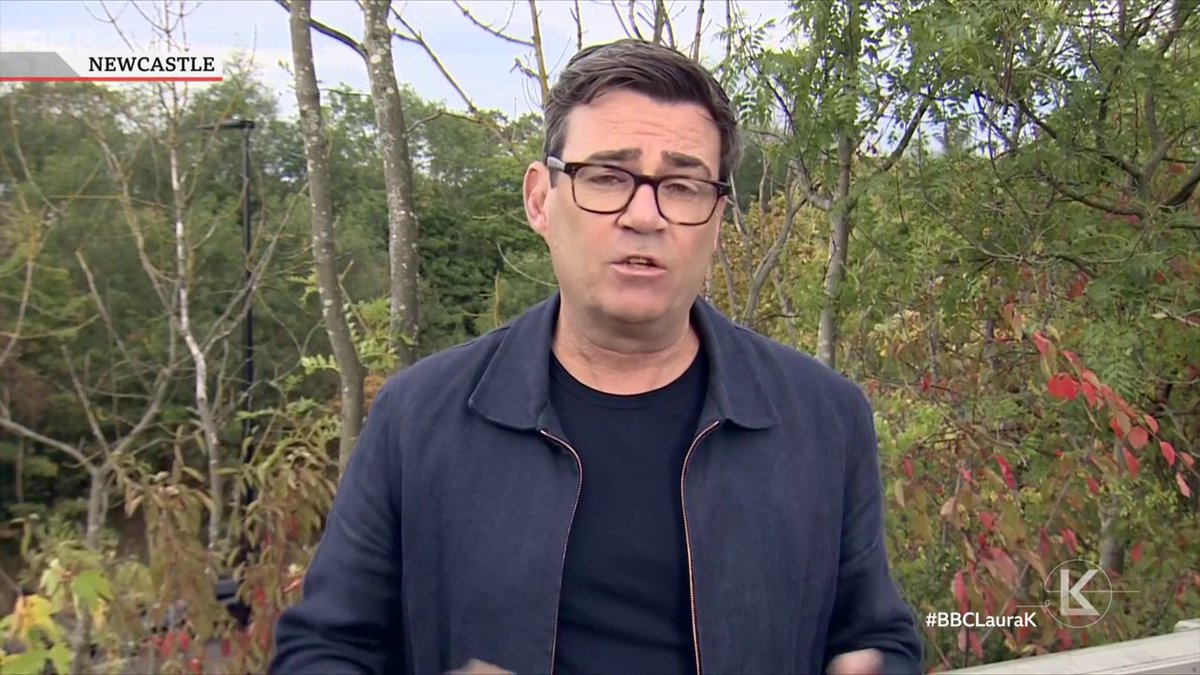
![“We’ve got to work out the way of [spending more money on defence]” Speaking to Laura Kuenssberg in his first major interview as prime minister, Andy Burnham wouldn’t commit to spending 3% of GDP on defence by 2030 #BBCLauraK](https://image.24vids.com/tw-2081260847544844324/media/HOIftUHXoAAIRiN.jpg)



!["What really enraged Tony [Blair] was when Andy [Burnham] said that he wanted an end to neoliberalism." Former Political Secretary to Tony Blair John McTernan speaks with Mehdi Hasan after a stunning by-election victory for the Labour candidate Andy Burnham in Makerfield.](https://image.24vids.com/tw-2068366620666331626/amplify_video_thumb/2068366234534473728/img/BI1KcPUaQIiV7fv3.jpg)


![“There will be thousands more [casualties in Gaza]” Former cabinet minister David Davis says “no one’s comfortable” with the amount of people being killed in Gaza but that Israel must be able to destroy Hamas in order to protect its security #BBCLauraK](https://image.24vids.com/tw-1718593411177922635/amplify_video_thumb/1718591459681591297/img/I4n3Fi6bj3mn_scE.jpg)