Loading video...

Video Failed to Load

Go Home

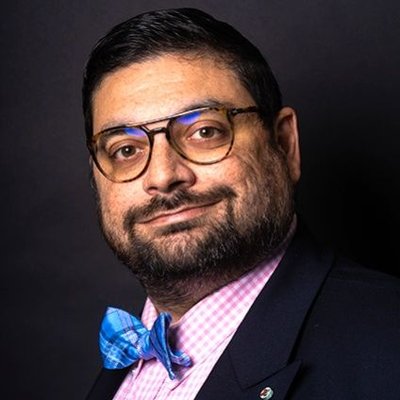
We often ask: how did Britain get so broken? Prof. Jason Arday, the Milli Vanilli of academia, the man who HUMILIATED Britain's woke elite, may offer a partial answer. There needs to be a root and branch investigation into D.E.I. hires, not only in academia, but in companies, organisations...

83,572 views • 8 days ago •via X (Twitter)

0 Comments

No comments available

Comments from the original post will appear here

Related Videos

The Free Speech Union is taking an interest in the story of Jason Arday for a number of reasons. First, we want to know who paid for the threatening letter from the law firm Carter-Ruck — effectively a SLAPP — that was sent to Times Higher Education in an attempt to get journalist Jack Grove to stop asking Professor Arday questions about his academic record. Was it Jason Arday himself? The University of Cambridge? Or the Good Law Project? Second, we want to know who reported both the academic and former professor David Harris and Times Higher Education journalist Jack Grove to the police, alleging harassment after they began asking Arday questions about his academic and extracurricular record. In David Harris’s case, the Metropolitan Police referred the complaint to Devon and Cornwall Police, which rightly decided there was nothing to investigate. But in Jack Grove’s case, he was contacted by the police and informed that he had been the subject of a four-month investigation by the Met. While officers said they would be taking no further action, he was told he should refrain from questioning Jason Arday again because it was also affecting Arday’s mental health. The police should never be telling journalists whom they can and cannot question — particularly when there are legitimate questions that need answering. Powerful people should not be able to use the police to silence journalists and academics who are simply asking questions and doing their jobs. The Free Speech Union has written to Sir Mark Rowley, Commissioner of the Metropolitan Police, to ask what on earth his officers were playing at. He has yet to reply. If Jason Arday was the person who reported these individuals to the police, that is one thing. But if it was the University of Cambridge, that would be even more serious — and is something FSU General Secretary Lord Young will be raising in Parliament in due course. Watch Lord Young below 👇

The Free Speech Union

368,120 views • 3 days ago

I shared a video from Nick Freitas yesterday about how to encourage and reach young men. You should check it out if you didn’t see it. Now, here is a clip that shows how to repel and discourage young men. This is so frustrating, Sean DeMars and Neil Shenvi. Leaving aside the whole “woke right” thing, whatever. You acknowledge that the Left has total cultural control. Then you mock the idea that white men are systemically discriminated against in our culture, or that we live in an effeminate gynocracy. What do you think the Left does with its total cultural control? You mock young men by claiming that their discrimination has no basis in reality, but has to be understood via some “gnostic” higher knowledge. This is not fair. We are starting to get more and more hard data on this issue. I will admit that there is an element of “look around, this should be obvious.” It should be, and you’re really sticking your head in the sand to deny these things. But being on the Right is to believe in God’s created reality. It’s not about “lived experience,” it’s about what is actually true. White men are being discriminated against in this culture, and the West has been feminized radically in the last 60 years. The biggest problem with the woke was always that they were wrong, beyond even their philosophical system. It wasn’t merely that they were claiming to be oppressed, but it was that this claim was wrong. "This argument sounds like that argument" is just so lazy when one was factually wrong, and one is factually right. The claims of the Right are correct in general. But at the end of the day, good luck crapping on young men like this. We'll see how that works out for you. I won’t be joining you.

Nate Schlomann

47,845 views • 8 months ago

Dr P Arora (Pooja Arora) and I spoke about cancel culture and common knowledge, the topic of my new book: When Everyone Knows That Everyone Knows . . . Me: Yeah, so cancel culture is one of the phenomena that has surrounded what’s sometimes called the Great Awokening. It’s a humorous term based on the Great Awakening, which was an era in American history where there was a huge multiplication of Protestant churches and of religious fervor in the 19th century. That was the Great Awakening, and so the joke is it’s the Great Awokening, probably starting maybe around 2014, but then it really exploded in 2020 in the United States with the killing of George Floyd in Minneapolis. But anyway, cancel culture, which is not restricted to the left, to wokeism—and in fact, in the United States in the last year, we’ve seen an eruption of cancel culture from the populist MAGA Trumpian right, especially after the killing of Charlie Kirk—where the same things that were happening in woke culture, namely someone would have a tweet or a comment that seemed disrespectful of the dominant ideology, and they would get threatened, they would get censored, they would get fired. So in my book, When Everyone Knows That Everyone Knows, one of the chapters is called The Cancelling Instinct. It’s a bit of a play on my book, The Language Instinct. It just asks the question: since it is not only the woke left, but it can also be the MAGA right—and to say nothing of the fascist right or the Nazi right—to repress speech, the question is why? Why do we feel the urge to shut up people we disagree with? Particularly since one of the principles of the Enlightenment, and of science and democracy, is that you need to have free speech, because none of us is infallible. The only way we make progress is that people—everyone—express an opinion; other people are free to criticize those opinions; and it is in the crucible of debate and criticism that we see which ideas are good, which ones are true, which ones are errors that we should discard. I suggest the reason that there is such an urge to cancel is that we all are—we live by moral norms, not just by laws where the police will arrest you and put you on trial and put you in jail if you break a law. And that happens. But we have many more norms of how we live our lives, where people don’t do something because, you know, everyone knows you don’t do it. Why does everyone know? Well, everyone knows that everyone else knows you don’t do it. You don’t walk around naked. You don’t eat mashed potatoes with your hands. You don’t insult people to their faces. You don’t point out—if someone is overweight or has a speech impediment—there are dozens of these norms. And some of the norms are: you don’t make racist comments. You don’t make comments that demean women or gay people. What upholds these norms? Common knowledge. They exist because everyone knows they exist, which means that if it appears that a norm is threatened—crucially, in a public arena where it could be common knowledge—then there is an urge to punish that person, but also publicly. That is, in an arena of common knowledge. That is where everyone can see the punishment, and everyone can see everyone else seeing the punishment. That’s what’s necessary to prop up a norm, and that, I think, gives rise to the urge to censor and cancel, often in highly public ways. Now, in the old days, it used to be that there were public hangings and public crucifixions and burnings at the stake. The electronic equivalent is the internet petition with 600 signatures or the social media shaming mob, but I think the underlying psychology is the same. Now, in some cases, this could be positive. That is, it really is good that we don’t insult each other to our faces, that we don’t tell racist jokes, which were very common when I grew up. On the other hand, in arenas like science, democracy, the rule of law, the truth is more important than social harmony, and the whole point of scholarship, academia, of science is that you find the truth even when the truth seems uncomfortable. And so cancel culture can get in the way of our collective effort to acquire knowledge.

Steven Pinker

63,515 views • 6 months ago