Video wird geladen...

Video konnte nicht geladen werden

Zur Startseite

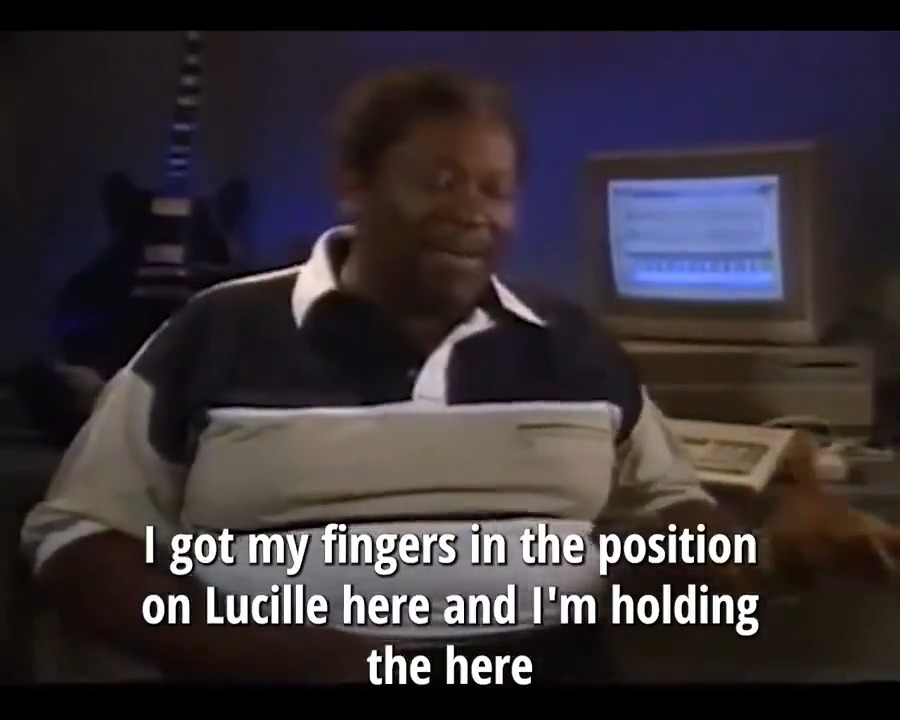
๐ŸŽธ โ€œWeโ€™re on a mission from God!โ€ Back when Saturday Night Live was at its absolute peak โ€” the Golden Era (1975โ€“1980) with the legendary original cast known as the **Not Ready for Prime Time Players** โ€” two cast members turned a love for Chicago blues into comedy gold....

24,446 Aufrufe โ€ข vor 5 Monaten โ€ขvia X (Twitter)

0 Kommentare

Keine Kommentare verfรผgbar

Kommentare vom Original-Post werden hier angezeigt

ร„hnliche Videos

According to Dan Aykroyd, many theaters in the Southern states of USA refused to screen "The Blues Brothers" (1980) because they felt that there were too many Black people in it. Dan Aykroyd talking about it: "Interviewer: When the movie came out, it wasn't immediately a huge hit. It had to be kind of carried on a wave into distribution. Aykroyd: It really wasโ€”for that time, it was a huge hit. Yeah. The movie opened at the top and then 'Airplane!' (1980) came in. But no, it opened number at top of the box office. It made about $80,000,000. Well, $78-80,000,000 in the gross that summer. So, that's very significant. Interviewer: But you didn't have the distribution that you wanted when the movie opened Aykroyd: Well, we didn't have southern states, because the exhibitors down there didn't want the movie, because there were too many Black people in it. Can you believe that? In 1980. (Sarcastically.) Thank you very much. God bless America. Ho-ly. Interviewer: They literally, explicitly said that. (Dan confirms). That's not you interpreting their actions. Aykroyd: No, no, they refused it. Finally, when the movie did do well in business elsewhere, southern exhibitors took it on. But no, it was a hit. It was a hit that summer. And it made its money back, of course, many times over by now." ("Bullseye with Jesse Thorn" podcast, 2024 & IMDb) P.S: On this day, 46 years ago, "The Blues Brothers" (1980) was released in the USA and Canada.

DepressedBergman

73,820 Aufrufe โ€ข vor 3 Monaten

According to Dan Aykroyd, the budget for "The Blues Brothers" (1980) included "Cocaine" for night shoots. He said, "Everyone did it, including me. Never to excess, and not ever to where I wanted to buy it or have it. [But] John [Belushi], he just loved what it did. It sort of brought him alive at nightโ€”that superpower feeling where you start to talk and converse and figure you can solve all the worldโ€™s problems." John Belushi put off rehab for his worsening condition in order to complete the movie. He told his wife, โ€œIโ€™m fine, I canโ€™t stop now until I finish the movie. Itโ€™ll be fine when itโ€™s over.โ€ For all the efforts of his friends and colleagues, Belushi was surrounded by enablers, according to Ned Zeman, though Landis did his best to convert them: โ€œFor Godโ€™s sake,โ€ he told Carrie Fisher when she arrived on set, โ€œif you see John doing drugs, stop him.โ€ John Belushi's addiction was so bad that he disappeared while filming one of the night scenes. Dan Aykroyd looked around and saw a single house with its lights on. He went to the house and was prepared to identify himself, the movie, and that they were looking for Belushi. Before he could, the homeowner looked at him, smiled and said, "You're here for John Belushi, aren't you?" The homeowner told them Belushi had entered their house, asked if he could have a glass of milk and a sandwich, and then crashed on their couch. Situations like that prompted Aykroyd to affectionately dub Belushi "America's Guest." The two of them walked back to the set like nothing happened. ("Drugs, John Belushi, and the Making of The Blues Brothers", Ned Zeman, Vanity Fair, 2012)

DepressedBergman

1,791,851 Aufrufe โ€ข vor 4 Monaten

BREATH CONTROL & TONAL MEMORY Beyond being an incredibly fun and creative moment of interaction with the audience, Kim Taehyung demonstrates excellent breath control, strong support technique, vocal confidence โ€” and, of course, remarkable tonal memory. โ Tonal memory is the cognitive ability to store, retain, and mentally recall specific pitch frequencies (musical notes). โž When Taehyung challenges the crowd to sustain the โ€œVegasโ€ chant, his musical instinct naturally settles into E-flat. FUN FACTS: We know that Taehyung studies Jazz, plays the saxophone, and is a lover of R&B, Soul, Gospel, Blues, and Classical music. โ†’ In Jazz, E-flat is one of the most favored keys. This is largely due to practical reasons connected to wind instruments. Many of the most iconic jazz instruments, such as the alto saxophone and baritone saxophone, are tuned in E-flat. โ†’ In Soul, R&B, and Gospel, E-flat is considered a legendary key. Because of its velvety texture and how beautifully it resonates with both brass arrangements and vocal performances, it has become the primary choice for countless ballads and classic songs. โ†’ In Piano Blues, Jazz-Blues, Jump Blues, and Brass Bands, E-flat is extremely natural and widely used. Many classic blues songs and jazz-blues standards are written in E-flat. โ†’ Great composers of the Classical and Romantic periods, such as Beethoven, loved composing in E-flat major because they considered it a heroic, rich, and powerful key. Since the late 18th century, E-flat major has been associated with: โ€ข Heroism โ€ข Majesty โ€ข Grandeur โ€ข Brilliance and sonic richness VEGAS V NO CHILL VIVA LAS TAEHYUNG #V_WORLDTOUR_ARIRANG_VEGAS_D3 #TAEHYUNG_WORLDTOUR_ARIRANG

Music Map โ“ฅ

11,524 Aufrufe โ€ข vor 3 Monaten

Remembering the great Cab Calloway who was born on this day in 1907. Known for his exuberant performing style, Calloway led one of the most highly regarded big bands of the swing era. Calloway was a dynamic and humorous entertainer known for his eccentric dance moves and the dramatic flair of wildly tossing his mop of hair. His signature style included a white tuxedo and an oversized baton, complementing his energetic performances. As a vocalist, Calloway possessed an extraordinary range, earning him praise as โ€œthe most unusually and broadly gifted male singer of the โ€™30s.โ€ He began leading his own bands in 1928 and moved to New York City the following year. In 1931, he became a bandleader at the iconic Cotton Club, where his orchestra, alongside Duke Ellingtonโ€™s, became one of the two house bands most synonymous with the legendary Harlem venue. That same year, he recorded his most famous composition, โ€œMinnie the Moocher,โ€ showcasing his talent for scat singing. Other hits from the 1930s included โ€œSaint James Infirmary,โ€ โ€œKickinโ€™ the Gong Around,โ€ โ€œReefer Man,โ€ โ€œThe Lady with the Fan,โ€ โ€œLong About Midnight,โ€ โ€œThe Man from Harlem,โ€ and โ€œMinnie the Moocherโ€™s Wedding Day.โ€ Calloway also had a successful side career as an actor. He appeared in several motion pictures, including The Big Broadcast (1932), Stormy Weather (1943), Sensations of 1945 (1944), and The Cincinnati Kid (1965). George Gershwin had conceived the role of โ€œSportinโ€™ Lifeโ€ in his 1935 jazz opera Porgy and Bess for Calloway; the entertainer finally got his chance at the part during a heralded world tour of the show in 1952โ€“54. In the 1960s, Calloway appeared on Broadway and on tour in Hello, Dolly!, portraying the role of Horace Vandergelder opposite Pearl Bailey as Dolly Levi, and he again starred on Broadway in the 1970s in the hit musical Bubbling Brown Sugar. His best-known acting performance was also his last, as a jive-talking music promoter in director John Landisโ€™s comedy The Blues Brothers (1980). The film featured Calloway singing โ€œMinnie the Moocherโ€ every bit as energetically and eccentrically as he had performed it in 1931. Here, he is performing โ€œHi-De-Hoโ€ in 1934.

The Jazz Estate

102,936 Aufrufe โ€ข vor 1 Jahr

๐Ÿ”ดBoyz II Men Neutralized: How Capitalism Appropriated Black Artistic Momentum to Build the Late-1990s White Boy Band Era Black America created jazz. Black America created rock and roll. Black America created rap/hiphop. These genres were born from the lived experience, spiritual traditions, rhythmic innovation, and cultural resistance of Black communities in the United States whose ancestry comes from West Africa. The polyrhythms, call and response structures, tonalities, and communal performance traditions carried across the Atlantic survived slavery, segregation, and systemic exclusion, transforming into distinctly American art forms forged through struggle and survival. Yet at pivotal moments in American history, the commercial breakthrough of these genres flowed disproportionately through white performers positioned as more marketable to mass audiences. The rise of Elvis Presley followed the foundational work of Black rhythm and blues artists who had already defined rock and roll. The global dominance of The Beatles and the Rolling Stones drew directly from Black American blues traditions they studied and replicated. Time and again, original Black artistic expression generated the cultural momentum, while corporate systems elevated white performers as the primary vehicles of large scale profit and distribution. The pattern is structural: Black innovation establishes the sound, and capitalist industry redirects its mass commercialization. Boyz II Men stood within that lineage of Black creative power. Their harmonies, phrasing, and emotional depth carried forward a tradition shaped by gospel, soul, and doo-wop. When they achieved massive crossover success in the early 1990s, they demonstrated once again that Black artistry defined the center of American popular music. Yet following the 1996 Telecommunications Act and the consolidation of radio ownership, corporate control over playlists and promotion intensified. In the same historical rhythm seen with rock and blues, the late 1990s white boy band explosion rose through a commercial system that adopted R and B vocal structures and performance aesthetics while redirecting scale and capital toward acts framed as universally marketable. The result reflects a recurring American reality: Black communities create the cultural foundation, and capitalist expansion transforms that foundation into mass profit streams often detached from its original creators.

Horn of Africa Leftists

45,908 Aufrufe โ€ข vor 7 Monaten