Video wird geladen...

Video konnte nicht geladen werden

Zur Startseite

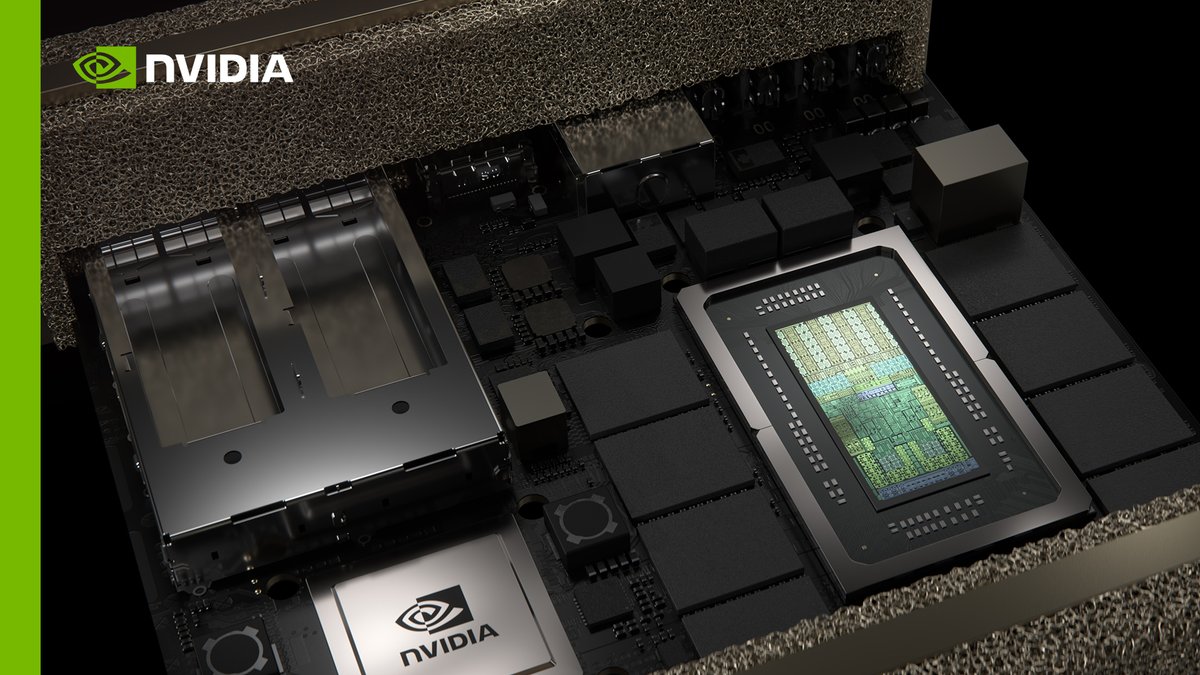
What does it actually take to run A/B testing at nearly a billion-user scale? Prudhvi Vatala, Head of Engineering Platforms at Snap Inc., explains how his team migrated 10+ petabytes of daily data processing to GPU-accelerated pipelines on Google Cloud — cutting job costs by 76% and memory footprint...

49,991 Aufrufe • vor 1 Monat •via X (Twitter)

0 Kommentare

Keine Kommentare verfügbar

Kommentare vom Original-Post werden hier angezeigt

Ähnliche Videos

Chamath said AI is not like the internet. Every new user costs real money. And the infrastructure making it possible was built by everyone. His argument was the clearest case for government ownership of AI labs I have ever heard. And it had nothing to do with Bernie Sanders. Start with the internet comparison. Google and Facebook became the most profitable companies in human history because of one number. The marginal cost of adding a new user was effectively zero. One more search query cost Google nothing. One more Facebook profile cost Meta nothing. They could serve a billion people and the incremental cost of that billion person was rounding error. That is the money printer. Infinite scale at zero marginal cost. AI breaks that model completely. Every single user taxes a GPU. Every query costs electricity. Every response requires memory and compute. The marginal cost of AI is real, significant, and does not disappear at scale. You cannot print money the same way. Then Chamath made the point that landed hardest. The infrastructure these companies depend on, the power grid, the land, the data centers, the permitting, the national security apparatus that protects their chips from being stolen, none of that was built by Anthropic or OpenAI. It was built by the public. By taxpayers. By decades of government investment in the physical and legal foundation these companies are now running on. He compared it to the interstate highway system. If the federal government built the roads and two companies transported all the goods on them, a logical question at that point would be how much of that should I own? You are riding on my rails. His conclusion was direct. If he were running a sovereign wealth fund and had the negotiating leverage of the US government, he would own 75% of these companies when he was done. The internet had zero marginal cost. That is why the founders captured almost all of the value. AI has real marginal cost and runs on public infrastructure. That changes who has a claim on what gets built. WATCH THE FULL PODCAST ON The All-In Podcast

Ihtesham Ali

78,381 Aufrufe • vor 7 Tagen

Chamath Palihapitiya just dropped the number that explains the entire AI infrastructure trade (Save this). A gigawatt of compute now costs $100 billion and when he started his Arizona data center project it was $4 to $5 billion, it has gone up 20x in a single investment cycle. The implication is not just that AI infrastructure is expensive but rather that the capital barrier to owning meaningful compute has become so high that only a handful of entities in the world can actually build it and the companies who got there early are sitting on what may be the most durable pricing power in the history of the technology industry. This is the neocloud trade. The neocloud market, purpose-built GPU cloud providers like CoreWeave, Nebius, and Lambda Labs was worth $35 billion in 2026 and is projected to reach $236 billion by 2031, compounding at 46% annually. For context, that is faster growth than cloud computing itself posted in its first decade. The reason is very simple, hyperscalers like AWS, Azure, and Google are building for everything, storage, databases, enterprise software, networking and their GPU pricing reflects the overhead of that full-stack infrastructure. Neoclouds build for one thing only, AI compute. The result is a 60% to 85% cost advantage on the same Nvidia silicon, bare metal H100s at $0.78 to $2.79 per GPU-hour on a neocloud versus $3.43 to $5.07 per GPU-hour on a hyperscaler. That spread does not close as AI demand scales but rather it widens, because hyperscalers have to amortize legacy infrastructure and margin expectations that neoclouds do not carry. Gartner projects that by 2030, neoclouds will capture 20% of the $267 billion AI cloud market, and Vultr's own analysis says at least 80% of GPU market share by end of 2026 will be held by a small group of scaled neocloud providers. Now zoom into Nebius specifically, because it is the most interesting publicly traded proxy for this trade. Nebius is the infrastructure arm of the former Yandex Russia's equivalent of Google rebuilt from the ground up after Russia's invasion of Ukraine by Arkady Volozh and relisted on Nasdaq in October 2024. The team that built it already knew how to run internet-scale infrastructure at the lowest possible cost, which is exactly the operational DNA a neocloud requires. In Q1 2026, Nebius reported revenue of $399 million and already generating serious cash on a young business with revenue growing nearly eightfold year-over-year. Then in March 2026, Meta signed a five-year infrastructure agreement with Nebius worth up to $27 billion, $12 billion in committed dedicated GPU capacity deployments beginning early 2027, plus up to $15 billion more tied to Meta purchasing Nebius's unsold third-party capacity. The deal will be executed on one of the first large-scale deployments of Nvidia's Vera Rubin platform, the next-generation architecture after Blackwell making Nebius one of a tiny number of operators in the world with confirmed priority access to the most advanced AI hardware available. Following the contract, Nebius guided to $7 to $9 billion in annualized recurring revenue for 2026 representing 540% year-over-year growth. Chamath Palihapitiya point about the $100 billion capital moat is the bear case for new entrants and the bull case for incumbents. No one can afford to build the next CoreWeave or Nebius from scratch at current hardware and power costs. The companies that are already built, already contracted, and already deploying Nvidia's latest silicon have a moat that compounds with every GPU generation cycle because they get allocations first, they deploy fastest, and their customers re-sign rather than wait for a new operator that does not yet exist. Come join Milk Road Pro for our full breakdown, the complete neocloud competitive landscape, how to think about Nebius's valuation versus CoreWeave and AI entire thesis. Link below.

Milk Road AI

137,646 Aufrufe • vor 7 Tagen