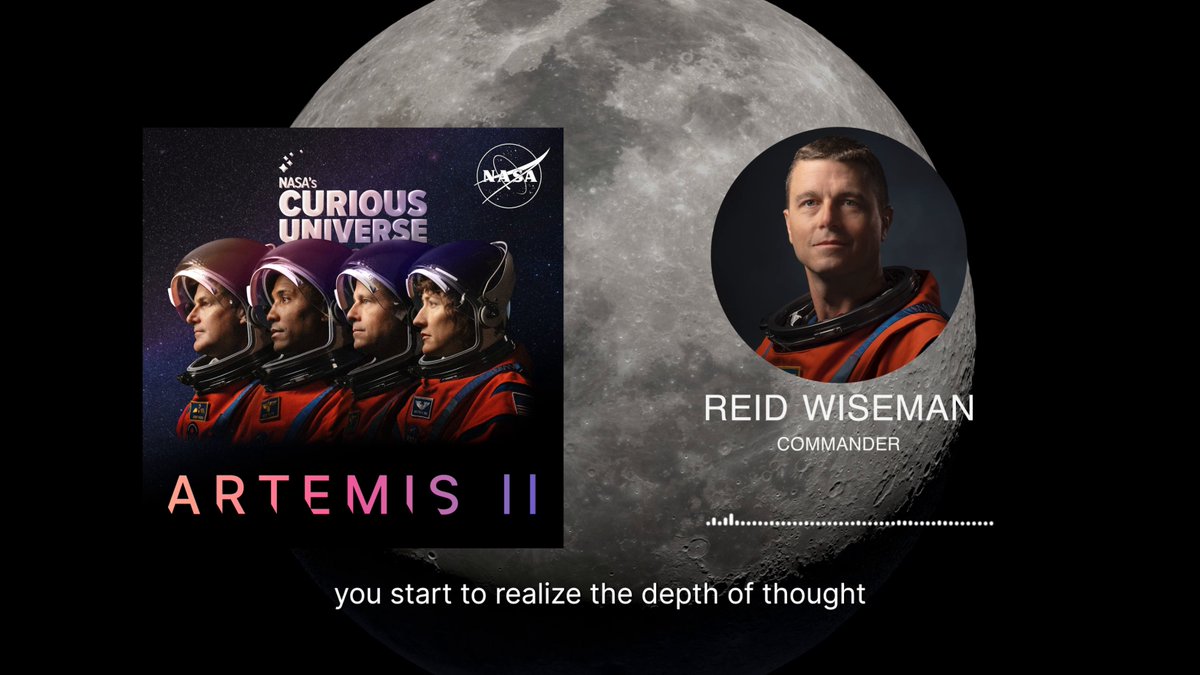
What does it take to design a spacecraft—and a rocket—that can send humans beyond low Earth orbit?

92M followers
586,851 views
35 Comments
Comments from the original post on X (Twitter)

@PepecoinNetwork
Hold my beer.
64 likes

@ResonanceEnter1
From where does the phrase “bread and circuses” originate?
10 likes

@jj4928621649542
The blueprints from the 60s by the looks of it.
10 likes

@tipcoinchat
Planet's moons
9 likes

@ChursinRosty
@elonmusk you can tell us about it
9 likes

@Gopalmishra_095
Love 💕
8 likes

@Schottkvarn
You should know? Haven't you done it before? 🤔
7 likes

@Nakamoto1
Overbuilding for safety in deep space is key redundancy saves lives.
7 likes

@balbJ39
Interplanetary and interstellar vehicles manned by humanoid robots with advanced AI would cost a fraction of such vehicles commanded by humans. Radiation, G force, etc. would have no impact on silicon based life forms.
7 likes

@biggs_staf415
We need a better design now for the future of space exploration
6 likes

@vipor316
To break free from Earth's gravity with humans and heavy cargo, you need unprecedented thrust. • Power: The SLS generates 8.8 million pounds of thrust, 15% more than the Saturn V. • Architecture: It uses a combination of liquid hydrogen/oxygen RS-25 engines (derived from the Space Shuttle) and massive solid rocket boosters to reach the 25,000 mph needed to head toward the Moon.
6 likes

@CuriousVaultX
What it really takes is knowing there’s no second try once it leaves Earth.
6 likes

@DwayneA19108038
Well not one that went to moon or so they say...
6 likes

@MikolaTiam_420
Mars waits ahead as the time machine carries Alice from Rome to tomorrow — is history just a rehearsal for interplanetary life 🌍➡️🔴❓ Grok imagine 🐇⏳
6 likes

@HalfFull26
I will be listening to this later!🚀🚀
6 likes

@Layla_Muhammed2
Nice
6 likes

@BenjaminCe42491
NASA: Which planet is the least important?
6 likes

@paulgalactics
We don't orbit. All it takes is CGI and lots of big fat nose lies
6 likes

@PIKAEMON2002
Super excited for Artemis II! The engineering behind Orion & SLS is mind-blowing can't wait to hear more in Curious Universe. Moon bound soon🌛
5 likes

@KhReddy2025
From low Earth orbit to the Moon- human ingenuity at its best. 🚀
5 likes


