Video wird geladen...

Video konnte nicht geladen werden

Zur Startseite

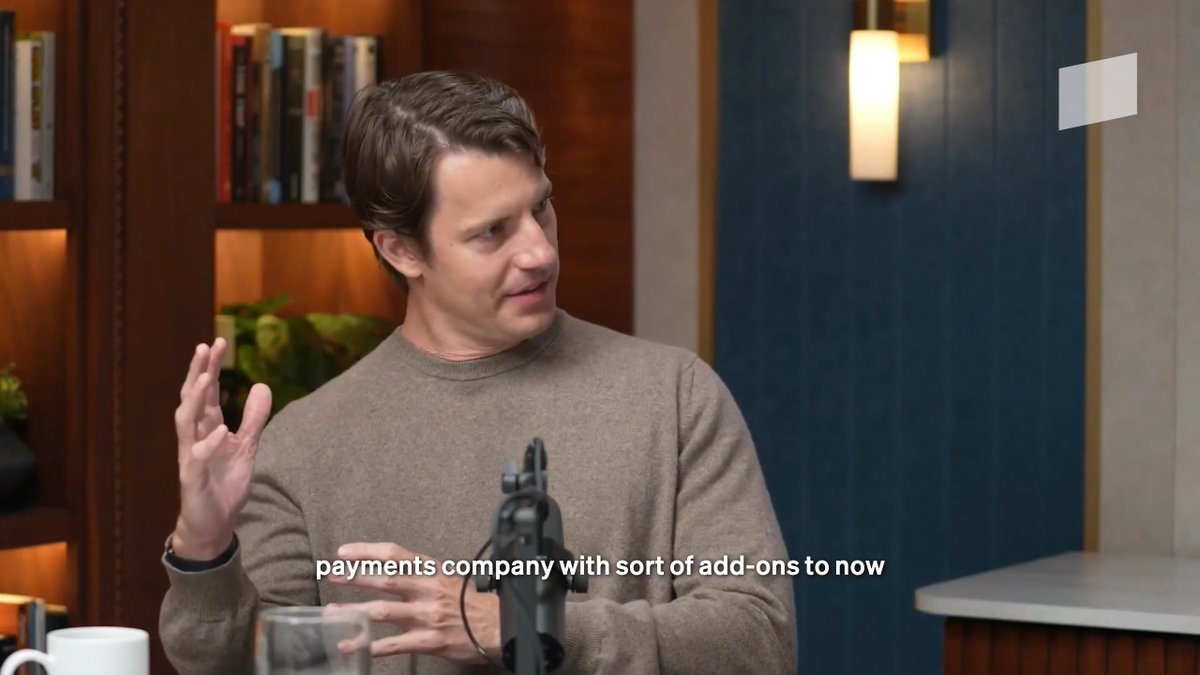
What makes a payments specific blockchain work really well? Listen to Will Gaybrick explain why Stripe incubated Tempo: privacy as a first class primitive, reliable throughput, and predictable near-zero fees so money can move efficiently, consistently, and cheaply as possible:

15,503 Aufrufe • vor 17 Tagen •via X (Twitter)

0 Kommentare

Keine Kommentare verfügbar

Kommentare vom Original-Post werden hier angezeigt

Ähnliche Videos

Stripe’s strategy is to “win all the startups and then win them again.” I had a great time talking with Will Gaybrick. Will has held a broad seat at Stripe for more than a decade, joining as CFO in 2015, and today leading Technology and Business. This makes him the right person to explain how Stripe went from a simple payments API to a platform with ~25-30 banner products and 288 launches at its most recent Sessions event. Here’s what their strategy looks like: -Companies like DoorDash and Instacart started on Stripe when they were tiny and pulled the company upmarket as they expanded. -The fastest startups act as canaries for new product opportunities. Cursor surfaced a burgeoning problem of AI free-trial and token abuse; so Stripe built a token detection pipeline with the team in a weekend, and the resulting network now helps companies on Stripe’s platform block thousands of fraudulent trials daily. -Stripe keeps expanding the number of needs it serves inside each company, from Billing, Radar, and Tax to Managed Payments, Treasury, and stablecoin infrastructure. There is a large and timely lesson from Stripe which I strongly agree with: using AI solely to reduce cost is essentially going short your own company. Instead, companies should be using AI (and the tailwinds it creates) to ship more, serve users better, and create their next product line. And as Stripe continues to invest in agentic commerce, the company can move from processing a transaction to orchestrating the entire economic loop around it. The line between tokens and dollars is already blurring, and Stripe’s next mandate is to make moving between them as seamless and safe as moving between dollars and euros. A fun conversation about what it takes to build the next Stripe inside Stripe. a16z

David George

68,751 Aufrufe • vor 18 Tagen

in my mid-20's, a time when about half of my friends hated their jobs (a very normal phenomenon if you're in your mid-20s), i noticed a group of people my age who looked extremely happy and actualized at work. and all of these people somehow seemed to work at stripe. i'll call out Tamara Winter and Ryan Orbuch specifically as some of the first people who made me realize that it was possible to be 25 years old and do *singular* work every day, and not just whatever garden-variety boilerplate the company demands. this podcast with Will Gaybrick and David George helps explain why this was, and still is, the case. will says stripe increasingly is a platform for founders internally, just as it's always been a platform for founders externally. he wants each employee to feel like an “auteur”: an engineer, product thinker, and creative person with enough context and authority to make something real. we're now seeing a new generation of this pattern, with stripe's support of stuff like tempo (a team that might have one of the highest concentrations of founder-mindsetted people im aware of? cc Georgios Konstantopoulos Dan Romero Varun Srinivasan Liam Horne etc) the embrace of teams like privy and bridge, and other incubated initiatives like minions. stripe is trying to make employees more founder-like while preserving a shared standard of quality (one of my favorite details on this point: stripe creates simulated customer accounts so teams can experience realistic UIs for disputes and refunds before exposing products to real users). this is something that's actually very tough to do well, so it's very cool to hear will talk about it on this pod.

Elena

56,729 Aufrufe • vor 17 Tagen