Video wird geladen...

Video konnte nicht geladen werden

Zur Startseite

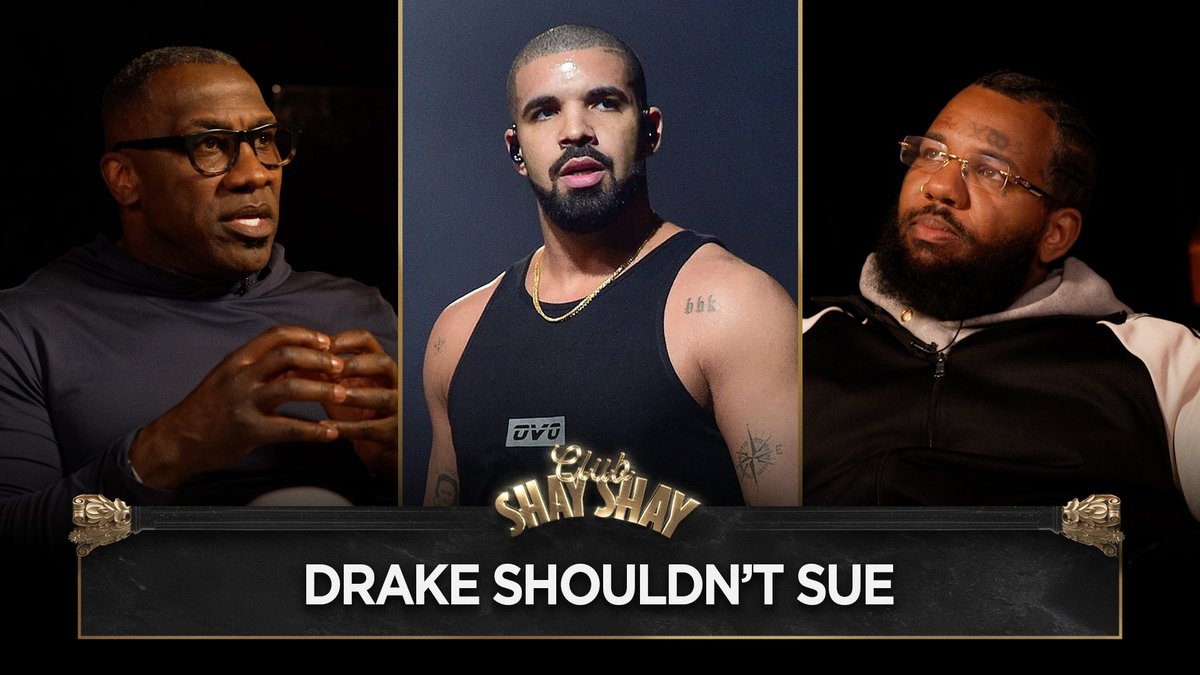
When the math doesn’t math .. be a great leader.. and that’s starts with being fair .. don’t ask for things that aren’t achievable out of audacity.. that’s the start ❤️
13,950 Aufrufe • vor 7 Monaten •via X (Twitter)

0 Kommentare

Keine Kommentare verfügbar

Kommentare vom Original-Post werden hier angezeigt

Ähnliche Videos

Several years ago, Peter Thiel shocked many people by telling Tyler Cowen he had it backwards: AI would be worse for math people than for wordcels. Tyler Cowen: “Large language models are already quite powerful. They’re only going to get better. In this world to come, will the wordcels just lose their influence? People who write, people who play around with ideas, pundits — are they just toast?” Peter Thiel: “My intuition would be it's going to be quite the opposite, where it seems much worse for the math people than the word people. What people have told me is that they think within three to five years, the Al models will be able to solve all the US Math Olympiad problems. That would shift things quite a bit. There's a longer history I always have on the math versus verbal riff. If you ask, "When did our society bias to testing people more for math ability?" I believe it was during the French Revolution because it was believed that verbal ability ran in families. Math ability was distributed in this idiot savant way throughout the population. If we prioritized math ability, it had this meritocratic but also egalitarian effect on society. Then, I think, by the time you get to the Soviet Union, Soviet Communism in the 20th century, where you give a number theorist or chess grandmaster a medal-which was always a part I was somewhat sympathetic to in the Soviet Union— maybe it's actually just a control mechanism, where the math people are singularly clueless. They don’t understand anything, but if we put them on a pedestal, and we tell everyone else you need to be like the math person, then it’s actually a way to control. Or the chess grandmaster doesn’t understand anything about the world. That’s a way to really control things. If I fast-forwarded to, let’s say, Silicon Valley in the early 21st century, it’s way too biased toward the math people. I don’t know if it’s a French Revolution thing or a Russian-Straussian, secret-cabal, control thing where you have to prioritize it. That’s the thing that seems deeply unstable, and that’s what I would bet on getting reversed, where it’s like the place where math ability — it’s the thing that’s the test for everything. It’s like if you want to go to medical school, okay, we weed people out through physics and calculus, and I’m not sure that’s really correlated with your dexterity as a neurosurgeon. I don’t really want someone operating on my brain to be doing prime number factorizations in their head while they’re operating on my brain, or something like that. In the late ’80s, early ’90s, I had a chess bias because I was a pretty good chess player. And so my chess bias was, you should just test everyone on chess ability, and that should be the gating factor. Why even do math? Why not just chess? That got undermined by the computers in 1997. Isn’t that what’s going to happen to math? And isn’t that a long-overdue rebalancing of our society?” More in clip:

Zarathustra

141,991 Aufrufe • vor 7 Tagen