正在加载视频...

视频加载失败

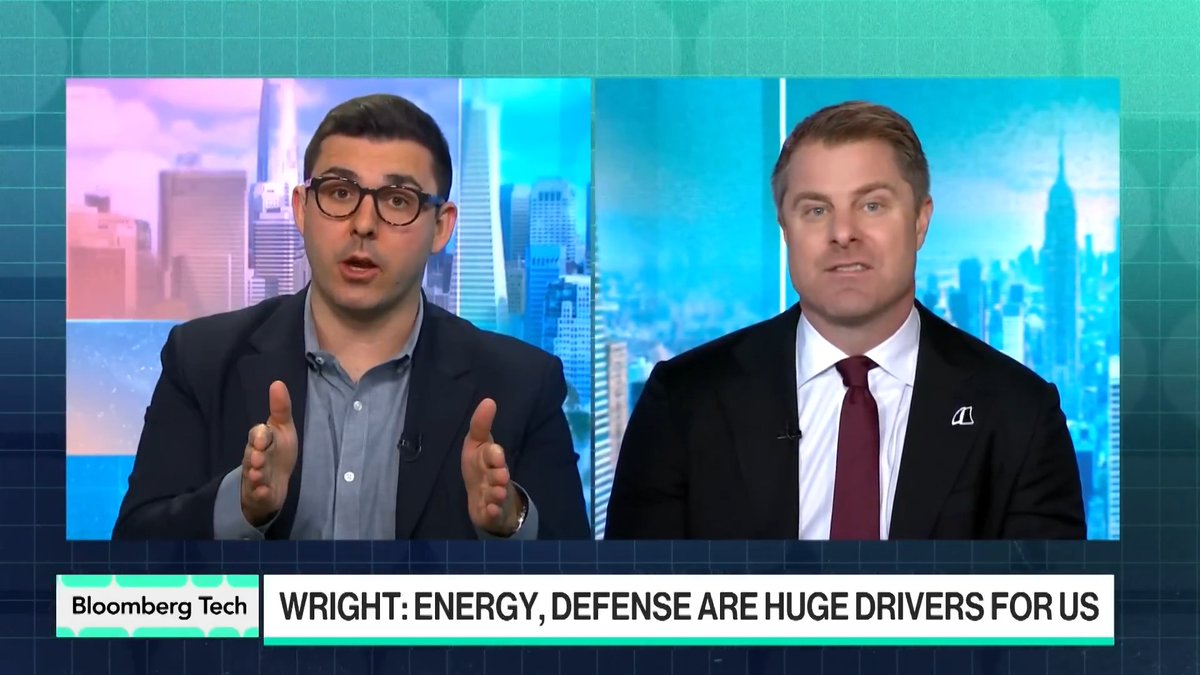
When we first met Tom, his obsession with energy markets came through immediately. Seemed random, but it's "actually" central to what he's building at Actual Computer. The thesis is that local inference is inevitable. Open source models are getting good enough, people don't want to feed their thoughts to...

35,706 次观看 • 6 个月前 •via X (Twitter)

0 条评论

暂无评论

原始帖子的评论将显示在这里

相关视频

NVIDIA is about to grow a new moat that has the potential to be the company’s most impenetrable moat yet: The Compute Futures Market One of the reasons why there’s so much demand for U.S. T-bills is because the market for them is incredibly deep, and large pools of capital can come in and out freely without much disturbance. That attribute is attractive, which leads to more demand for T-bills Liquidity begets liquidity Another example is what Bill Ackman is describing in the attached clip - the more valuable a company becomes, the easier it is for said company to raise capital to fund expansion, which in of itself is virtuous and valuable The same concept is going to apply to compute, and in some ways- it already is. NVIDIA GPUs are already the most financeable (in many cases the only financeable) form of compute for various parties to deploy in their data centers. But the introduction of a forward curve that facilitates financial expression like hedging takes that concept to a different level Companies who consume compute (structurally short compute) will want to be able to hedge their input costs, and companies who produce compute (structurally long compute) will want to be able to hedge their output price. The market will coalesce even more around the deepest / most liquid pools to facilitate this - which will be NVIDIA based futures (WTI Crude) This liquidity itself will become part of the value of purchasing NVIDIA equipment, it will be part of the justification to pay the “Nvidia tax”. And when the liquidity reaches a certain depth, it will be almost impossible to break - because to break it would involve coordinating between massive amounts of misaligned parties- impossible So NVIDIA, by no additional virtue or effort of their own will likely absorb another massive structural advantage that may be the most difficult advantage to overcome for any competitor out of anything that has been built so far. The rich really do get richer.

Nick Dorsey

33,944 次观看 • 16 天前

The CEO of the world's largest asset manager just said something that should reframe how every investor thinks about the AI trade. Larry Fink, managing $11.5 trillion at BlackRock, stood at the Milken Institute Global Conference and said four words that matter, "We just don't have enough compute." "The United States is short power. We're short compute. We're short chips. And there's going to be shortages in all three and memory, four things. I actually believe a new asset class will be buying futures of compute." Think about what that means. Fink is predicting that compute becomes a tradable commodity like oil, like grain, like natural gas where investors buy forward contracts on future capacity because the shortage is so structural and so predictable that a derivatives market will emerge to price it. That is not a minor observation from a finance executive but rather the chairman of the most powerful capital allocator on the planet telling you that compute scarcity is a multi-year, investable megatrend. The data backs him up completely. Data centers will consume 70% of all memory chips produced globally in 2026. Advanced HBM production from Samsung, SK Hynix, and Micron is sold out through 2026 and into 2027 and a single AI server consumes 10-20x more memory than a conventional workload server. DRAM supply growth is running at just 16% annually while AI infrastructure demand is growing at 80%+. The chip crunch, the power crunch, and the compute crunch are not temporary dislocations, they are structural, and they will get worse before they get better. Fink also said something the bears keep getting wrong: "There is not an AI bubble. There is the opposite. We have supply shortages. Demand is growing much faster than anyone has ever anticipated." This is why the Milk Road Pro portfolio is built the way it is, long the companies producing and supplying the constrained resources: chips, memory, compute infrastructure, and power. Check out Milk Road Pro, link below to access our full thesis and plays.

Milk Road AI

419,283 次观看 • 2 个月前

Micron is going to $4,000 and once you understand what inference actually is, the number stops sounding crazy (Save this). Dylan Patel just said that by 2030, OpenAI and Anthropic alone will need over 100 gigawatts of compute combined and by 2040, we may not even be measuring AI infrastructure in gigawatts anymore. We may be talking about terawatts. Every single one of those gigawatts needs memory to function. Without it, the compute is worthless. Most people heard that and thought about Nvidia but they should be thinking about Micron. Every AI model generating a response has two phases. The first is prefill, processing your prompt which is compute-heavy and the second is decode generating each word one token at a time and that phase is almost entirely memory-bound, not compute-bound. During decode, the GPU's processing units sit idle more than 95% of the time, waiting for data to arrive from memory. Google confirmed it in a research paper that decode-phase bottlenecks are dominated by memory bandwidth and capacity not raw compute. The GPU is not the bottleneck but the memory feeding the GPU is. This matters because inference is now where all the money lives. Training a model happens once, Inference happens billions of times a day every ChatGPT response, every Claude output, every agentic workflow running in the background and every one of those token streams is a billing event tied directly to memory performance. Adding more GPUs does not fix this because GPUs are already underutilized in inference because they are sitting idle waiting on memory. Adding more memory bandwidth and capacity is what directly reduces token cost, reduces latency, and allows the same cluster to serve dramatically more users simultaneously. Longer context windows compound the problem further, a model running a 1 million token context window requires dramatically more memory per session than a 10,000 token window, and every new model generation pushes context longer. The market treats memory as a downstream beneficiary of Nvidia orders. The correct framework is the opposite, Micron is the upstream constraint on how much value every Nvidia GPU can actually generate at inference scale. Micron guided Q4 to $50 billion in revenue, has HBM4 ramping at twice the pace of the prior generation, and CEO Sanjay Mehrotra has said supply will not catch demand before the end of 2027. At 8x forward earnings on $112 projected FY2027 EPS, Micron is the most undervalued infrastructure company in the entire AI stack. Inference is memory. Memory is Micron and the inference ramp has barely started. Milk Road Pro members are already up massively on this position and we're just getting started. If you want the full breakdown of what we're buying and why, come join us for just a dollar using the link below!

Milk Road AI

128,678 次观看 • 1 个月前