Video yükleniyor...

Video Yüklenemedi

Ana Sayfaya Dön

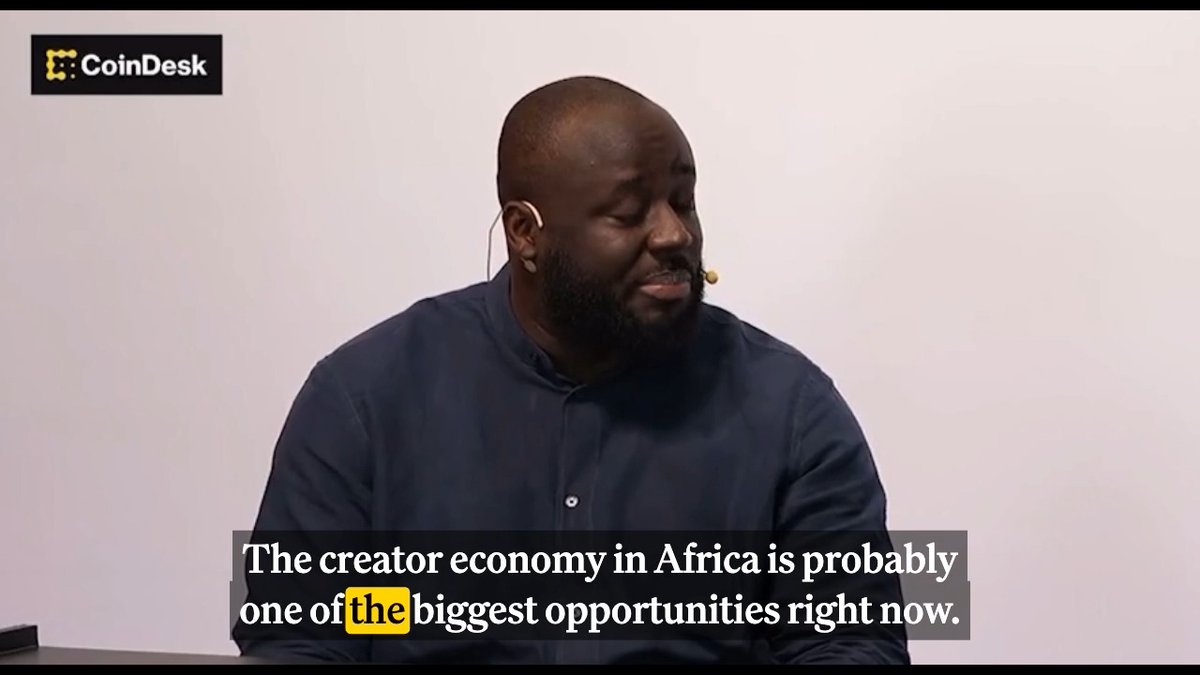
When you create a seamless user experience, the word stablecoin becomes obselete. Kwadwo Owusu-Agyeman 🇬🇭🌍 walking through Akuna Wallet's straightforward onboarding process at Meridian 2025.

14,631 görüntüleme • 10 ay önce •via X (Twitter)

0 Yorum

Yorum bulunmuyor

Orijinal gönderinin yorumları burada görünecek
Benzer Videolar

Q: How do you design an amazing user experience? In the clip below, Airbnb co-founder and CEO Brian Chesky explains that one route to a great UX and word-of-mouth growth is designing the perfect experience for one person: “How do you make something for a million people? I don’t know where to start. But if you pick one person, study them, and take their journey, you can actually build something really personal. You can design something and keep iterating until they love it. Don’t stop improving it until that person loves it, and you’re not allowed to move to the second person until the first person loves it. Then you get the second person and keep iterating until they love it. And so on.” As Brian argues, designing the perfect experience for one person is a much easier place to start than trying to design something for a million people. And when people truly love your service, they become your marketing department. He uses storyboarding and tries to imagine a “10-star experience” for an Airbnb check-in as an example: “A 5-star rating typically means nothing bad happened. But what if there was a 6th star?” He proposes the following ever-improving scenarios: 6 stars: You get to your Airbnb and there’s a bottle of wine and fruit waiting for you with a hand-written note 7 stars: A limo picks you up from the airport, and when you get to the house there’s a surfboard because the host knows you like surfing 8 stars: You ride back from the airport on a giant elephant and there’s a parade in your honor 9 stars: You land at the airport and there’s 5,000 teenagers cheering your name and you do a press conference in the front lawn of your Airbnb (”The Beetles Check-In”) 10 stars: Elon Musk picks you up from the airport and says “we’re going to space” The point here is that while you might not be able to create an 8+ star experience for your customers, the act of thinking through the most perfect experience for one customer and figuring out a way to scale something close to that to all of your users can help you arrive at a user experience that is truly amazing.

Michael McGuiness

635,155 görüntüleme • 3 yıl önce

Here is how to build the best possible onboarding experience for B2B There are two parts to this: the onboarding (getting them to value) and the setup (getting them to real usage). Part 1: Onboarding The goal of a good onboarding is 4 things. 1. Get them to the best possible version of your product with zero effort The best version that's achievable without any effort other than clicking a few buttons. No integrations, no calls, no configuration screens. 2. Make them feel your product was built for their use case If you serve different industries, you need to surface logos, testimonials, and integrations that are relevant to them. If you serve different use cases, you need to do only show features and integrations for their use case. You know this by getting their website or asking them in the first step. In our case, once the user inputs their website (post bridge) so I surfaced Firecrawl , Brevo, Sage, PhotoAI (@levelsio), and Postiz (Nevo David) because they're the closest match, and Dolby because it's a big name. 3. Teach the user the value of upgrading to a paid plan While they're onboarding, you need to make them choose features they want to use. In our case: integrations, voice, helpdesk, all gated behind a paywall. Show how these features work to make them understand and to make them interested, then make it clear that they get this stuff if they subscribe. 4. Motivate them to take the next step Make them excited and eager to continue the setup. You do this by having a good aha moment while showing some features that take this further. But they have to continue to the next step to get there. The most important thing You need to reach an aha moment as fast and as smooth as possible. And while getting there, get info from the user about what they care about, so you know how to upsell them. You also need to flex your features as they're going through the onboarding. Then you go to the complete setup step to get to the better version, once they're convinced that this will help them. Part 2: Setup After the user reaches a product they can play around with, they probably still need to continue the setup. Integrations, configuring stuff, etc. The goal here is to have the user build something that they will use/go live with and continue using. In our case they need to: add more data sources add more actions connect to the tools they use You're optimizing to have them go live, get the agent deployed on at least one channel. The metric to measure here is usage. A good onboarding flow gets your user to: Understand your product Understand that it was built for them Understand the value of paying Start using your product in production

Yasser

98,868 görüntüleme • 12 gün önce

All the best coaching in the world at the youngest ages is rendered useless if a child hasn’t developed the ability to focus their attention. You can bring the best coach in the world to your child’s training session and if they don’t pay full attention absolutely nothing takes place. Similar to inside a classroom where you can bring the teacher of the year to your child’s classroom and if they don’t focus and pay attention, learning does not take place. So it’s not always the case of good or bad coaching it’s often the case a child’s lack of ability to learn by not focusing on what is being taught. This is especially true for the youngest ages. This video is an example of a 5yr old child focusing their attention, trying to control an object with their feet, the ball. This becomes a mental task, married together with the action of movement, making it a physical task as well. The brain loves to learn while moving. Combining, mind and body, thinking and feeling, this allows the cerebellum, the seat of the unconscious mind, to create a chemical signature of this experience, which is emotions. Emotions are the on off switch for learning. Couple in a parent being present, this becomes a shared experience together, where the child is constantly seeking the parents approval, attention, and praise which creates a chemical electrical process in the body which is emotions. This facilitates, deep learning, and long-term memory, all disguised as playtime. A parent just being present allows for this experience to take place. A child this young rarely starts playing or exercising with a ball without someone being present. Being present and sharing this experience together is key for the learning process to take place. These movements are being stored in the non-declared memory which makes this implicit learning when you do something so many times it becomes natural and outside your conscious awareness. Like riding a bicycle or driving a car.

Tom Byerトム•バイヤー

26,691 görüntüleme • 2 yıl önce