Video wird geladen...

Video konnte nicht geladen werden

Zur Startseite

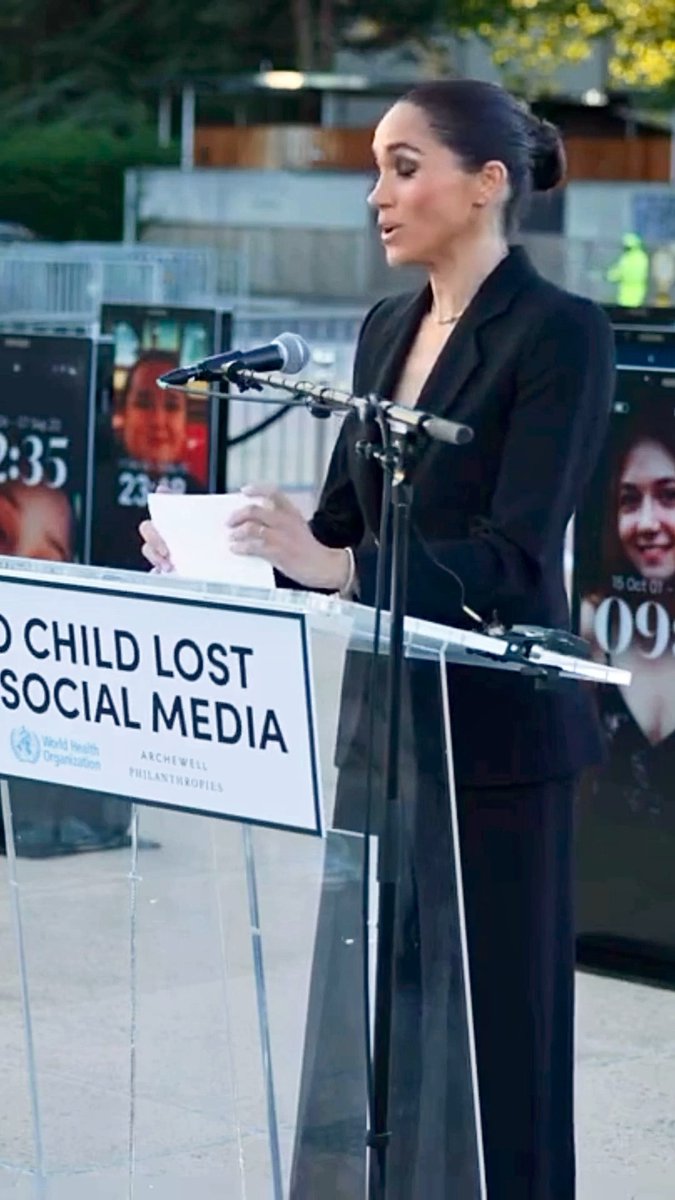
While Meghan is in Switzerland, she will highlight Archewell’s work on protecting children from online harm. She will pay tribute to the children lost as a result of social media. The Lost Screen Memorial, Each lock screen displays the image of a child whose life ended too soon.

15,541 Aufrufe • vor 2 Monaten •via X (Twitter)

0 Kommentare

Keine Kommentare verfügbar

Kommentare vom Original-Post werden hier angezeigt

Ähnliche Videos

Practice What You Preach, Meghan Markle: The Hypocrisy Behind the Geneva Speech In Geneva, Meghan Markle stood before the Lost Screen Memorial and delivered a speech about children harmed by online spaces. Fifty illuminated screens represented children whose lives ended after exposure to online harms. “Children must be safe by design, not safe by chance,” she said. On its face, the message is difficult to oppose. Children should be protected. Tech companies should be scrutinised. Grieving parents deserve to be heard. But speeches built on moral authority inevitably invite scrutiny of the messenger. And this is where Meghan Markle repeatedly encounters the same problem: the widening gap between the values she promotes publicly and the standards she fails to meet herself. For years, Harry and Meghan positioned themselves as victims of intrusion, demanding exceptional privacy and condemning media exposure as harmful and exploitative. Yet over time, carefully curated glimpses of Archie and Lili have increasingly appeared through documentaries, interviews, social media, personal storytelling, and the broader ecosystem surrounding Meghan’s lifestyle relaunch and public image. Not total privacy. Controlled visibility. This increasingly appears less like incidental sharing by a private mother and more like carefully managed visibility within a broader ecosystem of personal branding and image cultivation. To be fair, no one is asking why a mother shares moments of her children. They are asking something more uncomfortable: is privacy a principle, or a privilege exercised selectively depending on who controls the narrative? Because those are not the same thing. Demanding absolute protection while permitting exposure on personally advantageous terms does not eliminate exploitation concerns. It simply changes who controls them. Then there is the issue of online harassment. The Geneva speech centred around harmful digital environments and the devastating consequences of online cruelty. Yet one of the most aggressive sustained examples of online hostility in recent royal discourse emerged during Princess Catherine’s illness, where conspiracy theories, mockery, and harassment spread widely across social media by her vocal supporters. Public silence in the face of sustained abuse by those supporters raises uncomfortable questions about whether anti-bullying standards apply universally or only when convenient. Anti-bullying principles are easiest to defend when directed outward. They become more meaningful when applied to those perceived to be on your side. Advocacy without consistency risks becoming performance and that is the criticism shadowing Meghan Markle’s public life. Not that she speaks about important causes. Not that online harms are unworthy of attention. Not that grieving families should remain invisible. The criticism is that vulnerable people increasingly appear as the emotional centrepieces of carefully staged campaigns, while unresolved contradictions surrounding privacy, accountability, and selective outrage remain untouched. The Lost Screen Memorial featured parents who lost children. Their grief is real. Their pain deserves dignity beyond headlines, celebrity association, or institutional prestige. Which leads to an uncomfortable question: When audiences leave discussing Meghan Markle more than the children commemorated behind her, who truly became the focus? That is why the Geneva speech reeks of hypocrisy. It asks the public to embrace standards that Meghan herself has failed to uphold. ‘Children must be safe by design, not safe by chance.’ A powerful message. One weakened by the growing perception that the rules Meghan demands of others become negotiable when they collide with her own image, narrative, or interests. Because advocacy without consistency is not leadership. It is performance.

Queen Esther

33,319 Aufrufe • vor 2 Monaten