Video yükleniyor...

Video Yüklenemedi

Ana Sayfaya Dön

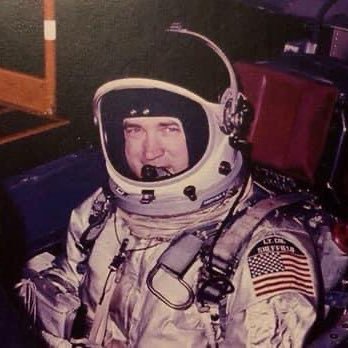
Why did the SR-71 crew members not worry about being shot down? Among other reasons the United States fighter pilots couldn’t even find them do you think the Russians could? The "Eagle Bait" missions were training exercises where the SR-71 Blackbird acted as a high-altitude, high-speed target for U.S....

101,637 görüntüleme • 2 gün önce •via X (Twitter)

11 Yorum

Freebie profil fotoğrafı
Freebie2 gün önce

My friend’s father was involved in a test where various sites tried to locate the Blackbird as it was flying westerly from the east coast. His site was the only one that picked it up on radar. When asked how he did it, he told em “well, you let us know direction it was traveling so we just kept scanning the eastern horizon only”. 😂

Silentweapon338 profil fotoğrafı
Silentweapon3382 gün önce

I was hoping to see the black bird walk off.

Salty Sea 🇺🇸🖤🪸 profil fotoğrafı
Salty Sea 🇺🇸🖤🪸2 gün önce

This is all so fascinating. I've fallen in love with the SR-71 because of your posts. Thank you for sharing.

Tavern profil fotoğrafı
Tavern2 gün önce

This and the A-10 are the most beautiful planes ever

Adrian profil fotoğrafı
Adrian2 gün önce

The Russians didn’t but the RAF did with a Lightning, always bet on Britain 😎

Josh profil fotoğrafı
Josh2 gün önce

I grew up building models of that airplane and got to see it in real life a few times during it's operational years. It will maintain a clear spot as king of the skies for long to come. We can build newer and faster planes, but will be tough to build anything cooler. 😎👌🇺🇸

Muttley profil fotoğrafı
Muttley2 gün önce

Why can't the supposed UFO videos be that clear, just saying.

Eddie Luckey profil fotoğrafı
Eddie Luckey2 gün önce

@TavernGatos add the P38 to that short list.

Pearlli profil fotoğrafı
Pearlli2 gün önce

Outstanding!

goose profil fotoğrafı
goose2 gün önce

if the russians couldn't, then the sr 71 could've just flown over ussr couldn't it? why larp bs, when even GDR with enviable regularity intercepted sr71 over baltics, an account which i read from history of sr71 by cia

crew dog profil fotoğrafı
crew dog2 gün önce

I served with the wing commander of the F15s at Kadena. He said the SRs could fly faster than they could track… and the F15 had the best radar in the world..

Benzer Videolar

🇸🇦🇾🇪 The first confirmed shootdown of the Saudi Boeing F-15 Eagle fighter jet by the Houthis. The Houthis publish footage of the downing and wreckage of a Boeing F-15SA Eagle II fighter jet (Reg. 5539) operated by the Royal Saudi Air Force (RSAF) that was hit by Ansar Allah air defense forces in the skies over Marib Governorate located in central-west Yemen on September 16, 2026. At this point, the fate of the two crew-members remains unknown. The Houthis claim that the warplane was struck with an unnamed "locally made surface-to-air missile." The downing of the Saudi F-15 coincides with the intensification of ground combat activities in Yemen and launch of new offensive operations by Houthi forces, including on the Red Sea coast. The setbacks suffered by Saudi-backed Yemeni government forces prompted the Royal Saudi Air Force to get more actively involved in combat. That in turn has put Saudi pilots at greater risk of being shot down by capable Houthi air defenses, the result of which we can see in below. Although there were a few more incidents involving RSAF F-15 Eagle fighter jets during the course of the war in Yemen in the past, none of them can be classified as a confirmed kill by the Houthis. In the latest video, on the other hand, we can clearly see the silhouette of the Eagle being hit by a SAM and catching fire, as well as the plane's wreckage that fell in Houthi-controlled territory in Yemen, making it the first confirmed RSAF F-15 shootdown by the Houthis. The F-15SA (Saudi Advanced) is a newer, more advanced version of the F-15E Eagle, developed for the Royal Saudi Air Force. (airframe photo for illustration purposes only as no actual photo for Reg. 5539 could've been found)

Status-6 (War & Military News)

60,496 görüntüleme • 19 gün önce

Random Information Post ❗️ The F-15 S/MTD, part Ace Combat 7: Skies Unknown 's Experimental Aircraft Series Set DLC or available on it's own in the F-15 S/MTD Set DLC, is a semi-historical fictional aircraft. It is based on the real life F-15 STOL/MTD and later F-15 ACTIVE test aircraft. The aircraft used for the project was pre-production TF-15A (F-15B) No. 1 (USAF S/N 71-0290), the first two-seat F-15 Eagle built by McDonnell Douglas (out of 2 prototypes), the sixth F-15 off the assembly line, and was the oldest F-15 flying up to its retirement. The programs ran from September 7th 1988 to January 30th 2009, where the air frame was finally retired. The aircraft was used in several tests and experiments centered around thrust vectoring and advanced avionics equipment. the F-15 STOL/MTD program was intended to give F-15s the ability to take off from short or damaged runways in the event that a war with the Soviet Union damaged them or forced the use of sub-optimal backup airfields. The canards on the aircraft are stabilizers from an F/A-18 that were attached to the fuselage, removing the 20mm Vulcan cannon in the process to allow for the modification. The aircraft used two types of thruster nozzles, the first being a square 2D nozzle, allowing thrust vectoring up and down, and later a 3D nozzle allowing thrust to be vectored in all directions. The program showed good results, though not intended as a performance upgrade McDonnel Douglas engineers noted a 15% increase in the plane's overall dog fighting performance from the modifications. Also noting takeoff speeds as low as 42 mph (68 km/h), and a 25% reduction in the required runway length for takeoff. However the US Air Force did not buy these upgrades. No official reason was made public but the collapse of the Soviet Union in 1991 likely eliminated the need and enthusiasm to upgrade the fleet of F-15s. The test aircraft continued to serve on loan to NASA until 2008 however, and is now on display at Edwards AFB. Still a very cool aircraft to look at, and a common sight in Ace Combat games since Ace Combat 3, with it's fictional F-15S/MT Eagle+ variant being it's first appearance in the franchise, and is one of my favorite fictional aircraft in the series. Sources: Wikipedia, Acepedia, and offhand knowledge from various articles and mentions from informed friends.

HoraceVT 🪄🎬

23,777 görüntüleme • 9 ay önce

🚨🇺🇸 What Makes the F-22 Raptor So Deadly? Built as America’s ultimate air-dominance fighter, the Raptor combines stealth, speed, and sensor power so overwhelming that opponents often never know they were in a battle at all. Its radar signature is tiny, closer to a bird than a fighter jet. That means enemy radar systems can miss it entirely until missiles are already on the way. Inside the cockpit, the pilot isn’t juggling dozens of sensors. The jet’s computers fuse everything, radar, signals, tracking, into one clean picture of the battlefield. The result is the doctrine pilots love to repeat: first look, first shot, first kill. The Raptor can cruise faster than the speed of sound without afterburners, something called supercruise. That means it can cross huge distances quickly while staying harder to detect. And if the fight somehow gets close? The F-22’s thrust-vectoring engines allow it to turn and maneuver in ways most fighters simply dream of. Even in a dogfight, it’s brutally hard to beat. This combination is why the aircraft is so feared in heavily defended airspace. Against layered air defenses or older fighter fleets, a stealth jet that can detect targets hundreds of miles away and strike before appearing on radar changes the math of the battlefield. Which is why the Raptor’s real job isn’t bombing cities, it’s clearing the skies. Take out the enemy fighters. Blind the radar networks. Punch holes in air defenses. Once that happens, everything else, bombers, strike fighters, and drones can move in safely.

Mario Nawfal

103,572 görüntüleme • 7 ay önce

General "Raizin" Caine, details the precision extraction mission in Venezuela: "Over the course of the night, aircraft began launching from 20 different bases on land and sea across the Western Hemisphere. In total, more than 150 aircraft, bombers, fighters, intelligence, reconnaissance, surveillance, rotary wing, were in the air last night. "Our youngest crew member was 20 and our oldest crew member was 49. And there's simply no match for American military might. As the night began, the helicopters took off with the extraction force, which included law enforcement officers, and began their flight into Venezuela at 100 feet above the water. As they approached Venezuelan shores, the United States began layering different effects provided by SPACECOM, CYBERCOM, and other members of the inter-agency to create a pathway. "Overhead, those forces were protected from aircraft- were protected by aircraft from the United States Marines, the United States Navy, the United States Air Force, and the Air National Guard. The force included F-22s, F-35s, F-18s, EA-18s, E-2s, B-1 bombers, and other support aircraft, as well as numerous remotely piloted drones. As the force began to approach Caracas, the joint air component began dismantling and disabling the air defense systems in Venezuela, employing weapons to ensure the safe passage of the helicopters into the target area. "The goal of our air component is, was, and always will be to protect the helicopters and the ground force, and get them to the target, and get them home. As the force crossed the last point of high terrain where they'd been hiding in the clutter, we assessed that we had maintained totally the element of surprise. As the helicopter force ingressed towards the objective at low level, we arrived at Maduro's compound at 1:01 AM Eastern Standard Time, or 2:01 AM Caracas local time, and the apprehension force descended into Maduro's compound and moved with speed, precision, and discipline towards their objective, and isolated the area to ensure the safety and security of the ground force while apprehending the indicted persons. "On arrival into the target area, the helicopters came under fire and they replied with that fire with overwhelming force in self-defense. One of our aircraft was hit, but remained flyable, and as the President said earlier today, all of our aircraft came home. And that aircraft remained flyable during the rest of the mission. As the operation unfolded at the compound, our air and ground intelligence teams provided real-time updates to the ground force, ensuring those forces could safely navigate the complex environment without unnecessary risk. "The force remained protected by overhead tactical aviation. Maduro and his wife, both indicted, gave up and were taken into custody by the Department of Justice, assisted by our incredible US military with professionalism and precision, with, with no loss of US life. After securing the indicted persons, the force began to prep for departure."

Andrew Kolvet

76,491 görüntüleme • 9 ay önce

Two air forces started the Pacific war. One trained its pilots, then kept them fighting until they died. The other trained its pilots, then often pulled many of its experienced combat pilots out to teach everyone else. This is one of the reasons America won the Pacific air war, let's dive in.. Japan's Elite Aviators At the start of the war, Japan had some of the finest fighter pilots in the world. The aviators who attacked Pearl Harbor were elite. Many had hundreds of hours in the cockpit and real combat experience from the fighting in China. Flying the nimble A6M Zero, they cut through Allied opposition in the early months of the war and earned a fearsome reputation. But Japan made a fateful choice about these men. It kept them in combat, more or less indefinitely. Japanese pilots flew mission after mission with no real system to rotate them home. They fought until they were shot down, crippled, or killed. It seemed ruthless and efficient. In reality, it was a slow-motion disaster. The Difference in Philosophy Because every time Japan lost one of those veterans, everything he knew died with him. America did the opposite. It regularly rotated many of its experienced combat pilots back home once they had done their share of fighting. There, they became instructors, pouring everything they had learned in real air combat directly into the next generation of pilots. So the two systems pulled in opposite directions. Japan's pool of skill drained away with every ace it buried. America's pool of skill grew, as each returning veteran multiplied his knowledge across hundreds of students. One nation was teaching. The other was simply dying. The Training Gap The gap became a chasm, and it was made worse by sheer scale. By 1944, the United States was training around 8,000 new aviators every month, each of them getting well over a year of instruction and hundreds of hours in the air before they ever saw combat. Japan could not come close. As its veterans vanished, its training program collapsed, and it was crippled by something else, too. Fuel. Japan was running so short of it that many trainees could barely fly enough hours to learn their trade. By the later part of the war, Japanese pilots were being rushed into battle with barely 100 hours of flying time, and sometimes far less. They were teenagers with almost no training, being sent up against American veterans who had been taught by the best combat pilots in the fleet. The outcome was no longer a contest. It was a slaughter. The Great Marianas Turkey Shoot Nowhere was that clearer than in the skies over the Mariana Islands in June 1944. When the Japanese launched hundreds of aircraft against the American fleet, they flew into a wall of Hellcat fighters, guided by radar and expert fighter direction that positioned the Americans at the perfect height and moment to strike. The green Japanese pilots in their now outdated Zeros never had a chance. In and around that battle, Japan lost nearly 480 aircraft, while the Americans lost only a few dozen. It was so one-sided that the American aviators nicknamed it the Great Marianas Turkey Shoot. Japan's naval air power, once the terror of the Pacific, was broken in a matter of days. Better Aircraft, Better Technology It was not only the pilots. It was the machines too. America kept producing better and better aircraft, like the tough, heavily armed F6F Hellcat, designed after studying a captured Zero and built to beat it. It could take punishment, out-dive and out-gun its opponent, and it was forgiving enough that even a less experienced pilot could survive his first fights and become a veteran. Over the war, Hellcat pilots claimed more than 5,000 enemy aircraft for a tiny fraction of that in losses. Japan, meanwhile, kept sending men up in the aging Zero, a plane that had been revolutionary in 1941 but was now underpowered, fragile, and outclassed. It was fast and agile, but a single burst of American fire could tear it apart, because it had traded armor and protection for maneuverability. Better pilots, in better planes, backed by better technology. The advantages stacked on top of one another. The Spiral Ends By the end, Japan had reached the final, desperate stage of the spiral. With almost no trained pilots left, and no way to make more in time, it turned to the kamikaze. A pilot did not need 500 hours of training to crash his aircraft into a ship. He only needed to take off, aim, and die. It was the last resort of an air force that had run out of the one thing it could never mass produce. Experienced men. America won the Pacific air war for many reasons. Its factories out-built the enemy. Its radar and intelligence gave it eyes the Japanese lacked. Its aircraft grew deadlier every year. But underneath all of it was something simpler. America treated its best pilots as a resource to be protected and passed on. Japan treated them as fuel to be burned. One of those choices built an air force that kept getting stronger. The other burned brightly, and then burned out. This was why America won the Pacific air war. I post a story like this every single day. Most people never see them. Follow so you don't miss the next one.

Untold War Stories

156,114 görüntüleme • 3 ay önce

(Video): “"Mile Wide Delta Shaped Craft made Two US F-14 Fighter Jets Disappear in Puerto Rico 1988” On December 28, 1988, at approximately 7:45 pm, a large triangle craft roughly the size of a baseball field was seen moving steadily along in the region near the naval air station in Puerto Rico, according to many witnesses (over a hundred). Three F-14s intercepted the moving UFO and apparently tried to force it to change its course. As the navy fighter planes engaged the large craft, it slowed down its forward speed almost to a standstill. One plane, in particular, stayed mostly to the right of the UFO and another stayed behind the UFO making close approaches at times. The third plane apparently stayed a bit farther out. The F-14 in the rear came close to the object, but as it flew either over or under the object, it was not seen again. Small red lights were also seen at times flying outside the large craft and may have served to protect the craft. It was as if the fighter plane had somehow been drawn into the large craft. The second aircraft made a sweep closer to the large object and was seen by one ground witness-using binoculars-to suddenly disappear possibly being taken in by the UFO. The third F-14 reportedly high tailed it out of the area on afterburner with glowing red lights chasing after it apparently in pursuit, according to ground witnesses Source: EyesOnCinema 🚬👀 #anonymoushadoww #ufotwitter #uaptwitter #ShadowLurker #ufo #Twitter

AnonymouShadow | UFO Research

50,391 görüntüleme • 8 ay önce