Video wird geladen...

Video konnte nicht geladen werden

Zur Startseite

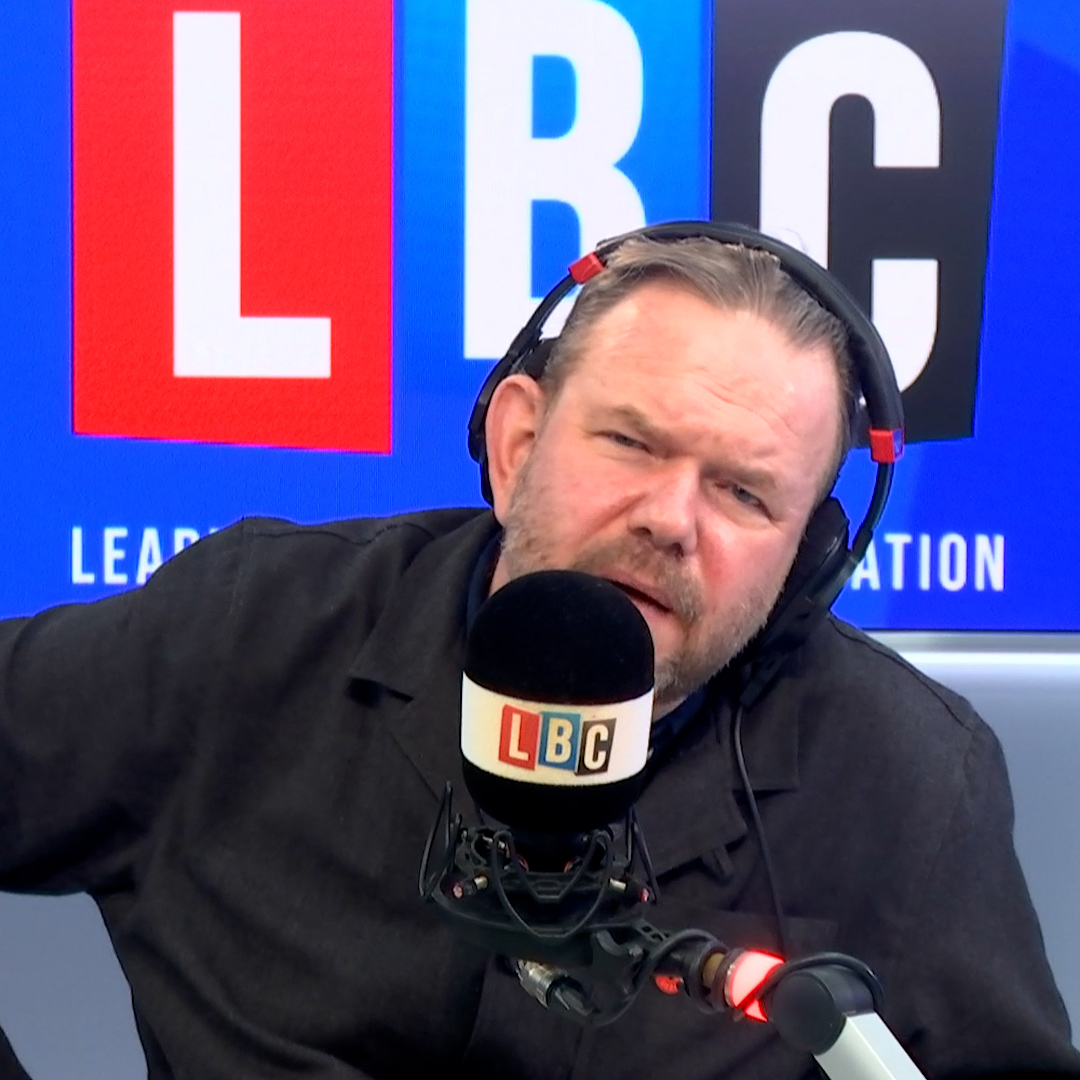
Why Elon Musk said Quantum computing is best done in the permanently shadowed craters on the Moon? At first, it sounds like one of Elon’s wild sci-fi ideas, but there’s deep logic behind it Quantum computers need extreme cold and perfect stability to work. The Moon’s permanently shadowed craters,...

87,966 Aufrufe • vor 7 Monaten •via X (Twitter)

0 Kommentare

Keine Kommentare verfügbar

Kommentare vom Original-Post werden hier angezeigt

Ähnliche Videos

Elon Musk just explained why artificial intelligence cannot physically survive on Earth. In a conversation with Jamie Dimon, Musk bypassed the romance of space exploration entirely. He answered with physics. Musk: “I think we can do probably somewhere around 1 terawatt per year of AI space compute from Earth, but we can do 1,000 terawatts or more from the Moon.” One terawatt. That is the thermodynamic ceiling of this entire planet. Every nuclear plant. Every solar farm. Every grid upgrade humanity can possibly build. All of it maxes out at one terawatt of AI compute. Earth is no longer a canvas. It is a bottleneck. So Musk is looking at the Moon. Not for flags. Not for footprints. For leverage. Musk: “Because the Moon has no atmosphere and about one-sixth Earth’s gravity, you can use an electromagnetic accelerator… You don’t need to use rockets to do AI data centers into deep space from the Moon. You can literally just shoot them like a railgun type of thing.” He is not describing a research outpost. He is describing a frictionless manufacturing hub on a celestial body. Mine the lunar surface for raw material. Build solar arrays and thermal radiators on-site. Construct an electromagnetic railgun. And fire AI superclusters directly into the vacuum of deep space. No supply chain from Earth. No atmosphere to fight. No fuel to burn on exit. A thousand terawatts. A 1,000x multiplier on the physical limit of human intelligence. And the Moon isn’t even the endgame. Musk: “We can build a self-growing city on the Moon faster than we could do so on Mars.” The Moon is the factory floor. Mars is the civilization. Musk: “If you warm up Mars, you could one day make Mars like Earth, meaning with liquid oceans and life and where you could walk outside without a spacesuit type of thing.” Musk: “I call Mars a fixer-upper of a planet, but it’s got a lot of potential.” A fixer-upper. That is how the richest man on Earth talks about an entire planet. Like a house with good bones and a bad roof. The rest of the industry is fighting over zoning permits and year-long environmental reviews to plug in a single server farm. Musk is building a magnetic launcher on the Moon to fire compute into the cosmos. For ten thousand years, humanity looked up at the stars and saw mythology. Musk looks up and sees bandwidth. We thought the ultimate purpose of spaceflight was exploration. It was always infrastructure. Earth was never the destination. It was the incubator.

Dustin

180,354 Aufrufe • vor 1 Monat

How IIT Madras is Changing Global Security The End of Hacking? IIT Madras is spearheading India's push into quantum-secure communications through the IITM-C-DOT Samgnya Technologies Foundation, launched as the National Hub for Quantum Communication under the National Quantum Mission. This initiative aims to make communications "unhackable" by shifting from math-based encryption to physics-based security, countering future quantum computer threats. ​ The hub, inaugurated in December 2025 at IIT Madras Research Park, partners with C-DOT and is funded by the Department of Science and Technology (DST). It focuses on developing indigenous quantum hardware, QKD networks, quantum repeaters, and satellite-based systems to protect critical infrastructure like AI data centers and defense networks. Traditional encryption relies on complex math that quantum computers will crack in years. QKD uses quantum physics: any eavesdropping alters the quantum state, alerting the system instantly and burning the key. IIT Madras claims an edge in secure transmission over computing leaders like the US and China. ​ The hub builds real-world testbeds, subsidizes hardware for startups, trains experts, and links globally via IITM Global outposts. It positions India to lead in quantum-secure networks for sovereign AI and government use within five years. ​ IIT Madras also runs CyStar, a cybersecurity center advancing quantum security, AI model protection, and IoT defenses since 2024. This aligns with national goals for unhackable comms amid rising cyber threats. Credit : AIM Network.

Augadh

11,978 Aufrufe • vor 5 Monaten

🚨 QUANTUM COMPUTING: THE NEXT TECH GOLD RUSH Quantum computing (QC) is about to blow up the tech world. Think of it as AI on steroids—but here’s the kicker: the entire U.S. quantum sector is worth less than Dogecoin. Imagine buying Bitcoin at $500. That’s where QC is today. Regular computers process in 1s and 0s. QCs use qubits, which can be 1, 0, or both at the same time (superposition). Translation? They solve ridiculously complex problems insanely fast. Google recently ran a calculation on its quantum chip in 5 minutes that would take the world’s fastest supercomputer 10 septillion years to complete. Yes, that’s older than the universe. Why it matters: QC isn’t just a cool science project—it’s a game-changer: Medicine: Design drugs in weeks, not years. Finance: Smarter investments, faster decisions. AI: Supercharges AI, making today’s breakthroughs look tiny. McKinsey predicts QC will add trillions to the economy in the next decade. Entire industries will be rewritten. We are closer than most people think. Quantum startups are already hitting 10 qubits, aiming for 100 in 2 years and thousands in 5 years. QC is already solving real problems in medicine, defense, and finance, and platforms like AWS and Google let you rent quantum power right now. Here’s the wild part: the entire U.S. quantum sector is trading for less than a meme coin. Meanwhile, China is outspending the U.S. 5 to 1 in quantum development. Legislation like the Quantum Leadership Act is injecting billions into R&D, but QC’s “ChatGPT moment”—where its potential becomes undeniable—is just 2-3 years away. The upside here is massive. QC isn’t just going to change industries—it’s going to flip them on their heads. When its moment comes, the repricing will be fast and brutal. The clock is ticking. Source: Charles Edwards

Mario Nawfal

1,870,630 Aufrufe • vor 1 Jahr