Загрузка видео...

Не удалось загрузить видео

На главную

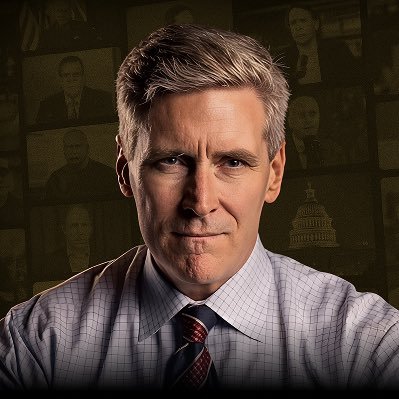
Why is Billionaire Mogul Dan Peña so passionately confident that when the world learns who’s “REALLY BEHIND BITCOIN”, its’ price will drop to zero in an instant? Peña believes every durable asset ultimately anchors to: • identifiable power, • enforceable authority, • or real-world coercion (law, armies, courts, balance...

136,796 просмотров • 6 месяцев назад •via X (Twitter)

Комментарии: 0

Нет доступных комментариев

Здесь появятся комментарии из оригинального поста

Похожие видео

“How many bitcoin do you own?” That’s how it starts, a stupid question from the host. From there, it goes downhill fast. Christine Lagarde repeats every tired anti-bitcoin cliché the ECB has ever pushed. Let's go... 1️⃣ “Bitcoin has no intrinsic value.” Neither does fiat. Intrinsic value is an outdated economic myth, money derives value from scarcity, credibility, and demand for settlement. Bitcoin’s scarcity is mathematically enforced; fiat’s is politically decided. 2️⃣ “It has no anchor of safety.” Bitcoin’s anchor is energy. Every coin represents irreversible work, proof of energy expended to secure the network. Fiat’s anchor is faith in central banks that inflate at will. 3️⃣ “It could collapse.” So can any monetary system. But bitcoin has operated with 99.99% uptime for 15 years, through wars, recessions, bans, and collapses, that you and your friends created! Now go and compare that to banking crises that occur every decade. 4️⃣ “It’s speculative.” Yes! In the same way that every emerging monetary asset is. Gold was speculative in 600 BC. Bonds were speculative in 17th-century Europe. Bitcoin is price discovery in real time. A Feature! 5️⃣ “A digital euro will be safer.” Hmmmm... no! That’s not safety. That’s dependency. A CBDC is not money you own; it’s credit you’re allowed to use, programmable and reversible at will. While bitcoin is ownership; CBDCs are permission. 6️⃣ “Stablecoins are different.” Exactly! They’re IOUs, not assets. They rely on trust in an issuer, exactly what bitcoin removes. Bottom line: Every critique Lagarde makes of bitcoin describes fiat more accurately. Trust math, not mandates.

Eli Nagar

187,398 просмотров • 10 месяцев назад

Larry Fink’s "Evolution" on Bitcoin Is a Masterclass in Oligarchic Hypocrisy BlackRock CEO & WEF co-chairman Larry Fink just admitted he was "wrong" about Bitcoin. But his confession reveals a chilling worldview. In 2017, he stood with Jamie Dimon, dismissing Bitcoin as the "currency for money launderers and thieves." Today, BlackRock runs the world's largest Bitcoin ETF. What changed? According to Fink, it wasn't a moral awakening; it was a cold, calculated realization of where true power lies in a decaying global system. Here’s what Fink is really saying: - Bitcoin is the "Currency of Fear." He admits people don't buy it out of hope, but out of desperation. They are "frightened of their security" and "frightened of the debasement" of their national currency. He sees the crumbling faith in the very fiat system his institution profits from. - It's a Tool for Bypassing Failed States. He learned of an Afghan woman using Bitcoin to pay female workers under the Taliban. His takeaway? When state-controlled banking becomes an instrument of oppression or collapses, decentralized networks become essential. He’s not celebrating freedom; he’s acknowledging a new, unstoppable geopolitical reality. - He Admits Its Illicit Use Case is Overblown. By highlighting that 20% of Bitcoin ownership is Chinese despite it being illegal, he implicitly concedes its primary use is not crime, but as a safeguard against authoritarian capital controls and economic instability. The Stunning Conclusion: Fink’s journey is the ultimate indictment of the system he helps lead. He now embraces Bitcoin not because he believes in its libertarian ideals, but because he recognizes it as the inevitable "digital gold" for a world losing trust in governments and central banks. BlackRock isn't "believing" in Bitcoin; it's commodifying your fear. They failed to kill it, so now they're seizing it, packaging it into an ETF, and selling your desperation back to you. The man who called it a tool for thieves now runs the world's biggest vault. The "evolution" isn't in Fink's character; it's in his strategy to control the very asset built to escape his control.

Camus

16,327 просмотров • 10 месяцев назад

LUKE GROMEN SAYS NO ONE HAS ACCURATELY DESCRIBED HIS NEAR-TERM BEARISH STANCE ON BITCOIN So here it is, line by line: • Gromen says he sold most, but not all, of his Bitcoin. • He argues most people misunderstand why he is bearish. • He says his thesis that Bitcoin is the last functioning smoke alarm of global liquidity has been proven right. • What was proven wrong, for now, is Bitcoin as a neutral reserve asset in deflation. • In deflation, Bitcoin trades like a high beta tech stock. • In other words, Bitcoin behaves like equity, not cash or gold. • The global economy is extremely leveraged. • In any leveraged system, deflation hits the equity tranche first. • Bitcoin, in Gromen’s framework, is the equity tranche. • AI and robotics are enforcing accelerating, exponential deflation. • Productivity gains overwhelm anything short of extreme money printing. • Without “nuclear printing,” deflation dominates. • When deflation dominates, equity prices fall. • Because Bitcoin trades like equity, Bitcoin falls. • Gromen does not think nuclear printing is coming soon. • He thinks sentiment on Bitcoin remains extremely bullish because of all the hate he has gotten for selling. • Long term, he is still bullish on Bitcoin. • He still expects deflation to eventually force the 'nuclear printing'. • His mistake was timing the policy response too early. • Until that response arrives, he believes Bitcoin is vulnerable.

Bitcoin News

201,601 просмотров • 7 месяцев назад

.Erik Voorhees: It’s actually good, from the Trojan horse perspective, that Bitcoin was traceable enough for traditional institutions to tolerate it. “When Bitcoin came out, everyone called it private, thought of it as private. It was referred to as anonymous in every news story. And in some ways, it is very private and very anonymous. But the truth is that it’s also extremely trackable and traceable. It is not private in reality. And the question is, should it have been from the start? And at first I thought, yes, it should have been more private. And that was a mistake in its design. However, I think if Bitcoin had been anonymous truly from the start, like a Zcash or a Monero, it would have had such antagonism from the state. I don’t know that the state could have snuffed it out, but they would have tried much harder. And I think it’s actually good, from the Trojan horse metaphor perspective, that it was traceable enough that the traditional institutions could tolerate it. They’ve never liked it, but they could at least tolerate it because there is some traceability. And that has allowed Bitcoin to grow. And I think in its shadow, that other crypto assets are actually anonymous is very healthy. The strength of cryptocurrency as a concept in society, I think, is served best when Bitcoin itself is not perfectly private, but other assets are. That is a very difficult thing, I think, for the state to combat. And that decentralization of attributes is really, really crucial. So, yeah, I’m very glad that there are other coins that are private. I want there to be more of them, and I want them to be more popular. And I think it’s okay that Bitcoin itself is not.”

Arjun Khemani

23,056 просмотров • 1 месяц назад

Would you bet EVERYTHING on one idea? Michael Saylor did. Michael is a technology entrepreneur and the founder of the company now called Strategy. Long before Bitcoin, he built businesses in business intelligence, speech recognition and smart-home technology. Today, he is probably best known for turning his company into the world’s largest corporate holder of Bitcoin. In 2020, his company was worth around $600 million when he made what I described to him as an “early, very contrarian bet on Bitcoin”. At its peak, the company reached roughly $125 billion. I wanted to understand what Michael saw that almost everyone else didn’t, where that level of conviction comes from, and why his thinking goes far beyond Bitcoin. We discussed things like: - How he says AI helped him create $15 billion last year. - Why he believes buying a house might not be the best way to build wealth. - What he would study if he was 18 today. - Which careers AI could completely transform. - What is happening to the value of the money sitting in your bank. - Why he still has such enormous conviction in Bitcoin. Michael’s whole point is that technology, money and careers are not separate conversations. He sees them as connected parts of where the world is heading, and believes the decisions we make now could matter far more than most people realise. Even if you see the world differently to Michael, there is a lot to take from the way he thinks. His experience building technology companies, making enormous financial bets and thinking deeply about AI gives him a perspective on money, work and the future that is worth listening to. Out now on all platforms. Let me know what you think of this one in the comments ❤️👊🏾

Steven Bartlett

141,548 просмотров • 6 дней назад

Did Epstein influence Bitcoin core development? Short answer: No. This is not how Bitcoin works. Here’s what happened: Epstein donated to MIT Media Lab…who in turn supported MIT Digital Currency Initiative…which in turn funded Bitcoin developers. These devs used to be funded by The Bitcoin Foundation (which I used to run as volunteer Executive Director) there are many devs and no dev or team had power or control over Bitcoin. Under MIT’s patronage the devs had the same deal they had with us at The Bitcoin Foundation: that they could work on the code and not have direction from the org. More importantly — how Bitcoin works is that *even if* a dev was compromised then the nodes and miners would still have to run that code to make it included in Bitcoin. So for example if I had somehow asked the devs paid by Bitcoin Foundation to “add 1000 coins for Bruce” 1) they wouldn’t have done this / it would have been counter to our agreement 2) no miners would run that code & no nodes would recognize it. It would be a laughing stock and completely rejected. Does this mean code dev is not an attack vector? No. It’s still a risk. Particularly with nation state style actors and very careful efforts to co-opt which are much more sophisticated than “give Bruce coins” or something. This is one reason I’m cautious of Bitcoin core funding - especially from actors who’ve had bad judgment in the past. I think we should be cautious of who does the dev and view it as an attack vector. Bitcoin code is transparent and has lots of eyes on it. So in this case especially there isn’t even a solid accusation, let alone evidence that MIT directed nefarious code changes. If that was an allegation the first question should be: well what code specifically did MIT direct and what proof is there and how was it harmful? I think claims around this would collapse. There’s obviously plenty to criticize about Epstein and MIT working with him — and when it comes to digital assets MIT’s work with Gensler and especially its work on CBDCs is much more suspect than the chance that malicious code was pushed through on Bitcoin. Be cautious but this is a nothing burger

Bruce Fenton

231,841 просмотров • 6 месяцев назад

A veteran of the Canadian Armed Forces stopped me in Red Deer and shared a perspective that I think a lot of people need to hear in full, not reduced to a slogan. He told me his father fought in World War II. He told me his sons served in Afghanistan. This is not somebody speaking casually about loyalty, sacrifice, or duty. This is somebody from a family that has given real service across generations. And his message was blunt: in his view, Canada is no longer being loyal to people like him, and nothing meaningful is going to change in Ottawa. That is why he believes Alberta independence is now the only way forward. Whether someone agrees with that conclusion or not, people should at least understand the depth behind it. For many soldiers, veterans, and military families, loyalty is not an abstract idea. It is tied to duty, sacrifice, service, loss, and trust. The basic belief is that if you give yourself to a country, that country should still reflect the values you served to protect. When people who spent their lives serving begin to feel alienated from the direction of the country, that is not a small thing. I think the concern here is bigger than party politics. It is about the feeling that the institutions of Canada are no longer listening, no longer correcting course, and no longer representing the people who built, defended, and sustained this country. For some veterans, the frustration is not just with one bad policy or one bad government. It is the belief that the system itself is no longer responsive. That is the nuance people miss. When a veteran says Alberta independence is the only way forward, he is not necessarily saying he stopped caring about the country overnight. He may be saying the opposite. He may be saying he cared so much, for so long, that it means something when he finally concludes the relationship is broken beyond repair. A lot of soldiers and veterans may have concerns about even entertaining that idea. They may value unity, continuity, tradition, and the memory of what they served under. They may worry that supporting Alberta independence feels like turning their back on their service, their oath, or the people they served beside. That is a real emotional and moral tension. But the other side of that tension is this: what if loyalty is not supposed to be one-way? What if there comes a point where citizens, including veterans, have the right to say that the political system has become unworthy of their continued trust? What if defending freedom sometimes means being honest about when a government or a national project has drifted too far from the people it claims to represent? That is why this moment mattered. This was not just a random political opinion shouted from the roadside. It was a serious statement from someone whose family has lived service, sacrifice, and national duty. And when people like that start saying Ottawa will not change, others should pay attention. You do not have to agree with him to recognize the weight of what he is saying. Watch this and listen to his words for yourself.

Jon Alberta Patriot

91,333 просмотров • 4 месяцев назад

Tucker Carlson reveals Charlie Kirk’s greatest “sin” — the one that cost him his life. Kirk’s death has clearly lit a fire under Carlson. This is two minutes of Tucker at his absolute best. “Charlie was not a Nazi. He was not killed because he was a Nazi. Yes, he was a defender of Israel. He didn’t die for Israel. However, why did he die? What was his life about? What was the sin, the core sin that Charlie Kirk committed against somebody, power that got him killed in the end? “And, the answer is right in front of us, certainly those of us who knew him. Charlie’s life was defined by his Christian faith, not his spirituality, but his belief in Jesus, his life as a Christian. Everything in his life flowed from those beliefs. Everything. “Everything he did, said and believed came from the fact that he was above all, a Christian. And that is and was and in fact has always been deeply provocative and offensive to the rest of the world. “And why is that? It’s worth thinking about it for just a second. Christianity doesn’t seem like the kind of religion that provoke people to anger and violence. In fact, it seems just the opposite. It’s the world’s most profoundly nonviolent religion. Maybe the world’s only truly nonviolent religion, a religion based on a man who Christians believe was also God, who, as he was being led away to be tortured to death on made up charges, scolded one of his disciples for fighting back. “This is a religion committed to love above all and to living in peace and harmony. Truly, it’s a universalist religion that believes that every person has a shot at heaven. It’s not exclusionary at all. And so you would think it would make sense that if you’re a government or if you’re in power, that you’d want a lot of Christians living in your country because they’re not going to cause massive problems. “Not a lot of sincere Christians are fomenting insurrection at any given moment. Pretty much none. Most of the time they’re tidy. They get married, they love their children, they pay their taxes. They’re commanded to pay their taxes. So why wouldn’t you want a nation full of Christians? “Why wouldn’t you encourage this religious belief, even if it wasn’t yours? Why would you hate it? Well, there are a couple of reasons. There are a couple of things about Christianity, and these were evident throughout Charlie’s public life, that are deeply provocative to the people in power. “And the first is the insistence that Christianity comes with inherently that you are not God, you are not God and neither are your leaders. God is God and all of us stand before him in the end to be judged and all of us will be found lacking. “Christians believe the only way to heaven is through Jesus. That’s the only way. But all of us, whether we believe in Jesus or not, are fallen. We are sinners, we are less than we ought to be. We are not gods, and neither are the people who lead us.”

The Vigilant Fox 🦊

941,852 просмотров • 10 месяцев назад

The standoff between Emmerson Dambudzo Mnangagwa and Mkanya Chiwenga is no longer a behind the scenes power struggle, it is an open test of authority, and right now, the silence from the top is deafening. If Mnangagwa is truly in charge, then he must prove it. Leadership is not maintained through hesitation, whispered briefings, or carefully planted statements through allies. It is exercised through decisive action. If Chiwenga is perceived as a threat, a rival, or simply out of step with the direction of government, then the President has both the authority and the obligation to act. Anything less is not strategy, it is weakness. Expecting Chiwenga to resign is politically naive. No one entrenched at that level of power walks away voluntarily. That option does not exist in reality. The only meaningful question is whether Mnangagwa has the resolve to remove him or whether he is prepared to continue governing under the shadow of his own deputy. The use of figures like Themba Mliswa as unofficial messengers only deepens the perception of insecurity. When leaders speak through intermediaries instead of addressing the nation directly, it raises a simple question: who is actually in control? Power that has to be hinted at, defended by proxies, or negotiated in public is power already slipping. This moment demands clarity, not choreography. Either Mnangagwa asserts his authority in unmistakable terms, or he concedes, by inaction, that the balance of power is no longer firmly in his hands. There is no middle ground. In politics at this level, hesitation is not neutrality; it is surrender in slow motion. #edmustgo #saynoto2030 #defendtheconstitution

kerina mujati

60,849 просмотров • 3 месяцев назад

Making Sense Of Strategy What is happening with $MSTR? If you’ve been following me on X for any meaningful length of time, you will know that I have been attempting to calibrate people’s expectations of the stock's performance for the best part of 2025. Here I have synthesised all of my thoughts and distilled them into a single video. If you prefer YouTube, you can watch it here: If you prefer written format, continue reading. The first thing we need to understand is what Strategy is and why people invest in it. Strategy At the highest level, Strategy is leveraged Bitcoin. That’s it. Strategy leverages debt to acquire more Bitcoin. Therefore, the main reason you invest in Strategy is because you want to outperform Bitcoin. The only thing better than Bitcoin is more Bitcoin. The second thing we need to understand is mNAV. mNAV Generally speaking for a pure-play Bitcoin Treasury Company like Strategy, mNAV is a reflection of the market's expectation of future Bitcoin Yield. Bitcoin Yield comes with diminishing returns because each additional Bitcoin purchase contributes less to Bitcoin Per Share. Thus, the larger your Bitcoin stack, the harder it becomes to generate Bitcoin Yield and by extension the harder it becomes to outperform Bitcoin. This is why on a Bitcoin Standard, over a long enough time horizon, mNAV trends towards 1 since the maximum amount of Bitcoin you can own is 21M. With all this in mind, why is Strategy trading where it is and why is it trading at such a low mNAV? There are a few reasons. 1. Strategy Is A Different Company In 2025 Firstly, Strategy is a totally different company in 2025 to the one it was in 2020. For context, believe it or not, the company only introduced Bitcoin Yield and Bitcoin Per Share in the July 2024 Q2 Earnings Call and so it was only after that that they began optimising for those metrics. In my view, that is also when Michael Saylor truly started to understand the opportunity that was in front of him, which is why in October 2024 we saw Strategy announce the 21/21 plan which became the catalyst for the parabolic run we saw in November 2024 where $MSTR went on to briefly hit an all-time-high of around $550. Since people are comparing $MSTR this cycle to the $MSTR of last cycle when it briefly traded at an mNAV of over 8x, it is distorting their expectations. Again, Strategy is a totally different company today with a totally different set of dynamics. 2. New Industry Secondly, we need to recognise that the Bitcoin Treasury Company industry is entirely new which means that the market has been forced to learn and adapt in real-time. With Strategy being the first and by far the largest Bitcoin Treasury Company, it has gained a disproportionate amount of attention and as a result it has attracted a disproportionate amount of speculative capital along the way while everyone has been trying to figure out how to value it. Consequently, in my view, the move we saw in November 2024 was an over-correction to the upside — which by the way coincided with Bitcoin’s parabolic run following Donald Trump’s election win — and what we’re now seeing is an over-correction to the downside. 3. Bitcoin Yield Thirdly, as I mentioned at the beginning, Bitcoin Treasury Companies are currently valued based on how much Bitcoin Yield they are expected to generate in the future. At the time of recording, Strategy currently holds precisely 637,460 Bitcoin — that’s over 3% of the total Bitcoin supply — which means that it is much, much harder to generate meaningful Bitcoin Yield, which again is why we’re seeing the mNAV compress. However, there is a caveat here. There is another metric that Strategy have introduced which is Bitcoin $ Gain. Bitcoin $ Gain is defined as the $ value of newly acquired Bitcoin within any period. Strategy — and I don’t blame them — have been attempting to encourage the market to interpret Bitcoin $ Gain as “earnings” and to value the company based on how much earnings it is expected to generate in the future. For full disclosure, I personally dislike Bitcoin $ Gain as a valuation metric. I think framing it as “earnings” is misleading and disingenuous. I understand why it has been introduced because it speaks the language of Wall Street. However, traditional earnings are final. Bitcoin $ Gain is not because it is forever subject to the price of Bitcoin. Therefore, for Bitcoin $ Gain to be embraced by Wall Street, the market must collectively agree that Bitcoin is going up forever. I remain very sceptical of that happening — especially in the short-to-medium term. However, I am also not attached to my beliefs and so if Wall Street does decide to embrace Bitcoin $ Gain as its primary valuation metric, then $MSTR is likely undervalued by a factor of 5-10x. If not, then $MSTR is likely undervalued by a factor of 1-2x. If you’re not content with the latter being the worst case scenario, then the stock probably isn’t for you. 4. Preferred Products Fourthly, the Strategy thesis right now revolves entirely around the success of its preferred products. Remember, Michael Saylor wants Strategy to become the Amazon of the fixed income market. Thus, we’re not talking about a small innovation here — we are talking about completely transforming global finance. This means that the process of generating awareness and educating the market that will ultimately drive demand for these products is going to take years — not months — which is why you need to have a long time-horizon. Presently, the market is completely discounting the success of Strategy’s preferred products. What it’s not factoring in however is that the capital markets are desperate for yield right now. Thus, when — not if — but when, they eventually wake up to Bitcoin, how do you think they’re going to get that yield? Who is going to be the entity that is offering Bitcoin-backed credit instruments at scale? The answer is obviously Strategy, but again, this is a 5-to-10 year and beyond story. So with all that said, if you’re reading this right now, what should you do? Valuing Strategy There are 3 steps you need to take: 1. Firstly, you need to define your time horizon. In other words, how long do you intend on holding the stock for? 2. Secondly, you need to estimate either — depending on your preferred metric — how much Bitcoin Yield or how much Bitcoin $ Gain you expect Strategy to generate during that period and then calculate how much you expect $MSTR to outperform Bitcoin based on those values. 3. Thirdly, ask yourself whether you’d be satisfied with the level of outperformance you have calculated? In other words, is the trade-off worth it? Or would you be better off investing in either spot Bitcoin, an alternative Bitcoin Treasury Company or a Bitcoin ETF. If you’re satisfied with the level of outperformance that you’ve calculated, then $MSTR it probably a good choice of investment for you. If you're not satisfied, then $MSTR is probably a bad choice of investment for you. I personally believe that $MSTR will outperform Bitcoin by a minimum factor of 1-2x over the next 5/10 years and potentially much more if Bitcoin $ Gain becomes the primary metric by which it is valued, but again, I remain sceptical of that happening. Regardless, the best is yet to come.

Chris Millas

36,835 просмотров • 10 месяцев назад

Why was Trump the first presidents in Decades to not get us involved in new wars? Why is there no evidence of Trump being involved in secret societies, I.e. bohemian Grove, or skull and crossbones like previous presidents? (John Kerry and George W. were members) Why is there no evidence of Trump being on Epsteins island and involved in other CIA blackmail operations? Why have Trumps taxes been turned upside down and they have never been able to convict him of any financial crime? The answer to these, is Trump is not a part of their club. He is a true outsider. That’s why many politicians hate him, (both Republican and Democrat) but the people love him. The intelligence agencies can’t control him. They don’t have the blackmail they had on presidents of the past. Trump is not a politician. Go back and listen to Biden from the 80s and 90s and go back and listen to Trump from the same time frame. Trump sounds like the same man he is today. He has the same principles and beliefs. He doesn’t flip/flop. Biden sounds like a completely different person, because he was. He just rolls with what’s he’s told, and what keeps him in power. When it was popular in the 2000s, Biden said marriage was between a “man and a woman.” He also said he “didn’t want his kids growing up in a racial jungle,”when leading the crime bill passage through congress. He is a crooked evil man. Trump said, “I don’t want to run for president, but I would never want to rule it out, and if it got so bad I would do it. I hate seeing this country ripped off.” Trump also said, “Unfortunately there’s a certain amount of dishonesty you need for running for office, and I’m a pretty straight guy that calls it like it is. I’m not sure that gets elected. Maybe not maybe so.” If we get 4 more years of Biden, America as we know it is gone. Trump 2024

Uncommon Sense

237,136 просмотров • 2 лет назад

🤔 The rifle drop location of the leftist who assassinated Charlie Kirk has been revealed. From the video which cuts off…we can see him waiting at the intersection. So not to be semantical but the diagram showing him cut across the parking lot isn’t accurate because he walks along the pathway. So it appears Tyler Robinson walked across the street and “HID” the Mauser in that vicinity and then walked to his car. My only question is if he knew in his own words that his father would notice the gun missing and have to come back to collect it WHY NOT JUST TAKE IT WITH YOU TO YOUR VEHICLE AND REMOVE THAT FROM THE EQUATION? He seemed to smuggle the weapon in there with NO PROBLEM hidden well enough and with all the commotion getting back to your car with the weapon would be a priority. We have heard routinely that he is NOT a stupid person so he would know that after committing the most high profile ASSASSINATION in the 21st century w/ cameras everywhere of a personal friend of The President that no stone would be unturned. So DID HE REALLY THINK HE WOULD BE ABLE TO RETURN TO A CAMPUS THAT WOULD BE ON LOCKDOWN HOURS LATER TO RETRIEVE IT? That doesn’t sound like a MENSA move to me. I’ll leave my post here also from 9/12 when his father turned him in where I said AT BARE MINIMUM HE WOULD HAVE KNOWN HIS DAD WOULD KNOW ITS MISSING. Why use the terminology “DROP POINT” as if it’s an OP as opposed to saying “I hid or stashed it”? Just little details like that stand out to me. Take it with you at this point don’t drop it a hundred feet away from a crime of the century.

Johnny St.Pete

45,016 просмотров • 10 месяцев назад

So evil exists, God exists, God willed evil to exist. He didn’t create it, He couldn’t. He’s holy, holy, holy. But He didn’t prevent it The Problem of Evil — John MacArthur // March 17, 2007 You have to understand that this issue of the problem of evil is the big issue, the big one in even evangelical Christianity, as well as liberal Christianity – everybody trying to save God from this biblical definition. Let’s assume for a minute that God doesn’t have the power or willingly limited the power for a greater good, human freedom; or doesn’t have the knowledge. In any case, guess what; evil exists and God exists, and God has no power over evil, and evil dominates the world, and it is beyond His control. The universe is out of control; it’s out of control and the most crucial point. So just exactly how, may I ask you, is God all of a sudden going to get the knowledge of the future that He needs to bring this deal to an end, and how is He going to exercise the power to end it, and how is He going to overturn His immutable decision in the past to give the creature autonomy? How is God going to define the end of everything in the way the Bible says He defines it if He’s not even in control of it, because He will not or cannot exercise the power, or doesn’t have the knowledge? Maybe global warming has more power than God. So I ask you this: Which god would you like? Would you rather have a god trying to get control of evil or a God completely in control of it? It’s obvious. It’s heresy to say the world is full of evil apart from a predetermined plan and purpose by God far beyond the willy-nilly human choices. So evil exists, God exists, God willed evil to exist. He didn’t create it, He couldn’t. He’s holy, holy, holy. But He didn’t prevent it. It occurred in a rebellion against Him. But He willed and ordained that it occurred. In fact, if you study the Bible carefully, you can see many ways in which God designs to use evil things – natural evil, moral evil, supernatural evil – for His own purposes, even eternal evil, sometimes to bring fear and terror and conviction on the unregenerate, sometimes to bring chastisement and discipline on God’s people, sometimes to humble them. And in the case of Job, He turned Satan loose for horrendous evil in the life of Job. You remember that Jesus said to Peter one day, “Satan desires to have you that he may sift you like wheat”? Remember that, Luke 22? And if I’d had been Peter I’d have said, “Well, you told him no, right?” Jesus said, “Actually, I told him yes, have at him.” What? “So that when you’re converted, you can strengthen the brethren.” There’s a remedial purpose in this. “As you come through that difficulty and come out the other side, you’re going to be able to strengthen the brethren.”It was 2 Corinthians 12 where Paul says, “There was given me a thorn in the flesh, a messenger of Satan.” A lot of discussion about what that is. Pretty clear. Messenger is aggelos. A satanic messenger is a what; a demon. I don’t think Paul had a demon in his life, I think that’s the demon that was leading the false teachers who were ripping and shredding the Corinthian church, and Paul prayed three times that it might be removed, and the Lord didn’t remove it. Why? He says twice in 2 Corinthians 12, “to keep me from exalting myself, to keep me from exalting myself.” If God so designs He will use a demon-led false teacher association to rip up a church to humble the pastor. He’s in control of all of that, of all of it.

Terri Green

16,836 просмотров • 2 месяцев назад